Quick Verdict: The XC60 Recharge T8 eAWD at a Glance
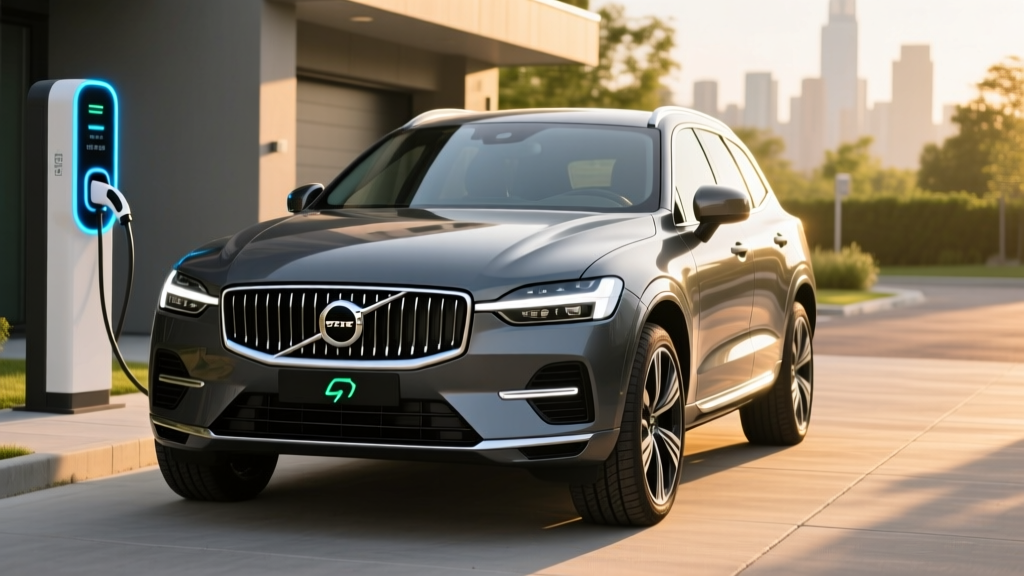
The 2025 Volvo XC60 Recharge is a plug-in hybrid (PHEV) — not a conventional hybrid — that pairs a turbocharged and supercharged 2.0-liter four-cylinder engine with a rear-axle electric motor to deliver all-wheel drive and a combined 455 horsepower. Its 18.8 kWh battery provides an EPA-estimated 35 miles of electric-only range, making it one of the more capable PHEVs in the luxury compact SUV segment. For buyers searching for the 2025 Volvo XC60 hybrid all-wheel drive activation and what it means in practice, the answer is straightforward: the electric rear motor engages automatically to provide AWD traction, and you can drive up to 35 miles without the gasoline engine firing at all.
This guide covers the XC60 Recharge T8 eAWD powertrain in full detail — from real-world MPG and electric range to charging logistics, battery longevity, federal tax credit eligibility, and whether this PHEV is the right bridge between a gas SUV and a full battery-electric vehicle.
| Spec | Value |
|---|---|
| Powertrain Type | Plug-in Hybrid (PHEV) |
| Combined Horsepower | 455 hp / 523 lb-ft torque |
| Gas Engine | 2.0L turbo + supercharged I4 (312 hp front) |
| Electric Motor | 143 hp rear-axle (ERAD) |
| Battery Capacity | 18.8 kWh (usable ~14.9 kWh) |
| Battery Chemistry | NMC (Nickel Manganese Cobalt) |
| EPA Electric Range | 35 miles |
| Total Combined Range | ~430 miles (electric + gas) |
| EPA MPGe (electric + gas) | 63 MPGe combined |
| EPA MPG (gas only, charge-depleted) | 28 combined (27 city / 28 hwy) |
| DC Fast Charging | No — AC only |
| Level 2 Charge Time (0–100%) | ~5 hours at 3.6 kW |
| 0–60 mph | 4.5 seconds |
| Drivetrain | eAWD (engine FWD + electric rear axle) |
| Starting MSRP | $59,395 (Core trim, incl. destination) |
| Battery Warranty | 8 years / 100,000 miles |
HEV vs PHEV: Understanding What the XC60 Recharge Actually Is
Volvo sells two distinct hybrid flavors under the XC60 nameplate, and confusing them is easy if you're browsing dealer lots or third-party listings:
| Attribute | XC60 B5 Mild Hybrid | XC60 Recharge T8 PHEV |
|---|---|---|
| Powertrain Type | Conventional HEV (mild hybrid) | Plug-in Hybrid (PHEV) |
| Battery Size | 0.4 kWh (48V system) | 18.8 kWh (high-voltage) |
| Plug-In Charging | No — self-charging only | Yes — plug in to charge |
| Electric-Only Driving | No (motor assists only) | Yes — up to 35 miles |
| Combined Horsepower | 247 hp | 455 hp |
| EPA MPG Combined | 26 MPG | 28 MPG (gas) / 63 MPGe (combined) |
| Starting MSRP | ~$47,050 | ~$59,395 |
| Federal Tax Credit | None | Potential partial credit* |
The XC60 B5 is a mild hybrid. It uses a small 48-volt battery and integrated starter-generator to smooth stop-start events and provide marginal torque assist. You never plug it in, and it cannot drive on electricity alone. Think of it as a slightly more efficient gas car.
The XC60 Recharge T8 is a full plug-in hybrid. It has a substantially larger battery, a dedicated rear-axle electric motor, and a charge port. You plug it in overnight, drive 35 miles on pure electricity for your commute, and the gas engine remains dormant until you exceed the electric range or demand hard acceleration. This is the model most buyers mean when searching for the 2025 Volvo XC60 hybrid.
How Many MPG Does the XC60 Recharge Get?
The answer depends entirely on whether you're driving with a charged battery or running on gasoline alone after the battery is depleted.
| Mode | City | Highway | Combined |
|---|---|---|---|
| Charge-Sustaining (gas only, battery depleted) | 27 MPG | 28 MPG | 28 MPG |
| Charge-Depleting + Gas (blended, MPGe) | 63 MPGe combined | ||
| Electric-Only Efficiency | ~63 kWh/100 mi (EPA) | ||
Real-world MPG vs EPA: PHEVs reward city driving and frequent charging. Owners who plug in nightly and commute under 35 miles round-trip may go weeks without visiting a gas station, effectively achieving 100+ "MPG" in daily use. On a long road trip where the battery depletes within the first 35 miles, expect the gas-only figure of roughly 26–29 MPG depending on speed, terrain, and climate control use. At sustained 75 mph highway speeds in cold weather, 25 MPG is realistic. According to fueleconomy.gov, the combined charge-sustaining figure is 28 MPG.
The city MPG is slightly higher than highway in gas-only mode because regenerative braking recaptures energy during stop-and-go traffic — a hallmark advantage of any hybrid powertrain.
Electric-Only Range and Total Driving Range
The EPA rates the 2025 XC60 Recharge at 35 miles of electric-only range. That figure assumes moderate temperatures, flat terrain, and mixed city/highway driving. Real-world expectations:
Real-World Expectation: 28–33 miles in mild weather; 20–25 miles in freezing temperatures with cabin heating
Total Combined Range (electric + full gas tank): ~430 miles
Cold weather hits PHEV electric range harder than gas MPG. Lithium-ion batteries lose efficiency below 40°F, and running the cabin heater draws heavily from the 18.8 kWh pack. If your one-way commute is 30 miles in a Minnesota January, expect the gas engine to kick in for the last few miles. In summer or temperate climates, 33–35 miles is achievable with gentle driving and preconditioning while plugged in.
The 18.5-gallon gas tank provides the remaining range. Once the battery depletes to its buffer threshold (roughly 15% state of charge, which the car protects automatically), the gasoline engine takes over seamlessly. You'll notice a faint hum and a slight vibration through the pedal — but the transition is among the smoothest in the PHEV segment.
Powertrain Deep Dive: How AWD Activation Works
The XC60 Recharge uses what Volvo calls eAWD — an electric all-wheel-drive system with no mechanical connection between the front and rear axles. Here's how it works:
- Front axle: The 2.0-liter turbocharged and supercharged inline-four (312 hp) drives the front wheels through an 8-speed automatic transmission.
- Rear axle: A 143 hp electric motor (ERAD — Electric Rear Axle Drive) powers the rear wheels independently, drawing from the 18.8 kWh battery.
- Combined output: 455 hp and 523 lb-ft of torque, making this one of the quickest compact luxury SUVs available (0–60 in 4.5 seconds).
All-wheel drive activation is managed entirely by software. In Pure mode (electric-only), only the rear motor drives the car — making the XC60 temporarily rear-wheel drive. In Hybrid mode, the car blends front engine and rear motor as needed, engaging AWD automatically when traction demand increases (wet roads, hard acceleration, cornering). In Power mode, both power sources deliver maximum output simultaneously for full AWD performance.
This is fundamentally different from a traditional mechanical AWD system with a driveshaft and center differential. There's no propeller shaft running the length of the car. The advantage is packaging efficiency and instant rear-axle torque response. The trade-off: if the high-voltage battery is fully depleted, AWD capability is reduced because the rear motor has less energy available — though Volvo's software maintains a buffer specifically to preserve traction.
Charging the XC60 Recharge: What You Need to Know
The 2025 XC60 Recharge charges exclusively via AC — there is no DC fast charging capability. This is typical for PHEVs in this class (the BMW X3 xDrive50e and Lexus TX 550h+ also lack DC fast charging), but it's worth understanding the implications.
| Charging Level | Power | Time (0–100%) | Use Case |
|---|---|---|---|
| Level 1 (120V household outlet) | ~1.4 kW | ~12–14 hours | Overnight top-up; slow for full recharge |
| Level 2 (240V home charger) | 3.6 kW (onboard charger limit) | ~5 hours | Overnight full charge; recommended setup |
| DC Fast Charging | N/A | N/A | Not supported |
The onboard charger is limited to 3.6 kW, which means even if you connect to a 48-amp Level 2 home charger capable of delivering 11.5 kW, the XC60 will only draw 3.6 kW. A full charge from empty takes about 5 hours. In practice, most owners rarely deplete the battery fully — a typical commute uses 50–80% of the pack, which recharges in 2.5–4 hours overnight.
Home charging setup cost: A Level 2 home charger installation (240V, 30-amp circuit) typically costs $500–$1,500 for the equipment and electrician labor, assuming your electrical panel has capacity. The Volvo-recommended ChargePoint Home Flex runs around $600–$700 for the unit alone.
Pricing, Trims, and Federal Tax Credit Eligibility
The 2025 Volvo XC60 Recharge T8 eAWD is offered in three trim levels:
| Trim | MSRP (incl. destination) |
|---|---|
| Core | $59,395 |
| Plus | $63,095 |
| Ultimate | $67,395 |
Federal tax credit (§30D): The XC60 Recharge's eligibility for the federal plug-in vehicle tax credit is complex and subject to change under current IRS rules. Key constraints include:
- MSRP cap: SUVs must be under $80,000 — all XC60 Recharge trims qualify.
- Buyer income cap: AGI must not exceed $150,000 (single) or $300,000 (joint).
- Battery component sourcing: Critical minerals and battery components must meet escalating North American/content thresholds per IRS §30D guidelines. These thresholds tighten annually and may reduce or eliminate credit eligibility for vehicles with overseas-sourced battery materials.
- Point-of-sale transfer: Eligible buyers can transfer the credit to the dealer for an immediate price reduction at purchase.
- Maximum credit: Up to $7,500 if both critical mineral and battery component requirements are met; $3,750 if only one is satisfied.
As of the 2025 model year, Volvo's battery supply chain sourcing determines whether the XC60 Recharge qualifies for the full $7,500, a partial $3,750, or no federal credit. This changes periodically as supply chains shift. Always verify current eligibility on fueleconomy.gov's tax credit tracker before purchasing, and consult a tax professional for your specific situation.
Battery Longevity, Warranty, and Replacement Cost
Capacity Retention Threshold: Warranty covers defects and excessive degradation — typically below 70% of original capacity
Powertrain Warranty: 4 years / 50,000 miles (general); hybrid-specific components covered under the 8-year battery warranty
The 18.8 kWh NMC battery in the XC60 Recharge is designed to last the life of the vehicle under normal use. PHEV batteries experience less stress than full EV batteries because the usable window is smaller (the car buffers the top and bottom of the charge to reduce degradation) and the total energy throughput over the vehicle's life is lower.
Degradation expectations: Based on industry data from similar NMC PHEV packs, expect approximately 8–12% capacity loss over 8 years / 100,000 miles under normal conditions. That translates to roughly 31–32 miles of electric range after a decade, down from the original 35. Cold-weather acceleration of degradation is real but modest for PHEVs due to the smaller pack and lower cycle counts.
Battery replacement cost: If the battery fails outside warranty, a replacement high-voltage pack for the XC60 Recharge currently ranges from $8,000 to $12,000 including parts and labor, based on Volvo dealer estimates. This is a worst-case scenario — most PHEV batteries outlast their warranty periods without requiring replacement. Volvo's hybrid-specific components (power electronics, ERAD motor, onboard charger) are also covered under the 8-year warranty.
Is the XC60 Recharge reliable? Volvo's PHEV powertrain has been in production since 2016 (with the SPA platform T6/T8 architecture), giving it nearly a decade of real-world validation. Common reported issues are minor — software glitches in the infotainment system and occasional onboard charger faults — rather than catastrophic battery or motor failures. According to IIHS, the XC60 earns top safety marks, and the powertrain's mechanical simplicity (no traditional AWD drivetrain, fewer moving parts than a conventional transmission-heavy system) reduces long-term failure points.
XC60 Recharge vs Full EV vs Gas SUV: Which Fits You?
- You can charge at home (Level 2) and your daily commute is under 35 miles round-trip
- You take road trips regularly and don't want to plan around DC fast chargers
- You want AWD capability without a range penalty in cold weather
- You want luxury SUV refinement with significantly reduced (but not eliminated) fuel costs
- You have reliable home charging and your daily needs fit within 250+ miles of range
- You want zero tailpipe emissions and minimal maintenance (no oil changes, no gas engine upkeep)
- You want access to DC fast charging for road trips at 150–250 kW speeds
- You want to maximize federal tax credit eligibility (most full EVs qualify more easily)
- You cannot charge at home (apartment, no garage, no outlet access)
- Your budget is closer to $47,000–$55,000
- You drive more than 40 miles daily and won't benefit from PHEV electric range
- You prefer a simpler ownership experience with no plug-in routine
The PHEV sweet spot is narrow but valuable: home charging access plus a commute that fits within the electric range. If both conditions are met, the XC60 Recharge functions as an electric car on weekdays and a gas-electric hybrid on weekends — giving you the best of both worlds without range anxiety on road trips.
Pros
- 35 miles electric covers most commutes gas-free
- 455 hp with seamless eAWD — genuinely quick (4.5s 0–60)
- Premium Scandinavian interior, Google-based infotainment
- Top IIHS safety ratings, comprehensive ADAS suite
- No range anxiety on road trips — 430+ mile total range
- Smooth engine/motor transitions in daily driving
Cons
- No DC fast charging — AC-only at 3.6 kW max
- Premium pricing: $59K–$67K before options
- Electric range drops to ~20–25 mi in freezing weather
- Tax credit eligibility uncertain due to battery sourcing rules
- Rear cargo space slightly reduced vs non-hybrid (battery placement)
- Only 247 hp in B5 mild hybrid — big performance gap to T8
Frequently Asked Questions
How many MPG does the 2025 Volvo XC60 hybrid get?
In charge-sustaining (gas-only) mode after the battery is depleted, the EPA rates it at 27 city / 28 highway / 28 combined MPG. When regularly charged and driven within its 35-mile electric range, effective fuel economy can exceed 100 MPGe in daily use. The EPA blended rating is 63 MPGe.
How far can the XC60 Recharge go on electric only?
The EPA rates it at 35 miles of electric-only range. Real-world results range from 28–33 miles in mild conditions to 20–25 miles in freezing temperatures with cabin heating active. Preconditioning the cabin while plugged in helps preserve range in cold weather.
Does the XC60 Recharge qualify for the federal tax credit?
It may qualify for up to $7,500 under IRS §30D, depending on current battery component and critical mineral sourcing requirements. The MSRP and buyer income caps are met, but the battery sourcing thresholds tighten annually. Check fueleconomy.gov for the latest eligibility status and consult a tax professional.
Is the XC60 hybrid reliable and what does battery replacement cost?
The T8 PHEV powertrain has been in production since 2016 with generally positive reliability data. The high-voltage battery is warrantied for 8 years/100,000 miles. Out-of-warranty replacement costs range from $8,000–$12,000, though most PHEV batteries outlast their warranties without issue.
How does the all-wheel drive activation work in the XC60 hybrid?
The XC60 Recharge uses eAWD — the gasoline engine drives the front wheels while an electric motor drives the rear wheels independently. There is no mechanical driveshaft connecting the axles. AWD activates automatically via software when traction demand increases, and in Pure electric mode the car is temporarily rear-wheel drive only.
Can I charge the XC60 Recharge at a DC fast charger?
No. The XC60 Recharge supports only AC charging (Level 1 at 120V or Level 2 at 240V). The onboard charger is limited to 3.6 kW, meaning a full charge takes approximately 5 hours on Level 2. This is standard for most PHEVs in this class.
Should I get the XC60 Recharge PHEV or the B5 mild hybrid?
If you can charge at home and your daily commute is under 35 miles, the Recharge T8 PHEV delivers dramatically lower fuel costs, far more power (455 hp vs 247 hp), and meaningful electric driving. If you can't charge at home or drive well beyond 35 miles daily without charging, the B5 mild hybrid at ~$12,000 less is the more practical choice.