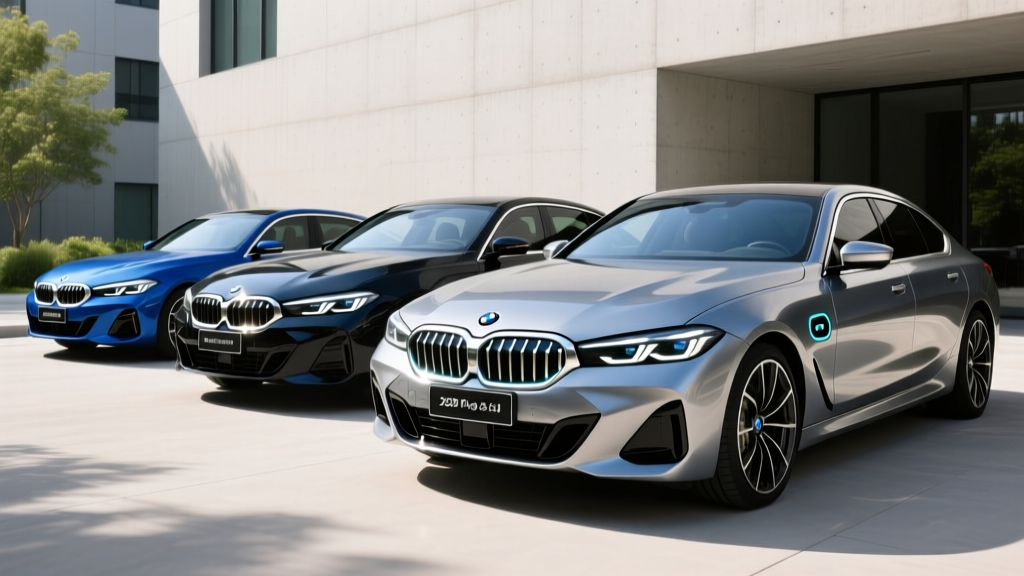
If you're researching BMW hybrid models for 2026, you're looking at a lineup that has fully committed to plug-in hybrid (PHEV) architecture. BMW phased out conventional hybrid (HEV) options in the U.S. market years ago, meaning every electrified BMW you can buy today plugs in. That's a critical distinction — and one that shapes everything from daily driving to tax-credit eligibility.
This guide covers every current BMW PHEV available in the U.S. for the 2026 model year, with exact EPA figures, battery specs, real-world efficiency data, pricing, and a framework to decide whether a BMW PHEV fits your garage better than a full EV or a gas-only alternative.
BMW's 2026 PHEV Lineup at a Glance
BMW offers plug-in hybrid variants across several core nameplates. For 2026, the U.S. lineup centers on models using BMW's fifth-generation eDrive technology paired with turbocharged four- and six-cylinder engines. Here's the full spec breakdown:
| Model | Powertrain | Combined HP | Battery (kWh usable) | EV Range (mi) | EPA MPGe | Base MSRP |
|---|---|---|---|---|---|---|
| BMW 330e xDrive | 2.0L turbo I4 + eDrive motor | 288 hp | 19.5 kWh | 22 mi | 67 MPGe | $48,275 |
| BMW 550e xDrive | 3.0L turbo I6 + eDrive motor | 483 hp | 18.7 kWh | 35 mi | 64 MPGe | $72,575 |
| BMW X5 xDrive50e | 3.0L turbo I6 + eDrive motor | 483 hp | 25.7 kWh | 38 mi | 56 MPGe | $74,675 |
| BMW XM | 4.4L twin-turbo V8 + eDrive motor | 738 hp (Label variant) | 25.7 kWh | 31 mi | 46 MPGe | $160,175 |
Note: All figures reflect 2026 model-year EPA data as published on fueleconomy.gov. MSRP excludes destination charges. Specs and pricing subject to change by trim and options.
HEV vs. PHEV: Why BMW Only Sells Plug-Ins
Before diving into individual models, it's worth understanding why BMW doesn't sell conventional hybrids (HEVs) in the U.S. A conventional hybrid — like the Toyota Prius — uses a small battery (typically 1–2 kWh) that recharges exclusively through regenerative braking and the engine. You never plug it in. It improves fuel economy but offers no meaningful electric-only driving.
| Feature | Conventional Hybrid (HEV) | Plug-In Hybrid (PHEV) |
|---|---|---|
| Battery size | 1–2 kWh | 15–30 kWh |
| Electric-only range | 0–1 mi at low speed | 20–40 mi typical |
| Plugs in? | No | Yes (Level 1 or Level 2) |
| Federal tax credit | No | Up to $3,750 (§30D, varies) |
| Best for | No charging access, city driving | Home charging, short commutes |
BMW's strategy targets buyers who have home or workplace charging and want electric daily commuting with gas-engine flexibility for road trips. If you can't plug in regularly, a BMW PHEV will still function as a heavy hybrid — but you'll lose the efficiency and cost benefits that justify the premium.
Real-World MPG and Electric Range: What to Actually Expect
EPA ratings tell part of the story. In practice, BMW PHEV owners report experiences that diverge from the sticker depending on driving habits, climate, and whether the battery is charged.
| Model | EPA Combined MPG (gas only) | EPA EV Range | Real-World EV Range (est.) | Real-World Combined MPG (hybrid mode) |
|---|---|---|---|---|
| 330e xDrive | 28 MPG | 22 mi | 17–20 mi (cold/highway) | 26–30 MPG |
| 550e xDrive | 27 MPG | 35 mi | 28–33 mi (cold/highway) | 25–29 MPG |
| X5 xDrive50e | 24 MPG | 38 mi | 30–35 mi (cold/highway) | 22–26 MPG |
| XM | 17 MPG | 31 mi | 24–28 mi (cold/highway) | 15–18 MPG |
Key factors that reduce real-world electric range in BMW PHEVs:
- Cold weather: Expect 15–25% range loss below 40°F. Battery chemistry becomes less efficient, and cabin heating draws significant power.
- Highway speeds: EV range drops sharply above 65 mph due to aerodynamic drag. City and suburban driving maximizes electric miles.
- Battery buffer: BMW reserves roughly 10–15% of total battery capacity as a buffer to protect longevity, so "usable" kWh is already the de-rated figure.
When the battery depletes, BMW PHEVs transition to hybrid mode seamlessly. The B58 inline-six in the 550e and X5 is one of the most refined engines in the segment, and hybrid-mode fuel economy remains competitive with non-plug-in luxury SUVs and sedans.
Charging: Speeds, Connectors, and Home Setup
Every 2026 BMW PHEV uses a J1772 connector for Level 1 (120V) and Level 2 (240V) AC charging. None of BMW's current U.S. PHEVs support DC fast charging — a deliberate engineering trade-off that keeps weight and cost down but means longer recharge times on road trips.
| Charging Level | Power (kW) | 0–100% Time (approx.) | Practical Notes |
|---|---|---|---|
| Level 1 (120V outlet) | ~1.4 kW | 14–20 hours | Overnight top-up only; not practical for daily full charges |
| Level 2 (240V, 32A) | 7.4 kW (onboard max) | 2.5–4 hours | Ideal home setup; full charge overnight |
| DC Fast Charge | Not supported | N/A | No CCS or NACS DC capability on BMW PHEVs |
For most PHEV owners, a Level 2 home charger is the sweet spot. A 240V/32A circuit delivers a full battery in roughly 3 hours — meaning you can recharge during the workday or overnight without issue. Home installation typically runs $500–$1,500 for the electrician work, depending on panel proximity and local permitting. BMW includes a flexible charging cable (Level 1/Level 2 capable) with each PHEV, though a dedicated wall unit (such as the BMW Wallbox or a ChargePoint Home Flex) is recommended for daily use.
Pricing and Federal Tax Credit Eligibility
BMW PHEVs command a premium over their gas-only siblings, typically $4,000–$8,000 more depending on the model. The question is whether tax incentives and fuel savings close that gap.
Under current IRS §30D rules, the federal plug-in hybrid credit is calculated based on battery capacity and critical-mineral/battery-component sourcing. For 2026, most BMW PHEVs qualify for a partial credit — typically $3,750 — because BMW's battery supply chain does not fully meet the critical-minerals and battery-component thresholds required for the maximum $7,500.
Federal Tax Credit Checklist for BMW PHEVs (2026)
- Credit amount: Typically $3,750 (partial — battery sourcing rules limit full $7,500)
- MSRP cap: Vans/SUVs/pickups ≤ $80,000; sedans ≤ $55,000 (330e qualifies; X5 and XM do not at most trims)
- Income cap: AGI ≤ $150K single / $300K joint filers
- Point-of-sale transfer: Yes — you can apply the credit as a down-payment reduction at the dealer
- North American assembly: Required — verify VIN on fueleconomy.gov
Tax rules change frequently. Consult a tax professional and verify eligibility at the IRS before purchasing.
The BMW 330e xDrive, at $48,275, clears the $55,000 sedan MSRP cap and is the most credit-eligible model in the lineup. The X5 xDrive50e may qualify at base MSRP ($74,675, under the $80K SUV cap), but options can push it over. The 550e sedan and XM exceed their respective caps at most trim levels.
Battery Longevity, Warranty, and Replacement Costs
Battery degradation is the number-one concern among hybrid buyers — and it's an area where BMW provides solid coverage.
BMW PHEV Battery Warranty
Coverage: 8 years / 80,000 miles (whichever comes first)
Capacity threshold: BMW warrants the high-voltage battery against dropping below 70% of original capacity during the warranty period
Replacement cost (out of warranty): $8,000–$14,000 depending on model, including labor
Real-world degradation: BMW PHEV batteries typically lose 8–12% capacity over the first 5 years / 75,000 miles based on owner-reported data — well within warranty thresholds
BMW uses NMC (nickel manganese cobalt) chemistry across its PHEV lineup, which offers higher energy density than LFP but is more sensitive to sustained high-state-of-charge storage. Best practices for longevity:
- Avoid leaving the battery at 100% SoC for extended periods (days or weeks)
- Use the built-in charge-limit setting (80% target) for daily commuting
- Precondition the battery via the iDrive app in extreme cold before driving
Out-of-warranty replacement is expensive but rarely needed in the first 10–12 years of ownership. BMW's modular battery design also allows individual cell-module replacement rather than a full pack swap, reducing costs in some failure scenarios.
Which BMW PHEV Fits Your Driving Pattern?
Not every BMW PHEV suits every buyer. Here's a practical decision framework based on real driving profiles:
Choose the BMW 330e xDrive if:
- Your daily commute is under 20 miles round-trip
- You want the most affordable entry point into BMW's PHEV lineup
- You qualify for the full federal tax credit (under $55K sedan cap)
- You prioritize driving dynamics over cargo space
Choose the BMW X5 xDrive50e if:
- You need SUV practicality (33 cu ft cargo, optional third row)
- Your commute is 25–35 miles and you have Level 2 charging at home
- You tow occasionally (up to 5,000 lbs rated)
- You want inline-six smoothness with electric assist
Choose the BMW 550e xDrive if:
- You want flagship sedan comfort with the longest EV range in the lineup
- Performance matters (483 hp, 0–60 in ~4.2 sec)
- You don't need SUV cargo space but want rear-seat luxury
- Budget allows $72K+ before incentives
Skip the PHEV and consider a full BEV if:
- You have reliable home and workplace charging
- Your daily driving exceeds 40 miles (PHEV EV range won't cover it)
- You want zero engine maintenance (no oil, spark plugs, or exhaust)
- Models like the BMW i5 or iX better fit your range needs
BMW PHEV vs. Full EV vs. Gas: The Ownership Math
The decision between a BMW PHEV, a battery-electric vehicle (BEV), and a conventional gas car depends on three variables: charging access, daily mileage, and how long you plan to keep the vehicle.
| Factor | BMW PHEV | Full EV (e.g., BMW i5) | Gas BMW (e.g., 330i) |
|---|---|---|---|
| Fuel/energy cost (15K mi/yr) | $1,200–$1,800 | $600–$1,000 | $2,200–$2,800 |
| Maintenance (5-yr avg) | Moderate (engine + EV systems) | Low (no engine) | Moderate |
| Charging access needed | Recommended (Level 2 ideal) | Essential (Level 2 at minimum) | None |
| Road-trip convenience | Excellent (gas backup) | Requires DC fast-charge planning | Excellent |
| 5-year total cost advantage | Best for mixed driving + home charging | Best for high mileage + cheap electricity | Best if no charging access |
The PHEV sweet spot: you drive 15–35 miles daily, have Level 2 charging at home, and take 3–5 road trips per year where you don't want to plan around charging stations. In this scenario, a BMW PHEV covers 60–80% of your miles on electricity while eliminating range anxiety entirely.
Frequently Asked Questions
How many MPG does a BMW hybrid get?
In hybrid mode (battery depleted), the 2026 BMW 330e achieves 28 MPG combined (EPA), the 550e gets 27 MPG, the X5 xDrive50e gets 24 MPG, and the XM gets 17 MPG. Real-world results vary by driving style and conditions, with city driving often yielding slightly better numbers thanks to regenerative braking.
How far can BMW PHEVs go on electric only?
EPA-rated electric-only range spans 22 miles (330e) to 38 miles (X5 xDrive50e). In cold weather or sustained highway driving, expect 15–25% less. For most commuters with sub-30-mile round trips, the X5 or 550e can handle daily driving entirely on electricity when charged nightly.
Do BMW hybrids qualify for a tax credit?
Yes, but with caveats. Under current IRS §30D rules, most BMW PHEVs qualify for a partial credit of approximately $3,750 rather than the full $7,500, due to battery-sourcing requirements. The 330e sedan clears the $55K MSRP cap; the X5 may qualify under the $80K SUV cap at base MSRP. Income limits apply ($150K single / $300K joint). Always verify on irs.gov before purchasing.
Is BMW's hybrid battery reliable and what does replacement cost?
BMW PHEV batteries are covered for 8 years / 80,000 miles against capacity loss below 70%. Real-world degradation data shows 8–12% loss over 5 years — well within warranty limits. Out-of-warranty replacement runs $8,000–$14,000 depending on the model. BMW's modular pack design can reduce costs by allowing partial module replacement.
Can I charge a BMW PHEV at a Tesla Supercharger or DC fast charger?
No. BMW's 2026 PHEVs support AC charging only (Level 1 and Level 2) via a J1772 connector. They cannot use DC fast chargers, including Tesla Superchargers, Electrify America, or any CCS/NACS DC station. This is a deliberate design choice to control weight and cost — PHEV batteries are small enough that AC charging overnight is sufficient for daily needs.
Should I buy a BMW PHEV or a full EV like the i5 or iX?
Choose a PHEV if you lack reliable public charging infrastructure for road trips, drive under 40 miles daily, and want the flexibility of a gas engine. Choose a full BEV (like the BMW i5 or iX) if you have home charging, drive more than 40 miles daily, want lower maintenance costs, and are comfortable planning DC fast-charge stops on road trips. The total-cost-of-ownership advantage shifts toward BEVs at higher annual mileage.