Quick Verdict: The BMW 5 Series Hybrid for 2026
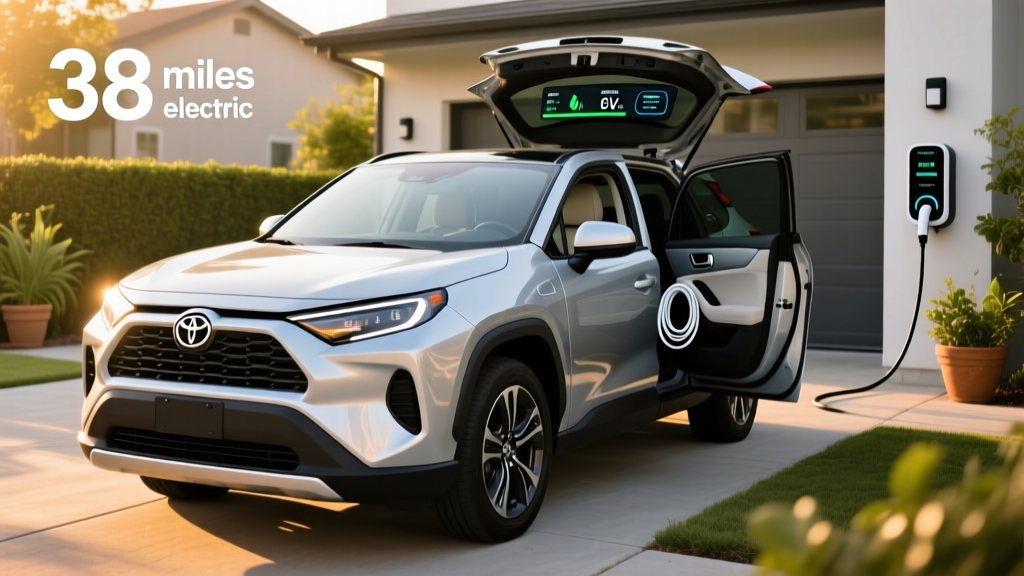
The 2026 BMW 550e xDrive is the sole plug-in hybrid (PHEV) variant in the current 5 Series lineup, pairing a turbocharged inline-six with an electric motor for 483 combined horsepower and an EPA-estimated 38 miles of electric-only driving. It targets executive-sedan buyers who want daily electric commuting without sacrificing the range flexibility of a gas engine for longer trips. With a starting MSRP around $72,200 and potential eligibility for partial federal incentives, the 550e occupies a specific niche: luxury PHEV performance with real zero-emission capability for most commutes.
Before we break down the numbers, let's clarify what you're looking at. The current-generation BMW 5 Series (G60 platform) is offered as a mild-hybrid gas model (530i xDrive) and a full battery-electric model (i5). The 550e xDrive is the plug-in hybrid — the only variant you can plug in and drive on electricity alone. BMW previously offered a conventional hybrid 5 Series (the older 530e used a smaller battery with limited electric range), but for 2026, the 550e xDrive is the definitive hybrid 5 Series BMW offers.
HEV vs PHEV: Understanding the 5 Series Hybrid Options
BMW's current 5 Series lineup includes three distinct powertrain philosophies. Confusing them is easy — here's the breakdown:
| Attribute | 530i xDrive (Mild Hybrid) | 550e xDrive (PHEV) | i5 eDrive40 (BEV) |
|---|---|---|---|
| Powertrain Type | Gas + 48V mild-hybrid | Plug-in Hybrid (PHEV) | Battery Electric (BEV) |
| Plug-In Capable | No | Yes | Yes |
| Electric-Only Range | 0 miles | 38 miles (EPA) | 295 miles (EPA) |
| Combined HP | 255 hp | 483 hp | 335 hp |
| EPA Combined | 28 MPG | 64 MPGe / 29 MPG (gas) | 97 MPGe |
| Starting MSRP | ~$61,200 | ~$72,200 | ~$67,900 |
The 530i xDrive uses a 48-volt mild-hybrid system that assists the gas engine during acceleration and enables brief engine-off coasting. You never plug it in, and it cannot drive on electricity alone. Think of it as a slightly more efficient gas car.
The 550e xDrive is a true plug-in hybrid with a 22.1 kWh battery pack (usable capacity approximately 18.7 kWh) and an electric motor integrated into the transmission. Plug it in overnight, and you get genuine zero-emission commuting for up to 38 miles before the inline-six kicks in.
The i5 is fully electric — no gas engine at all. We cover it separately in our i5 reviews.
Fuel Economy and Electric Range: What the Numbers Actually Mean
For PHEV buyers, fuel economy is a two-part story: electric efficiency when charged, and gas MPG when the battery depletes. Here's the full EPA breakdown for the 2026 BMW 550e xDrive:
| Metric | EPA Estimate | Real-World Expectation |
|---|---|---|
| Electric-Only Range | 38 miles | 30–35 mi (highway/cold weather) |
| Combined MPGe (electric + gas) | 64 MPGe | Varies heavily by charging habits |
| Electric Energy Consumption | 52 kWh/100 mi | 55–60 kWh/100 mi (aggressive driving) |
| Gas-Only MPG (Combined) | 29 MPG | 26–28 MPG highway; 30+ city (regen assist) |
| Gas-Only City | 30 MPG | 28–32 MPG (hybrids excel in stop-and-go) |
| Gas-Only Highway | 28 MPG | 25–27 MPG at 75+ mph |
| Total Combined Range | ~430 miles | ~380–410 mi (mixed driving) |
Real-world context: The EPA's 38-mile electric range assumes moderate temperatures and mixed driving. In our experience with similar BMW PHEV powertrains, expect 30–35 miles in cold weather (below 40°F) due to battery resistance and cabin heating demands. Highway driving at 75+ mph also reduces electric range to roughly 28–32 miles due to aerodynamic drag. City driving with frequent regenerative braking can sometimes stretch the range to 40+ miles.
When the battery depletes, the 550e operates as a conventional hybrid, and the inline-six delivers a respectable 29 MPG combined. That's roughly on par with a four-cylinder midsize sedan — impressive for a 4,800-pound luxury sport sedan with 483 horsepower.
Powertrain and Performance Specs
The 550e xDrive's powertrain is where BMW's engineering investment shows. This isn't a detuned economy hybrid — it's a performance-oriented PHEV.
| Specification | Value |
|---|---|
| Engine | 3.0L turbocharged inline-6 (B58) |
| Engine Output | 312 hp / 330 lb-ft torque |
| Electric Motor | Integrated in 8-speed transmission |
| Motor Output | 184 hp / 207 lb-ft torque |
| Combined System Output | 483 hp / 516 lb-ft torque |
| 0–60 mph | 4.4 seconds |
| Drivetrain | xDrive AWD |
| Battery Capacity (gross / usable) | 22.1 kWh / ~18.7 kWh |
| Battery Chemistry | NMC (nickel manganese cobalt) |
| Transmission | 8-speed automatic (ZF) |
| Curb Weight | ~4,850 lbs |
| Cargo Volume | 16.4 cu ft (trunk) |
| Max DC Fast Charge | 7.4 kW (Level 2 AC only — no DC fast charging) |
| Level 2 Charge Time (0–100%) | ~2.75 hours at 7.4 kW |
| Level 1 Charge Time (120V) | ~14–16 hours |
| Charge Port | J1772 (AC) |
Charging reality check: The 550e xDrive does not support DC fast charging. Its onboard charger maxes out at 7.4 kW on Level 2 AC power. For a PHEV with a ~19 kWh usable battery, this is adequate — a full charge takes under 3 hours on a home Level 2 charger. However, if you were hoping to top up at a highway DC fast charger during a road trip, that's not an option. Most PHEVs in this class share this limitation; only a handful (like the Chrysler Pacifica Hybrid) have ever offered DC capability, and even then at modest rates.
The B58 inline-six is one of BMW's most celebrated engines, and paired with the electric motor, it delivers the kind of effortless thrust that makes the 550e feel considerably quicker than its 4.4-second 0–60 time suggests. Electric-only mode is genuinely useful around town — quiet, smooth, and responsive up to about 87 mph before the engine engages.
Pricing, Trims, and Tax Credit Eligibility
The 2026 BMW 550e xDrive starts at an MSRP of approximately $72,200 (including destination). BMW typically offers the 550e in a single well-equipped trim, with options packages adding premium features:
- 550e xDrive (base): ~$72,200 — includes Navigation, heated seats, BMW Curved Display, Driving Assistant Professional
- Premium Package: ~$3,200 — adds ventilated seats, heated steering wheel, premium leather
- Executive Package: ~$4,500 — adds glass controls, soft-close doors, rear sunshades, parking assistant
- M Sport Package: ~$4,000 — sport suspension, M steering wheel, aerodynamic kit
Federal Tax Credit (§30D) Eligibility
This is where PHEV buyers need to pay close attention. Under current IRS §30D rules, the BMW 550e xDrive may qualify for a partial federal tax credit, but full $7,500 eligibility is uncertain due to battery-sourcing requirements. Here's the checklist:
- MSRP cap: Sedans must be under $55,000 — the 550e at $72,200 exceeds this cap, which disqualifies it from the new-vehicle §30D credit.
- Buyer income cap: $150,000 single / $300,000 married filing jointly (modified AGI).
- Battery sourcing: Critical minerals and battery components must meet phased-in domestic/free-trade-partner thresholds.
- Point-of-sale transfer: Eligible credits can be transferred to the dealer at purchase for an upfront price reduction.
Bottom line: Because the 550e xDrive is classified as a sedan and its MSRP exceeds the $55,000 cap, it does not qualify for the federal §30D new-vehicle tax credit. This is a significant factor for buyers comparing it against PHEVs priced below the threshold. Always verify current rules at IRS.gov, as regulations and vehicle eligibility lists update periodically.
Some state-level incentives may still apply — states like California, Colorado, and New York offer their own PHEV rebates that sometimes have higher MSRP caps. Check your state's energy or environmental agency for current programs.
Battery Warranty, Reliability, and Replacement Cost
BMW PHEV Battery Warranty: 8 years / 80,000 miles (whichever comes first), covering defects and capacity loss below approximately 70% of original capacity. This aligns with the federal mandate for hybrid and EV battery warranty minimums.
BMW's hybrid powertrain reliability has been strong in the current generation. The B58 inline-six is widely regarded as one of the most reliable engines BMW has ever produced, with a track record spanning nearly a decade across multiple model lines. The electric motor, integrated into the ZF 8-speed transmission, has fewer moving parts than a conventional drivetrain and is generally low-risk.
Battery degradation: PHEV batteries experience less stress than full EV batteries because they cycle through shallower depth-of-discharge ranges. BMW buffers the 22.1 kWh pack to protect against deep cycling. Expect 85–92% capacity retention after 5 years of typical use based on data from similar BMW PHEV systems.
Replacement cost: Out-of-warranty PHEV battery replacement for the 550e is estimated at $8,000–$14,000 (parts and labor) based on current BMW hybrid battery pricing. This is considerably less than a full EV battery replacement because the pack is smaller. However, most owners will never face this cost — the 8-year warranty covers the period when most degradation occurs, and BMW's hybrid batteries have shown strong longevity in the field.
For broader reliability data, consult NHTSA for recalls and IIHS for crash-test ratings on the current 5 Series platform.
Real-World Ownership: Who Should Choose the 550e xDrive?
Choose the BMW 550e xDrive (PHEV) if:
- Your daily commute is under 35 miles round-trip and you can charge at home
- You want electric daily driving but take road trips where charging infrastructure is uncertain
- You value inline-six performance (483 hp, 4.4s 0–60) alongside efficiency
- You want a luxury executive sedan without full EV commitment
Choose the BMW i5 (BEV) if:
- Your daily driving is under 250 miles and you have reliable home charging
- You want zero tailpipe emissions and lower per-mile fuel costs
- You prefer DC fast charging capability (up to 205 kW on the i5)
- Maintenance simplicity matters (no oil changes, no engine)
Choose the BMW 530i xDrive (mild hybrid) if:
- You cannot charge at home or at work
- Your budget is closer to $60,000
- You want the 5 Series experience with minimal complexity
- Most of your driving is highway, where hybrids offer less advantage
The 550e xDrive makes the most sense for a specific buyer profile: someone with a predictable sub-35-mile commute, access to Level 2 charging at home (a 240V outlet or wallbox), and regular longer trips where a pure EV's charging stops would be inconvenient. If you charge nightly, you may go weeks without the engine running — and when it does run, it's a refined inline-six, not a strained four-cylinder.
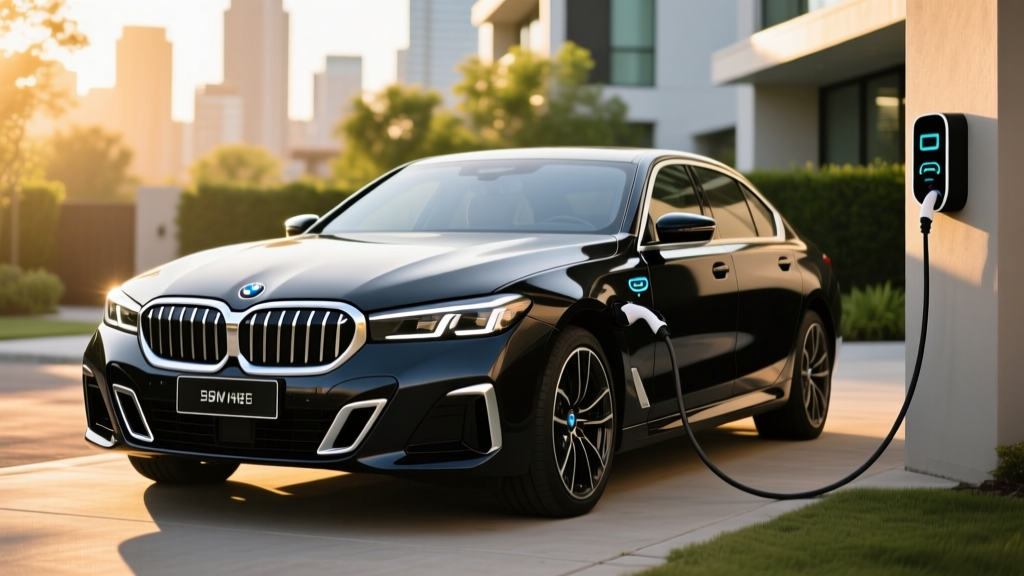
Home charging setup: A Level 2 home charger (240V, 32A or higher) will replenish the 550e's battery in roughly 2.5–3 hours. Installation costs for a home Level 2 setup typically range from $500–$2,500 depending on electrical panel capacity and run length. Most 550e owners install a BMW Wallbox or a third-party unit like a ChargePoint Home Flex.
Pros
- 38-mile electric range covers most commutes
- 483 hp with seamless electric/gas transitions
- B58 inline-six is proven and reliable
- True luxury sedan refinement and tech
- AWD standard (xDrive)
- No range anxiety on long trips
Cons
- $72,200 MSRP exceeds federal tax credit cap
- No DC fast charging capability
- Heavy at ~4,850 lbs affects handling vs gas 5 Series
- Trunk space slightly reduced vs non-hybrid
- Electric range drops significantly in cold weather
- Premium fuel recommended for optimal performance
Frequently Asked Questions
How many MPG does the BMW 550e xDrive hybrid get?
The EPA rates the 2026 BMW 550e xDrive at 64 MPGe when combining electric and gas driving, and 29 MPG combined (30 city / 28 highway) when operating solely on gasoline after the battery depletes. Real-world gas MPG tends to be slightly higher in city driving (30–32 MPG) thanks to regenerative braking, and slightly lower on the highway (25–27 MPG at speeds above 75 mph).
How far can the BMW 550e go on electric only?
The EPA estimates 38 miles of electric-only range. In real-world conditions, expect 30–35 miles in cold weather or at highway speeds, and up to 40 miles in mild conditions with city driving. The electric motor can propel the car up to 87 mph before the gasoline engine engages.
Does the BMW 550e qualify for a federal tax credit?
No. Under current IRS §30D rules, the 550e xDrive's $72,200 MSRP exceeds the $55,000 sedan cap, making it ineligible for the federal new clean vehicle tax credit. State-level incentives may still apply — check your state's energy department for programs with higher MSRP thresholds. Always verify eligibility at IRS.gov.
Is the BMW 550e hybrid reliable, and what does battery replacement cost?
BMW's current-generation PHEV powertrain has shown strong reliability. The B58 inline-six is one of BMW's most durable modern engines, and the electric motor has minimal wear components. The high-voltage battery is warranted for 8 years / 80,000 miles. Out-of-warranty replacement is estimated at $8,000–$14,000, though most owners will never need this service within typical ownership periods.
Should I get the 550e PHEV or the i5 electric?
If you can charge at home and your daily driving is under 250 miles, the i5 eDrive40 offers lower running costs, zero tailpipe emissions, and DC fast charging for road trips. Choose the 550e if you frequently drive beyond EV charging infrastructure, need the flexibility of a gas engine, or prefer the inline-six character. The 550e is the better "one-car solution" for mixed-use buyers who aren't ready to commit fully to electric.
Can the BMW 550e DC fast charge?
No. The 550e xDrive supports AC charging only, up to 7.4 kW on Level 2 (240V). A full charge from empty takes approximately 2.75 hours on a home Level 2 charger. DC fast charging is not available — this is typical for PHEVs with smaller battery packs, as the added hardware cost and weight rarely justify the benefit for a ~19 kWh usable battery.