Quick Verdict: The Audi Q7 Hybrid (TFSI e) at a Glance
The 2026 Audi Q7 Hybrid — officially the Q7 55 TFSI e — is a plug-in hybrid (PHEV), not a conventional hybrid. That distinction matters: it can drive roughly 25 miles on battery power alone before the turbocharged V6 kicks in, and it must be plugged in to unlock its full efficiency potential. For a three-row luxury SUV weighing over 5,200 pounds, the TFSI e powertrain delivers a compelling blend of electric commuting and gas-powered road-trip range, wrapped in Audi's signature interior refinement.
If you're searching for an "Audi Q7 hybrid," this is currently the only electrified Q7 sold in the U.S. Audi discontinued the earlier Q7 e-tron (diesel PHEV) years ago, so the 55 TFSI e is the model to evaluate. Below, we break down every spec that matters: electric range, real-world MPG, charging speed, powertrain output, pricing, and whether it qualifies for federal tax incentives.
HEV vs PHEV: What the Audi Q7 Hybrid Actually Is
Before diving into specs, let's clarify what you're buying:
Conventional Hybrid (HEV)
- Small battery (~1-2 kWh), charged by regenerative braking and the engine
- No plug required — you just fill up with gas
- Modest efficiency gains (typically 20-35% better MPG than gas-only)
- Cannot drive on electric power alone at meaningful speeds or distances
- Example: Toyota Highlander Hybrid
Plug-In Hybrid (PHEV) — Audi Q7 55 TFSI e
- Larger battery (~17.9 kWh usable), charged by plugging in AND regenerative braking
- Electric-only driving for ~25 miles at highway speeds
- Gas engine provides 350+ miles of additional range
- Best efficiency when charged daily; functions as a heavy HEV when battery is depleted
- Eligible for certain incentives (details below)
The Q7 55 TFSI e is firmly in the PHEV camp. If you never plug it in, you'll still get better fuel economy than the gas-only Q7 55 TFSI, but you'll leave most of the efficiency and performance on the table.
Powertrain Specs: 503 Horsepower from a Turbo V6 + Electric Motor
| Specification | 2026 Audi Q7 55 TFSI e |
|---|---|
| Powertrain Type | Plug-In Hybrid (PHEV) |
| Engine | 3.0L Turbocharged V6 (TFSI) |
| Engine Output | 335 hp / 369 lb-ft torque |
| Electric Motor | Integrated in transmission (P2 layout) |
| Motor Output | ~134 hp / 258 lb-ft torque |
| Combined System Output | 503 hp / 516 lb-ft torque |
| Transmission | 8-speed Tiptronic automatic with integrated motor |
| Drivetrain | quattro all-wheel drive |
| 0-60 mph | 5.5 seconds (manufacturer est.) |
| Battery Capacity (Usable) | ~17.9 kWh (lithium-ion) |
| Electric-Only Range (EPA) | ~25 miles |
| Total Combined Range | ~380 miles (electric + gas) |
| Base MSRP | ~$81,000 (Premium Plus trim) |
The P2 hybrid layout places the electric motor between the engine and the transmission, allowing the Q7 to operate in pure EV mode, hybrid mode, or a blended mode where both power sources contribute maximum thrust. The result is a 5,200-pound SUV that hits 60 mph in the mid-5-second range — genuinely quick for its class.
Fuel Economy: EPA MPG and Real-World Expectations
| Mode | City | Highway | Combined |
|---|---|---|---|
| Charge-Sustaining (gas only, depleted battery) | ~20 MPG | ~24 MPG | ~22 MPG |
| MPGe (electric + gas combined, EPA) | ~50 MPGe (varies by drive cycle) | ||
| kWh/100 miles (EV mode) | ~58 kWh/100mi | ||
Here's what those numbers mean in practice. The EPA rates PHEVs using MPGe (miles per gallon equivalent), which blends electric and gas operation into a single figure. For the Q7 55 TFSI e, expect approximately 50 MPGe combined when you start with a full charge and drive within the electric range. Source: fueleconomy.gov.
But MPGe is highly dependent on your driving pattern:
- Daily commute under 25 miles with nightly charging: You'll use almost no gasoline. Effective "MPG" is essentially infinite for weekday driving.
- Mixed driving with occasional charging: Expect 30-40 MPG equivalent on shorter trips where the battery assists heavily.
- Long road trips, no charging: The battery depletes within ~25 miles, and the V6 operates as a conventional hybrid. Expect ~22 MPG combined — about 2-3 MPG better than the gas-only Q7 55 TFSI.
Charging the Q7 PHEV: Level 1, Level 2, and What You Need at Home
| Charging Level | Power | Time (0-100%) | Miles of EV Range per Hour |
|---|---|---|---|
| Level 1 (120V household outlet) | ~1.4 kW | ~13-14 hours | ~2 miles/hr |
| Level 2 (240V, home or public) | ~7.2 kW (onboard charger max) | ~2.5-3 hours | ~9 miles/hr |
| DC Fast Charging | Not supported — no DC fast charge port | ||
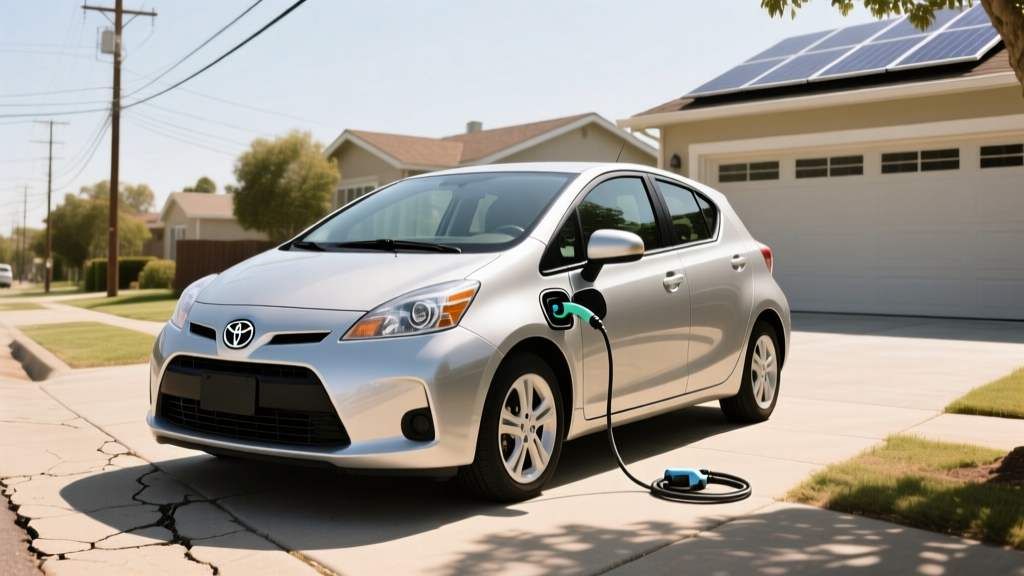
The Q7 55 TFSI e uses a standard J1772 connector for AC charging and does not support DC fast charging. This is typical for PHEVs — the battery is small enough that Level 2 charging refills it in under three hours, which is sufficient for overnight or workplace top-ups.
For home charging, a 240V Level 2 wallbox rated at 32-40 amps (such as the ChargePoint Home Flex or Emporia Vue) will replenish the 17.9 kWh battery in roughly 2.5 hours. Installation costs for a Level 2 home charger typically range from $500 to $2,000 depending on your electrical panel capacity and the distance from the panel to your parking spot. A licensed electrician should evaluate your panel — older homes with 100-amp service may need an upgrade to support a dedicated 240V circuit.
Battery Warranty, Reliability, and Replacement Cost
Hybrid and PHEV battery reliability has improved dramatically over the past decade. Audi's lithium-ion pack in the Q7 TFSI e uses a relatively conservative state-of-charge window (the car never fully charges or fully depletes the battery at the cell level), which reduces degradation. Based on industry data from similar VW Group PHEV systems, owners can expect 85-92% battery capacity retention after 5 years and 60,000 miles of regular use.
If the battery does need replacement out of warranty, expect a cost in the range of $8,000 to $12,000 for the high-voltage pack, plus labor. However, individual cell modules can sometimes be replaced at lower cost. This is a worst-case scenario — the vast majority of PHEV batteries outlast the vehicle's ownership cycle without issue.
For overall vehicle reliability, Audi's Q7 platform (MLB Evo) is well-established. The 3.0L TFSI V6 has been in production since 2018 with iterative refinements. The main reliability considerations are typical German luxury SUV items: air suspension maintenance, electronics complexity, and premium parts costs. IIHS and NHTSA safety ratings should be checked for the latest crash-test results.
Pricing, Trims, and Tax Credit Eligibility
The 2026 Audi Q7 55 TFSI e starts at approximately $81,000 MSRP for the Premium Plus trim, with the Prestige trim pushing past $88,000 with options. This positions it as a premium offering — roughly $15,000 more than the gas-only Q7 55 and $20,000+ above a Toyota Highlander Hybrid.
Federal Tax Credit (§30D) Eligibility
- Vehicle MSRP cap: SUVs must be under $80,000 MSRP. The Q7 55 TFSI e Premium Plus at ~$81,000 likely exceeds this cap — verify the exact base MSRP on Audi's configurator and the IRS qualifying vehicle list.
- Buyer income cap: Modified adjusted gross income must not exceed $150,000 (single), $225,000 (head of household), or $300,000 (married filing jointly).
- Battery sourcing requirements: Critical minerals and battery components must meet escalating domestic-content thresholds. For 2026, these requirements are stringent and may disqualify vehicles with Asian-sourced battery cells.
- Credit amount: Up to $7,500 if all requirements are met, but PHEVs with smaller batteries may qualify for a reduced credit ($3,750 if only one of the two sourcing requirements is met).
- Point-of-sale transfer: If eligible, you can transfer the credit to the dealer at purchase for an immediate price reduction.
Bottom line on tax credits: The Q7 TFSI e's MSRP is right at or above the $80,000 SUV cap, which may disqualify it from the federal §30D credit. Always verify current eligibility on IRS.gov and consult a tax professional before relying on credit assumptions. Some states offer separate PHEV rebates (California, Colorado, and others) that have different MSRP thresholds — check your state's energy office for details.
Who Should Buy the Q7 Hybrid vs. a Full EV or Gas SUV?
Choose the Audi Q7 55 TFSI e (PHEV) if:
- Your daily commute is under 25 miles round-trip and you can charge at home nightly
- You need three rows and regular road-trip capability without planning charging stops
- You want EV-like daily driving but aren't ready to commit to a full BEV
- You value 500+ combined horsepower and Audi's luxury cabin
Choose a Full EV (e.g., Audi Q8 e-tron, Tesla Model X) if:
- You have reliable home Level 2 charging and your trips rarely exceed 250 miles
- You want zero tailpipe emissions and minimal drivetrain maintenance
- You want the lowest per-mile fuel cost (electricity vs. premium gasoline)
Choose the Gas-Only Q7 55 TFSI if:
- You cannot charge at home (apartment, no garage, street parking only)
- Your budget is under $65,000 and you don't need electric-only driving
- You drive predominantly long highway trips where PHEV advantages diminish
Pros
- ~25 miles electric-only covers most daily commutes gas-free
- 503 hp combined — genuinely quick for a three-row SUV
- No range anxiety: gas engine provides 350+ additional miles
- Premium Audi interior with virtual cockpit, MMI, and available air suspension
- Lower daily fuel cost if you charge regularly
Cons
- ~$81,000+ MSRP likely disqualifies it from the federal tax credit
- No DC fast charging — Level 2 only
- 22 MPG on gas-only road trips is modest for the class
- Heavy: 5,200+ lbs affects tire wear and braking distances
- Premium fuel required (91 octane)
Frequently Asked Questions
How many MPG does the Audi Q7 Hybrid get?
The 2026 Q7 55 TFSI e achieves approximately 50 MPGe combined when operating with a full charge in mixed electric/gas driving. Once the battery is depleted, it operates as a conventional hybrid at roughly 22 MPG combined (20 city / 24 highway). Real-world results vary significantly based on how often you charge and your trip length.
How far can the Audi Q7 PHEV go on electric only?
The EPA estimates approximately 25 miles of electric-only range. In real-world conditions, expect 18-20 miles in cold weather and up to 27-28 miles in mild city driving. This is sufficient for most daily commutes if you charge nightly.
Does the Audi Q7 Hybrid qualify for a tax credit?
Federal §30D credit eligibility is uncertain for the Q7 TFSI e due to its ~$81,000 MSRP, which may exceed the $80,000 SUV cap. Battery sourcing requirements add another potential disqualifier. Check the current IRS qualifying vehicle list at irs.gov and consult a tax professional. State-level incentives may still apply regardless of federal eligibility.
Is the Q7 Hybrid battery reliable, and what does replacement cost?
Audi covers the high-voltage battery for 8 years/100,000 miles. Based on VW Group PHEV data, expect 85-92% capacity retention after 5 years. Out-of-warranty replacement costs range from $8,000-$12,000, though partial module repairs may cost less. Most PHEV batteries last the life of the vehicle without major issues.
Can the Audi Q7 Hybrid charge itself without plugging in?
Partially. The Q7 TFSI e uses regenerative braking and the gas engine to maintain the battery at a low state of charge, but it cannot fully recharge the battery without being plugged in. To get the full 25 miles of electric range, you must plug into a Level 1 or Level 2 charger. Without plugging in, it functions as a conventional hybrid with modest efficiency gains.
Hybrid vs PHEV vs EV — which fits my lifestyle?
If you can charge at home and your daily driving is under 30 miles, a PHEV like the Q7 TFSI e gives you electric commuting with gas-engine flexibility. If you never want to visit a gas station and can plan charging on road trips, a full EV (like the Q8 e-tron) offers lower running costs and less maintenance. If you cannot charge at home at all, a conventional hybrid (HEV) is the most practical electrified option — though Audi doesn't currently offer a non-plug-in Q7 hybrid in the U.S.