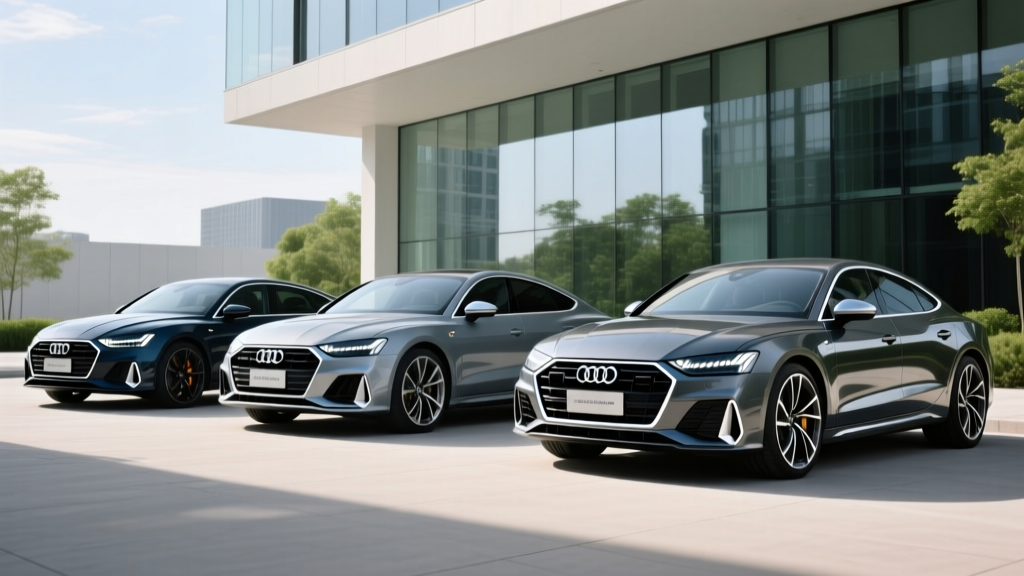
Audi's electrified strategy in the U.S. has pivoted hard toward battery-electric (the e-tron GT, Q8 e-tron, and upcoming PPE-platform models), but for buyers who need the flexibility of gasoline without range compromise, Audi hybrid vehicles remain a compelling middle ground. The 2026 lineup centers on plug-in hybrid (PHEV) variants of the Q5, Q5 Sportback, and A7 — all branded under Audi's TFSI e badge. These pair a turbocharged gasoline engine with an electric motor and a lithium-ion battery you can charge from a wall outlet.
This guide breaks down exactly what Audi offers in the hybrid space for 2026, the real-world MPG and electric-only range you can expect, charging logistics, federal tax credit eligibility under IRS §30D rules, and whether a PHEV, conventional hybrid, or full EV is the right call for your garage.
HEV vs PHEV: What Audi Actually Sells in 2026
Conventional Hybrid (HEV): Uses a small battery recharged by regenerative braking and the engine. You never plug it in. Examples: Toyota RAV4 Hybrid, Honda CR-V Hybrid. Audi does not currently sell a conventional HEV in the U.S. market.
Plug-In Hybrid (PHEV): Carries a larger battery (typically 14–26 kWh usable) that you charge via a plug. Delivers 20–40 miles of electric-only driving before the gasoline engine takes over seamlessly. This is what Audi's TFSI e models are.
If you're cross-shopping Audi against brands like Toyota or Lexus, understand that Audi's hybrid offering is exclusively plug-in. You must have access to a charging outlet (even a standard 120V household plug works, albeit slowly) to extract the electric-only range and efficiency benefits. Without regular charging, a PHEV operates as a heavier, less efficient conventional hybrid.
2026 Audi PHEV Lineup: Specs at a Glance
| Spec | Q5 55 TFSI e | Q5 Sportback 55 TFSI e | A7 55 TFSI e |
|---|---|---|---|
| Powertrain | 2.0L turbo I4 + electric motor | 2.0L turbo I4 + electric motor | 2.0L turbo I4 + electric motor |
| Combined Horsepower | 362 hp / 369 lb-ft | 362 hp / 369 lb-ft | 362 hp / 369 lb-ft |
| Battery (usable) | ~17.9 kWh lithium-ion | ~17.9 kWh lithium-ion | ~17.9 kWh lithium-ion |
| EPA Electric-Only Range | 23 miles | 22 miles | 24 miles |
| EPA Combined MPG (gas) | 25 MPG | 25 MPG | 27 MPG |
| EPA MPGe (electric + gas) | 61 MPGe | 60 MPGe | 63 MPGe |
| 0–60 mph | 5.0 sec | 5.0 sec | 4.9 sec |
| Level 2 Charge Time (0–100%) | ~2.5 hours (7.7 kW) | ~2.5 hours (7.7 kW) | ~2.5 hours (7.7 kW) |
| DC Fast Charging | No | No | No |
| Starting MSRP | $60,795 | $62,495 | $78,595 |
Sources: EPA fueleconomy.gov, Audi USA. Specs reflect 2026 model year where published; some figures may shift with final EPA certification.
MPG Breakdown: EPA Numbers vs. Real-World Driving
| Model | EPA City | EPA Highway | EPA Combined | Real-World Expectation |
|---|---|---|---|---|
| Q5 55 TFSI e | 24 MPG | 27 MPG | 25 MPG | 23–27 MPG (city favors electric assist; highway drops to ~23) |
| Q5 Sportback 55 TFSI e | 24 MPG | 27 MPG | 25 MPG | 23–26 MPG |
| A7 55 TFSI e | 26 MPG | 29 MPG | 27 MPG | 25–29 MPG (sedan aero helps highway) |
Real-World Range Note: The EPA electric-only range of 22–24 miles assumes moderate temperatures and mixed driving. In winter conditions (below 32°F), expect electric-only range to drop to roughly 16–18 miles due to cabin heating demands and battery chemistry limitations. Highway-only driving at 75+ mph also reduces electric range to approximately 17–19 miles. For the gasoline portion, sustained highway driving above 75 mph typically yields 1–3 MPG below the EPA highway sticker.
The key advantage of these PHEVs is daily commuting on electricity. If your round-trip commute is under 20 miles and you charge nightly at home, you may burn gasoline only on weekend road trips. Owners who charge regularly report achieving an effective 50–80 MPGe over months of mixed use — well above the sticker MPGe — because the EPA test cycle doesn't fully capture the benefit of consistent daily charging.
Charging the Audi TFSI e: What You Need at Home
Audi's 2026 PHEVs use a standard J1772 connector for AC charging. Here's what the charging experience looks like:
| Level | Power | Time (0–100%) | Practical Notes |
|---|---|---|---|
| Level 1 (120V outlet) | ~1.4 kW | ~12–14 hours | Overnight top-up works if you start above 30% |
| Level 2 (240V, 32A) | 7.7 kW (onboard max) | ~2.5 hours | Recommended home setup; full charge before bed |
| DC Fast Charge | N/A | N/A | Not supported — CCS DC pins not present |
The onboard charger maxes out at 7.7 kW, meaning even a 48-amp Level 2 home charger won't speed things up beyond what a 32-amp unit delivers. For PHEV owners, a dedicated 32-amp Level 2 wallbox (typically $500–$800 for the unit, plus $500–$2,000 for electrician installation depending on panel proximity) is the sweet spot. You'll arrive home, plug in, and wake up to a full battery every morning.
The absence of DC fast charging is standard for PHEVs in this class — the battery is simply too small to justify the hardware cost and weight. On road trips, the gasoline engine handles all propulsion once the battery depletes, so you won't be waiting at charging stations.
Federal Tax Credit: Does an Audi PHEV Qualify?
IRS §30D Clean Vehicle Credit — 2026 Rules:
- Maximum credit: Up to $7,500 for qualifying new PHEVs/EVs (battery ≥ 7 kWh)
- MSRP cap: SUVs/vans/pickups ≤ $80,000; sedans ≤ $55,000
- Buyer income cap (AGI): $300K joint / $225K head of household / $150K single
- Battery sourcing: Critical minerals and battery components must meet phased-in percentage thresholds from U.S. or FTA partners
- Point-of-sale transfer: Eligible buyers can apply the credit as a down payment reduction at the dealership
- FEOC exclusion: Vehicles with battery components from a "foreign entity of concern" are disqualified
Where the Audi PHEVs stand: The Q5 55 TFSI e (MSRP ~$60,795) falls under the $80,000 SUV cap. The A7 55 TFSI e (MSRP ~$78,595) is classified as a sedan — and the sedan cap is $55,000, which exceeds the A7's base price, making it ineligible for the federal credit unless you find a lower-priced variant (none currently exist). The Q5's eligibility further depends on battery component and critical-mineral sourcing compliance, which Audi sources from a global supply chain. As of early 2026, Audi has not confirmed full §30D compliance for U.S.-spec TFSI e models.
Bottom line: Do not assume the $7,500 credit applies. Check the official fueleconomy.gov tax credit database before purchasing, and confirm with your tax professional. Some states offer additional PHEV rebates (California, Colorado, New York, and others) that may apply regardless of federal eligibility.
Battery Longevity, Warranty, and Replacement Cost
Audi PHEV Battery Warranty: 8 years / 100,000 miles (whichever comes first), covering defects and capacity loss below a specified threshold (typically 70% of original capacity). This aligns with the federal mandate for emissions-related components on PHEVs.
Hybrid/PHEV Battery Replacement Cost: If out of warranty, a TFSI e battery pack replacement runs approximately $8,000–$14,000 including labor, based on current parts pricing and dealership service rates. However, PHEV batteries in the 17–18 kWh range experience less stress than full EV packs because they operate in a narrower state-of-charge window and benefit from active thermal management.
Audi's lithium-ion packs use NMC (nickel-manganese-cobalt) chemistry with liquid thermal management. Real-world degradation data from European-market TFSI e models (sold since 2019) suggests roughly 8–12% capacity loss over 5 years / 60,000 miles under normal use patterns. This translates to losing perhaps 2–3 miles of electric-only range over that period — noticeable but not debilitating.
For reliability broadly, Audi's PHEV powertrains have proven solid, though the added complexity of dual power sources (engine + motor + power electronics + charging hardware) means more potential failure points than a conventional ICE vehicle. The 2.0L TFSI engine is a well-established Audi/VW Group unit. Owner forums and J.D. Power data suggest the main complaints center on software glitches in the energy management system rather than mechanical failures.
Who Should Buy an Audi PHEV — and Who Shouldn't
Choose an Audi TFSI e PHEV if:
- Your daily commute is 15–25 miles round-trip and you can charge at home
- You take regular road trips (200+ miles) and don't want to plan around charging stations
- You want Audi's premium interior, Quattro AWD, and build quality with lower fuel costs
- You live in an area with sparse DC fast-charging infrastructure
- You're not ready to commit to a full EV but want meaningful electric driving
Choose a full EV (e.g., Audi Q8 e-tron) instead if:
- You can install Level 2 charging at home and your daily needs are under 250 miles
- You want zero tailpipe emissions and minimal maintenance (no oil changes, no gas engine upkeep)
- You qualify for the full $7,500 federal tax credit on a compliant EV
Choose a conventional hybrid (e.g., Lexus RX 350h) instead if:
- You cannot charge at home or at work — a PHEV without charging is a worse hybrid
- You want maximum MPG without any plug-in behavior
- Lower purchase price is a priority (conventional hybrids typically cost $5,000–$10,000 less than PHEVs)
Pros and Cons of the 2026 Audi Hybrid Lineup
Pros
- Seamless electric-to-gas transition — no range anxiety on road trips
- 362 combined hp delivers genuinely quick acceleration (0–60 in ~5 sec)
- Premium cabin with Audi Virtual Cockit, MMI, and excellent build quality
- Quattro standard on all TFSI e models — all-weather capability
- 22–24 miles electric-only covers most daily commutes
- Level 2 home charging fully replenishes in just 2.5 hours
Cons
- Starting MSRP above $60K — premium pricing for the segment
- No DC fast charging — road trips are gasoline-only
- A7 sedan exceeds $55K MSRP cap, likely disqualifying it from federal credit
- Electric-only range (22–24 mi) trails newer PHEVs like the Toyota RAV4 Prime (42 mi)
- Cargo space reduced vs. non-hybrid Q5 due to battery placement
- Complex powertrain means potentially higher out-of-warranty repair costs
Frequently Asked Questions
How many MPG does the Audi Q5 hybrid get?
The 2026 Audi Q5 55 TFSI e is EPA-rated at 25 MPG combined (24 city / 27 highway) when operating as a hybrid after the battery is depleted. When factoring in electric-only driving, the combined rating is 61 MPGe. Real-world results vary: owners who charge daily and commute short distances report using gasoline only a few times per month, while those who rarely charge see 22–24 MPG in mixed driving.
How far can the Audi PHEV drive on electric only?
The EPA rates the Q5 55 TFSI e at 23 miles of electric-only range, the Sportback at 22 miles, and the A7 at 24 miles. In real-world conditions, expect 17–19 miles at highway speeds or in cold weather, and up to 25 miles in gentle city driving at moderate temperatures. This is sufficient for many daily commutes but shorter than competitors like the RAV4 Prime (42 mi) or Jeep Wrangler 4xe (22–25 mi).
Does the Audi Q5 TFSI e qualify for the $7,500 federal tax credit?
Possibly, but it's not guaranteed. The Q5's MSRP is under the $80,000 SUV cap, and its battery exceeds 7 kWh. However, eligibility hinges on battery component sourcing and critical-mineral requirements under IRS §30D rules, which have tightened significantly. Verify current status at fueleconomy.gov before purchasing, and consult a tax professional regarding your income eligibility.
Is the Audi hybrid reliable, and what does a battery replacement cost?
Audi's TFSI e powertrain has proven reasonably reliable since its 2019 European introduction, with most issues being software-related rather than mechanical. The high-voltage battery is warranted for 8 years / 100,000 miles. Out-of-warranty replacement costs approximately $8,000–$14,000. NMC chemistry with liquid cooling and a conservative state-of-charge window suggests the battery should retain 85–90% capacity after 8 years of normal use.
Do I need to plug in the Audi hybrid, or does it charge itself?
Audi's U.S. hybrid lineup is exclusively plug-in (PHEV). While regenerative braking and the engine do maintain some charge, you must plug in regularly to access the 22–24 miles of electric-only range and the efficiency benefits. Without plugging in, the car operates as a heavy conventional hybrid and will achieve lower MPG than the EPA sticker suggests. If you cannot plug in at home or work, a conventional hybrid from another brand may be a better fit.
Can the Audi PHEV charge at a Tesla Supercharger or public DC fast charger?
No. Audi's TFSI e models support only AC charging via a J1772 connector (Level 1 and Level 2). They do not have DC fast-charge capability. This is typical for PHEVs — the battery is too small to benefit from DC charging infrastructure. On road trips, the gasoline engine handles propulsion once the battery is depleted.