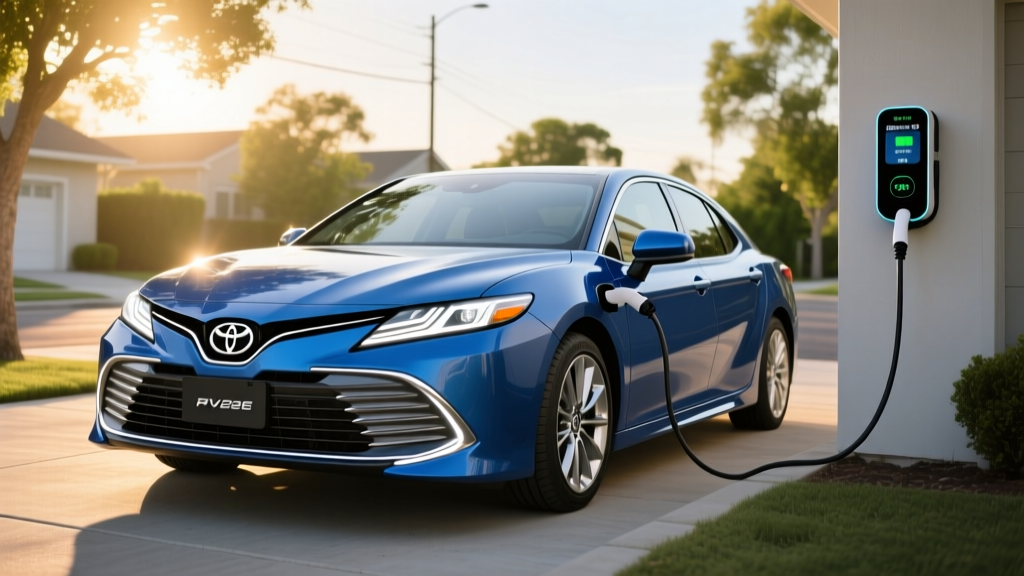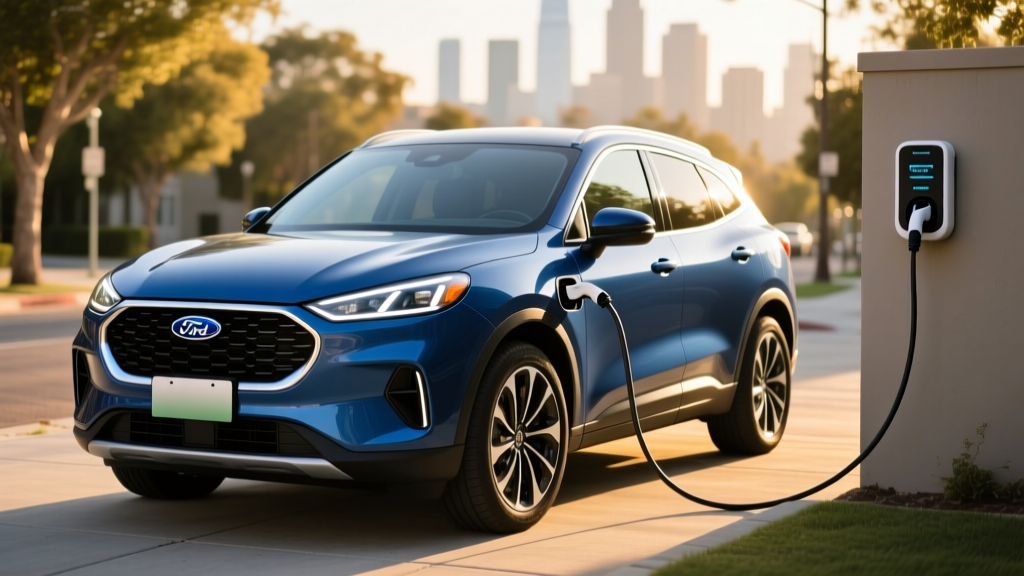
If you've considered a hybrid but hesitated at the thought of a $4,000 battery replacement, you're not alone. The question of whether hybrid cars are expensive to repair is one of the most searched concerns among buyers weighing electrified options against conventional gas vehicles. The short answer: modern hybrids are generally no more expensive to maintain than their gas-only counterparts, and in several key areas, they actually cost less over time.
But the full picture depends on whether you're looking at a conventional hybrid (HEV) or a plug-in hybrid (PHEV), what model you choose, and how long you plan to keep the vehicle. Let's break down the real numbers for 2026.
HEV vs PHEV: Understanding What You're Buying
Before discussing repair costs, it's critical to distinguish between the two types of hybrids on the market, because their complexity — and therefore their long-term cost profile — differs meaningfully.
| Feature | Conventional Hybrid (HEV) | Plug-in Hybrid (PHEV) |
|---|---|---|
| Plug-in charging required? | No — charges via regenerative braking and engine | Yes — plug in for full electric range |
| Battery size | Small (0.5–2.0 kWh) | Larger (10–25+ kWh) |
| Electric-only driving | Very limited (low-speed assist only) | 20–50+ miles on battery alone |
| Complexity | Moderate — proven eCVT designs | Higher — adds onboard charger, larger thermal mgmt |
| Federal tax credit | Not eligible under §30D | May qualify (up to $7,500, subject to rules) |
| Typical battery replacement cost | $1,500–$3,500 | $4,000–$9,000+ |
Conventional hybrids like the Toyota Prius or Honda Accord Hybrid use small batteries that assist the gas engine but never drive the car on electric power alone at meaningful distances. PHEVs like the Toyota RAV4 Prime or Jeep Wrangler 4xe carry much larger batteries enabling genuine electric-only commutes, but that added capacity means higher potential replacement costs down the road.
Hybrid Maintenance Costs vs. Gas Cars: The Real Numbers
Here's where hybrids often surprise skeptics. According to long-term ownership data, hybrids tend to have lower routine maintenance costs than comparable gas-only vehicles for several reasons:
- Regenerative braking saves brake pads. Because the electric motor handles much of the deceleration, friction brakes are used less frequently. It's common for hybrid owners to go 80,000–100,000 miles on original brake pads, compared to 30,000–50,000 miles for many gas cars.
- No starter motor or alternator. The high-voltage system and motor-generator handle engine starting and electrical generation, eliminating two common failure points found in conventional vehicles.
- Engine runs less, reducing wear. In city driving especially, the gas engine shuts off at stops and during low-load conditions, reducing total engine hours and oil degradation.
- eCVT transmissions have fewer moving parts. Toyota's planetary-gear eCVT, used in the Prius and RAV4 Hybrid, has no belts, clutches, or torque converter — components that fail in traditional automatic transmissions.
A 2025 analysis by Consumer Reports found that hybrids cost an average of $0.03–$0.05 per mile to maintain over the first 100,000 miles, compared to $0.05–$0.08 for comparable gas-only models. The savings come primarily from brake and drivetrain longevity.
What About the Hybrid Battery? Replacement Costs and Lifespan
The hybrid battery is the single biggest repair fear — and it's also the most misunderstood. Here's what the data shows for 2026 model-year vehicles:
Federal Hybrid Battery Warranty Mandate
By federal law, all hybrid and PHEV batteries sold in the U.S. must carry a minimum warranty of 8 years or 100,000 miles (whichever comes first). In CARB states (California, New York, Oregon, Washington, and others adopting CARB standards), that extends to 10 years or 150,000 miles. This warranty covers battery capacity loss below a manufacturer-defined threshold — typically 60–70% of original capacity.
Real-world failure data is encouraging. Toyota's nickel-metal hydride (NiMH) and lithium-ion hybrid batteries have demonstrated exceptional longevity:
- Toyota Prius (all generations): Taxi fleet data shows many original batteries lasting 200,000–300,000 miles before significant degradation. Individual cell replacement (rather than the full pack) is increasingly available for $800–$1,500.
- Toyota RAV4 Hybrid/Prime: The 1.6 kWh NiMH (HEV) and 18.1 kWh lithium-ion (PHEV) packs have shown minimal degradation reports through 150,000+ miles in owner forums and long-term tests.
- Honda hybrid systems: Honda's two-motor hybrid system in the Accord and CR-V Hybrid uses lithium-ion packs with similar 8-year/100,000-mile coverage. Replacement costs range from $2,000–$4,000 for HEV packs.
| Model | Battery Type / Size | Warranty | Estimated Replacement Cost (out of warranty) |
|---|---|---|---|
| Toyota Prius (HEV) | Li-ion, 1.3 kWh | 10 yr / 150,000 mi (CARB) | $2,000–$3,000 |
| Toyota RAV4 Prime (PHEV) | Li-ion, 18.1 kWh | 10 yr / 150,000 mi (CARB) | $6,000–$9,000 |
| Honda CR-V Hybrid | Li-ion, 1.1 kWh | 8 yr / 100,000 mi | $1,800–$3,000 |
| Hyundai Tucson PHEV | Li-ion, 13.8 kWh | 10 yr / 100,000 mi | $5,000–$7,500 |
| Ford Escape PHEV | Li-ion, 14.4 kWh | 8 yr / 100,000 mi | $5,500–$8,000 |
The key insight: most hybrid batteries outlast the vehicle itself, or at minimum last well beyond the warranty period. When they do need replacement, aftermarket and refurbished options have driven costs down significantly from the $6,000–$8,000 dealer prices of a decade ago.
Fuel Economy: What EPA Numbers and Real-World MPG Look Like
Hybrid buyers are motivated by fuel savings, and this is where these vehicles consistently deliver — often exceeding EPA estimates in real-world city driving.
| Model | EPA City | EPA Highway | EPA Combined | Real-World Notes |
|---|---|---|---|---|
| 2026 Toyota Prius LE (HEV) | 57 MPG | 56 MPG | 57 MPG | City often exceeds 60 MPG; highway drops to ~48 at 80 mph |
| 2026 Toyota RAV4 Hybrid (HEV) | 41 MPG | 38 MPG | 39 MPG | Achievable year-round; cold weather drops ~3–5 MPG |
| 2026 Honda Accord Hybrid | 51 MPG | 44 MPG | 48 MPG | Strong city performer; highway efficiency trails Prius |
| 2026 Toyota RAV4 Prime (PHEV) | 42 MPG (gas) / 94 MPGe (elec) | 38 MPG (gas) | 38 MPG + 42 mi electric | 42-mi EV range covers most commutes; gas engine rarely needed |
| 2026 Hyundai Tucson PHEV | 37 MPG (gas) / 80 MPGe | 35 MPG (gas) | 36 MPG + 33 mi electric | 33-mi EV range; DC fast charging not available |
For PHEVs, the electric-only range is the critical number. The EPA's fueleconomy.gov database provides verified range and MPGe figures. Here's a closer look at PHEV electric capabilities:
- Toyota RAV4 Prime: 42 miles electric-only on a full charge, using an 18.1 kWh lithium-ion battery. Charges in ~2.5 hours on a 240V Level 2 outlet. No DC fast charging. Combined total range exceeds 600 miles.
- Hyundai Tucson PHEV: 33 miles electric-only, 13.8 kWh battery. Level 2 charging in ~2 hours. No DC fast charging capability.
- Jeep Wrangler 4xe: 22 miles electric-only, 17.3 kWh battery. Level 2 in ~2.5 hours. Combined range ~370 miles.
Powertrain Specs: What's Under the Hood
Modern hybrids pair efficient engines with electric motors for combined output that often exceeds their gas-only siblings. Here's a snapshot of popular 2026 models:
| Model | Engine | Combined HP | 0–60 mph | Drivetrain | Starting MSRP |
|---|---|---|---|---|---|
| Toyota Prius LE | 2.0L 4-cyl + 2 motors | 194 HP | 7.2 sec | FWD (AWD available) | $29,445 |
| Toyota RAV4 Hybrid | 2.5L 4-cyl + 3 motors | 219 HP | 7.4 sec | AWD (standard) | $34,095 |
| Toyota RAV4 Prime | 2.5L 4-cyl + 2 motors | 302 HP | 5.7 sec | AWD (standard) | $44,595 |
| Honda Accord Hybrid | 2.0L 4-cyl + 2 motors | 204 HP | 6.5 sec | FWD | $34,390 |
| Hyundai Tucson PHEV | 1.6L turbo 4-cyl + motor | 261 HP | 7.0 sec | AWD (standard) | $39,995 |
The RAV4 Prime's 302 HP makes it one of the quickest vehicles in Toyota's lineup — a fact that surprises many buyers who associate "hybrid" with sluggish performance.
Tax Credits: Do Hybrids Qualify?
This is where HEVs and PHEVs diverge sharply under current IRS §30D rules:
Federal Tax Credit Eligibility for Hybrids (2026)
- Conventional hybrids (HEVs): Do NOT qualify for the §30D Clean Vehicle Credit. The credit applies only to plug-in vehicles with a minimum battery capacity of 7 kWh.
- Plug-in hybrids (PHEVs): May qualify for up to $7,500, but eligibility depends on multiple factors:
- MSRP cap: SUVs, vans, and trucks must be under $80,000; sedans under $55,000.
- Buyer income cap: Modified AGI must not exceed $150,000 (single), $225,000 (head of household), or $300,000 (joint).
- Battery sourcing: Critical minerals and battery components must meet escalating domestic-sourcing thresholds. Check the specific model's eligibility on the IRS qualified vehicles list, as it changes frequently.
- Point-of-sale transfer: As of 2024, buyers can transfer the credit to the dealer for an immediate price reduction rather than waiting to claim it on their tax return.
Among popular PHEVs, the RAV4 Prime (SUV, $44,595 MSRP) typically qualifies for the full $7,500 for eligible buyers, while the Tucson PHEV ($39,995) also qualifies depending on battery sourcing verification. Always confirm current eligibility before purchasing — the DOE's alternative fuels site maintains an updated list.
Who Should Buy a Hybrid vs. a PHEV vs. a Full EV?
Choose a Conventional Hybrid (HEV) If:
- You can't charge at home or work (no plug needed)
- You want maximum simplicity and proven reliability
- Your budget is under $35,000
- You drive a mix of city and highway and want 40–57 MPG without behavior changes
- You plan to keep the car 10+ years and want the lowest long-term risk
Choose a PHEV If:
- You can install a Level 2 charger at home
- Your daily commute is under 30–45 miles (covers most in EV mode)
- You want electric daily driving but need gas flexibility for road trips
- You want to qualify for the $7,500 federal tax credit
- You're not ready to commit to a full EV but want to reduce gas consumption significantly
Choose a Full EV If:
- You have reliable home charging (Level 2)
- Your daily driving is predictable and within the vehicle's range
- You want zero tailpipe emissions and the lowest per-mile fuel cost
- You're comfortable with public DC fast charging for road trips
- You want the lowest maintenance costs (no oil changes, minimal brake wear, no engine)
Long-Term Repair Outlook: What the Data Says
Aggregating data from Consumer Reports reliability surveys, J.D. Power vehicle dependability studies, and owner-reported maintenance logs, the consensus is clear:
- Hybrid-specific components rarely fail within the first 150,000 miles. The motor-generators, inverters, and power control units have proven extremely durable.
- The 12V auxiliary battery is the most common "hybrid battery" issue. Like any car, hybrids still use a standard 12V battery for accessories and computers. It needs replacement every 3–5 years at typical costs of $150–$300. A dead 12V battery can make the car appear completely non-functional — but it's not the expensive high-voltage pack.
- Inverter/coolant system maintenance is the one hybrid-specific cost. Toyota recommends inverter coolant replacement at 100,000 miles (~$150–$250 at a dealer). Neglecting this can lead to inverter failure, which is costly ($1,500–$3,000). Follow the maintenance schedule.
- Overall 10-year cost of ownership for popular hybrids like the Prius and RAV4 Hybrid consistently ranks among the lowest in their segments, factoring in fuel, maintenance, depreciation, and repairs.
Frequently Asked Questions
Are hybrid cars expensive to repair compared to gas cars?
On average, no. Hybrids typically have lower routine maintenance costs due to reduced brake wear, no starter/alternator, and less engine runtime. The high-voltage battery is the one unique cost risk, but most last well beyond 150,000 miles and are covered by 8–10 year warranties.
How much does it cost to replace a hybrid battery?
For conventional hybrids (HEVs), replacement runs $1,500–$3,500. For PHEVs with larger packs, expect $4,000–$9,000. Refurbished and aftermarket options are increasingly available at 30–50% below dealer pricing. Most batteries never need replacement during typical ownership.
Do hybrids need to be plugged in?
Conventional hybrids (HEVs) never need plugging in — they charge their small battery through regenerative braking and the gas engine. Plug-in hybrids (PHEVs) benefit greatly from plugging in to access their electric-only range, but can still operate as regular hybrids on gas alone if you don't charge.
What hybrid has the lowest repair costs?
The Toyota Prius consistently ranks among the cheapest vehicles to maintain across all powertrains, gas or hybrid. Its eCVT transmission, proven battery chemistry, and massive service network keep costs low. The RAV4 Hybrid follows closely for SUV buyers.
Is a hybrid worth it if I keep my cars for 10+ years?
Yes — long-term ownership is where hybrids shine. The fuel savings compound over time (often $500–$1,200/year depending on mileage and gas prices), maintenance costs stay low, and the battery will likely last the duration. If you plan to keep a car past 150,000 miles, a Toyota or Honda hybrid is among the safest bets in the market.
Do PHEVs qualify for the $7,500 federal tax credit?
Many do, but eligibility depends on MSRP caps, buyer income limits, and battery component/critical-mineral sourcing requirements under IRS §30D rules. Always verify the specific model year's eligibility on the IRS qualified vehicle list before purchasing, as sourcing compliance can change.