Quick Verdict: The Audi Q5 PHEV in 2026
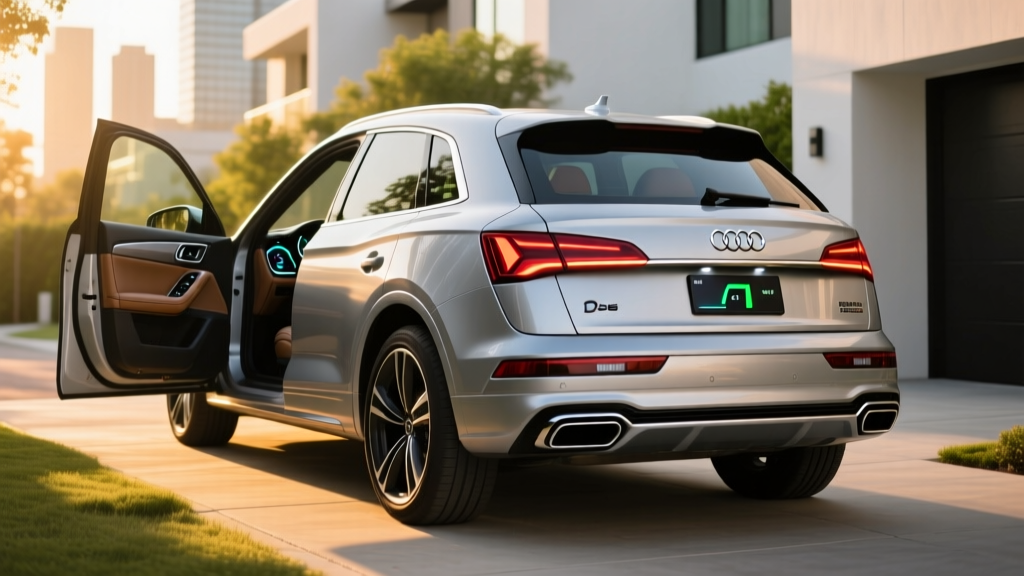
The 2026 Audi Q5 55 TFSI e quattro is a plug-in hybrid (PHEV) that bridges the gap between a conventional luxury SUV and a full battery-electric vehicle. With 23 miles of EPA-rated electric-only range, 362 combined horsepower, and standard quattro all-wheel drive, it targets buyers who want daily electric commuting without sacrificing road-trip flexibility. But at a starting MSRP near $59,000 and with a modest electric range compared to rivals like the BMW X5 xDrive50e, the Q5 PHEV demands a careful cost-benefit analysis before you sign.
2026 Audi Q5 PHEV Specs at a Glance
| Specification | 2026 Audi Q5 55 TFSI e quattro |
|---|---|
| Powertrain | 2.0L turbo I4 + electric motor, PHEV |
| Combined Horsepower | 362 hp / 369 lb-ft torque |
| Battery (usable) | 14.1 kWh (NMC lithium-ion) |
| EPA Electric-Only Range | 23 miles |
| EPA MPGe (electric+gas) | 61 MPGe combined |
| EPA MPG (gas-only, charge-depleted) | 25 city / 27 hwy / 26 combined |
| Total Combined Range | ~410 miles (est.) |
| 0–60 mph | 5.0 seconds |
| AC Charging (Level 2) | 7.2 kW onboard charger, ~2.5 hr 0–100% |
| DC Fast Charging | Not available |
| Drivetrain | quattro AWD (standard) |
| Cargo Volume (rear seats up) | 24.7 cu ft |
| Base MSRP (Premium trim) | $58,995 |
| Federal §30D Tax Credit | Eligible for up to $3,750 (see details below) |
| Hybrid Battery Warranty | 8 years / 100,000 miles |
Fuel Economy: Real-World MPG vs. EPA Estimates
The EPA rates the 2026 Q5 55 TFSI e at 61 MPGe combined when operating in blended electric-and-gas mode, and 26 MPG combined (25 city / 27 highway) once the battery is depleted and you're running on the 2.0L turbo engine alone. According to EPA data on fueleconomy.gov, those figures place the Q5 PHEV ahead of the gas-only Q5 45 TFSI (rated at 25 MPG combined) but behind the more efficient BMW X5 xDrive50e (56 MPGe, but with a far longer 38-mile electric range).
- City driving with nightly charging: If your commute is under 23 miles round-trip and you charge at home, you may use almost zero gasoline for weeks. Expect effective "MPG" well above the EPA figure because you're running on electricity most of the time.
- Highway road trips (battery depleted): Expect 24–26 MPG at 70–75 mph. PHEVs lose their electric advantage on sustained highway runs, and the added battery weight slightly hurts efficiency versus a gas-only Q5.
- Cold weather (below 30°F): Electric-only range drops to roughly 16–18 miles due to battery chemistry limitations and cabin-heating demand. Gas-mode MPG may dip to 22–23 in freezing city driving.
One advantage PHEVs hold over EPA estimates: in stop-and-go city traffic, regenerative braking recaptures energy more effectively than the EPA test cycle fully captures. Many PHEV owners report beating the gas-mode city MPG by 1–2 MPG in real urban driving, though highway numbers tend to match or slightly trail the sticker.
Electric-Only Range and Charging: What to Expect
The Q5 55 TFSI e carries a 14.1 kWh usable battery (gross capacity approximately 17.9 kWh, with a buffer to protect longevity). That translates to an EPA-rated 23 miles of electric-only range. In practice, that means most owners with a sub-20-mile one-way commute can complete daily driving on electricity alone — provided they charge at home overnight.
MPGe explained: MPGe (miles per gallon equivalent) converts electrical energy into a gasoline-equivalent figure. At 61 MPGe, the Q5 PHEV uses about 33 kWh of electricity per 100 miles when running in electric mode — roughly comparable to a small EV, though the heavier SUV body limits efficiency.
Charging Speeds and Times
| Charging Level | Power (kW) | Time (0–100%) | Notes |
|---|---|---|---|
| Level 1 (120V household) | ~1.2 kW | ~12 hours | Emergency/trickle only |
| Level 2 (240V home/public) | 7.2 kW | ~2.5 hours | Recommended for daily use |
| DC Fast Charge | N/A | N/A | Not supported on Q5 PHEV |
The 7.2 kW onboard charger is adequate for overnight replenishment on a Level 2 home station. However, the lack of DC fast charging is a notable limitation — competitors like the Chrysler Pacifica PHEV and some newer PHEVs offer DC capability. For Q5 owners, destination charging (grocery store Level 2, workplace chargers) can top up the battery during the day, but you won't get a quick boost at a highway DC fast-charging station.
Powertrain and Performance
The Q5 55 TFSI e pairs a 2.0-liter turbocharged inline-four (producing 261 hp on its own) with an electric motor integrated into the 7-speed S tronic dual-clutch transmission. Combined system output is 362 horsepower and 369 lb-ft of torque, routed through Audi's quattro all-wheel-drive system.
The result is a 0–60 mph time of approximately 5.0 seconds — meaningfully quicker than the gas-only Q5 45 TFSI (which hits 60 in about 5.7 seconds). The electric motor provides instant low-end torque, making the PHEV feel noticeably punchier in city acceleration and highway merging. In EV mode, the Q5 can reach up to 84 mph on electric power alone, sufficient for most suburban and highway driving.
Drive modes include EV (electric-only), Hybrid (automatic blending), Battery Hold (reserves charge for later), and Battery Charge (uses the engine to replenish the battery on the highway). Smart PHEV owners use Battery Hold when entering city limits after a highway stretch, saving their electric miles for stop-and-go traffic where regenerative braking maximizes efficiency.
Pricing, Trims, and Tax Credit Eligibility
The 2026 Audi Q5 55 TFSI e is offered in three trims:
- Premium: $58,995 MSRP (includes destination)
- Premium Plus: ~$63,495 MSRP
- Prestige: ~$68,295 MSRP
Federal Tax Credit Under IRS §30D
For 2026, the Audi Q5 55 TFSI e qualifies for a partial federal plug-in hybrid tax credit of up to $3,750 under IRS §30D clean vehicle rules. Here's why it's partial rather than the full $7,500:
- ✅ Vehicle type: Qualifies as a new clean vehicle (PHEV with ≥7 kWh battery)
- ✅ MSRP cap: SUVs capped at $80,000 — all Q5 PHEV trims fall under
- ✅ Battery capacity: 17.9 kWh gross exceeds the 7 kWh minimum
- ⚠️ Critical minerals requirement: Partially met — earns $3,750 of the $7,500 maximum
- ❌ Battery component sourcing: Does not fully meet the domestic-content threshold for the additional $3,750
- ⚠️ Buyer income caps: AGI must not exceed $150K (single) / $300K (joint) — verify with your tax professional
- ✅ Point-of-sale transfer: You can transfer the credit to the dealer for an upfront price reduction
Note: §30D rules are subject to legislative changes. Always verify current eligibility on irs.gov and consult a qualified tax professional before relying on credit amounts for purchase decisions.
After the $3,750 credit, the effective starting price of the Q5 PHEV Premium drops to approximately $55,245 — still a significant premium over the gas-only Q5 45 TFSI (starting around $46,000) but competitive within the luxury PHEV segment.
Battery Warranty, Reliability, and Replacement Cost
Reliability outlook: Audi's 2.0L TFSI engine family is well-established, and the PHEV powertrain has been in the Q5 lineup since the 2020 model year with iterative updates. The main reliability considerations for any PHEV are:
- Battery degradation: NMC chemistry in the Q5 PHEV typically sees 5–10% capacity loss over 8 years under normal use. Given the modest 23-mile range, a 10% loss means roughly 20–21 miles of range — still usable for short commutes.
- Out-of-warranty replacement cost: If the high-voltage battery requires replacement after the warranty expires, expect $8,000–$12,000 for the battery pack plus labor. This is a real long-term ownership cost to factor in if you plan to keep the vehicle past 100,000 miles.
- Dual-system maintenance: PHEVs have both an internal-combustion engine and an electric powertrain. You still need oil changes, spark plugs, and transmission service on the gas side — though the engine runs fewer total miles than in a pure ICE vehicle, potentially extending service intervals.
Audi's broader vehicle warranty covers 4 years / 50,000 miles bumper-to-bumper. For buyers prioritizing long-term reliability data, IIHS crash-test ratings and owner-survey platforms like Consumer Reports provide model-year-specific insights as they become available.
Q5 PHEV vs. Full EV vs. Gas Q5: Which Fits You?
Choose the Q5 PHEV If:
- Your daily commute is under 25 miles round-trip
- You have home Level 2 charging access
- You take 3+ road trips per year and don't want to plan around DC chargers
- You want AWD and luxury without full-EV pricing
- You live in an area with sparse public charging infrastructure
Look at a Full EV Instead If:
- Your daily drive exceeds 30 miles (the Q5's 23-mi EV range won't cover it)
- You want zero gasoline expenses and zero oil changes
- You qualify for the full $7,500 federal credit on an EV like the Audi Q8 e-tron or Tesla Model Y
- You want 250+ miles of range and DC fast charging for road trips
- You prioritize lowest total cost of ownership over 5+ years
Stick With the Gas-Only Q5 45 TFSI If:
- You cannot install a home charger (apartment, no garage, no 240V access)
- Your budget is under $50,000 and you don't want to stretch for the PHEV premium
- You drive mostly highway miles where PHEV electric range provides minimal benefit
- You plan to own the vehicle 3 years or less (the PHEV premium is hard to recoup in fuel savings in a short ownership window)
Pros and Cons
Pros
- Strong 362 hp with seamless electric torque fill
- 23-mile EV range covers most daily commutes
- Standard quattro AWD for all-weather confidence
- Premium cabin quality, quiet electric-mode operation
- No range anxiety — 410+ miles total range with gas tank
- Eligible for partial $3,750 federal tax credit
Cons
- 23-mile EV range trails BMW X5 PHEV (38 mi) and Toyota RAV4 Prime (42 mi)
- No DC fast charging — strictly Level 2 or Level 1
- $13,000+ premium over gas-only Q5 45 TFSI
- Cargo space reduced by battery (24.7 vs 25.8 cu ft gas model)
- Partial $3,750 credit, not the full $7,500
- Out-of-warranty battery replacement could exceed $10,000
Frequently Asked Questions
How many MPG does the Audi Q5 Hybrid get?
The 2026 Audi Q5 55 TFSI e is rated at 61 MPGe combined when using both electric and gas power, and 26 MPG combined (25 city / 27 highway) when running on gasoline alone after the battery is depleted. Real-world city MPG in gas mode may slightly exceed the EPA estimate thanks to regenerative braking, while highway driving typically matches or falls 1–2 MPG short.
How far can the Q5 PHEV go on electric only?
The EPA rates it at 23 miles of electric-only range. In mild weather with conservative driving, you may see 24–26 miles. In cold weather (below 30°F) or with aggressive acceleration, expect 16–19 miles. The gasoline engine seamlessly takes over when the battery is depleted — you don't need to stop and plug in.
Does the Audi Q5 Hybrid qualify for a tax credit?
Yes, partially. Under current IRS §30D rules for 2026, the Q5 PHEV qualifies for up to $3,750 in federal tax credit (half of the maximum $7,500) because it meets the critical-minerals requirement but not the full battery-component sourcing threshold. Buyer income caps apply ($150K single / $300K joint AGI), and the credit can be transferred to the dealer as a point-of-sale discount. Always verify eligibility with a tax professional and the IRS clean vehicle credit page.
Is the Audi Q5 PHEV reliable, and what does a battery replacement cost?
The Q5 PHEV powertrain has been in production since 2020 with incremental refinements. Audi's hybrid battery warranty covers 8 years / 100,000 miles with a 70% capacity-retention guarantee. Out-of-warranty high-voltage battery replacement runs $8,000–$12,000. The 2.0L TFSI engine is well-proven, though PHEV ownership means maintaining both a gas engine and an electric drivetrain simultaneously.
Should I buy the Q5 PHEV or a full electric SUV?
If you have reliable home charging, a commute under 23 miles, and regularly drive long distances where charging infrastructure is uncertain, the Q5 PHEV offers a practical bridge. If your commute exceeds the electric range, you want zero gasoline costs, or you have access to DC fast charging on your regular routes, a full EV like the Audi Q8 e-tron (285-mile range), BMW iX, or Tesla Model Y will deliver a more transformative ownership experience with lower long-term running costs.
Can the Audi Q5 PHEV charge at a Tesla Supercharger or DC fast charger?
No. The Q5 55 TFSI e does not support DC fast charging of any kind — not CCS, not NACS (Tesla), not CHAdeMO. It can only charge via AC power: Level 1 (120V household outlet) or Level 2 (240V home or public AC charger) using its standard J1772 connector. This is the single biggest practical limitation of the Q5 PHEV compared to full EVs and some rival PHEVs.