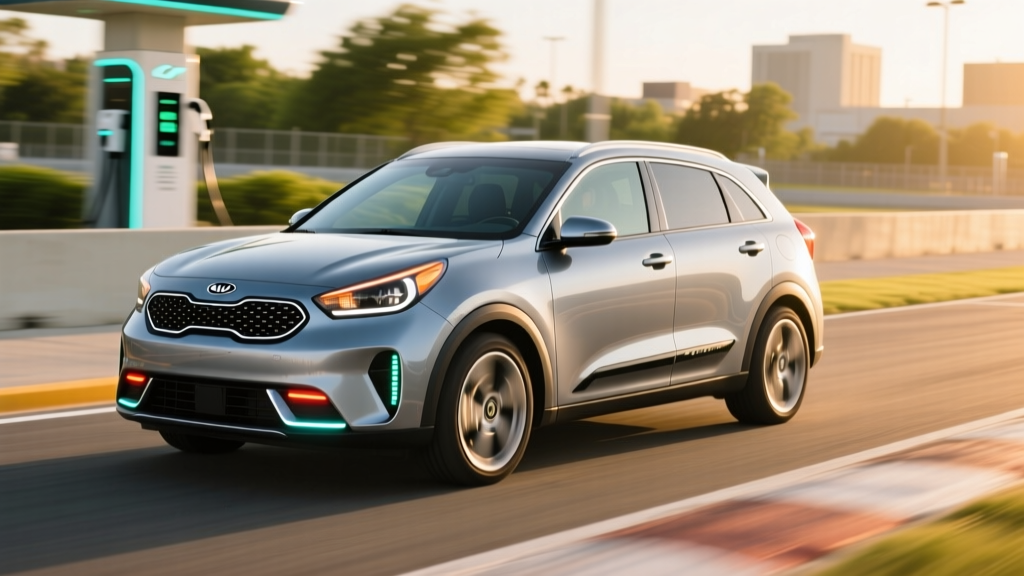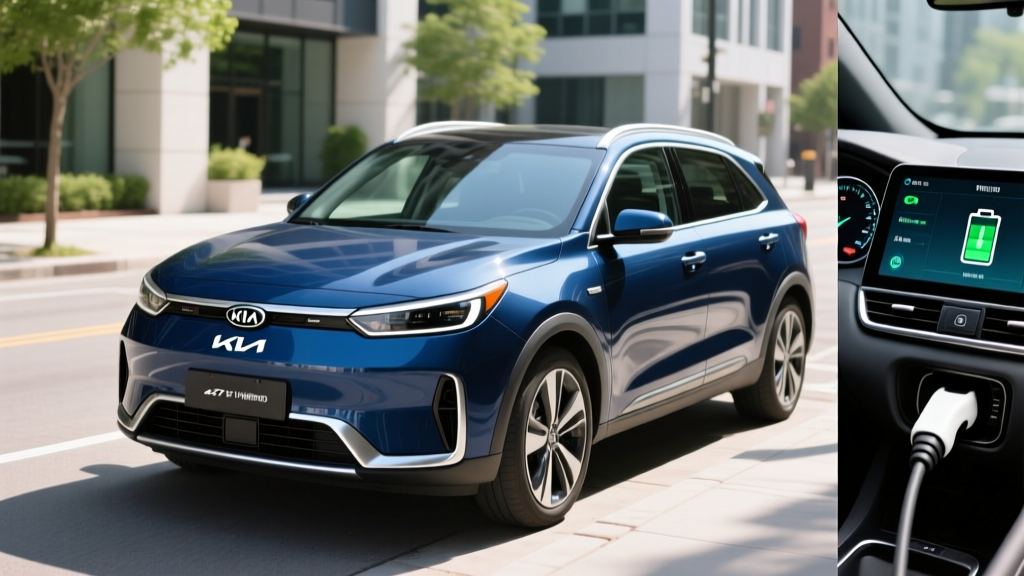
The Kia Niro has occupied a specific niche since its debut: a dedicated hybrid crossover for buyers who want efficiency without the complexity or cost of a full battery-electric vehicle. The 2027 Kia Niro Hybrid carries that formula forward with updated styling, refined powertrain tuning, and the same core promise — excellent fuel economy in a practical, compact crossover package. If you've been searching for the 2027 Kia Niro Hybrid to understand whether it's the right fit versus a plug-in hybrid or a full EV, this guide breaks down every number that matters.
Before we get into the specs, a critical distinction: Kia sells the Niro in two electrified flavors — a conventional hybrid (HEV) and a plug-in hybrid (PHEV). They share a platform and a 1.6-liter engine, but their drivetrains, batteries, and daily-use profiles are very different. We'll cover both, with emphasis on the HEV since that's what most Niro buyers are shopping for.
HEV vs PHEV: Which Niro Is Which?
This confusion trips up a lot of shoppers at the dealership, so let's make it permanent:
Niro HEV (Conventional Hybrid)
- No plug required. The battery charges via regenerative braking and the gasoline engine.
- Smaller battery: ~1.56 kWh lithium-ion pack.
- Electric-only driving: Brief, low-speed EV assists only — not designed for sustained electric-only travel.
- Refueling: Gas station only, like any conventional car.
- Best for: Drivers without home charging access, apartment dwellers, or anyone who wants hybrid efficiency with zero lifestyle change.
Niro PHEV (Plug-In Hybrid)
- Plugs in. Charges from a wall outlet, Level 2 charger, or public station.
- Larger battery: ~11.1 kWh usable lithium-ion pack.
- Electric-only range: EPA-estimated 33 miles on battery alone before the gas engine engages.
- Total range: ~430 miles combined (electric + gasoline).
- Best for: Drivers with home or workplace charging who want daily electric commuting with gas-engine backup for longer trips.
Neither version supports DC fast charging. The PHEV charges via J1772 connector at Level 1 (120V, ~10 hours from empty) or Level 2 (240V, ~2 hours 45 minutes). For a PHEV with an 11.1 kWh battery, the lack of DC fast charging is normal — the battery is small enough that Level 2 covers overnight needs easily.
2027 Kia Niro Hybrid MPG: EPA Numbers and Real-World Results
Fuel economy is the Niro HEV's headline feature, and the 2027 model continues with the proven 1.6-liter GDI four-cylinder paired with a 32 kW (43 hp) electric motor and a 6-speed dual-clutch automatic transmission. Combined system output is 139 horsepower and 195 lb-ft of torque.
| Trim | City MPG | Highway MPG | Combined MPG |
|---|---|---|---|
| LX / EX | 53 | 54 | 53 |
| EX Touring / SX Touring | 49 | 52 | 50 |
The split between trims comes down to wheel size: the base LX and EX ride on 16-inch wheels with lower rolling resistance, while the Touring trims step up to 18-inch alloys, which costs about 3 MPG combined. Source: fueleconomy.gov.
Real-World MPG: What Owners Actually See
Here's where hybrids consistently surprise first-time buyers: real-world city MPG often exceeds the EPA sticker. The EPA city test includes frequent stops and low-speed driving — exactly the conditions where regenerative braking and electric-motor assist shine. Many Niro HEV owners report 55–58 MPG in suburban and city driving during mild weather.
Highway driving tells a different story. At sustained 70–80 mph speeds, the hybrid system's advantage diminishes because the electric motor contributes less and aerodynamic drag dominates. Expect 46–50 MPG on the highway in real-world conditions, particularly with roof racks, headwinds, or cold temperatures. In winter conditions (below 35°F), plan for a 5–10% reduction across the board as the engine runs more frequently to provide cabin heat and maintain battery temperature.
Niro PHEV Fuel Economy and Electric Range
| Metric | Value |
|---|---|
| Electric-only range | 33 miles |
| Combined MPGe (electric + gas) | 108 MPGe |
| Gas-only combined MPG (after battery depleted) | 48 MPG |
| Total combined range | ~430 miles |
The PHEV's 1.6-liter engine is paired with a more powerful 62 kW (83 hp) electric motor, bringing combined output to 180 horsepower and 195 lb-ft of torque. That extra electric muscle makes the PHEV noticeably quicker off the line — expect 0–60 mph in roughly 7.5 seconds versus about 9.5 seconds for the HEV.
Powertrain and Driving Impressions
The Niro's 6-speed dual-clutch transmission (DCT) sets it apart from competitors like the Toyota Corolla Cross Hybrid, which uses a continuously variable transmission (CVT). The DCT delivers more natural, stepped gear changes — no rubber-band drone under acceleration — and contributes to a more engaging driving feel. Trade-off: occasional low-speed hesitation from stop, typical of DCT designs, though Kia's tuning has smoothed this considerably in the current generation.
Ride quality is comfort-oriented. The Niro absorbs bumps competently but isn't trying to be a sporty crossover. Steering is light and predictable. The cabin is well-insulated at city speeds, though wind and tire noise become noticeable above 65 mph. For a compact crossover focused on efficiency, the driving experience is a pleasant surprise — it feels more refined than its price suggests.
Pricing, Trims, and Tax Credit Eligibility
Here's where the HEV vs PHEV decision gets financial. The 2027 Niro Hybrid (HEV) starts at an estimated $28,490 MSRP for the LX trim, rising to approximately $36,090 for the fully loaded SX Touring. The Niro PHEV starts around $35,590 for the EX trim and tops out near $40,990 for the SX Prestige.
| Specification | Niro HEV | Niro PHEV |
|---|---|---|
| Combined HP | 139 hp | 180 hp |
| Combined Torque | 195 lb-ft | 195 lb-ft |
| Battery Capacity | 1.56 kWh | 11.1 kWh |
| EPA Combined MPG / MPGe | 53 MPG (LX/EX) | 108 MPGe / 48 MPG gas-only |
| EV-Only Range | N/A | 33 miles |
| 0–60 mph (est.) | ~9.5 sec | ~7.5 sec |
| Starting MSRP | ~$28,490 | ~$35,590 |
| Drivetrain | FWD | FWD |
Does the 2027 Kia Niro Qualify for a Federal Tax Credit?
The Niro HEV does not qualify for the federal §30D clean vehicle tax credit. Conventional hybrids are not eligible — the credit applies only to plug-in electric vehicles (BEVs and PHEVs) that meet battery-sourcing, critical-mineral, MSRP, and buyer-income requirements.
The Niro PHEV may qualify for up to $3,750 under current IRS rules, depending on battery-component and critical-mineral sourcing compliance. Key eligibility requirements for the §30D credit include:
- MSRP cap: Vans, SUVs, and pickups up to $80,000; sedans up to $55,000. The Niro PHEV clears this easily.
- Buyer income cap: Modified AGI must not exceed $150,000 (single), $225,000 (head of household), or $300,000 (joint filers).
- Battery sourcing: Must meet critical-mineral and battery-component requirements that phase in annually through 2030. Sourcing compliance varies by production batch — confirm with your dealer at purchase.
- Point-of-sale transfer: You can transfer the credit to the dealer at purchase for an immediate price reduction, or claim it on your tax return.
Always verify current eligibility on IRS.gov before purchasing, as sourcing rules tighten annually and a vehicle's eligibility status can change between model years. Many states also offer additional rebates or HOV-lane access for PHEVs — check your state's energy office or AFDC state law database for specifics.
Battery Warranty, Lifespan, and Replacement Cost
Kia Hybrid Battery Warranty
HEV: 10 years / 100,000 miles (whichever comes first), covering defects and capacity loss below a defined threshold.
PHEV: 10 years / 100,000 miles, covering the high-voltage lithium-ion traction battery against defects and excessive degradation.
Hybrid system components (inverter, motor, control unit): 10 years / 100,000 miles.
Standard vehicle warranty: 5 years / 60,000 miles bumper-to-bumper; 10 years / 100,000 miles powertrain.
Kia's hybrid battery warranty is among the strongest in the segment, matched only by Hyundai (its corporate sibling). The 10-year/100,000-mile coverage significantly reduces the financial risk that worries many hybrid buyers.
How Long Will the Niro Hybrid Battery Last?
Modern lithium-ion hybrid batteries are engineered for longevity. The Niro's battery management system maintains a state-of-charge buffer — it never allows the battery to charge to a true 100% or discharge to 0% — which dramatically extends cycle life. Based on data from the current-generation Niro and similar Kia/Hyundai hybrid platforms, expect 12–15 years of service life before significant degradation, with many units lasting the life of the vehicle.
Hybrid batteries experience less stress than full EV batteries because the charge/discharge cycles are shallow and frequent rather than deep. The HEV's 1.56 kWh battery undergoes micro-cycles throughout every drive, which is far less taxing than draining a full EV battery from 100% to 10%.
Battery Replacement Cost
If the high-voltage battery does need replacement outside warranty, expect $2,000–$3,500 for the HEV battery and $4,500–$6,500 for the PHEV battery, including labor. These are ballpark figures based on current dealer pricing and may vary. Third-party hybrid battery refurbishers offer rebuilt units for 30–50% less, though warranty coverage on refurbished units varies.
Who Should Choose the Niro Hybrid vs a PHEV or Full EV?
Choose the Niro HEV if:
- You don't have access to home or workplace charging (apartment, street parking, no garage outlet).
- You want maximum MPG with zero behavior change — just fill up at any gas station.
- Your budget is under $30,000 and you want the lowest upfront cost in the segment.
- You drive a mix of city and highway and want consistent 50+ MPG in daily use.
Choose the Niro PHEV if:
- You can charge at home (even a standard 120V outlet works overnight for 33 miles of range).
- Your daily commute is under 30 miles round-trip — you'll rarely burn gas on weekdays.
- You want the $3,750 federal tax credit (subject to eligibility) to narrow the price gap with the HEV.
- You take occasional long road trips and want gas-engine backup without range anxiety.
Choose a Full EV (like the Kia Niro EV or EV6) if:
- You have reliable home Level 2 charging and your daily driving is under 200 miles.
- You want the lowest per-mile fuel cost (electricity at $0.13/kWh costs roughly $0.04/mile vs $0.10–$0.12/mile for the HEV at $3.50/gal).
- You want to eliminate oil changes, spark plugs, and emissions system maintenance entirely.
- You qualify for the full $7,500 federal EV tax credit on a qualifying BEV.
Pros and Cons: 2027 Kia Niro Hybrid
What We Like
- Class-leading city MPG: 53 EPA city on LX/EX trims is exceptional.
- Strong warranty: 10yr/100k mi on battery and hybrid components reduces ownership risk.
- Practical cargo space: 22.8 cu ft behind rear seats, 63.7 cu ft folded — competitive for the segment.
- DCT over CVT: More natural acceleration feel than competitors with CVTs.
- Low starting price: Under $29,000 makes it one of the most affordable hybrid crossovers available.
- Standard safety tech: Forward collision avoidance, lane keeping, blind-spot monitoring across all trims.
Where It Falls Short
- No AWD option: FWD only — a dealbreaker for buyers in heavy snow regions.
- Modest power: 139 hp in the HEV means highway merging requires planning.
- Higher trims lose MPG: 18-inch wheels on Touring trims drop combined to 50 MPG.
- PHEV lacks DC fast charging: Not an issue for overnight home charging, but limits public-charging utility on road trips.
- Road noise: Cabin insulation is adequate but not premium at highway speeds.
- No federal credit for HEV: Only the PHEV version is eligible for §30D.
Frequently Asked Questions
How many MPG does the 2027 Kia Niro Hybrid get?
The 2027 Kia Niro HEV achieves an EPA-estimated 53 city / 54 highway / 53 combined MPG on LX and EX trims. Touring trims with 18-inch wheels drop to 49 city / 52 highway / 50 combined. In real-world city driving, many owners report exceeding the EPA city number, reaching 55–58 MPG. Highway driving typically yields 46–50 MPG.
How far can the Niro PHEV go on electric only?
The 2027 Niro PHEV delivers an EPA-estimated 33 miles of electric-only range on a full charge. That covers most daily commutes without engaging the gasoline engine. Once the battery depletes, the PHEV operates as a conventional hybrid and achieves 48 MPG combined. Total range is approximately 430 miles.
Do I need to plug in the Niro Hybrid (HEV)?
No. The conventional Niro HEV charges its battery entirely through regenerative braking and the gasoline engine. There is no plug, no charging cable, and no need for any charging infrastructure. You refuel at a gas station like any other car. Only the Niro PHEV requires (and benefits from) plugging in.
Is the Kia Niro Hybrid reliable?
The Niro platform has a strong reliability record since its introduction. Kia's 10-year/100,000-mile hybrid battery and powertrain warranty provides substantial coverage. The 1.6-liter GDI engine and 6-speed DCT are proven components shared across the Kia/Hyundai lineup. The Niro has consistently earned strong safety ratings from both NHTSA and IIHS. Long-term hybrid battery data from similar platforms suggests 12–15+ years of usable life.
What does a Niro Hybrid battery replacement cost?
Outside of warranty coverage, a replacement high-voltage battery for the Niro HEV costs approximately $2,000–$3,500 installed. The PHEV battery runs $4,500–$6,500. However, given Kia's 10-year/100,000-mile warranty and the proven longevity of modern hybrid batteries, most owners will never face an out-of-pocket battery replacement.
Does the 2027 Kia Niro Hybrid qualify for a tax credit?
The Niro HEV (conventional hybrid) does not qualify for the federal §30D clean vehicle tax credit. The Niro PHEV may qualify for up to $3,750, subject to IRS battery-sourcing requirements, buyer income limits ($150K single / $300K joint), and the $80,000 MSRP cap for SUVs. Verify eligibility at IRS.gov before purchase, and check your state for additional hybrid/PHEV incentives.
How does the Niro Hybrid compare to the Toyota Corolla Cross Hybrid?
The Corolla Cross Hybrid offers standard AWD (the Niro is FWD only) and achieves 42 MPG combined. The Niro HEV is more fuel-efficient at 53 MPG combined, starts at a lower price, and offers a DCT instead of a CVT. If you need AWD for snow, the Toyota wins. If you prioritize MPG, cargo space, and value, the Niro is the stronger pick.
Is the Niro Hybrid good for long road trips?
Yes. With a 13.2-gallon fuel tank and 53 MPG combined, the Niro HEV can travel roughly 700 miles between fill-ups — one of the longest effective ranges in any vehicle class. Highway comfort is adequate, though road noise is noticeable. The PHEV adds 33 miles of initial electric range before transitioning to hybrid mode at 48 MPG.