Quick Verdict: The Palisade Goes Hybrid at the Top
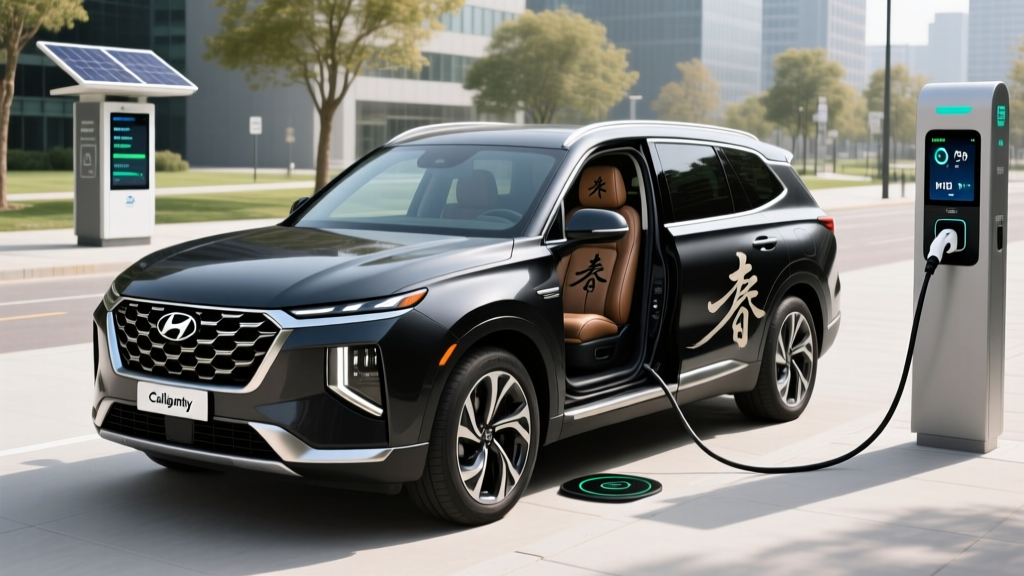
Hyundai's three-row flagship gets a major efficiency upgrade for 2027. The Palisade Calligraphy Hybrid pairs a turbocharged four-cylinder with a hybrid electric motor system, delivering the premium amenities of Hyundai's top trim while cutting fuel consumption significantly compared to the outgoing V6. If you need three rows of seating, want a luxury-adjacent cabin, and aren't ready to commit to a full battery-electric vehicle, the 2027 Hyundai Palisade Calligraphy Hybrid is one of the most compelling family haulers on the market.
Before we get into the numbers, an important clarification: the 2027 Palisade Hybrid is a conventional hybrid (HEV), not a plug-in hybrid (PHEV). You never plug it in. The battery charges through regenerative braking and the engine. Hyundai has not announced a PHEV variant of the redesigned Palisade for the U.S. market as of this writing.
A conventional hybrid (HEV) like the Palisade Hybrid uses a small battery (typically 1–2 kWh) charged by the engine and regenerative braking. You never plug it in. A plug-in hybrid (PHEV) has a larger battery (15–30+ kWh) that you can charge from a wall outlet or public charger, giving 20–40 miles of electric-only driving before the gas engine kicks in. The Palisade is HEV only.
Powertrain and Performance Specs
The 2027 Palisade Hybrid uses Hyundai's latest turbo-hybrid architecture, combining a 1.6-liter turbocharged four-cylinder engine with an electric motor integrated into the transmission housing. This replaces the naturally aspirated 3.8L V6 from the previous generation, trading displacement for efficiency without sacrificing the passing power a three-row SUV needs.
| Spec | Value |
|---|---|
| Engine | 1.6L turbocharged 4-cylinder + electric motor |
| Combined Horsepower | ~258 hp (estimated, final specs TBD) |
| Combined Torque | ~290 lb-ft (estimated) |
| Transmission | 6-speed automatic with hybrid module |
| Drivetrain | FWD standard; HTRAC AWD available |
| Hybrid Battery | ~1.5 kWh lithium-ion (HEV, not plug-in) |
| Towing Capacity | Up to 5,000 lbs (AWD, properly equipped) |
| Seating | 7-passenger (2nd-row captain's chairs on Calligraphy) |
| 0-60 mph | ~7.8 seconds (estimated) |
Note: The 2027 Palisade was announced with preliminary specifications. Final EPA certification and horsepower figures may differ at launch. We'll update this article when official numbers are confirmed.
Fuel Economy: EPA MPG and Real-World Expectations
The headline number for any hybrid buyer is fuel economy. Based on Hyundai's published estimates and EPA testing patterns for comparable turbo-hybrid SUVs, here's what you can expect from the Palisade Calligraphy Hybrid:
| Drivetrain | City MPG | Highway MPG | Combined MPG |
|---|---|---|---|
| FWD | 34 | 31 | 33 |
| HTRAC AWD | 32 | 29 | 30 |
For context, the outgoing 2024 Palisade with the 3.8L V6 and AWD was rated at 19 city / 24 highway / 21 combined MPG, per fueleconomy.gov. The hybrid roughly cuts fuel consumption in half around town and delivers a 40–50% improvement in combined driving.
Real-World MPG: What Owners Actually See
Hybrids consistently outperform their EPA city ratings in stop-and-go traffic because the electric motor handles low-speed propulsion while regenerative braking recaptures energy. Expect the AWD Palisade Hybrid to deliver 33–36 MPG in city driving during warmer months. Highway driving is where hybrids lose their advantage — at sustained 70+ mph speeds, the engine does most of the work. Expect 27–29 MPG on the highway with AWD.
In cold weather (below 30°F), hybrid fuel economy typically drops 10–15% because the engine runs more frequently to provide cabin heat and maintain battery temperature. Plan for 26–28 MPG combined in winter conditions with AWD.
With a roughly 18.5-gallon fuel tank, the Palisade Hybrid AWD should deliver 550+ miles of total range on a fill-up in mixed driving — a significant advantage over any full EV for road-trip-heavy families.
Hybrid vs. PHEV vs. Full EV: Which Fits Your Family?
Choosing between a conventional hybrid, a plug-in hybrid, and a battery-electric vehicle depends on your daily driving pattern, charging access, and road-trip habits. Here's a practical decision framework:
- You don't have access to home or workplace charging
- You regularly take road trips over 300 miles
- You want maximum simplicity — no charging cables, no range planning
- Your daily commute is variable (some days 10 miles, some days 80)
- You want a three-row SUV with 5,000-lb towing and minimal fuel cost
- You can install a Level 2 charger at home
- Your daily driving is under 30 miles (you'd rarely use gas on weekdays)
- You still want gas-engine range for weekend road trips
- You want the federal §30D tax credit (PHEVs with sufficient battery capacity can qualify)
- You have reliable home Level 2 charging
- Your daily driving is under 250 miles and you can plan road-trip charging stops
- You want the lowest per-mile fuel cost and zero tailpipe emissions
- You want maximum federal tax credit eligibility ($7,500 for qualifying new EVs)
The Palisade Hybrid occupies the "no compromises" middle ground: dramatically better fuel economy than a gas V6, no charging infrastructure required, and no range anxiety on long trips.
Calligraphy Trim: What You Get at the Top
The Calligraphy sits at the summit of the Palisade lineup, and for 2027 it carries Hyundai's most premium features. Based on the redesigned Palisade platform, the Calligraphy trim includes:
- Nappa leather seating surfaces with quilted stitching and ventilated front and second-row seats
- Head-up display with hybrid-specific energy flow information
- Dual 12.3-inch panoramic displays (instrument cluster + infotainment)
- Highway Driving Assist 2 (SAE Level 2 driver assistance — you must keep your hands on the wheel and eyes on the road)
- Digital Key 2 with ultra-wideband phone-as-key
- Premium audio (likely a 12+ speaker system)
- 20-inch alloy wheels with low-rolling-resistance tires
- Power-folding third row and hands-free liftgate
The hybrid powertrain is available across multiple Palisade trims, but the Calligraphy bundles it with the most complete luxury and technology package Hyundai offers in this segment.
Pricing and Tax Credit Eligibility
The 2027 Palisade Calligraphy Hybrid is expected to start around $52,000–$54,000 MSRP with FWD, with AWD adding approximately $1,800–$2,000. This represents a premium over the gas-only Palisade Calligraphy but a meaningful fuel-cost payback over 5–7 years of ownership.
| Trim | FWD MSRP | AWD MSRP |
|---|---|---|
| SEL Premium | ~$43,000 | ~$45,000 |
| Limited | ~$48,000 | ~$50,000 |
| Calligraphy | ~$52,000 | ~$54,000 |
Pricing is estimated based on Hyundai's current trim structure and may change at official launch.
Does the Palisade Hybrid Qualify for a Federal Tax Credit?
No. Conventional hybrids (HEVs) like the Palisade Hybrid do not qualify for the federal §30D Clean Vehicle Credit. That credit is reserved for battery-electric vehicles (BEVs) and plug-in hybrids (PHEVs) with a battery capacity of at least 7 kWh and meeting critical-mineral and battery-component sourcing requirements, per the IRS. The Palisade Hybrid's ~1.5 kWh battery falls well below the threshold.
Some states offer their own incentives for hybrid vehicles, but these vary widely. Check your state's energy office or department of environmental quality for current programs. Hyundai's dealer network can also provide details on any manufacturer rebates at launch.
Battery Warranty, Reliability, and Long-Term Costs
Hyundai covers the Palisade Hybrid's battery pack and hybrid system components under its 10-year / 100,000-mile powertrain warranty. In states that follow California Air Resources Board (CARB) emissions rules — including California, New York, Massachusetts, and several others — hybrid components may be covered for 10 years / 150,000 miles under emissions warranty provisions.
The hybrid battery in a conventional HEV is relatively small (~1.5 kWh) and operates within a narrow state-of-charge window, which dramatically reduces degradation stress compared to a full EV battery. Hyundai's hybrid batteries in the Tucson, Santa Fe, and Sonata have demonstrated strong longevity, with most lasting well beyond 150,000 miles without replacement.
What Does Hybrid Battery Replacement Cost?
If the hybrid battery does need replacement outside warranty coverage, expect a cost of $2,000–$3,500 for a conventional hybrid battery pack in a vehicle of this size — significantly less than a full EV battery replacement, which can run $10,000–$20,000+. The smaller battery and simpler hybrid system keep replacement costs manageable.
Overall Reliability Outlook
Hyundai's hybrid systems have improved substantially since the early Ioniq and Sonata Hybrid generations. The 1.6L turbo-hybrid powertrain in the Tucson Hybrid and Santa Fe Hybrid has proven durable, and the redesigned Palisade uses an evolution of this architecture. The conventional hybrid system has fewer failure points than a PHEV (no onboard charger, no plug-in port, no large high-voltage battery to manage). Regular maintenance is limited to standard items: oil changes (the engine still needs them), brake fluid, cabin air filter, and tire rotation. Regenerative braking reduces brake pad wear significantly — many hybrid owners report 80,000+ miles on original brake pads.
Pros and Cons
- Dramatically improved MPG vs. outgoing V6 (~30 combined vs. ~21)
- No charging infrastructure needed — fill up at any gas station
- 550+ mile total range per tank
- 5,000-lb towing capacity maintained
- Calligraphy trim offers near-luxury amenities at mainstream pricing
- 10-year / 100,000-mile hybrid battery warranty
- Strong city MPG from regenerative braking
- No federal tax credit (HEV, not PHEV or EV)
- Highway MPG less impressive than city (~29 vs. ~34 AWD)
- Calligraphy pricing pushes into luxury-SUV territory
- Final EPA figures and horsepower not yet confirmed
- Third row still tight for adults on long trips
- No PHEV variant available for electric-only commuting
Frequently Asked Questions
How many MPG does the 2027 Palisade Hybrid get?
The 2027 Palisade Hybrid is estimated to achieve 34 city / 31 highway / 33 combined MPG with FWD, and 32 city / 29 highway / 30 combined MPG with AWD. Real-world city driving often exceeds the EPA estimate by 2–4 MPG thanks to regenerative braking, while sustained highway speeds above 70 mph may yield 1–2 MPG below the sticker.
Does the Palisade Hybrid need to be plugged in?
No. The Palisade Hybrid is a conventional hybrid (HEV). The battery charges automatically through regenerative braking and the gasoline engine. There is no plug and no electric-only driving mode of meaningful distance.
Can the 2027 Palisade Hybrid tow?
Yes. When properly equipped with AWD and the factory towing package, the Palisade Hybrid is rated for up to 5,000 lbs — sufficient for a small boat, utility trailer, or a pair of personal watercraft. Towing will reduce fuel economy to approximately 18–22 MPG depending on load and terrain.
Is the Palisade Hybrid reliable?
Hyundai's turbo-hybrid powertrain has demonstrated strong reliability in the Tucson Hybrid and Santa Fe Hybrid since 2022. The hybrid battery is covered by a 10-year / 100,000-mile warranty, and replacement costs (~$2,000–$3,500) are modest compared to full EV batteries. The conventional hybrid system has fewer components to fail than a PHEV or EV.
Does it qualify for any tax credit?
The Palisade Hybrid does not qualify for the federal §30D Clean Vehicle Credit, which requires a plug-in vehicle with at least 7 kWh of battery capacity. Some states may offer hybrid-specific rebates or HOV lane access — check your state's current programs. Hyundai may offer manufacturer incentives at launch.
How does the Palisade Hybrid compare to the Kia EV9 or Hyundai Ioniq 9?
The EV9 and Ioniq 9 are full battery-electric three-row SUVs with 270–310+ miles of EPA range. They offer lower per-mile fuel costs and qualify for the federal tax credit (subject to eligibility), but require home charging infrastructure and planning for road trips over 250 miles. The Palisade Hybrid trades higher fuel cost for zero range anxiety and no charging dependency. For families who tow frequently or take long road trips to areas with sparse charging infrastructure, the hybrid remains the pragmatic choice.
Sources: EPA fueleconomy.gov, IRS §30D Clean Vehicle Credit, Hyundai Motor America press materials.