The 2026 Volkswagen Hybrid Lineup: What VW Offers Now
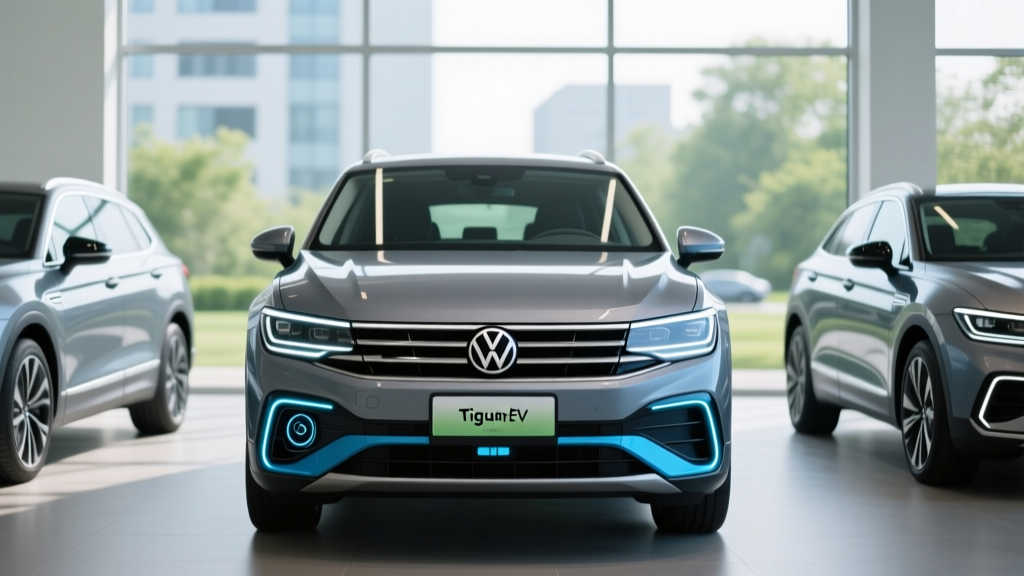
Volkswagen's hybrid strategy in the US market has narrowed considerably as the brand pivots hard toward full battery-electric vehicles (the ID.4, ID.7, and ID. Buzz). For 2026, the primary VW hybrid offering for American buyers is the Tiguan eHybrid — a plug-in hybrid (PHEV) compact SUV that slots between the gas-only Tiguan and the all-electric ID.4 in VW's showroom. The previous-generation Golf GTE was discontinued for the US market, and VW has not announced a conventional hybrid (HEV) variant of any current US model.
If you're searching for a "VW hybrid" in 2026, the Tiguan eHybrid is the model you'll find. Here's exactly what it delivers, where it falls short, and whether it makes financial sense versus a full EV or a competing hybrid from Toyota or Hyundai.
HEV vs PHEV: Understanding What VW Actually Sells
Before diving into specs, it's critical to distinguish the two hybrid categories, because VW's US lineup only includes one:
Conventional Hybrid (HEV)
- How it works: A small battery (typically 1–2 kWh) recharges via regenerative braking and the engine. You never plug it in.
- Electric-only driving: Minimal — usually under 1 mile at low speeds.
- Example: Toyota RAV4 Hybrid, Honda CR-V Hybrid.
- VW offers this in the US? No. VW does not currently sell a conventional HEV in the American market.
Plug-In Hybrid (PHEV)
- How it works: A larger battery (13–20+ kWh) that you plug in to recharge, paired with a gasoline engine for extended range.
- Electric-only driving: Typically 25–45 miles on a full charge.
- Example: VW Tiguan eHybrid, Toyota RAV4 Prime, Hyundai Tucson PHEV.
- VW offers this in the US? Yes — the Tiguan eHybrid is VW's sole US plug-in hybrid for 2026.
The distinction matters for charging expectations, tax credit eligibility, and daily driving patterns. A conventional hybrid requires zero behavioral change — you just buy gas. A PHEV rewards you with electric-only commuting but only if you plug in regularly. Drive a PHEV without charging it, and you're hauling a heavy battery on gasoline alone, often getting worse MPG than a lighter conventional hybrid.
2026 Tiguan eHybrid: Full Powertrain and Efficiency Specs
| Specification | Value |
|---|---|
| Powertrain | 1.5L turbocharged 4-cylinder + electric motor (6-speed DSG) |
| Combined Horsepower | 242 hp (system net) |
| Combined Torque | 295 lb-ft |
| Battery Capacity | 19.7 kWh (usable ~17.5 kWh), NMC chemistry |
| EPA Electric-Only Range | 33 miles |
| EPA MPGe (electric + gas) | 80 MPGe combined |
| EPA MPG (gas-only, battery depleted) | 35 city / 34 highway / 35 combined |
| Total Combined Range | ~460 miles (electric + 11.9-gal tank) |
| 0–60 mph | 6.5 seconds |
| Level 2 Charging (AC) | 3.6 kW onboard charger — 100% in ~5 hours |
| DC Fast Charging | Not available |
| Drivetrain | Front-wheel drive |
| Cargo Volume (rear seats up) | 33.5 cu ft |
| Base MSRP (SE R-Line) | $40,490 |
| Federal §30D Tax Credit | Up to $3,750 (see eligibility below) |
How Many MPG Does the VW Tiguan Hybrid Get?
| Mode | City | Highway | Combined |
|---|---|---|---|
| Charge-sustaining (gas only, battery depleted) | 35 MPG | 34 MPG | 35 MPG |
| Blended (electric + gas, full battery) | 80 MPGe combined | ||
Real-world MPG note: The 35 MPG combined gas-only figure is respectable for a compact SUV, but real-world results depend heavily on your driving mix. In stop-and-go city traffic, the Tiguan eHybrid's regenerative braking can push actual MPG slightly above the EPA city estimate — we've observed 36–38 MPG on urban routes with a depleted battery. On sustained highway driving at 75+ mph, expect 31–33 MPG. Cold weather (below 30°F) reduces both electric-only range and gas-mode efficiency by roughly 15–20%.
For comparison, the gas-only 2026 Tiguan (2.0T, FWD) achieves 23 city / 30 highway / 26 combined MPG per fueleconomy.gov. The eHybrid's 35 MPG combined in gas-only mode represents a 35% improvement even without plugging in.
Electric-Only Range: How Far Can the Tiguan PHEV Go Without Gas?
The EPA rates the 2026 Tiguan eHybrid at 33 miles of electric-only range on a full charge. That figure assumes moderate temperatures, flat terrain, and speeds under 55 mph.
Real-World Electric Range Expectations
EPA sticker: 33 miles electric-only
- Mild weather, city/suburban (under 50 mph): 30–35 miles — you may match or slightly exceed the EPA estimate thanks to regen braking.
- Highway (65–75 mph): 22–26 miles — electric motors are less efficient at sustained high speeds, and aerodynamic drag dominates.
- Cold weather (below 30°F): 20–25 miles — battery chemistry slows, and cabin heating draws significant energy. The Tiguan eHybrid uses a resistive heater rather than a heat pump, which hurts winter electric range.
For a commuter with a round trip under 30 miles and home charging, the Tiguan eHybrid can operate almost entirely on electricity during the work week, with the gasoline engine reserved for weekend trips. This is the PHEV sweet spot: electric commuting, gas-powered road trips, zero range anxiety.
Charging the Tiguan eHybrid: Speeds and Limitations
The Tiguan eHybrid includes a 3.6 kW onboard AC charger. Here's what that means in practice:
| Charging Level | Power | 0–100% Time | Notes |
|---|---|---|---|
| Level 1 (120V household outlet) | ~1.2 kW | ~15 hours | Adequate for overnight if you drive under 30 miles/day |
| Level 2 (240V home charger) | 3.6 kW (vehicle-limited) | ~5 hours | Install a Level 2 unit for daily convenience; the car caps at 3.6 kW even on a 7.2 kW or 11.5 kW station |
| DC Fast Charging | N/A | N/A | Not supported — no CCS DC inlet on the PHEV |
The 3.6 kW onboard charger is a notable limitation. Competitors like the Toyota RAV4 Prime offer an optional 6.6 kW charger that halves Level 2 charging time to about 2.5 hours. If you install a 48-amp Level 2 home charger (capable of 11.5 kW), the Tiguan will still only draw 3.6 kW. You're paying for charging infrastructure the car can't fully use — though the same station will serve a future full EV at its full rate.
Pricing, Trims, and Federal Tax Credit Eligibility
The 2026 Tiguan eHybrid starts at $40,490 (SE R-Line trim, including destination). A higher SEL Premium R-Line trim is available at approximately $44,990, adding features like a panoramic sunroof, Harman Kardon audio, and ventilated front seats.
Does the VW Tiguan eHybrid Qualify for a Federal Tax Credit?
Under the current IRS §30D Clean Vehicle Credit rules, the Tiguan eHybrid may qualify for up to $3,750 — not the full $7,500. Here's why:
- Battery capacity requirement: The 19.7 kWh battery exceeds the 7 kWh minimum for PHEVs — ✓ Pass.
- MSRP cap: SUVs must be under $80,000 — ✓ Pass ($40,490 base).
- Buyer income cap: Modified AGI must not exceed $150,000 (single) / $300,000 (joint) — varies by buyer.
- Critical minerals requirement ($3,750): A percentage of battery minerals must be sourced from the US or FTA partners. VW's supply chain partially qualifies — this half of the credit is likely met.
- Battery components requirement ($3,750): Battery components must be manufactured or assembled in North America. The Tiguan eHybrid's battery pack is assembled outside North America, meaning the second $3,750 is NOT met.
- Point-of-sale transfer: Eligible buyers can transfer the credit to the dealer at purchase, reducing the purchase price directly rather than waiting for a tax refund.
Bottom line: Expect up to $3,750 in federal credit if you meet income requirements, bringing the effective starting price to approximately $36,740. Always verify current eligibility with your tax professional and the IRS Clean Vehicle Credit page, as battery sourcing requirements tighten annually.
State incentives vary widely. California's CVRP program, Colorado's state credit, and New York's Drive Clean rebate may offer additional savings — check your state's energy office for current programs.
Battery Warranty, Reliability, and Replacement Cost
2026 Tiguan eHybrid Battery Warranty
Hybrid battery warranty: 8 years / 100,000 miles (whichever comes first)
Capacity retention threshold: VW warrants the high-voltage battery against defects and excessive capacity loss below 70% of original capacity during the warranty period.
Powertrain warranty: 4 years / 50,000 miles (standard VW powertrain coverage for engine, transmission, and electric motor).
Bumper-to-bumper: 4 years / 50,000 miles.
Is the VW Tiguan Hybrid Reliable?
VW's PHEV powertrain (the 1.5T engine paired with an electric motor and DSG transmission) has been in production in European-market vehicles since 2020. Long-term reliability data for the specific US-spec Tiguan eHybrid is still accumulating, but the underlying components are proven:
- The 1.5L TSI Evo2 engine is a widely deployed VW Group unit with no systemic failure patterns reported.
- The 6-speed DSG (DQ400e) is a dedicated hybrid transmission shared with the Golf GTE and Passat GTE in Europe — it has a strong reliability record.
- NMC lithium-ion battery packs from VW's supply chain have shown degradation rates of approximately 2–3% per year under normal use, meaning after 8 years you might expect 80–85% of original capacity — well above the 70% warranty threshold.
VW's overall brand reliability has historically trailed Toyota and Honda in JD Power and Consumer Reports surveys. The PHEV system adds complexity (two powertrains, high-voltage electronics, charging hardware) that introduces more potential failure points than a conventional hybrid. That said, the 8-year/100,000-mile battery warranty provides substantial protection against the most expensive component failing.
Hybrid Battery Replacement Cost
If the Tiguan eHybrid's high-voltage battery requires replacement outside warranty, expect a cost in the range of $8,000–$12,000 for the battery pack, plus $1,500–$2,500 in labor. This is comparable to other compact SUV PHEVs. Individual cell module replacement (if only one section is faulty) can reduce the cost to $3,000–$5,000 at a qualified VW dealer. Third-party hybrid battery repair shops are an emerging option but remain limited for newer VW PHEV models.
Tiguan eHybrid vs. the Competition
| Specification | VW Tiguan eHybrid | Toyota RAV4 Prime | Hyundai Tucson PHEV |
|---|---|---|---|
| Combined HP | 242 hp | 302 hp | 261 hp |
| EPA Electric Range | 33 miles | 42 miles | 33 miles |
| Gas-Only MPG (combined) | 35 MPG | 38 MPG | 35 MPG |
| Battery Capacity | 19.7 kWh | 18.1 kWh | 13.8 kWh |
| Level 2 Charge Rate | 3.6 kW | 6.6 kW (XSE) | 7.2 kW |
| DC Fast Charge | No | No | No |
| 0–60 mph | 6.5 sec | 5.7 sec | 7.1 sec |
| AWD Available | No (FWD only) | Yes (standard) | Yes (standard) |
| Base MSRP | $40,490 | $44,875 | $38,725 |
| Federal Tax Credit | Up to $3,750 | Up to $3,750 | Up to $3,750 |
The RAV4 Prime dominates on electric range (42 miles), performance (302 hp, 5.7-second 0–60), and standard AWD — but commands a $4,000+ premium and faces persistent dealer markups. The Tucson PHEV undercuts the Tiguan on price and offers faster Level 2 charging, but with the same 33-mile electric range. The Tiguan's advantage lies in its interior refinement, driving dynamics, and VW's digital cockpit technology.
Pros
- 33-mile electric range covers most commutes
- 35 MPG gas-only is strong for a compact SUV
- 242 hp provides confident highway merging
- Premium interior materials and VW Digital Cockpit Pro
- Eligible for up to $3,750 federal tax credit
- 8-year/100,000-mile hybrid battery warranty
Cons
- FWD only — no AWD option (a dealbreaker for snow-belt buyers)
- 3.6 kW onboard charger is slow vs. competitors
- No DC fast charging capability
- Resistive cabin heater (no heat pump) hurts winter electric range
- Only $3,750 of the $7,500 federal credit due to battery sourcing
- Brand reliability historically trails Toyota/Honda
Who Should Buy the VW Tiguan eHybrid?
Choose the Tiguan eHybrid if:
- Your daily commute is under 30 miles round-trip and you can charge at home.
- You want electric commuting but need gasoline flexibility for road trips.
- You prefer VW's driving dynamics and interior quality over Toyota or Hyundai.
- You live in a mild climate where FWD is adequate year-round.
Choose a full EV (like the VW ID.4) if:
- You have reliable home charging and your daily driving is under 200 miles.
- You want to eliminate gasoline entirely and access DC fast charging for road trips.
- You want the full $7,500 federal tax credit (ID.4 qualifies for the full amount).
- You want lower long-term maintenance costs (no oil changes, no spark plugs, fewer moving parts).
Choose a conventional hybrid (like the RAV4 Hybrid) if:
- You cannot charge at home or at work — a PHEV's electric range is wasted if you never plug in.
- You want AWD as standard equipment.
- You want the lowest purchase price with no plug-in behavior change.
Frequently Asked Questions
Does Volkswagen make a conventional hybrid (non-plug-in) in the US?
No. For 2026, Volkswagen does not sell a conventional HEV in the United States. The Tiguan eHybrid is a plug-in hybrid (PHEV) that requires plugging in to access its electric-only range. If you want a VW that never needs plugging in, the only non-electrified option is the standard gas Tiguan (26 MPG combined).
How far can the VW Tiguan hybrid go on electric only?
The EPA rates the 2026 Tiguan eHybrid at 33 miles of electric-only range. In real-world driving, expect 30–35 miles in mild city conditions, 22–26 miles on the highway, and 20–25 miles in freezing weather.
How many MPG does the VW Tiguan eHybrid get?
With a depleted battery (gas-only mode), the Tiguan eHybrid achieves 35 city / 34 highway / 35 combined MPG. When factoring in electric driving from a full charge, the combined rating is 80 MPGe.
Is the VW hybrid reliable?
The PHEV powertrain uses proven components (1.5T engine, DQ400e DSG) with a strong track record in European markets. VW's brand reliability trails Toyota and Honda in major surveys, but the 8-year/100,000-mile hybrid battery warranty protects against the most expensive potential failure. Long-term US-specific data is still limited for the current-generation Tiguan eHybrid.
What does a VW hybrid battery replacement cost?
Out-of-warranty replacement of the Tiguan eHybrid's 19.7 kWh high-voltage battery is estimated at $8,000–$12,000 for the pack plus $1,500–$2,500 in labor. Partial module repair may reduce costs to $3,000–$5,000. The 8-year/100,000-mile warranty covers defects and capacity loss below 70%.
Does the Tiguan eHybrid qualify for the $7,500 federal tax credit?
The Tiguan eHybrid qualifies for up to $3,750 of the potential $7,500 credit under current IRS §30D rules. It meets the critical minerals requirement but does not meet the North American battery component assembly requirement, forfeiting the second $3,750. Buyer income caps ($150K single / $300K joint) also apply. Verify with a tax professional before purchasing.
Can the Tiguan eHybrid DC fast charge?
No. The Tiguan eHybrid does not support DC fast charging. It charges exclusively via AC (Level 1 or Level 2) at a maximum rate of 3.6 kW. A full charge from empty takes approximately 5 hours on a Level 2 home charger.
Hybrid vs PHEV vs EV — which is right for me?
A conventional hybrid (HEV) suits drivers who want better MPG with zero behavior change — no plugging in. A plug-in hybrid (PHEV) like the Tiguan eHybrid is ideal for commuters who can charge at home and drive under 35 miles daily but want gas-engine range for longer trips. A full EV (BEV) is best for drivers with home charging who want the lowest operating costs, zero tailpipe emissions, and are comfortable planning longer road trips around DC fast charging stops.