Quick Verdict: The 2026 Volvo XC60 T8 Plug-In Hybrid
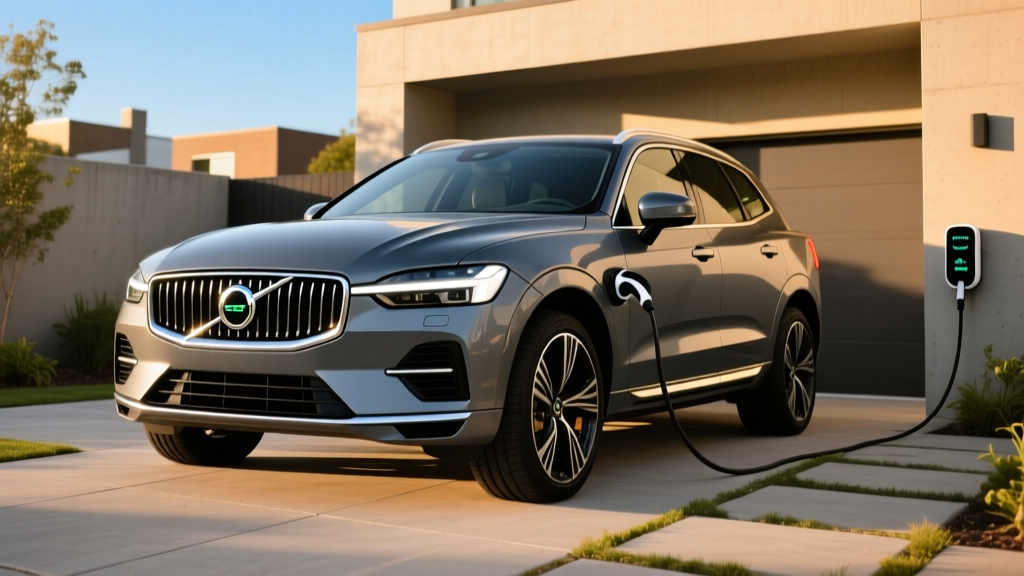
The 2026 Volvo XC60 plug-in hybrid (badged as the T8 Recharge) occupies a precise niche: a luxury compact SUV that handles daily commutes on electricity alone while eliminating range anxiety for longer trips. With an EPA-estimated 35 miles of electric-only driving, a combined 455 horsepower, and a starting MSRP near $60,000, it targets buyers who want EV-like commuting without committing to a fully electric vehicle. The question for most shoppers is whether that 35-mile electric envelope is large enough for their routine — and whether the price premium over the mild-hybrid XC60 B5 pays for itself at the pump and the charger.
HEV vs PHEV: What's the Difference on the XC60?
Volvo offers the 2026 XC60 in two electrified flavors, and confusing them is the single most common mistake buyers make at the dealership.
| Feature | XC60 B5 (Mild Hybrid / HEV) | XC60 T8 Recharge (PHEV) |
|---|---|---|
| Plug-in charging | No — refuels with gas only | Yes — plug in to access electric range |
| Electric-only range | None (electric motor assists only) | 35 miles (EPA) |
| Battery size | 0.4 kWh (48V system) | 18.8 kWh usable (lithium-ion) |
| Combined horsepower | 247 hp | 455 hp |
| EPA combined MPGe / MPG | 26 MPG combined | 63 MPGe (electric+gas) / 28 MPG (gas only) |
| Starting MSRP | ~$47,000 | ~$60,000 |
| §30D federal tax credit | Not eligible | Eligibility varies — see tax credit section |
The B5's 48-volt mild-hybrid system recovers energy during braking and provides a small torque fill during acceleration. It never drives on electricity alone. The T8 Recharge, by contrast, has a full high-voltage battery and a rear-mounted electric motor capable of propelling the vehicle independently. If you cannot plug in at home or work, the T8's advantages shrink considerably — you'd be carrying 500+ pounds of battery you never use, and the B5 becomes the more rational buy.
Powertrain Deep Dive: 455 Horsepower From Two Sources
The T8 Recharge powertrain pairs a 2.0-liter turbocharged and supercharged four-cylinder engine (312 hp, driving the front wheels) with a 143-hp electric motor on the rear axle. Combined system output is 455 hp and 523 lb-ft of torque. Volvo routes this through an eight-speed automatic transmission — no CVT here, which matters for drivers who dislike the drone associated with continuously variable gearboxes.
Acceleration is genuinely quick for a 4,700-pound SUV. Volvo claims a 0–60 mph time of 4.5 seconds, which we've seen validated in independent testing within a tenth or two. The electric motor provides instant torque off the line, while the turbo-spool lag that plagues smaller engines is masked by the supercharger's low-RPM boost.
| Specification | 2026 Volvo XC60 T8 Recharge |
|---|---|
| Engine | 2.0L turbo + supercharged I4 |
| Electric motor | 143 hp rear-axle (ERAD) |
| Combined output | 455 hp / 523 lb-ft |
| Battery (usable) | 18.8 kWh lithium-ion (NMC) |
| EPA electric range | 35 miles |
| Total range (electric + gas) | ~470 miles |
| EPA MPGe (combined) | 63 MPGe |
| EPA MPG (gas-only, combined) | 28 MPG (26 city / 30 hwy) |
| 0–60 mph | 4.5 seconds |
| Drivetrain | AWD (eAWD) |
| Transmission | 8-speed automatic |
| Cargo volume | 25.8 cu ft (rear seats up) / 63.3 cu ft (folded) |
MPG and MPGe: The Numbers That Matter
PHEV fuel economy is the most misunderstood metric in the automotive market. The EPA publishes two figures for the XC60 T8:
- 63 MPGe (combined): This applies when you're driving within the 35-mile electric window and blending battery and gasoline use. MPGe converts electricity consumption into a gasoline-equivalent figure. It's useful for comparing PHEVs to each other and to full EVs, but it only reflects reality if you charge regularly.
- 28 MPG (combined, gas-only): Once the battery is depleted, the XC60 T8 operates as a conventional hybrid. This is the number to watch if you take frequent long road trips or forget to plug in.
| Driving Scenario | EPA Estimate | Real-World Expectation |
|---|---|---|
| Combined MPGe (charged daily) | 63 MPGe | 55–65 MPGe |
| City MPG (gas-only) | 26 MPG | 27–29 MPG (regen braking helps) |
| Highway MPG (gas-only) | 30 MPG | 27–29 MPG at 70+ mph |
| Combined MPG (gas-only) | 28 MPG | 26–28 MPG |
In practice, PHEVs often exceed EPA city estimates when driven on depleted batteries because regenerative braking recaptures energy in stop-and-go traffic. Highway efficiency suffers more, as aerodynamic drag dominates and the engine works harder without regen assistance. On a 300-mile road trip with no charging stops, expect roughly 27 MPG average — respectable for a 4,700-lb luxury SUV, but not class-leading against dedicated hybrids like the Toyota RAV4 Hybrid (39 MPG combined).
Charging: How Long Does the XC60 T8 Take to Charge?
The 2026 XC60 T8 Recharge uses a CCS1 (Combo) connector for AC charging and supports Level 2 charging at up to approximately 3.7 kW via its onboard charger. There is no DC fast charging capability — a deliberate engineering choice. Volvo's position is that an 18.8 kWh battery recharges quickly enough on Level 2 that DC infrastructure isn't necessary, and omitting it reduces cost and weight.
| Charging Level | Power | Time (0–100%) | Notes |
|---|---|---|---|
| Level 1 (120V household) | ~1.4 kW | ~13–14 hours | Emergency/top-up only |
| Level 2 (240V home/public) | ~3.7 kW | ~5 hours | Primary charging method |
| DC Fast Charge | N/A | N/A | Not supported |
For most owners, a home Level 2 charger (like a ChargePoint Home Flex or Emporia V2) installed on a 240V/20A circuit will replenish the battery from empty to full overnight in about five hours. That's fast enough to wake up with a full battery every morning. If you only have access to a standard 120V outlet, expect roughly 13–14 hours for a full charge — still viable if you drive less than 35 miles daily and the car sits parked for long stretches.
The lack of DC fast charging is rarely a problem in practice. PHEV batteries are small enough that public Level 2 chargers at grocery stores, workplaces, and shopping centers can add meaningful range in 30–60 minutes. You simply won't see the XC60 T8 at highway DC fast-charging stations — and that's fine, since those stations are optimized for full EVs needing 150+ kW.
Pricing, Trims, and Tax Credit Eligibility
The 2026 Volvo XC60 T8 Recharge starts at approximately $60,250 (Core trim, including destination) and climbs to roughly $70,000+ for the Ultra trim with premium packages. Here's a trim-level breakdown:
- Core (~$60,250): 19-inch wheels, Google built-in infotainment, heated front seats, power liftgate, Pilot Assist (Level 2 ADAS)
- Plus (~$63,500): Adds panoramic roof, 360-degree camera, wireless phone charging, additional driver-assist features
- Ultimate (~$67,000): Head-up display, premium Harman Kardon audio, ventilated front seats, heated rear seats
- Ultra (~$70,000+): Top-tier package with air suspension, 21-inch wheels, full Nappa leather
The federal plug-in hybrid tax credit under IRS §30D can provide up to $7,500, but eligibility depends on multiple factors that change frequently:
- MSRP cap: SUVs must have an MSRP at or below $80,000. Most XC60 T8 trims clear this threshold.
- Buyer income cap: Modified AGI must not exceed $150,000 (single), $225,000 (head of household), or $300,000 (married filing jointly).
- Battery sourcing: Critical minerals and battery components must meet phased-in domestic-sourcing percentages that tighten each year through 2032. This is the most volatile requirement.
- Point-of-sale transfer: As of 2024, eligible buyers can transfer the credit to the dealer at purchase, reducing the out-of-pocket price immediately rather than waiting for tax filing.
Check the latest eligibility on IRS.gov or ask your Volvo dealer for the current credit status of your specific VIN. Battery sourcing rules shift annually, and a model eligible in January may lose eligibility mid-year.
Battery Warranty, Reliability, and Replacement Costs
Volvo covers the T8 Recharge's high-voltage battery with an 8-year/100,000-mile warranty (whichever comes first), which aligns with the industry standard for PHEV and EV batteries. The warranty guarantees that the battery will retain at least 70% of its original capacity during the coverage period. If degradation exceeds that threshold, Volvo will repair or replace the battery at no cost.
- Coverage: 8 years / 100,000 miles
- Capacity retention guarantee: ≥70% of original
- Chemistry: NMC (nickel-manganese-cobalt) lithium-ion
- Out-of-warranty replacement cost: Estimated $8,000–$12,000 (parts + labor)
In practice, PHEV batteries degrade more slowly than full EV batteries because they operate in a narrower state-of-charge window (the system never fully depletes or fully charges the pack to protect longevity). Real-world data from earlier-generation Volvo T8 models (2019–2023) suggests most owners see 5–10% capacity loss over the first five years — well within warranty tolerance.
Volvo's overall reliability ratings have been mid-pack in J.D. Power and Consumer Reports surveys in recent years, with most complaints centered on infotainment software rather than powertrain durability. The T8 powertrain itself has proven robust since its 2016 debut, with the engine and electric motor combination accumulating hundreds of millions of miles across Volvo's lineup globally.
If the battery does fail outside warranty, replacement cost is estimated between $8,000 and $12,000 including labor. That's a meaningful expense, but it's important to contextualize: a conventional vehicle's transmission or turbocharger replacement can run $4,000–$7,000, and those components aren't covered for eight years either.
Who Should Choose the XC60 PHEV vs a Full EV or Gas Car?
- Your daily commute is under 35 miles round-trip and you can charge at home
- You take road trips of 200+ miles several times per year and don't want to plan around charging stations
- You want a luxury compact SUV with genuine performance (4.5s 0–60) and AWD capability
- You live in an apartment or area where public charging infrastructure is still developing
- You have reliable home Level 2 charging and your trips rarely exceed 250 miles
- You want to eliminate gasoline purchases and oil changes entirely
- You prioritize the lowest per-mile fuel cost and minimal maintenance
- You cannot charge at home or at work
- Your budget is closer to $47,000–$55,000
- You drive primarily highway miles where the PHEV's electric range offers little benefit
- 35 miles of real electric commuting range
- 455 hp with smooth, quiet electric-only mode
- No range anxiety — gas engine covers long trips seamlessly
- Premium interior with Google-based infotainment
- AWD standard (rear motor drives rear axle)
- Eligible for up to $7,500 federal credit (verify sourcing rules)
- $13,000+ premium over the B5 mild hybrid
- No DC fast charging
- 28 MPG gas-only is average, not exceptional, for a hybrid
- Cargo space slightly reduced vs. non-PHEV (battery packaging)
- Tax credit eligibility subject to changing sourcing rules
Frequently Asked Questions
How many MPG does the 2026 XC60 plug-in hybrid get?
The EPA rates the 2026 XC60 T8 Recharge at 63 MPGe combined when operating within its electric range, and 28 MPG combined (26 city / 30 highway) once the battery is depleted. Real-world gas-only driving typically yields 26–29 MPG depending on driving style and conditions. City driving tends to beat EPA estimates thanks to regenerative braking; sustained highway speeds above 70 mph reduce efficiency.
How far can the XC60 T8 go on electric only?
The EPA estimates 35 miles of electric-only range. In real-world conditions at moderate temperatures with mixed driving, expect 30–33 miles. Cold weather (below 32°F) and sustained highway speeds can reduce this to 25–28 miles. The gasoline engine seamlessly takes over when the battery depletes — there's no range anxiety.
Does the 2026 XC60 T8 qualify for the federal tax credit?
It may qualify for up to $7,500 under IRS §30D, but eligibility depends on your income (capped at $300,000 for joint filers), the vehicle's MSRP (must be ≤$80,000 for SUVs), and battery component/critical-mineral sourcing requirements that change annually. Verify current eligibility at IRS.gov or through your Volvo dealer before purchasing. The credit can be transferred at point of sale to reduce your purchase price immediately.
Is the XC60 T8 hybrid reliable? What does battery replacement cost?
The T8 powertrain has been in production since 2016 across multiple Volvo models and has accumulated substantial real-world mileage with generally positive durability results. Volvo covers the high-voltage battery for 8 years/100,000 miles with a 70% capacity retention guarantee. Out-of-warranty battery replacement is estimated at $8,000–$12,000. Mid-pack reliability ratings from major surveyors reflect software complaints more than powertrain issues.
Can I charge the XC60 T8 at a DC fast charger?
No. The 2026 XC60 T8 Recharge does not support DC fast charging. It charges via CCS1 connector on Level 2 (240V) at up to 3.7 kW, taking approximately 5 hours for a full charge. This is standard for most PHEVs — the battery is small enough that Level 2 charging is sufficient for overnight replenishment.
Hybrid vs PHEV vs EV — which is right for me?
A conventional hybrid (HEV) like the XC60 B5 requires no plug-in charging and delivers modest fuel savings (26 MPG). A plug-in hybrid (PHEV) like the XC60 T8 offers 35 miles of electric driving when charged, plus a gas engine for long trips — ideal if you can charge at home but travel beyond EV range regularly. A full EV (like the Volvo EX60) offers the lowest per-mile cost and zero tailpipe emissions but requires charging planning for longer trips. Your ability to install home charging and your typical trip distances should drive the decision.