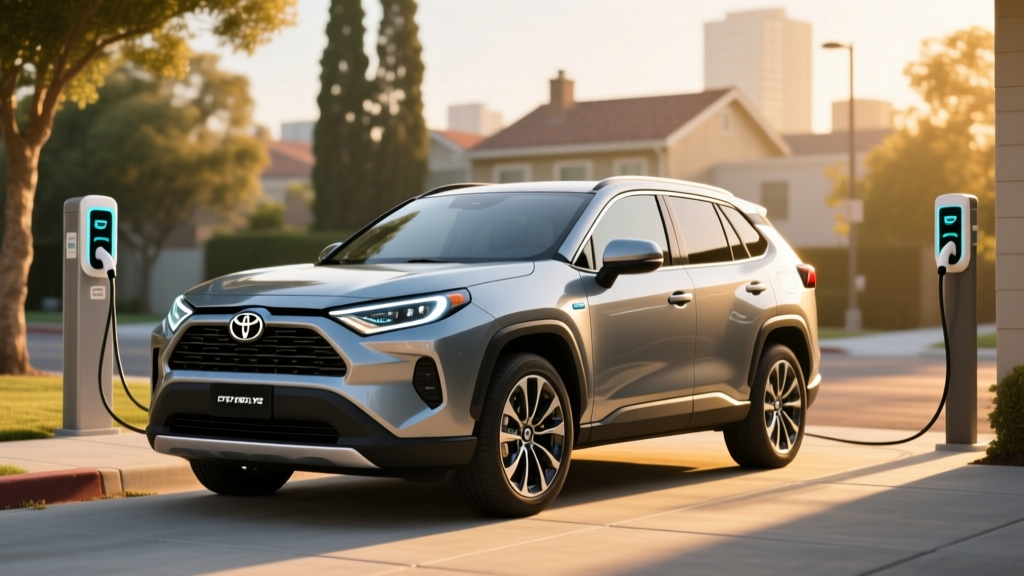
The 2026 Toyota RAV4 Hybrid XSE sits in a sweet spot for buyers who want electrified efficiency without plugging in. As a conventional hybrid (HEV), it recovers energy through regenerative braking and engine optimization — no charging cable required. With an EPA-estimated 39 MPG combined, standard electronic all-wheel drive, and a sport-tuned suspension that distinguishes the XSE from lesser trims, it remains one of the most practical compact SUVs on the market. But how does it stack up against the RAV4 Prime plug-in hybrid, and is the real-world fuel economy as strong as the sticker suggests?
HEV vs PHEV: Which RAV4 Electrified Model Is Right for You?
Before diving into the XSE's specifics, it's critical to understand the fundamental difference between the RAV4 Hybrid (HEV) and the RAV4 Prime (PHEV). Toyota sells both, and they serve very different use cases.
| Feature | RAV4 Hybrid (HEV) | RAV4 Prime (PHEV) |
|---|---|---|
| Plug-in required? | No — self-charging | Yes — plug in for EV mode |
| Battery size | ~1.6 kWh (NiMH) | 18.1 kWh (lithium-ion) |
| Electric-only range | Not applicable | EPA 42 miles |
| Combined horsepower | 219 hp | 302 hp |
| EPA combined MPG/MPGe | 39 MPG | 94 MPGe (EV) / 38 MPG (gas) |
| Federal tax credit (§30D) | Not eligible | Up to $7,500 (eligibility varies) |
| Starting MSRP (2026) | ~$34,500 | ~$44,500 |
The HEV is the right call if you lack home charging access, want a lower purchase price, and primarily need better fuel economy around town. The PHEV (Prime) makes sense if you can charge at home, have a short commute under 42 miles, and want the option to drive on electricity alone most days while retaining gas-engine range for road trips.
Fuel Economy: EPA Estimates and Real-World MPG
The 2026 RAV4 Hybrid XSE carries the same powertrain calibration as other AWD-equipped RAV4 Hybrid trims. Here's the EPA breakdown, sourced from fueleconomy.gov:
| Driving Cycle | EPA Estimate | Real-World Expectation |
|---|---|---|
| City | 41 MPG | 42–45 MPG (hybrids excel in stop-and-go) |
| Highway | 38 MPG | 35–37 MPG (aero drag, sustained speeds) |
| Combined | 39 MPG | 38–41 MPG (varies by driving mix) |
Hybrids like the RAV4 routinely exceed their EPA city estimate because regenerative braking recovers more energy in traffic. Highway driving is where the advantage narrows — at 75+ mph, the gasoline engine does most of the work, and aerodynamic drag dominates. In cold weather (below 30°F), expect a 5–10% MPG reduction as the engine runs longer to warm the cabin and the battery operates less efficiently.
With a 14.5-gallon fuel tank, total driving range sits around 565 miles under mixed driving — enough for most road trips without range anxiety of any kind.
Powertrain and Performance Specs
| Specification | 2026 RAV4 Hybrid XSE |
|---|---|
| Engine | 2.5L inline-4 Atkinson cycle |
| Engine output | 176 hp / 163 lb-ft torque |
| Front electric motor | 118 hp / 149 lb-ft |
| Rear electric motor (AWD) | 54 hp / 89 lb-ft |
| Net combined horsepower | 219 hp |
| Transmission | eCVT (planetary gearset) |
| Drivetrain | Electronic AWD (eAWD) standard |
| 0–60 mph | 7.4 seconds (Toyota est.) |
| Towing capacity | 1,750 lbs |
| Battery type | NiMH, ~1.6 kWh |
The XSE trim adds a sport-tuned suspension with stiffer damping and a lower ride height compared to the LE and XLE Hybrid trims. It doesn't change the powertrain output, but it does sharpen turn-in response and reduce body roll on winding roads. The eCVT is Toyota's proven planetary-gear hybrid system — there are no traditional gear shifts, just seamless power delivery. The rear electric motor engages automatically for traction, making this a true AWD system with no mechanical driveshaft connecting the axles.
Pricing, Trim Value, and Tax Credit Eligibility
The 2026 RAV4 Hybrid XSE starts at an MSRP of approximately $36,025 (including destination charge). Key standard features at this price point include:
- 18-inch gloss black alloy wheels
- SofTex-trimmed heated front seats
- 8-inch Toyota Audio Multimedia touchscreen with wireless Apple CarPlay and Android Auto
- Toyota Safety Sense 2.5+ (adaptive cruise, lane-keeping, automatic emergency braking, blind-spot monitoring)
- LED headlights and taillights with black accent trim
- Qi wireless phone charging
Adding the Technology Package (JBL audio, panoramic moonroof, 10.5-inch navigation display) pushes the price toward $39,500–$40,000.
Federal Tax Credit Status
The RAV4 Hybrid (HEV) does not qualify for the IRS §30D Clean Vehicle Credit. That credit applies only to plug-in electric vehicles (BEVs and PHEVs) meeting battery-sourcing, MSRP, and buyer-income requirements. Conventional hybrids are excluded under current IRS rules. Some states may offer minor rebates for hybrids — check your state energy office for current programs.
Hybrid Battery Warranty, Lifespan, and Replacement Cost
Battery longevity is the top concern for hybrid buyers, and Toyota addresses it directly. The 2026 RAV4 Hybrid's nickel-metal hydride (NiMH) traction battery is covered by Toyota's Hybrid Battery Warranty: 10 years or 150,000 miles, whichever comes first. This warranty guarantees the battery against defects and excessive capacity loss.
In practice, Toyota's hybrid batteries have demonstrated strong longevity. The NiMH chemistry used in the RAV4 Hybrid is mature and conservative — it's the same technology that powered millions of Prius vehicles over two decades. Real-world data from fleet operators and long-term owners shows most Toyota hybrid batteries lasting 150,000–200,000+ miles before significant degradation.
If replacement is needed out of warranty, a refurbished RAV4 Hybrid battery typically costs $2,000–$3,500 installed at an independent hybrid specialist, or $4,000–$5,500 at a Toyota dealership with a new OEM unit. Given the 10-year/150,000-mile coverage and the battery's track record, this is a manageable long-term risk.
Real-World Ownership: Who Should Choose the RAV4 Hybrid XSE?
Pros
- 39+ MPG combined with no plug-in requirement
- Standard AWD — valuable in snow and rain climates
- Strong reliability record and 10-year battery warranty
- Sport-tuned suspension gives the XSE real handling character
- 565-mile total range eliminates refueling anxiety
- Competitive cargo space (37.5 cu ft behind rear seats)
Cons
- No federal tax credit (HEV ineligible for §30D)
- eCVT drone under hard acceleration
- Towing limited to 1,750 lbs
- Infotainment screen smaller than some rivals at base level
- No electric-only driving mode
The RAV4 Hybrid XSE is the right vehicle if:
- You can't charge at home. Apartment dwellers, street parkers, and those without garage access benefit enormously from HEV efficiency without needing infrastructure.
- You want AWD efficiency. The electronic AWD system adds traction without the fuel-economy penalty of a traditional mechanical AWD system.
- You prioritize proven reliability. Toyota's hybrid system is among the most battle-tested in the industry.
- Your budget is under $40K. The HEV comes in roughly $8,000–$10,000 below the RAV4 Prime PHEV.
Consider a full EV (like the Toyota bZ4X or Hyundai Ioniq 5) instead if you have home charging, a commute under 250 miles, and want zero tailpipe emissions with lower per-mile fuel costs. Consider the RAV4 Prime PHEV if you can charge at home and want 42 miles of electric-only commuting with gas backup.
Hybrid vs PHEV vs EV: Decision Framework
| Choose the RAV4 Hybrid (HEV) if... | Choose the RAV4 Prime (PHEV) if... | Choose a full BEV if... |
|---|---|---|
| No home charging access | Home Level 2 charging available | Home charging + under 250 mi daily |
| Budget under $40K | Budget $44K+ (credit may offset) | Want lowest per-mile fuel cost |
| Want simplicity — no plugs | Commute under 42 miles | Want zero tailpipe emissions |
| Frequent long road trips | Want EV daily + gas for trips | Comfortable with DC fast charging on trips |
Frequently Asked Questions
How many MPG does the 2026 RAV4 Hybrid XSE get?
The EPA rates it at 41 MPG city, 38 MPG highway, and 39 MPG combined. In real-world city driving with frequent stops, many owners report 42–45 MPG thanks to regenerative braking. Highway-only driving at 75 mph typically yields 35–37 MPG.
Does the RAV4 Hybrid need to be plugged in?
No. The RAV4 Hybrid is a conventional hybrid (HEV). It charges its small battery through regenerative braking and the gasoline engine. You simply fill it with gas like any other car — there is no plug and no electric-only driving mode.
How far can the RAV4 Prime go on electric only?
The RAV4 Prime (PHEV) offers an EPA-estimated 42 miles of electric-only range on its 18.1 kWh lithium-ion battery. Once depleted, it operates as a conventional hybrid at 38 MPG combined. Total combined range (electric + gas) exceeds 600 miles.
Is the RAV4 Hybrid reliable, and what does battery replacement cost?
Toyota's hybrid system has an extensive reliability track record spanning over 20 years. The hybrid battery is warrantied for 10 years / 150,000 miles. Out-of-warranty replacement costs $2,000–$5,500 depending on refurbished vs. new OEM, but most batteries last well beyond the warranty period.
Does the 2026 RAV4 Hybrid qualify for a federal tax credit?
No. The IRS §30D Clean Vehicle Credit applies only to plug-in vehicles (BEVs and PHEVs). Conventional hybrids like the RAV4 Hybrid do not qualify. The RAV4 Prime PHEV may qualify for up to $7,500, subject to buyer income caps, MSRP limits, and battery-sourcing requirements — verify current eligibility at irs.gov.
What makes the XSE trim different from other RAV4 Hybrid trims?
The XSE adds a sport-tuned suspension, 18-inch gloss black wheels, SofTex heated seats, a black roof option, and distinctive exterior styling. Mechanically, the powertrain and MPG are identical to the LE and XLE Hybrid trims — the differences are cosmetic and in ride tuning.