Quick Verdict: The Hybrid Sweet Spot for Compact SUV Buyers
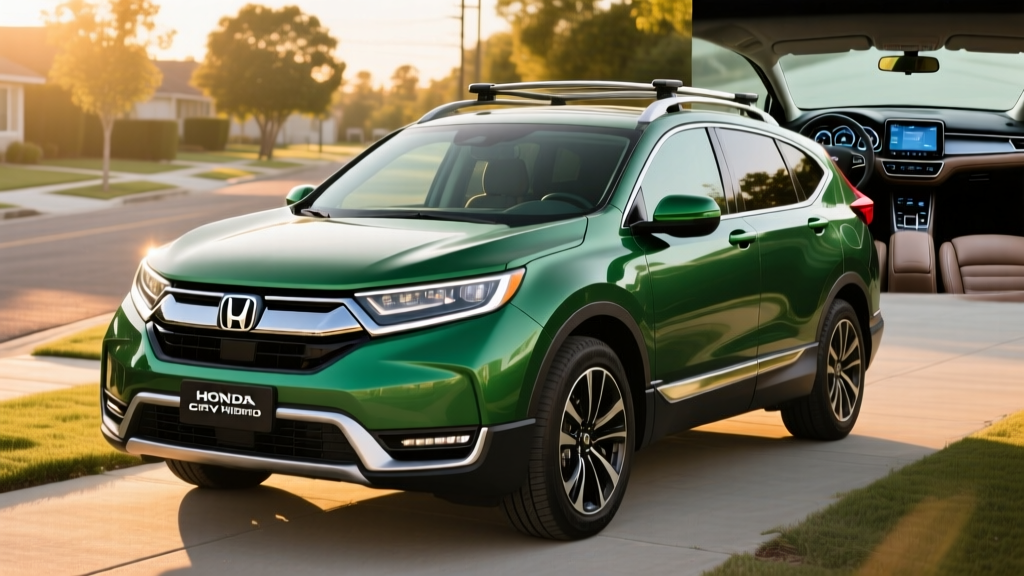
The 2024 Honda CR-V Hybrid occupies a pragmatic middle ground that an increasing number of buyers are gravitating toward: no plug required, no range anxiety, and fuel economy that undercuts its gas-only sibling by a significant margin. After evaluating the powertrain, real-world efficiency data, and ownership economics, the CR-V Hybrid stands out as one of the most compelling conventional hybrid SUVs in the segment — particularly for drivers who lack access to home charging and aren't ready to commit to a full battery-electric vehicle.
With a two-motor hybrid system producing 204 combined horsepower and an EPA-estimated 40 MPG combined (on the Sport and Sport Touring trims), the CR-V Hybrid delivers meaningful fuel savings without asking you to change a single driving habit. No plugging in, no charging apps, no route planning around chargers. You just drive.
Fuel Economy: EPA Estimates and Real-World MPG
Fuel economy is the primary reason buyers choose the CR-V Hybrid over the gas-only model. Here's how the numbers break down across trims, according to EPA data from fueleconomy.gov:
| Trim | City MPG | Highway MPG | Combined MPG | Drivetrain |
|---|---|---|---|---|
| Sport (FWD) | 43 | 36 | 40 | FWD |
| Sport (AWD) | 40 | 34 | 37 | AWD |
| Sport-L (FWD) | 43 | 36 | 40 | FWD |
| Sport-L (AWD) | 40 | 34 | 37 | AWD |
| Sport Touring (AWD only) | 40 | 34 | 37 | AWD |
For comparison, the gas-only 2024 CR-V with AWD returns 27 city / 32 highway / 29 combined MPG. The hybrid's advantage is most pronounced in city driving, where the electric motors do the heavy lifting at low speeds and in stop-and-go traffic.
Powertrain: How the Two-Motor Hybrid System Works
The 2024 CR-V Hybrid uses Honda's fourth-generation two-motor hybrid system, a series-parallel architecture that operates differently from a traditional Toyota-style planetary-gear hybrid. Here's what's under the hood:
| Specification | Detail |
|---|---|
| Engine | 2.0L Atkinson-cycle 4-cylinder |
| Engine Power | 145 hp @ 6,100 rpm / 134 lb-ft torque |
| Electric Motors | Two motors (one drive, one generator) |
| Drive Motor Output | 181 hp / 247 lb-ft torque |
| Combined System Output | 204 hp / 247 lb-ft torque |
| Transmission | e-CVT (no traditional gears) |
| Hybrid Battery | Lithium-ion, ~1.06 kWh (nominal) |
| AWD System | Rear-mounted electric motor (AWD trims only) |
| 0–60 mph | ~7.6 seconds (AWD, estimated) |
| Towing Capacity | 1,000 lbs (all trims) |
What makes Honda's system distinctive is its predominant series-hybrid operation. In most driving conditions — especially at city speeds — the gasoline engine doesn't drive the wheels directly. Instead, it acts as a generator, producing electricity that powers the drive motor. Only at higher highway speeds does a lock-up clutch engage, creating a direct mechanical connection between the engine and the front wheels for better efficiency at steady-state cruising.
The result is a driving experience that feels more like an EV around town, with smooth, linear electric torque delivery and minimal engine noise. The engine only revs audibly under hard acceleration or steep hill climbs.
Pricing, Trims, and Tax Credit Eligibility
The 2024 CR-V Hybrid is available in three trims, all positioned above the mid-range gas-only EX-L. Here's the MSRP breakdown at launch:
| Trim | FWD MSRP | AWD MSRP | Key Features |
|---|---|---|---|
| Sport | $33,995 | $35,495 | 7" touchscreen, wireless CarPlay/Android Auto, Honda Sensing suite |
| Sport-L | $36,695 | $38,195 | Leather seats, 9" touchscreen, wireless charging, power liftgate |
| Sport Touring | AWD only | $40,895 | Bose 12-speaker audio, heated rear seats, navigation, hands-free liftgate |
Reliability, Battery Warranty, and Long-Term Ownership Costs
Battery longevity is the single most common concern among first-time hybrid buyers. Here's what you need to know about the CR-V Hybrid's long-term reliability:
- Coverage: 8 years / 100,000 miles (10 years / 150,000 miles in CARB states including CA, CO, CT, ME, MA, NJ, NY, OR, RI, VT, WA)
- What's covered: Hybrid battery pack, hybrid control module, and related hybrid system components
- Capacity threshold: Honda covers defects and significant capacity loss that impairs hybrid system function
- Transferable: Yes, warranty transfers to subsequent owners
Honda's hybrid system has proven durable in real-world use. The fourth-generation two-motor system, introduced for the 2023 model year, uses a relatively small lithium-ion battery that operates within a conservative state-of-charge window — typically between 20% and 80% — which significantly reduces degradation stress. Unlike a full EV battery that cycles through a wide SoC range daily, the CR-V Hybrid's battery undergoes shallow charge-discharge cycles, extending its operational life well beyond the warranty period.
Based on historical data from Honda's earlier hybrid systems (Insight, Accord Hybrid), hybrid battery replacement — if needed outside warranty — typically costs between $2,000 and $4,000 including labor. However, failures before 150,000+ miles are uncommon. Most hybrid batteries outlast the vehicle's useful economic life.
The broader powertrain is also well-proven: the 2.0L Atkinson-cycle engine is a simpler, lower-stress design than a turbocharged gasoline engine, and the e-CVT has no traditional transmission components (no clutch packs, torque converters, or gear sets) to wear out. IIHS named the 2024 CR-V a Top Safety Pick+, the organization's highest rating.
Hybrid vs. PHEV vs. Full EV: Which Powertrain Fits Your Life?
The CR-V Hybrid competes not just against other gas SUVs but against plug-in hybrids and full EVs. Here's a practical decision framework:
| Factor | HEV (CR-V Hybrid) | PHEV (e.g., RAV4 Prime) | BEV (e.g., Tesla Model Y) |
|---|---|---|---|
| Plug in required? | No | Yes (for EV range) | Yes (always) |
| Electric-only range | ~1 mi (low-speed only) | 25–42 mi typical | 250–330 mi |
| Home charging needed? | No | Recommended | Essential |
| Federal tax credit | None | Up to $7,500* | Up to $7,500* |
| Fuel cost per mile | ~$0.10 (gas) | $0.04 (electric) / $0.10 (gas) | ~$0.04–0.05 |
| Road trip convenience | Excellent | Excellent | Good (requires planning) |
| Starting MSRP range | $34K–$41K | $43K–$48K | $38K–$55K+ |
* §30D tax credit subject to MSRP caps, buyer income limits, and battery sourcing requirements. Verify current eligibility at irs.gov.
- You rent or live somewhere you cannot install a Level 2 charger
- Your daily commute involves heavy stop-and-go traffic where hybrid efficiency shines
- You take frequent road trips and don't want to plan around charging stops
- You want meaningful fuel savings at the lowest upfront cost with zero lifestyle changes
- You have home charging access and a daily commute under 40 miles
- You want electric-only commuting but also want a gas engine for longer trips
- You qualify for the $7,500 federal tax credit, which can offset the higher MSRP
- You have reliable home charging and want the lowest per-mile operating cost
- You want to eliminate gasoline entirely and reduce maintenance (no oil changes, fewer moving parts)
- Your daily driving is under 250 miles and you're comfortable with occasional DC fast charging on road trips
Cargo, Interior, and Daily Practicality
One of the CR-V Hybrid's strengths is that the hybrid powertrain doesn't significantly compromise interior space. The lithium-ion battery pack is compact enough to fit under the cargo floor without reducing cargo volume compared to gas-only trims:
- Cargo volume (behind rear seats): 36.3 cu ft (AWD) / 36.3 cu ft (FWD)
- Cargo volume (rear seats folded): 76.5 cu ft
- Passenger volume: 106.0 cu ft
The Sport Touring trim — the most expensive hybrid variant — adds features that push it into near-luxury territory for the segment: a 12-speaker Bose audio system, heated rear seats, a heated steering wheel, and a hands-free power liftgate. All trims include Honda's full Sensing suite of driver-assistance features (adaptive cruise control, lane-keeping assist, forward collision warning with automatic emergency braking, and traffic sign recognition).
It's worth noting that Honda Sensing is a SAE Level 2 driver-assistance system. It provides steering and speed support, but you must keep your hands on the wheel and your eyes on the road at all times. It is not a self-driving system.
Pros and Cons at a Glance
- 40 MPG combined (FWD) — best-in-class for the segment
- No plug-in required — works with any lifestyle
- Smooth, EV-like driving feel in city conditions
- Strong cargo capacity unaffected by hybrid battery
- IIHS Top Safety Pick+ rating
- Proven, durable hybrid powertrain architecture
- 8-year/100K-mile hybrid battery warranty
- No PHEV option available — zero electric-only commuting range
- AWD trims lose 3 MPG combined vs. FWD
- Engine drone under hard acceleration (e-CVT characteristic)
- No federal tax credit eligibility
- Towing limited to 1,000 lbs
- Sport trim uses a smaller 7" screen (9" on Sport-L and above)
- Base Sport Hybrid is $3,000+ more than the gas-only EX
Frequently Asked Questions
How many MPG does the 2024 Honda CR-V Hybrid get?
The EPA rates the 2024 CR-V Hybrid at 43 city / 36 highway / 40 combined MPG in FWD trims (Sport and Sport-L). AWD trims drop to 40 city / 34 highway / 37 combined. In real-world driving, owners frequently exceed EPA city estimates in warm weather while highway MPG at sustained speeds tends to run 2–4 MPG below the sticker.
Does the CR-V Hybrid need to be plugged in?
No. The CR-V Hybrid is a conventional hybrid (HEV), not a plug-in hybrid. Its small lithium-ion battery charges entirely through regenerative braking and the gasoline engine. You fuel it exclusively at the gas pump, exactly like a conventional vehicle.
Does the 2024 CR-V Hybrid qualify for any tax credit?
No. The federal §30D new clean vehicle tax credit requires a battery capacity of at least 7 kWh and plug-in charging capability. The CR-V Hybrid's ~1.06 kWh battery and conventional design do not meet these criteria. Some states may offer minor hybrid incentives — check with your state energy office. Always consult a tax professional for personalized advice.
How long will the CR-V Hybrid battery last, and what does replacement cost?
Honda covers the hybrid battery for 8 years/100,000 miles (10 years/150,000 miles in CARB states). Based on historical data from Honda's hybrid lineup, the battery is designed to last the vehicle's useful life — typically 150,000+ miles — without requiring replacement. If replacement is needed out of warranty, expect to pay approximately $2,000–$4,000 including labor.
Is the CR-V Hybrid better than the gas-only CR-V?
If fuel economy is a priority, yes. The hybrid delivers 37–40 MPG combined versus 29 combined for the gas AWD model — a 28–38% improvement. The hybrid also provides smoother, more responsive acceleration from its electric drive motor. The trade-off is a roughly $3,000–$4,000 premium over comparably equipped gas trims. At 15,000 miles per year and $3.50/gallon gas, the hybrid saves approximately $500–$600 annually in fuel costs, meaning the premium pays for itself in roughly 5–7 years.
How does the CR-V Hybrid compare to the Toyota RAV4 Hybrid?
The 2024 RAV4 Hybrid is rated at 41 city / 38 highway / 39 combined MPG (AWD standard on all trims). The CR-V Hybrid matches or slightly beats it in city driving (40/34/37 AWD) and offers a more refined, EV-like driving feel. The RAV4 Hybrid starts at a lower MSRP ($31,725 for the LE) and offers a PHEV variant (RAV4 Prime, 42 miles EV range). If PHEV capability matters to you, the RAV4 Prime is the better choice; if you want the smoothest conventional hybrid experience, the CR-V Hybrid is a strong pick.
Sources: EPA fuel economy data from fueleconomy.gov; MSRP and specifications from American Honda Motor Co.; federal tax credit rules from irs.gov; safety ratings from IIHS. Prices and incentive rules are subject to change — verify current figures with your dealer and tax advisor.