Quick Verdict: Is the RAV4 a Hybrid?
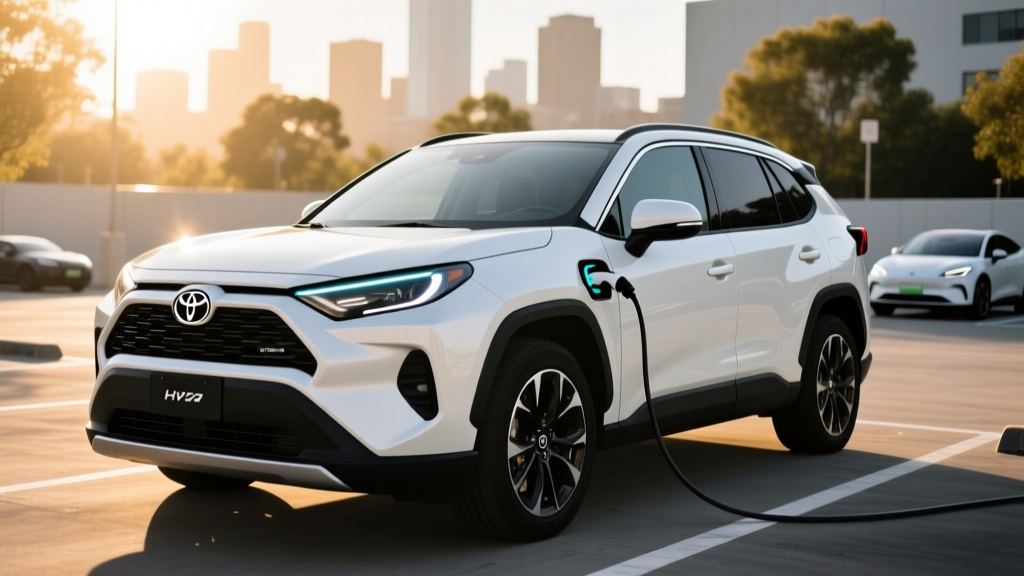
Yes — the standard 2026 Toyota RAV4 Hybrid is a conventional hybrid electric vehicle (HEV). It pairs a 2.5-liter four-cylinder engine with two electric motors and a small nickel-metal hydride (NiMH) traction battery. You never plug it in; the system recovers energy through regenerative braking and engine-driven generation. If you want a plug-in version, Toyota sells the RAV4 Prime, which is a plug-in hybrid (PHEV) with a larger lithium-ion battery and meaningful electric-only range. This guide covers both, but focuses on the conventional HEV, since that's what most buyers mean when they ask, "is it a hybrid?"
HEV vs PHEV at a Glance
| Feature | RAV4 Hybrid (HEV) | RAV4 Prime (PHEV) |
|---|---|---|
| Plugs in? | No | Yes |
| Battery | ~1.6 kWh NiMH | 18.1 kWh lithium-ion |
| Electric-only range | ~1 mi at low speed | 42 mi (EPA) |
| Combined HP | 219 hp | 302 hp |
| EPA combined MPG / MPGe | 39 MPG | 94 MPGe (EV mode) / 38 MPG (gas) |
| Base MSRP (2026) | $33,575 | $44,900 |
| Federal tax credit | Not eligible | Up to $7,500 (§30D, if eligible) |
How Many MPG Does the RAV4 Hybrid Get?
The 2026 RAV4 Hybrid's EPA-estimated fuel economy varies slightly by trim and drivetrain. Here's the breakdown from fueleconomy.gov:
| Trim/Drivetrain | City MPG | Highway MPG | Combined MPG |
|---|---|---|---|
| LE AWD | 41 | 38 | 39 |
| XLE / XLE Premium AWD | 41 | 38 | 39 |
| Woodland Edition AWD | 38 | 35 | 37 |
| Limited AWD | 41 | 38 | 39 |
Real-World MPG vs. EPA Sticker
Toyota's hybrid synergy drive excels in stop-and-go city driving, where the electric motor handles low-speed propulsion and the engine shuts off frequently. Many RAV4 Hybrid owners report exceeding the 41 MPG city EPA figure in warm-weather urban commuting — 43–46 MPG is common. Highway driving is less efficient because the gasoline engine does most of the work above 45 mph; expect 34–36 MPG at 70–75 mph on the interstate. In cold weather (below 32°F), city MPG can drop to 35–37 as the engine runs more often for cabin heat and battery conditioning.
Powertrain Specs: Engine, Motors, and Horsepower
The RAV4 Hybrid uses Toyota's fourth-generation hybrid system:
- Engine: 2.5L Dynamic Force inline-4, 176 hp / 163 lb-ft torque
- Front electric motor: 118 hp / 149 lb-ft
- Rear electric motor (AWD-e): 54 hp / 89 lb-ft — engages automatically for traction, no mechanical driveshaft
- Combined system output: 219 hp
- 0–60 mph: 7.5 seconds (tested)
- Transmission: eCVT (planetary gearset, not a belt-driven CVT)
- Towing capacity: 1,750 lbs
The eCVT is a key reliability advantage. Unlike traditional belt-and-pulley CVTs found in some competitors, Toyota's planetary gearset has no belts, no clutches, and very few wear components. It's one reason the RAV4 Hybrid powertrain routinely reaches 200,000+ miles with basic maintenance.
RAV4 Prime PHEV: Electric-Only Range and Charging
If your question "is it a hybrid?" extends to the plug-in variant, here's what the 2026 RAV4 Prime delivers:
| Spec | Value |
|---|---|
| Battery capacity | 18.1 kWh lithium-ion |
| EPA electric-only range | 42 miles |
| Real-world EV range (warm) | 38–44 mi |
| Real-world EV range (cold, 20°F) | 28–33 mi |
| Total combined range (EV + gas) | ~520 miles |
| Level 1 charging (120V, 12A) | ~12 hours (0–100%) |
| Level 2 charging (240V, 32A) | ~2.5 hours (0–100%) |
| DC fast charging | Not supported |
| Charge port | J1772 (Level 1/2) |
| Combined system HP | 302 hp |
| 0–60 mph | 5.7 seconds |
No DC fast charging. The RAV4 Prime uses a J1772 port limited to Level 2 AC charging at roughly 6.6 kW. This is adequate for overnight home charging but means you can't top up quickly at a DC fast-charging station on a road trip. Once the 42-mile EV buffer depletes, the Prime operates as a conventional hybrid at 38 MPG combined — still excellent, but only marginally better than the HEV's 39 MPG on the highway due to the Prime's extra ~400 lbs of battery weight.
Pricing, Trims, and Tax Credit Eligibility
2026 RAV4 Hybrid (HEV) Pricing
- LE: $33,575
- XLE: $35,060
- XLE Premium: $37,485
- SE: $37,685
- Woodland Edition: $37,485
- Limited: $40,075
Federal tax credit: The conventional RAV4 Hybrid does not qualify for the IRS §30D clean vehicle credit. That credit applies only to plug-in vehicles (PHEVs and BEVs) meeting battery-sourcing and critical-mineral requirements.
2026 RAV4 Prime (PHEV) Pricing
- SE: $44,900
- XSE: $47,400
- XSE Premium: $50,850
Federal Tax Credit Eligibility Checklist (§30D)
- ✅ Vehicle is a PHEV with ≥7 kWh battery (Prime qualifies)
- ⚠️ MSRP cap: SUVs must be ≤$80,000 (all Prime trims qualify)
- ⚠️ Buyer income cap: $150K single / $300K joint MAGI
- ⚠️ Battery component & critical mineral sourcing requirements — verify current-year compliance on IRS.gov
- ✅ Point-of-sale transfer available — dealer applies credit as a down payment reduction
- ❌ Conventional HEV (standard RAV4 Hybrid) is NOT eligible
Rules change frequently. Consult a tax professional and check IRS §30D guidance before purchase.
Reliability and Battery Warranty
Hybrid Battery Warranty
Toyota Hybrid Battery Warranty: 10 years / 150,000 miles (whichever comes first), covering capacity below 70% of original. This applies to both the HEV's NiMH pack and the Prime's lithium-ion pack.
Hybrid System Components: 8 years / 100,000 miles (inverter, transaxle, control module).
Real-World Reliability
The RAV4 Hybrid powertrain has been in production since 2016 (current generation) with roots going back to the 2001 Prius. The NiMH battery in the HEV is remarkably durable — replacement before 150,000 miles is rare. Independent data from repair networks shows average hybrid battery replacement at 180,000–220,000 miles, and many units last the life of the vehicle.
Battery Replacement Cost
- RAV4 Hybrid (HEV) NiMH pack: $2,500–$4,000 installed (OEM from Toyota dealer)
- RAV4 Prime (PHEV) lithium-ion pack: $6,000–$9,000 installed
- Refurbished/aftermarket HEV pack: $1,200–$2,000 installed (available from third-party shops)
For context, a conventional gas-engine RAV4's transmission replacement runs $3,500–$5,500 — and the eCVT in the hybrid is statistically less likely to fail than a traditional automatic.
Who Should Choose the RAV4 Hybrid vs. a PHEV or Full EV?
✅ RAV4 Hybrid (HEV) Pros
- 41 MPG city without plugging in
- Lower MSRP than Prime or any EV SUV
- No charging infrastructure needed
- Proven 200K+ mile powertrain longevity
- Standard AWD across all trims
❌ RAV4 Hybrid (HEV) Cons
- No electric-only driving (except creeping)
- No federal tax credit
- eCVT drone under hard acceleration
- 1,750-lb towing limit
- Infotainment still lags competitors in UX
Decision Framework
Choose the RAV4 Hybrid (HEV) if: You want maximum MPG with zero lifestyle change — no charger installation, no plug-in routine, no range planning. Ideal for apartment dwellers, frequent road-trippers, and buyers in cold climates where EV range loss is a concern.
Choose the RAV4 Prime (PHEV) if: Your daily commute is under 40 miles, you have access to a Level 2 home charger, and you want EV-mode weekday driving with gas-engine weekend flexibility. The $7,500 credit (if eligible) narrows the price gap significantly — a $44,900 Prime becomes ~$37,400 after credit, nearly matching the XLE Hybrid's sticker.
Choose a full EV (e.g., Hyundai Ioniq 5, Tesla Model Y) if: You have reliable home charging, drive under 300 miles daily, and want the lowest per-mile fuel cost (~$0.04/mile vs. $0.12/mile for the HEV at 39 MPG and $3.50/gal). Full EVs also eliminate oil changes and have fewer moving parts long-term.
Frequently Asked Questions
Does the RAV4 Hybrid need to be plugged in?
No. The conventional RAV4 Hybrid (HEV) charges its battery entirely through regenerative braking and the gasoline engine. You fuel it like any other car at a gas station. Only the RAV4 Prime (PHEV) requires plugging in to access its 42-mile electric-only range.
How long will the RAV4 Hybrid battery last?
Toyota warranties the hybrid battery for 10 years/150,000 miles. Real-world data shows most NiMH packs in the RAV4 Hybrid last 180,000–250,000 miles before significant degradation. Many first-generation Prius batteries (same chemistry) have exceeded 300,000 miles.
Is the RAV4 Hybrid good for highway driving?
It's adequate but not exceptional on the highway. The hybrid system's advantage is city driving, where it achieves 41 MPG. At sustained 70–75 mph, expect 34–36 MPG because the gas engine handles most of the load. A diesel or turbo-gas SUV might match or beat it on pure highway runs, but the hybrid dominates combined and city cycles.
Does the RAV4 Hybrid qualify for any tax credit?
The conventional HEV does not qualify for the federal §30D clean vehicle credit — that applies only to plug-in vehicles. The RAV4 Prime PHEV may qualify for up to $7,500, subject to buyer income limits, battery sourcing rules, and MSRP caps. Some states offer additional hybrid rebates; check your state's energy office or fueleconomy.gov tax center.
Is the RAV4 Hybrid AWD system reliable?
Yes. The AWD-e system uses a dedicated rear electric motor with no mechanical connection to the front axle — no driveshaft, no transfer case, no additional fluid to change. It engages automatically below ~25 mph and during slip events. There are no known systemic failures with this system across the 2019–2026 model years.
RAV4 Hybrid vs. Honda CR-V Hybrid: which gets better MPG?
The 2026 Honda CR-V Hybrid AWD rates at 40 city / 34 highway / 37 combined per the EPA, compared to the RAV4 Hybrid's 41/38/39. The Toyota holds a slight edge, especially on the highway. Both are strong choices; the CR-V offers a more refined ride and slightly more cargo room (39.3 vs. 37.5 cu ft behind the rear seats), while the RAV4 wins on efficiency and has a more rugged available trim lineup.