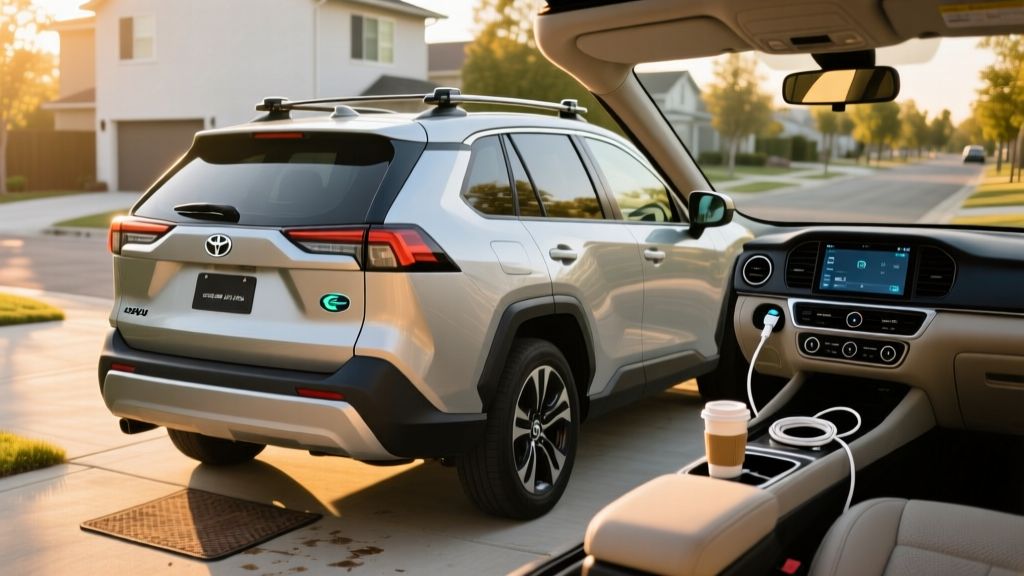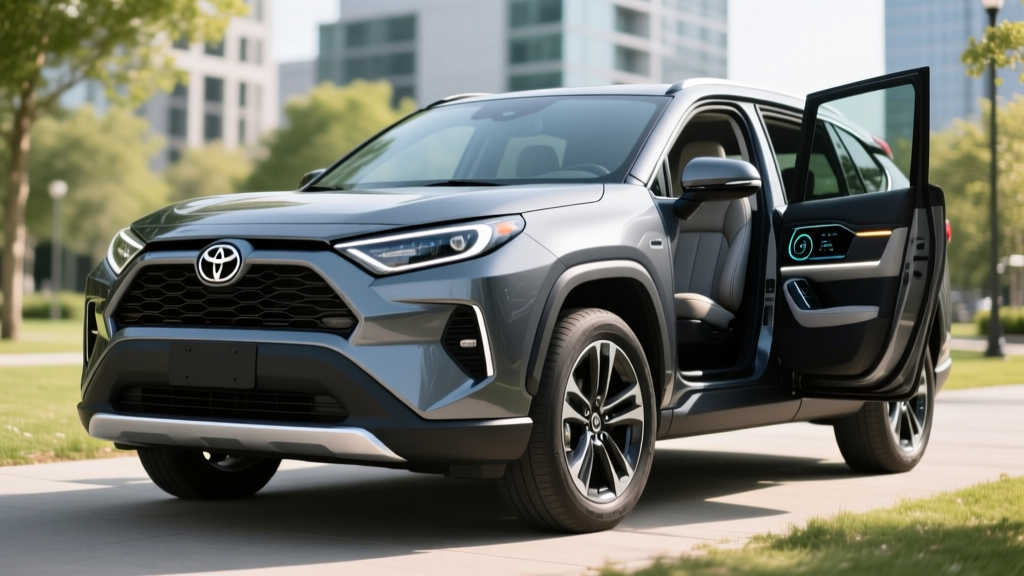
Quick Verdict: The 2026 RAV4 XSE Hybrid delivers a compelling middle ground for buyers who want electrified efficiency without plugging in. With an EPA-estimated 40 MPG combined and a sport-tuned suspension that sets it apart from the rest of the RAV4 Hybrid lineup, the XSE trim targets drivers who prioritize both fuel savings and a more engaged driving feel. It's a conventional hybrid (HEV)—no plug required—making it ideal for apartment dwellers and those without home charging access.
HEV vs PHEV: Which RAV4 Hybrid Is Right for You?
Before diving into the XSE Hybrid specifics, it's critical to understand that Toyota sells two fundamentally different electrified RAV4 models, and confusing them is one of the most common buyer mistakes we see:
| Feature | RAV4 Hybrid (HEV) | RAV4 Prime (PHEV) |
|---|---|---|
| Plug-in Required? | No — self-charging via regenerative braking | Yes — 18.1 kWh battery, plug to charge |
| Electric-Only Range | ~1 mile at low speed | 42 miles (EPA) |
| Combined Horsepower | 219 hp | 302 hp |
| EPA Combined MPG / MPGe | 40 MPG | 94 MPGe (electric) / 38 MPG (gas) |
| Battery Size | 1.6 kWh (NiMH) | 18.1 kWh (Li-ion) |
| DC Fast Charging | N/A | No (Level 2 AC only, ~2.5 hrs) |
| Starting MSRP (2026 est.) | ~$33,500 | ~$45,000 |
| Federal Tax Credit (§30D) | Not eligible | Up to $7,500 (eligibility varies) |
The 2026 RAV4 XSE Hybrid falls squarely in the HEV column. It uses a small battery that charges itself through regenerative braking and the gasoline engine. You never plug it in—you simply fuel up at any gas station and drive. The electric motors assist the engine during acceleration and enable brief electric-only movement at low speeds, but the system is designed to optimize fuel economy, not to replace gasoline entirely.
If you have access to home or workplace charging and a commute under 42 miles, the RAV4 Prime PHEV may deliver dramatically lower fuel costs. But if charging access is uncertain, the HEV eliminates that variable entirely while still delivering meaningful efficiency gains over a gas-only vehicle.
2026 RAV4 XSE Hybrid Fuel Economy: EPA Numbers and Real-World MPG
Fuel economy is the core value proposition of any hybrid, and the RAV4 XSE Hybrid doesn't disappoint. Here's the EPA-estimated breakdown as published on fueleconomy.gov:
| Driving Condition | EPA Estimated MPG |
|---|---|
| City | 41 MPG |
| Highway | 38 MPG |
| Combined | 40 MPG |
Real-World MPG Expectations: Toyota's hybrid system excels in stop-and-go city driving where regenerative braking recaptures energy constantly. In our experience and consistent with owner reports, city MPG often meets or slightly exceeds the 41 MPG EPA estimate—drivers regularly see 42-44 MPG on urban routes. Highway driving at sustained 70-80 MPH tends to return 36-38 MPG, slightly below the EPA sticker due to aerodynamic drag that the hybrid system can't offset. In cold weather (below 30°F), expect a 5-10% reduction across the board as the engine runs more frequently to maintain cabin heat and battery temperature. Annual fuel cost at 15,000 miles and $3.50/gallon averages approximately $1,313—roughly $700-900 less per year than a comparable gas-only RAV4 AWD.
The XSE Hybrid's fuel economy is identical to other AWD RAV4 Hybrid trims. The sport-tuned suspension and 18-inch wheels don't impose a measurable efficiency penalty compared to the LE or XLE Hybrid.
Powertrain and Performance Specs
The 2026 RAV4 XSE Hybrid uses Toyota's proven fourth-generation hybrid synergy drive system paired with electronic on-demand all-wheel drive (AWD). Here's the full spec breakdown:
| Specification | 2026 RAV4 XSE Hybrid |
|---|---|
| Engine | 2.5L 4-cylinder Dynamic Force (176 hp / 163 lb-ft) |
| Front Electric Motor | 88 kW (118 hp) |
| Rear Electric Motor (AWD) | 40 kW (54 hp) |
| Combined Net Horsepower | 219 hp |
| Transmission | eCVT (electronically controlled) |
| 0-60 MPH | 7.4 seconds |
| Drivetrain | Electronic On-Demand AWD |
| Hybrid Battery | 1.6 kWh Nickel-Metal Hydride (NiMH) |
| Towing Capacity | 1,750 lbs |
| Cargo Volume | 37.6 cu ft (rear seats up) / 69.8 cu ft (folded) |
The 219 combined horsepower figure comes from Toyota's specific power-split calculation—it's not a simple addition of the engine and motor outputs, as peak outputs occur at different RPM points. The result is a powertrain that feels responsive off the line (electric motors deliver instant torque) while maintaining the efficiency benefits of the Atkinson-cycle engine during cruising.
The XSE trim specifically adds a sport-tuned suspension with revised damper tuning and a slightly firmer ride compared to the LE and XLE Hybrid trims. You'll notice less body roll in corners and a more connected steering feel, though ride comfort over rough pavement is marginally reduced. It's a meaningful but modest differentiation—not a sports car, but a noticeably more engaging compact SUV.
What Does the XSE Trim Add Over the Standard Hybrid?
The XSE sits in the upper-middle of the RAV4 Hybrid lineup, and its premium over the volume-selling XLE Hybrid (typically $2,000-$2,500) buys both cosmetic and functional upgrades:
- Sport-tuned suspension with unique damper calibration for tighter handling
- SofTex-trimmed seats with blue contrast stitching (exclusive XSE interior)
- 18-inch black alloy wheels with a sport-specific design
- Dual-zone automatic climate control (single-zone on LE Hybrid)
- 8-inch Toyota Audio Multimedia touchscreen with wireless Apple CarPlay and Android Auto
- Power liftgate with height adjustment
- LED fog lights and unique front/rear bumper styling
- Qi-compatible wireless phone charging pad
The XSE does not include Toyota's most advanced driver-assistance features as standard—those are bundled in the Technology Package (JBL audio, panoramic view monitor, front and rear parking assist with automatic braking) which adds approximately $1,500 to the MSRP.
Pricing and Tax Credit Eligibility
The 2026 RAV4 XSE Hybrid carries an estimated starting MSRP of $37,495 (including destination charge). Adding the Technology Package pushes it to approximately $39,000, and fully loaded with premium paint and accessories, expect to land around $40,500-$41,000 out the door before taxes and registration.
Federal Tax Credit Status: The conventional RAV4 Hybrid (HEV) does not qualify for the IRS §30D Clean Vehicle Credit. That credit is reserved for plug-in electric vehicles (BEVs and PHEVs) meeting battery sourcing, MSRP cap, and buyer income requirements. If the $7,500 federal tax credit is a priority in your purchase decision, you would need to look at the RAV4 Prime PHEV or a full BEV. Some states and utilities offer smaller rebates for conventional hybrids—check your local programs, but these are typically $500-$1,500 and vary by jurisdiction.
For buyers who don't qualify for the PHEV credit due to income caps ($150,000 single / $300,000 joint for §30D) or who simply lack charging access, the HEV's lower purchase price and strong fuel economy still deliver a compelling total cost of ownership without any credit dependency.
Reliability, Battery Warranty, and Long-Term Ownership Costs
Toyota's hybrid system is among the most thoroughly validated electrified powertrains on the road. The RAV4 Hybrid has been in continuous production since the 2016 model year, and the underlying hybrid synergy drive architecture traces back to the original Prius in 1997. This is not experimental technology.
Hybrid Battery Warranty: Toyota covers the RAV4 Hybrid's traction battery for 10 years or 150,000 miles (whichever comes first) in all 50 states. This warranty guarantees the battery will retain sufficient capacity to operate the hybrid system as designed. If the battery fails or degrades below Toyota's threshold within the warranty period, replacement is covered at no cost to the owner.
Out-of-Warranty Replacement Cost: If a hybrid battery replacement is needed after the warranty expires, expect to pay between $2,500 and $4,000 for a refurbished or new battery pack plus installation at a Toyota dealer. Independent hybrid specialists often offer replacements for $2,000-$3,000. In practice, Toyota hybrid batteries routinely last 200,000+ miles with minimal degradation, as the system never fully charges or fully depletes the battery—keeping it in the 40-80% state-of-charge window that maximizes longevity.
Beyond the battery, the RAV4 Hybrid has fewer wear components than a conventional gas vehicle. There's no traditional starter motor, no alternator, and the eCVT has no clutch packs or bands to wear out. Regenerative braking significantly reduces brake pad wear—owners commonly report 80,000-100,000 miles on original brake pads. The IIHS has consistently rated the RAV4 highly for safety, and Toyota Safety Sense 2.5+ (pre-collision system, lane departure alert, dynamic radar cruise control, lane tracing assist) comes standard on every trim.
Who Should Buy the RAV4 XSE Hybrid — and Who Shouldn't?
Choose the 2026 RAV4 XSE Hybrid if:
- You want 40 MPG without changing your fueling habits (no plug, no charger install)
- You live in an apartment or lack reliable access to home/workplace charging
- You frequently drive in stop-and-go city traffic where hybrid efficiency peaks
- You want a sportier suspension tune without stepping to a luxury badge
- You plan to own the vehicle 8-10+ years and value Toyota's reliability track record
- Your annual mileage is 12,000-20,000 miles, maximizing fuel savings
Look elsewhere if:
- You have home charging and a sub-40-mile commute — the RAV4 Prime PHEV eliminates most gas usage entirely
- You want a full electric experience — consider the Tesla Model Y, Hyundai Ioniq 5, or Toyota bZ4X
- You need more than 1,750 lbs towing capacity — the gas RAV4 Adventure can tow up to 3,500 lbs
- You prioritize the softest possible ride — the XSE's sport tuning is firmer than the XLE Hybrid
Pros
- 41 city MPG exceeds EPA in real-world stop-and-go driving
- No plug-in charging required — zero lifestyle change from a gas car
- 10-year / 150,000-mile hybrid battery warranty provides peace of mind
- Sport-tuned suspension adds genuine handling differentiation
- Standard AWD with electric rear motor for confident all-weather traction
- Strong resale value — RAV4 Hybrids hold value well in the used market
Cons
- Not eligible for the $7,500 federal §30D tax credit (HEV limitation)
- Highway MPG (38) trails city MPG — less benefit for long-distance commuters
- 1,750-lb towing capacity is modest for an AWD compact SUV
- XSE price premium over XLE Hybrid may not justify the sport suspension for all buyers
- eCVT drone under hard acceleration remains a characteristic of Toyota's hybrid system
- No DC fast charging capability (not applicable to HEV, but worth noting vs. PHEV/BEV)
Frequently Asked Questions
How many MPG does the 2026 RAV4 XSE Hybrid get?
The EPA rates the 2026 RAV4 XSE Hybrid at 41 MPG city, 38 MPG highway, and 40 MPG combined. In real-world city driving, many owners report 42-44 MPG thanks to frequent regenerative braking. Highway cruising at 75+ MPH typically yields 35-38 MPG.
Does the RAV4 XSE Hybrid need to be plugged in?
No. The RAV4 XSE Hybrid is a conventional hybrid (HEV). Its 1.6 kWh battery charges entirely through regenerative braking and the gasoline engine. You fuel it like any other car at a gas station. Only the RAV4 Prime (PHEV) requires plug-in charging.
Is the hybrid battery reliable and what does replacement cost?
Toyota's hybrid batteries are among the most reliable in the industry, routinely lasting 200,000+ miles. The battery is covered by a 10-year / 150,000-mile warranty. Out-of-warranty replacement costs $2,500-$4,000 at a dealer, or $2,000-$3,000 at an independent hybrid specialist. Failures within the warranty period are rare but fully covered.
Does the 2026 RAV4 XSE Hybrid qualify for a federal tax credit?
No. The IRS §30D Clean Vehicle Credit applies only to plug-in electric vehicles (BEVs and PHEVs). The conventional RAV4 Hybrid does not qualify. The RAV4 Prime PHEV may qualify for up to $7,500, subject to buyer income limits, MSRP caps, and battery sourcing requirements. Check current IRS guidelines for eligibility.
Hybrid vs PHEV vs EV — which RAV4 should I buy?
If you lack home charging access, the RAV4 Hybrid (HEV) is the clear choice—zero infrastructure needed, 40 MPG. If you have a Level 2 charger at home and a commute under 42 miles, the RAV4 Prime PHEV can eliminate most gasoline usage while still offering 450+ miles of total range for road trips. If you're ready to go fully electric, look beyond the RAV4 lineup to dedicated BEVs like the Tesla Model Y or Hyundai Ioniq 5 for 250-320 miles of EPA range and lower per-mile fuel costs.
How does the XSE Hybrid compare to the gas-only RAV4?
The gas-only RAV4 AWD returns approximately 27 MPG combined versus the XSE Hybrid's 40 MPG—a 48% improvement. Over 15,000 miles per year at $3.50/gallon, that's roughly $750-$900 in annual fuel savings. The hybrid also delivers smoother acceleration from a stop (electric motor torque) and quieter low-speed operation. The trade-off is a $3,000-$4,000 higher purchase price and 1,750 lbs of towing capacity versus 3,500 lbs on the gas RAV4 Adventure.
What is the 0-60 time on the RAV4 XSE Hybrid?
The 2026 RAV4 XSE Hybrid accelerates from 0-60 MPH in approximately 7.4 seconds. That's competitive with turbocharged four-cylinder compact SUVs and noticeably quicker than the base gas RAV4 (8.1 seconds). The electric motor's instant torque makes it feel even brisker in real-world 0-30 MPH city acceleration.