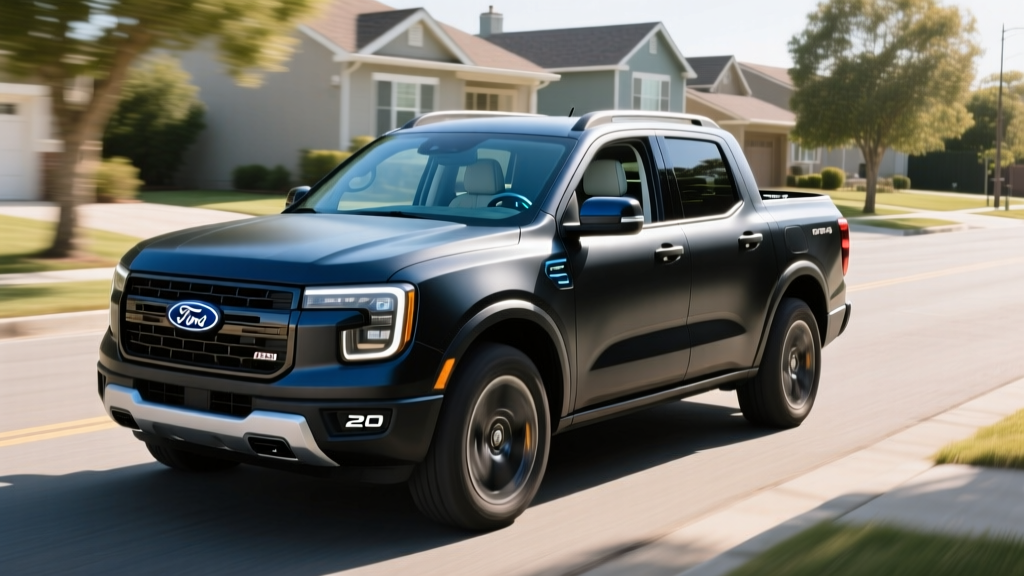
The Ford Maverick Hybrid has carved out a unique niche as one of the most affordable and fuel-efficient trucks on the market. But until the 2025 model year, buyers who wanted all-wheel drive had to opt for the turbocharged 2.0L EcoBoost engine, sacrificing the hybrid's stellar fuel economy. That changed when Ford finally introduced the Maverick Hybrid AWD configuration, pairing its proven hybrid powertrain with all-weather traction. For truck shoppers torn between efficiency and capability, this is the variant that demands a closer look.
Below, we break down every number that matters — EPA MPG, real-world fuel economy, powertrain output, pricing, tax-credit eligibility, and long-term battery reliability — so you can decide whether the Maverick Hybrid AWD fits your driveway.
Ford Maverick Hybrid AWD: Core Specs at a Glance
| Specification | Value |
|---|---|
| Powertrain | 2.5L Atkinson-cycle I-4 + electric motor (HEV) |
| Combined Horsepower | 194 hp |
| Drivetrain | All-wheel drive (AWD) |
| EPA MPG (City / Hwy / Combined) | 40 / 34 / 37 |
| Fuel Tank Capacity | 16.5 gallons |
| Estimated Total Range | ~610 miles |
| 0–60 mph | ~7.5 seconds (est.) |
| Max Towing (with 4K Tow Package) | 4,000 lbs |
| Max Payload | 1,500 lbs |
| Bed Length | 4.5 ft (54.4 cu ft volume) |
| Starting MSRP (AWD Hybrid) | $29,495 (Lobo / XL trim) |
| Hybrid Battery Warranty | 8 years / 100,000 miles |
How Many MPG Does the Maverick Hybrid AWD Actually Get?
The EPA rates the 2025 Maverick Hybrid AWD at 40 mpg city, 34 mpg highway, and 37 mpg combined. That's a modest drop from the front-wheel-drive hybrid's 42/33/37 split — you lose 2 mpg in the city but gain 1 mpg on the highway, with the combined figure holding at 37 mpg.
| Configuration | City | Highway | Combined |
|---|---|---|---|
| FWD Hybrid | 42 mpg | 33 mpg | 37 mpg |
| AWD Hybrid | 40 mpg | 34 mpg | 37 mpg |
| AWD 2.0L EcoBoost | 22 mpg | 29 mpg | 25 mpg |
Real-World MPG: What Owners Report
Hybrids consistently overperform their EPA city ratings in stop-and-go driving because regenerative braking recovers energy that gas-only vehicles waste as heat. Maverick Hybrid owners on forums and fuel-tracking apps like Fuelly report real-world city figures of 41–45 mpg in mild weather — a pleasant surprise versus the sticker.
Highway driving tells a different story. At sustained 75–80 mph speeds, the electric motor contributes less and the 2.5L engine shoulders more of the load. Expect 30–33 mpg on the highway at freeway speeds, roughly matching or slightly below the EPA estimate. Cold weather (below 35°F) can knock 3–5 mpg off combined figures as the engine runs more frequently to heat the cabin and maintain battery temperature.
Hybrid (HEV) vs. Plug-In Hybrid (PHEV): Where the Maverick Fits
The Maverick Hybrid is a conventional hybrid electric vehicle (HEV), not a plug-in hybrid (PHEV). This distinction matters because it affects how you fuel the truck, what you pay at the pump, and whether you qualify for federal tax incentives.
| Feature | HEV (Maverick Hybrid) | PHEV (e.g., Toyota RAV4 Prime) | Full EV (e.g., Ford F-150 Lightning) |
|---|---|---|---|
| Plug in to charge? | No — gas only | Yes — Level 1/2 | Yes — Level 1/2/DC |
| Electric-only range | None (motor assists at low speed) | 35–42 miles typical | 230–320+ miles |
| Battery size | ~1.1 kWh (small buffer) | 14–18 kWh usable | 77–131 kWh usable |
| Fuel/energy cost per mile | ~$0.10–0.12 (gas) | ~$0.04 (electric) / ~$0.11 (gas) | ~$0.04–0.06 (electric) |
| Federal tax credit (§30D) | Not eligible | Up to $7,500 (if eligible) | Up to $7,500 (if eligible) |
| Home charging needed? | No | Recommended | Essential |
If you lack access to home or workplace charging, the HEV setup is the pragmatic choice. You never plug in — the gasoline engine and regenerative braking keep the small hybrid battery charged. If you do have a garage outlet and a short commute, a PHEV could let you drive electric most days while keeping a gas engine for longer trips. The Maverick does not currently offer a PHEV variant.
Powertrain Deep Dive: 2.5L Hybrid with AWD
The Maverick Hybrid AWD uses Ford's fourth-generation hybrid system, the same architecture found in the Ford Escape Hybrid. Here's how the components break down:
- Engine: 2.5-liter Atkinson-cycle inline-4, producing approximately 162 hp and 155 lb-ft of torque on its own
- Electric Motor: Permanent-magnet synchronous motor integrated into the transaxle, contributing up to ~131 hp
- Combined System Output: 194 hp (net, accounting for power overlap between engine and motor)
- Transmission: Electronic continuously variable transmission (eCVT) — not a belt-driven CVT, but a planetary gearset that blends engine and motor power seamlessly
- AWD System: A rear-axle electric motor (rather than a mechanical driveshaft) powers the rear wheels when traction is needed. This is an on-demand system — under normal cruising, the front wheels handle propulsion, and the rear motor engages during acceleration, slippery conditions, or when the system detects wheel slip
The result is a truck that feels adequately quick around town (the electric motor provides instant torque from a stop) while delivering fuel economy that embarrasses most compact SUVs. The eCVT is smooth and avoids the "rubber-band" feel of traditional belt CVTs, though it can hold high RPMs under hard acceleration — typical hybrid behavior.
Towing and Payload with AWD Hybrid
With the optional 4K Tow Package ($750 on most trims), the Maverick Hybrid AWD can tow up to 4,000 pounds — enough for a small boat, utility trailer, or a pair of ATVs. Without the package, towing is limited to 2,000 pounds. Payload capacity sits at 1,500 pounds for most AWD Hybrid trims, competitive with compact crossovers but below the EcoBoost AWD's 1,500-pound rating.
Pricing, Trims, and Tax Credit Eligibility
The 2025 Maverick Hybrid AWD is available across multiple trims. Here's the pricing landscape:
| Trim | MSRP (AWD Hybrid) | Notable Features |
|---|---|---|
| XL | $29,495 | Base trim, 8" touchscreen, Ford Co-Pilot360 |
| XLT | $31,995 | Alloy wheels, keyless entry, rear USB ports |
| Lariat | $36,495 | Leather-trimmed seats, power driver seat, ambient lighting |
| Tremor (Off-Road) | $40,495 | Off-road suspension, skid plates, all-terrain tires, raised ride height |
Does the Maverick Hybrid Qualify for a Federal Tax Credit?
No. The Maverick Hybrid is a conventional HEV, not a plug-in vehicle. Under IRS §30D rules, only battery electric vehicles (BEVs) and plug-in hybrid electric vehicles (PHEVs) with a minimum battery capacity of 7 kWh qualify for the federal clean vehicle credit. The Maverick Hybrid's ~1.1 kWh battery is far below that threshold.
However, the Maverick Hybrid's low starting price (~$29,495 for AWD) means many buyers will find the out-of-pocket cost competitive with a PHEV SUV after the PHEV buyer claims their credit — especially when you factor in the Maverick's truck bed utility and comparable fuel economy.
Battery Warranty, Reliability, and Long-Term Costs
Hybrid battery longevity is the single most common concern among first-time hybrid buyers. Here's what you need to know about the Maverick Hybrid's battery pack:
Real-World Hybrid Battery Reliability
Ford's hybrid system has been in production since the 2005 Escape Hybrid, and the current fourth-generation architecture benefits from nearly two decades of refinement. The Maverick Hybrid uses a nickel-metal hydride (NiMH) battery pack — a chemistry with a long track record of durability in Toyota and Ford hybrids. While NiMH is less energy-dense than the lithium-ion packs in EVs, it is thermally stable and degrades slowly.
Based on data from high-mileage Ford Escape Hybrid and Toyota Prius fleets, hybrid battery packs routinely last 150,000–200,000 miles before significant degradation. Out-of-warranty replacement costs for a Maverick Hybrid battery are estimated at $2,500–$4,000 (parts and labor) based on comparable Ford hybrid service pricing, though this figure may shift as the Maverick Hybrid ages and aftermarket options emerge.
For context, the average American driver covers ~14,000 miles per year. At that rate, the hybrid battery should outlast a decade of ownership for most buyers, and the 8-year/100,000-mile warranty provides substantial protection.
Who Should Choose the Maverick Hybrid AWD?
Choose the Maverick Hybrid AWD if:
- You want truck utility (bed, towing) with car-like fuel costs
- You live in a region with rain, snow, or unpaved roads and need AWD
- You don't have access to home or workplace EV charging
- Your daily commute is under 50 miles with mixed city/highway driving
- You want a low starting price without waiting on tax-credit eligibility
Look elsewhere if:
- You need heavy towing (5,000+ lbs) — consider the EcoBoost or a full-size truck
- You want electric-only driving to minimize fuel costs — consider a PHEV or BEV
- You drive mostly highway miles at 80+ mph (hybrid advantage diminishes at high speed)
- You want the lowest possible per-mile energy cost — a BEV at $0.04–0.06/mile beats $0.10–0.12/mile on gas
Maverick Hybrid AWD vs. Full EV Trucks
The Ford F-150 Lightning and Chevrolet Silverado EV offer zero tailpipe emissions, lower per-mile energy costs, and instant torque. But they start well above $50,000, require home charging infrastructure, and carry range limitations when towing. The Maverick Hybrid AWD at ~$29,500 is a fundamentally different value proposition: affordable, no charging hassle, and 610 miles of total range. It's the right call for budget-conscious buyers who need a truck bed but don't need to tow a 7,000-pound trailer.
Frequently Asked Questions
Does the Maverick Hybrid AWD need to be plugged in?
No. The Maverick Hybrid is a conventional hybrid (HEV). It charges its small battery through regenerative braking and the gasoline engine. You fuel it exclusively at gas stations — no plug, no charging cable, no home charger required.
How far can the Maverick Hybrid AWD go on a full tank?
With a 16.5-gallon fuel tank and an EPA combined rating of 37 mpg, expect approximately 610 miles of total range in mixed driving. City-heavy driving may push this to 650+ miles; sustained highway driving at high speeds will reduce it to roughly 500–530 miles.
Is the Maverick Hybrid AWD good in snow?
The AWD system engages the rear electric motor automatically when it detects front-wheel slip, providing confident traction in light to moderate snow and rain. For severe winter conditions, pairing the AWD system with dedicated winter tires will significantly improve braking and cornering grip. The hybrid powertrain also provides smooth, predictable torque delivery on slippery surfaces — an advantage over turbocharged engines that can surge unexpectedly.
How long will the hybrid battery last?
Based on Ford's hybrid track record and comparable NiMH packs in the Escape Hybrid and Toyota Prius, expect the battery to last 150,000–200,000 miles before notable degradation. Ford's warranty covers 8 years/100,000 miles (10 years/150,000 miles in CARB states), which protects the vast majority of owners through the vehicle's prime ownership period.
Can I get the Maverick Hybrid AWD with the 4K Tow Package?
Yes. The 4K Tow Package is available on the Maverick Hybrid AWD and raises maximum towing capacity to 4,000 pounds. This package includes an upgraded cooling system, a trailer brake controller, and a higher-capacity alternator. Expect to pay approximately $750 for the package depending on trim.
Does the Maverick Hybrid AWD qualify for any tax credits?
The Maverick Hybrid does not qualify for the federal §30D clean vehicle credit because it is a conventional HEV, not a plug-in vehicle. Some states or municipalities may offer small incentives for hybrid purchases, but these vary widely. Check your state's energy office or the DOE's Alternative Fuels Data Center for local programs.