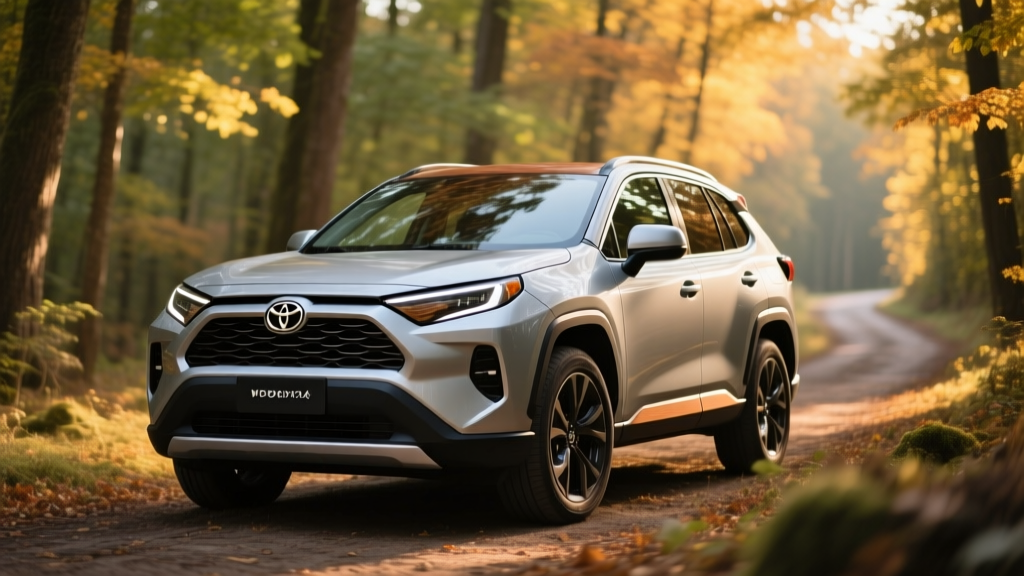
The Toyota RAV4 Hybrid has long dominated the compact crossover segment, but the Woodland trim targets a specific buyer: someone who wants hybrid efficiency without sacrificing weekend trail capability. For 2026, the RAV4 Woodland Hybrid continues to pair Toyota's proven series-parallel hybrid system with standard electronic all-wheel drive and off-road-oriented styling. This is a conventional hybrid (HEV) — no plug required — and that distinction matters for buyers cross-shopping against the RAV4 Prime plug-in hybrid or a full battery-electric vehicle.
Below, we break down every number that matters: EPA fuel economy, real-world MPG expectations, powertrain output, pricing by trim, battery warranty, and how the Woodland stacks up against both its plug-in sibling and pure EVs. If you're researching the 2026 Toyota RAV4 Woodland Hybrid before visiting a dealer, this guide gives you the data to decide.
HEV vs. PHEV: Where the Woodland Fits
Before diving into specs, it's essential to clarify what the Woodland is — and what it isn't. Toyota sells two electrified RAV4 variants, and confusing them is one of the most common buyer mistakes we see.
| Feature | RAV4 Woodland Hybrid (HEV) | RAV4 Prime (PHEV) |
|---|---|---|
| Powertrain type | Conventional hybrid — no plug | Plug-in hybrid — charges via outlet |
| Battery size | ~1.6 kWh (small buffer) | 18.1 kWh usable |
| Electric-only range | None (EV assist only) | 42 miles EPA |
| Combined HP | 219 hp | 302 hp |
| EPA combined MPG/MPGe | 39 MPG | 94 MPGe (electric) / 38 MPG (gas) |
| Federal tax credit | Not eligible (§30D is BEV/PHEV only) | Eligible up to $7,500 (subject to sourcing/income rules) |
| Starting MSRP (2026) | ~$37,500 | ~$46,000 |
The Woodland Hybrid is a self-charging HEV. Its small battery recovers energy from braking and the gasoline engine — you never plug it in. The RAV4 Prime is a PHEV with a much larger battery that you charge at home or at public stations, giving it a meaningful electric-only commute range before the gas engine engages.
Fuel Economy: EPA Ratings and Real-World MPG
The headline number for any hybrid buyer is fuel economy. The 2026 RAV4 Woodland Hybrid carries EPA estimates that reflect its AWD hardware and slightly more aggressive all-terrain tires compared to the standard RAV4 Hybrid LE or XLE.
| Driving Cycle | EPA Estimate | Real-World Expectation |
|---|---|---|
| City | 38 MPG | 40–44 MPG (hybrids excel in stop-and-go) |
| Highway | 38 MPG | 34–37 MPG (sustained 70+ mph reduces regen benefit) |
| Combined | 39 MPG | 36–41 MPG depending on driving mix |
Why real-world city MPG often beats the EPA sticker: Toyota's hybrid system recovers kinetic energy during braking and deceleration. In city driving with frequent stops, the electric motor handles more of the propulsion load, and the gasoline engine shuts off at idle. On the highway, the engine runs more continuously, and aerodynamic drag at 75 mph penalizes the boxy RAV4 shape.
Cold-weather caveat: Expect a 5–10% MPG reduction in winter months (roughly 34–36 combined) because the engine must run more often to generate cabin heat and because battery chemistry is less efficient below freezing. This is normal for all hybrids and far less severe than the 20–30% range loss a full BEV experiences in cold weather.
According to fueleconomy.gov, the RAV4 Hybrid AWD's combined rating places it among the most efficient AWD crossovers available, trailing only the RAV4 Prime in gas-only mode by roughly 1 MPG.
Powertrain and Performance Specs
The 2026 Woodland Hybrid uses Toyota's fourth-generation hybrid synergy drive, pairing a 2.5-liter Atkinson-cycle four-cylinder engine with front and rear electric motors for electronic on-demand AWD.
| Specification | Value |
|---|---|
| Engine | 2.5L 4-cyl Atkinson cycle |
| Engine output | 176 hp / 163 lb-ft torque |
| Front electric motor | 134 hp / 199 lb-ft |
| Rear electric motor (AWD) | 54 hp / 89 lb-ft |
| Net combined system output | 219 hp |
| Transmission | eCVT (planetary gearset, not a belt CVT) |
| 0–60 mph | 7.4 seconds (est.) |
| Drivetrain | Electronic AWD (eAWD) with Trail mode |
| Towing capacity | 1,750 lbs |
| Fuel tank | 14.5 gallons |
| Total driving range | ~565 miles (combined) |
The eAWD system is worth explaining. Unlike a mechanical AWD system with a driveshaft, the rear wheels are driven entirely by the dedicated rear electric motor. This means there's no parasitic drivetrain loss when AWD isn't needed — the rear motor simply disengages. The Trade mode adjusts throttle response, brake-based limited-slip, and torque distribution for loose surfaces like gravel or snow, though this is light-duty off-road capability, not a body-on-frame truck.
Acceleration is adequate for merging and passing. The 219 hp figure doesn't translate to sports-SUV thrust, but the electric motor's instant torque (199 lb-ft from the front motor alone) gives the Woodland a responsive feel around town that the horsepower number undersells.
Pricing, Trims, and Tax Credit Eligibility
The 2026 RAV4 Woodland Hybrid sits in the upper-middle of the RAV4 Hybrid lineup. Pricing below reflects MSRP before destination charges.
- Woodland Hybrid: ~$37,500 MSRP (includes destination)
- Woodland Hybrid with Premium Package: ~$39,800 MSRP (adds JBL audio, panoramic roof, heated/ventilated seats)
Federal Tax Credit: Not Eligible
The IRS §30D Clean Vehicle Credit applies only to battery-electric vehicles (BEVs) and plug-in hybrids (PHEVs) with a battery capacity of at least 7 kWh. The RAV4 Woodland Hybrid's ~1.6 kWh battery disqualifies it entirely. This is a common point of confusion: conventional hybrids have not qualified for the federal purchase credit since the original Toyota Prius credit expired over a decade ago.
If the federal tax credit is a dealbreaker, the RAV4 Prime PHEV is the electrified RAV4 that may qualify — though eligibility depends on current-year battery sourcing requirements, buyer income caps ($150K single / $300K joint), and the $80,000 MSRP cap for SUVs. Always verify current eligibility on IRS.gov or with a tax professional before assuming the full $7,500 credit applies.
Some states offer their own hybrid or high-MPG vehicle rebates (California's CVRP, for example, has historically focused on BEVs and PHEVs, not HEVs). Check your state energy office for current programs.
Battery Warranty, Reliability, and Replacement Cost
Hybrid battery longevity is the single most common concern we hear from first-time hybrid buyers. Here's what the data shows.
| Coverage | Terms |
|---|---|
| Hybrid battery warranty | 10 years / 150,000 miles (whichever comes first) |
| Hybrid system components | 8 years / 100,000 miles |
| Powertrain warranty (engine, transaxle) | 5 years / 60,000 miles |
| Basic bumper-to-bumper | 3 years / 36,000 miles |
Toyota's 10-year/150,000-mile hybrid battery warranty is among the best in the industry and applies nationwide (not just in CARB states, as it once did). The warranty covers the hybrid battery pack against defects and capacity loss below a defined threshold — typically around 60–70% of original capacity.
Real-world reliability data: Toyota's hybrid system is one of the most proven electrified powertrains on the road. The Prius, Camry Hybrid, and RAV4 Hybrid collectively have billions of real-world miles logged. Independent data from Consumer Reports and J.D. Power consistently ranks Toyota hybrids among the most reliable vehicles in their segments. The hybrid battery in a RAV4 Hybrid routinely lasts 150,000–200,000+ miles before any significant degradation.
Battery replacement cost: If the hybrid battery does eventually need replacement out of warranty, expect to pay between $3,000 and $4,500 for a new OEM pack installed at a Toyota dealer. Refurbished or aftermarket cells are available for $1,500–$2,500. This is dramatically less than a full EV battery replacement ($10,000–$20,000+), because the hybrid battery is small (~1.6 kWh vs. 75+ kWh in a BEV).
Who Should Choose the Woodland Hybrid vs. a PHEV or Full EV?
Pros
- No plug-in charging needed — works with any gas station
- 39 MPG combined with AWD is exceptional efficiency
- Proven reliability with 10-year hybrid battery warranty
- Trail mode and eAWD for light off-road and snow capability
- ~565-mile total range eliminates range anxiety entirely
- Lower purchase price than the RAV4 Prime or comparable BEVs
Cons
- No federal tax credit eligibility
- No electric-only driving mode (always uses some gasoline)
- 219 hp is adequate but not quick for a 3,800-lb crossover
- 1,750-lb tow rating limits utility for boat/trailer owners
- Highway MPG drops noticeably above 75 mph
- Cabin noise under hard acceleration (eCVT drone)
Decision Framework
Choose the RAV4 Woodland Hybrid if: You want maximum simplicity — no home charger installation, no plug-in routine, no range anxiety. You drive a mix of city and highway, take occasional gravel-road or camping trips, and want to spend under $40K on a reliable, efficient AWD crossover. You don't have access to home or workplace charging, making a PHEV or BEV impractical.
Choose the RAV4 Prime (PHEV) if: You have reliable Level 2 home charging, a commute under 42 miles, and want to drive mostly on electricity during the week while keeping gas-engine range for road trips. You're willing to pay ~$8,500 more upfront and want the 302 hp performance boost — plus potential federal tax credit eligibility.
Choose a full BEV (e.g., Tesla Model Y, Hyundai Ioniq 5) if: You have home charging, want zero tailpipe emissions, qualify for the full $7,500 federal credit, and your driving patterns fit within a 270–320 mile real-world range. You're ready to plan around DC fast charging on road trips.
Real-World Ownership Costs: 5-Year Estimate
Beyond MPG, the Woodland Hybrid's ownership economics are driven by Toyota's strong resale values, low maintenance costs (no oil changes beyond the standard interval, no transmission fluid changes on the eCVT), and modest insurance premiums relative to EVs.
| Cost Category (5 years / 75,000 mi) | RAV4 Woodland Hybrid | RAV4 Gas (AWD) | Comparable BEV (e.g., Ioniq 5) |
|---|---|---|---|
| Fuel / energy | ~$6,200 | ~$9,800 | ~$3,100 (home charging) |
| Maintenance | ~$2,800 | ~$3,900 | ~$1,800 |
| Insurance (avg.) | ~$7,500 | ~$7,000 | ~$9,200 |
| Depreciation (est.) | ~$14,000 | ~$16,500 | ~$18,000 |
| Federal tax credit | $0 | $0 | Up to –$7,500 |
| Estimated 5-yr net cost | ~$30,500 | ~$37,200 | ~$24,600 |
The hybrid saves roughly $6,700 over the gas-only RAV4 over five years, primarily through fuel savings and stronger resale value. A BEV with the full federal credit still wins on pure economics if home charging is available — but the hybrid requires zero infrastructure investment and zero behavior change.
Frequently Asked Questions
How many MPG does the 2026 RAV4 Woodland Hybrid get?
The EPA rates the RAV4 Woodland Hybrid at 38 city / 38 highway / 39 combined MPG. In real-world driving, expect 40–44 MPG in city conditions (where regenerative braking shines) and 34–37 MPG on the highway at sustained speeds above 70 mph. Cold weather reduces these figures by roughly 5–10%.
Does the RAV4 Woodland Hybrid need to be plugged in?
No. The Woodland is a conventional hybrid (HEV). Its small battery charges through regenerative braking and the gasoline engine. You fuel it like any other car at a gas station. If you want a RAV4 you plug in, you're looking for the RAV4 Prime, which is a plug-in hybrid (PHEV).
Does the 2026 RAV4 Woodland Hybrid qualify for a federal tax credit?
No. The IRS §30D Clean Vehicle Credit applies only to battery-electric vehicles and plug-in hybrids with a battery capacity of at least 7 kWh. The Woodland Hybrid's ~1.6 kWh battery does not qualify. The RAV4 Prime PHEV may qualify, depending on current-year sourcing, income, and MSRP requirements.
How long will the hybrid battery last, and what does replacement cost?
Toyota's hybrid battery is warranted for 10 years or 150,000 miles. Real-world data from millions of Toyota hybrids suggests these batteries routinely last 150,000–200,000+ miles. If replacement is needed out of warranty, expect $3,000–$4,500 for a new OEM pack, or $1,500–$2,500 for a refurbished unit.
How does the Woodland Hybrid compare to the RAV4 Prime for off-road use?
Both use electronic AWD with a rear electric motor and offer a Trail mode. The Woodland Hybrid's all-terrain tires and slightly higher ground clearance give it a marginal edge on rough surfaces. However, neither is a dedicated off-roader — both are designed for gravel roads, snow, and mild trails, not rock crawling or deep mud.
Is the RAV4 Woodland Hybrid a good choice if I can't charge at home?
Yes — it's arguably the ideal choice. The Woodland Hybrid requires zero charging infrastructure. You get hybrid efficiency (39 MPG combined with AWD) without installing a Level 2 charger or relying on public charging networks. This makes it the best electrified option for apartment dwellers, street parkers, or anyone without dedicated parking with electrical access.
The 2026 Toyota RAV4 Woodland Hybrid occupies a specific and practical niche: an efficient, AWD-capable crossover that demands nothing more from its owner than a fill-up at any gas station. It won't qualify for federal incentives, and it won't drive on electricity alone. What it delivers is 39 MPG in a package that can handle a snowy commute and a dirt-road campsite with equal competence — backed by a 10-year battery warranty and Toyota's track record for hybrid durability. For buyers who want electrified efficiency without the complexity of plugging in, the Woodland Hybrid makes a compelling, numbers-backed case.