Quick Verdict: The Off-Road Hybrid That Doesn't Sacrifice Efficiency
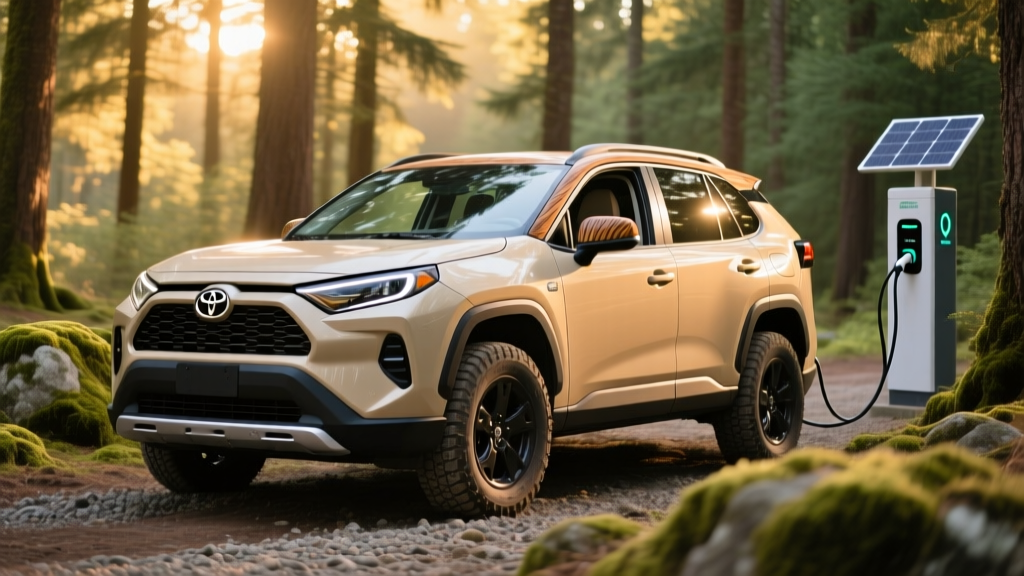
The 2026 Toyota RAV4 Hybrid Woodland Edition occupies a narrow but compelling lane: it's the most trail-capable RAV4 Hybrid you can buy, wrapped in rugged cladding and equipped with all-terrain tires, yet it still returns an EPA-estimated 39 MPG combined. For buyers who want weekend dirt-road capability without the fuel penalty of a body-on-frame SUV — and who aren't ready to commit to a full battery-electric vehicle — the Woodland Edition makes a strong case.
This guide breaks down the Woodland's powertrain, real-world fuel economy, battery longevity, pricing, and how it compares to both the RAV4 Prime (the plug-in variant) and fully electric alternatives. We'll also clarify the critical difference between a conventional hybrid (HEV) and a plug-in hybrid (PHEV), because Toyota sells both in the RAV4 lineup and the distinction matters enormously for your wallet and daily routine.
HEV vs. PHEV: Where the Woodland Fits in the RAV4 Lineup
Before diving into specs, it's essential to understand that the 2026 RAV4 Hybrid Woodland Edition is a conventional hybrid (HEV), not a plug-in hybrid. Here's what that means in practice:
| Feature | RAV4 Hybrid (HEV) — Woodland Edition | RAV4 Prime (PHEV) |
|---|---|---|
| Plug-in charging required? | No — refuels at any gas station | Yes — plugs into Level 1 or Level 2 |
| Electric-only range | None (electric motor assists gas engine) | ~42 miles EPA (electric-only) |
| Battery capacity | ~1.6 kWh (small, self-charging) | ~18.1 kWh (large, plug-in) |
| Combined horsepower | 219 hp | 302 hp |
| EPA combined MPG / MPGe | 39 MPG combined | 94 MPGe (electric) / 38 MPG (gas-only) |
| Federal tax credit (§30D) | Not eligible | Eligible — up to $7,500 (rules apply) |
| Starting MSRP (est.) | ~$37,500 | ~$44,500 |
The Woodland Edition is built on the HEV platform. You never plug it in. The gasoline engine and regenerative braking keep the small hybrid battery charged automatically. If you want electric-only commuting and access to the federal tax credit, you're looking at the RAV4 Prime — a different vehicle at a different price point.
Powertrain and Performance Specs
The 2026 RAV4 Hybrid Woodland Edition uses Toyota's proven fourth-generation hybrid system paired with a 2.5-liter Dynamic Force four-cylinder engine and electronic on-demand all-wheel drive (AWD). A rear-mounted electric motor provides independent rear-wheel torque, giving the Woodland genuine all-weather and light-trail capability without a mechanical driveshaft.
| Specification | 2026 RAV4 Hybrid Woodland Edition |
|---|---|
| Engine | 2.5L 4-cylinder Dynamic Force (176 hp / 163 lb-ft) |
| Front electric motor | Permanent magnet synchronous (118 hp) |
| Rear electric motor | Permanent magnet synchronous (54 hp) |
| Net combined horsepower | 219 hp |
| Transmission | eCVT (electronically controlled continuously variable) |
| Drivetrain | Electronic AWD (eAWD) with rear motor |
| 0-60 mph | ~7.4 seconds |
| Towing capacity | 1,750 lbs |
| Ground clearance | 8.6 inches (Woodland-specific tuning) |
| Hybrid battery | ~1.6 kWh nickel-metal hydride (NiMH) |
The Woodland Edition adds TRD-tuned suspension, all-terrain tires (typically a Falken Wild Peak or equivalent), and unique exterior cladding that sets it apart from the standard RAV4 Hybrid trims. Ground clearance is slightly elevated compared to the LE/XLE Hybrid, aiding approach and departure angles on forest roads.
Fuel Economy: EPA Estimates vs. Real-World MPG
The headline number for the 2026 RAV4 Hybrid Woodland Edition is its EPA-estimated fuel economy. Because the Woodland wears all-terrain tires and carries additional weight from its rugged equipment, it rates slightly lower than the standard RAV4 Hybrid LE (which achieves 41 MPG combined).
| Driving Cycle | EPA Estimate | Real-World Expectation |
|---|---|---|
| City | 40 MPG | 41-44 MPG (hybrids excel in stop-and-go) |
| Highway | 38 MPG | 34-37 MPG (aero drag and A/T tire penalty at 70+ mph) |
| Combined | 39 MPG | 37-40 MPG (mixed driving) |
Why real-world city MPG often beats the EPA sticker: Toyota's hybrid system recovers significant energy through regenerative braking in stop-and-go traffic. In city driving, the electric motor handles low-speed propulsion while the gas engine shuts off at stops. Owners in urban environments consistently report exceeding the EPA city estimate by 2-4 MPG. Highway driving, however, tells a different story — at sustained 70-80 mph speeds, the all-terrain tires and boxy SUV aerodynamics create measurable drag, and the gas engine does most of the work.
On a 300-mile highway road trip at 75 mph with two passengers and cargo, expect to see closer to 34-35 MPG. In cold weather (below 30°F), the engine runs more frequently to maintain cabin heat and battery temperature, reducing efficiency by roughly 5-10%. These are normal hybrid behaviors, not deficiencies.
For context, the non-hybrid 2026 RAV4 gas AWD returns an EPA-estimated 29 MPG combined. The Woodland Hybrid's 39 MPG represents a 34% fuel savings over the gas model — roughly $500-$650 per year at 15,000 miles and $3.50/gallon regular unleaded, according to fueleconomy.gov estimates.
Battery Longevity, Warranty, and Replacement Cost
Hybrid battery anxiety is the single most common concern we hear from first-time hybrid buyers. Here's what the data actually shows:
Toyota covers the 2026 RAV4 Hybrid's battery with a 10-year / 150,000-mile hybrid battery warranty (whichever comes first). This warranty guarantees that the battery will retain sufficient capacity to operate the hybrid system properly. In California Air Resources Board (CARB) states, coverage extends further under emissions-related provisions.
Toyota's hybrid batteries in the RAV4 have demonstrated exceptional longevity in real-world use. Data from fleet operators and long-term owners shows that the vast majority of RAV4 Hybrid batteries last well beyond 150,000 miles without significant degradation. The NiMH chemistry used in the RAV4 Hybrid's small battery pack is mature technology — it's far less stressed than the large lithium-ion packs in full EVs because it operates within a narrow state-of-charge window (roughly 40-80%), which dramatically reduces cell wear.
| Item | Details |
|---|---|
| Hybrid battery warranty | 10 years / 150,000 miles |
| Hybrid system components warranty | 8 years / 100,000 miles (inverter, motors, control module) |
| Typical battery lifespan (real-world) | 150,000-250,000+ miles |
| Replacement cost (out of warranty) | $2,500-$4,000 (refurbished); $4,000-$5,500 (new OEM) |
| 12V auxiliary battery | Standard AGM; replace every 4-6 years (~$200-$300) |
If the hybrid battery does eventually need replacement outside warranty, the cost is substantially lower than a full EV battery swap. Refurbished RAV4 Hybrid batteries from certified suppliers typically run $2,500-$4,000 installed, while a new OEM pack from a Toyota dealer runs $4,000-$5,500. For comparison, a conventional gas-engine transmission replacement can cost $3,000-$5,000 — so the hybrid battery is not the financial boogeyman some fear.
Toyota's reliability track record with hybrid systems is among the best in the industry. The RAV4 Hybrid consistently earns top marks from IIHS and strong predicted reliability scores. The hybrid system has fewer wear items than a conventional powertrain — no traditional starter motor, no alternator, no torque converter, and regenerative braking significantly extends brake pad life (many owners report 80,000+ miles on original pads).
Pricing, Trims, and Tax Credit Eligibility
The 2026 Toyota RAV4 Hybrid Woodland Edition slots near the top of the RAV4 Hybrid lineup, positioned between the XSE and Limited trims in pricing but with unique off-road content.
| Cost Factor | Amount |
|---|---|
| Estimated base MSRP (Woodland Edition) | $37,500 |
| Destination charge | $1,450 |
| Typical dealer options (roof rack, cargo mats) | $500-$1,200 |
| Estimated out-the-door (before tax) | $39,000-$41,000 |
| Federal §30D tax credit | Not eligible (HEV — not a plug-in) |
Tax credit reality check: Under current IRS §30D rules, only plug-in electric vehicles (PHEVs and BEVs) with sufficient battery capacity qualify for the federal clean vehicle credit. Conventional hybrids like the RAV4 Hybrid Woodland Edition do not qualify — regardless of their efficiency. If the $7,500 federal credit is a priority for your purchase, you would need to look at the RAV4 Prime (PHEV) or a fully electric SUV. Some states offer separate incentives for hybrids, but these vary widely — check your state's energy office or DMV for current programs.
While the Woodland doesn't qualify for federal EV credits, its lower purchase price compared to the RAV4 Prime (roughly $7,000 less) and zero charging-infrastructure requirements mean the total cost of ownership can be competitive over five years, especially for buyers without access to home Level 2 charging.
Who Should Choose the RAV4 Hybrid Woodland — And Who Shouldn't
Pros
- 39 MPG combined with genuine AWD capability
- No plug-in charging required — works with existing gas-station infrastructure
- Off-road content (A/T tires, TRD suspension, cladding) without a fuel-economy penalty
- Proven Toyota hybrid reliability with 10-year/150,000-mile battery warranty
- Strong city MPG that often exceeds EPA estimates in real-world driving
- Lower purchase price than RAV4 Prime or comparable electric SUVs
Cons
- No federal tax credit eligibility (HEV, not PHEV/BEV)
- All-terrain tires reduce highway MPG vs. standard RAV4 Hybrid trims
- Only 1,750 lbs towing capacity (insufficient for most boat/camper trailers)
- Modest 219 hp — adequate but not quick for highway merging with cargo
- No electric-only driving mode; always burns some gasoline
- Higher MSRP than base RAV4 Hybrid LE (~$34,000) for similar fuel economy
Decision Framework: Is the Woodland Edition Right for You?
Choose the RAV4 Hybrid Woodland Edition if: You regularly drive on unpaved roads, forest service roads, or snowy mountain passes and want AWD capability without sacrificing fuel economy. You don't have access to home Level 2 charging (apartment, street parking) and need a vehicle that works with gas stations alone. You value Toyota's long-term reliability and want minimal drivetrain maintenance.
Choose the RAV4 Prime (PHEV) instead if: You have a garage or driveway with a 240V outlet, your daily commute is under 42 miles round-trip (covering most errands on electric-only), and you want the $7,500 federal tax credit (subject to IRS §30D income and sourcing rules). The Prime also offers 302 hp — significantly more power.
Choose a full EV (e.g., Hyundai Ioniq 5, Tesla Model Y) instead if: You have reliable home charging, want zero tailpipe emissions, seek the lowest per-mile fuel cost (electricity at ~$0.04-$0.06/mile vs. gasoline at ~$0.10-$0.13/mile), and your typical road trips stay within DC fast-charging corridor coverage.
Frequently Asked Questions
How many MPG does the 2026 RAV4 Hybrid Woodland Edition get?
The EPA rates the 2026 RAV4 Hybrid Woodland Edition at 40 MPG city, 38 MPG highway, and 39 MPG combined. In real-world driving, city mileage often exceeds 41 MPG thanks to regenerative braking, while sustained highway driving at 75+ mph typically returns 34-37 MPG due to all-terrain tire rolling resistance and SUV aerodynamics.
Does the RAV4 Hybrid Woodland need to be plugged in?
No. The RAV4 Hybrid Woodland Edition is a conventional hybrid (HEV). It charges its small hybrid battery through the gasoline engine and regenerative braking. You refuel it at any gas station with regular unleaded — no plug, no charging cable, no home charger installation required.
How far can the RAV4 Hybrid Woodland go on electric only?
It cannot. As a conventional hybrid, the Woodland Edition has no meaningful electric-only range. The electric motor assists the gas engine during acceleration and low-speed maneuvers, but the gasoline engine is always running or cycling on during normal driving. If you need electric-only range, the RAV4 Prime (PHEV) offers approximately 42 miles on battery alone.
Is the RAV4 Hybrid battery reliable, and what does replacement cost?
Toyota's hybrid batteries have an excellent longevity record, with most lasting 150,000-250,000+ miles. The battery is covered by a 10-year/150,000-mile warranty. Out-of-warranty replacement runs $2,500-$4,000 for a refurbished unit or $4,000-$5,500 for a new OEM battery — comparable to a transmission replacement on a conventional vehicle.
Does the 2026 RAV4 Hybrid Woodland qualify for any tax credit?
It does not qualify for the federal §30D clean vehicle credit, which is limited to plug-in vehicles (PHEVs and BEVs). Some states may offer separate hybrid incentives, but these vary by jurisdiction. Check your state's energy office for current programs. If the federal credit is important to your purchase math, consider the RAV4 Prime PHEV instead.
How does the Woodland Edition compare to the standard RAV4 Hybrid trims?
The Woodland Edition adds TRD-tuned suspension, all-terrain tires, unique exterior cladding, roof rails, and a slightly lifted ride height compared to the LE/XLE trims. The trade-off is 1-2 MPG less on the highway due to tire rolling resistance and a higher MSRP (~$37,500 vs. ~$34,000 for the LE). If you never leave pavement, the standard Hybrid LE offers nearly identical efficiency at a lower price.
Hybrid vs. PHEV vs. EV — which powertrain fits my lifestyle?
HEV (this vehicle): Best for drivers without home charging access, those in apartments or with street parking, or anyone who drives in areas with sparse EV charging infrastructure. You get excellent fuel economy with zero behavioral change.
PHEV (RAV4 Prime): Best for drivers with home Level 2 charging and a commute under 40 miles. You drive electric most days and use gas only for longer trips. Qualifies for the federal tax credit.
BEV (full EV): Best for drivers with reliable home charging who want the lowest operating cost, zero tailpipe emissions, and minimal maintenance. Requires planning for road trips around DC fast-charging stations.