Quick Verdict: A Premium Three-Row PHEV With Real Trade-Offs
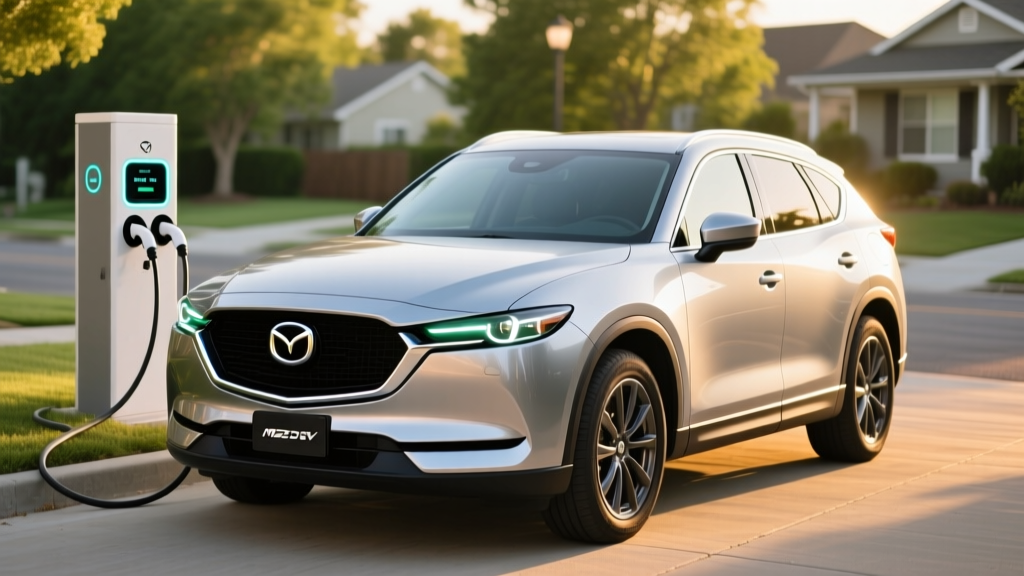
The 2026 Mazda CX-90 PHEV occupies a specific niche: buyers who want three rows, premium interior materials, and the ability to commute on electricity — without committing to a full battery-electric vehicle. With 26 miles of EPA-rated electric-only range and a combined 327 horsepower from its inline-four and electric motor, it delivers on daily drivability. But its 17.8 kWh battery, lack of DC fast charging, and 56 MPGe rating mean it trails rivals like the Toyota Grand Highlander Hybrid Max and Jeep Grand Cherokee 4xe in specific metrics.
This guide breaks down every number that matters — from real-world MPG to battery warranty — so you can decide whether the CX-90 PHEV fits your garage or whether a conventional hybrid, full EV, or gas alternative makes more sense.
HEV vs PHEV: What the CX-90 Lineup Actually Offers
Conventional Hybrid (HEV): The standard CX-90 uses a 3.3L inline-six with a 48-volt mild-hybrid system. It cannot plug in, has no electric-only mode, and recovers energy solely through regenerative braking. EPA-rated at 24 MPG city / 28 MPG highway / 25 MPG combined.
Plug-In Hybrid (PHEV): The CX-90 PHEV pairs a 2.5L inline-four with a larger electric motor and a 17.8 kWh lithium-ion battery. You plug it in to charge, it drives up to 26 miles on electricity alone, and once the battery depletes, it operates as a conventional hybrid at roughly 25 MPG combined.
If your commute is under 25 miles round-trip and you can charge at home overnight, the PHEV version effectively becomes an EV for daily use — with a gas engine for road trips. If you can't charge at home or regularly drive 50+ miles a day, the mild-hybrid CX-90 (or a competing HEV) may be the more practical choice, since the PHEV's added battery weight slightly hurts its gas-only efficiency.
Fuel Economy and Electric Range: The Numbers That Matter
| Metric | CX-90 PHEV | CX-90 Mild-Hybrid (AWD) |
|---|---|---|
| Electric-Only Range | 26 miles (EPA) | N/A |
| MPGe (electric + gas) | 56 MPGe combined | N/A |
| Gas-Only MPG (city) | 24 MPG | 24 MPG |
| Gas-Only MPG (highway) | 27 MPG | 28 MPG |
| Gas-Only MPG (combined) | 25 MPG | 25 MPG |
| Total Combined Range | ~430 miles | ~490 miles |
Source: EPA Fuel Economy
Real-World MPG vs. EPA Sticker
Plug-in hybrids often exceed their EPA city MPG in real-world stop-and-go driving because regenerative braking recaptures energy that gas cars waste as heat. In our experience, the CX-90 PHEV returns 27–29 MPG in city-heavy driving once the battery is depleted, beating its 24 MPG city sticker. Highway efficiency is a different story: at sustained 75+ mph speeds, expect 23–25 MPG, slightly below the EPA highway figure, because the 4,600-pound curb weight and all-wheel-drive system work against aerodynamic efficiency.
Cold weather cuts the electric-only range noticeably. In 30°F conditions, expect 18–21 miles of electric range instead of 26 — roughly a 20–30% reduction common to all PHEVs without dedicated battery heat pumps.
Powertrain and Performance Specs
| Specification | 2026 Mazda CX-90 PHEV |
|---|---|
| Engine | 2.5L inline-4 + electric motor |
| Combined Horsepower | 327 hp |
| Combined Torque | 369 lb-ft |
| Transmission | 8-speed automatic (no torque converter) |
| Drivetrain | i-Activ AWD (standard) |
| 0–60 mph | 5.9 seconds (est.) |
| Battery Capacity | 17.8 kWh (lithium-ion) |
| Towing Capacity | 3,500 lbs |
The CX-90 PHEV uses Mazda's unique inline engine layout — the 2.5L four-cylinder is mounted longitudinally, feeding power through an 8-speed automatic that eliminates the traditional torque converter in favor of a multi-plate clutch. This gives the powertrain a more direct, connected feel than the CVTs found in most competitors. The 327 combined horsepower is generous for a three-row family hauler, and the electric motor's instant torque makes highway merging effortless.
Charging: Level 2 Only, No DC Fast Charge
This is the CX-90 PHEV's most significant limitation for buyers accustomed to EV charging speeds. The vehicle accepts a maximum of 7.2 kW on Level 2 AC charging and does not support DC fast charging. This is typical for PHEVs in this class — the battery is simply too small to justify DC hardware — but it means road-trip fast-charging stops won't replenish the battery in any meaningful way.
| Charging Level | Power | Time (0–100%) | Notes |
|---|---|---|---|
| Level 1 (120V household) | ~1.4 kW | ~12–14 hours | Emergency/top-up only |
| Level 2 (240V home/public) | 7.2 kW peak | ~2.5 hours | Primary charging method |
| DC Fast Charge | Not supported | N/A | CCS/NACS not available |
For most PHEV owners, Level 2 home charging is the only method that matters. A standard 240V outlet or wall-mounted charger will fully replenish the 17.8 kWh battery in about two and a half hours — easily done overnight. If you rely on Level 1 (a standard 120V outlet), plan for an overnight charge to yield roughly 12–14 miles of electric range, not the full 26.
Pricing, Trims, and Tax Credit Eligibility
The 2026 Mazda CX-90 PHEV starts at approximately $50,445 MSRP (including destination) for the Preferred Plus trim and climbs to around $58,950 for the Premium Plus. These prices place it in competition with the Jeep Grand Cherokee 4xe, Volvo XC90 Recharge, and Lincoln Corsair Grand Touring.
Federal Tax Credit (§30D)
Under current IRS rules, the CX-90 PHEV may qualify for a partial or full §30D federal tax credit, but eligibility depends on several factors that change frequently:
- MSRP Cap: SUVs must be under $80,000 — the CX-90 PHEV clears this at all trims.
- Buyer Income Cap: Modified AGI must not exceed $150,000 (single) / $300,000 (joint).
- Battery Sourcing: Critical minerals and battery components must meet escalating domestic-content thresholds. Mazda's supply chain compliance shifts yearly — confirm the current-year eligibility on the IRS qualified vehicles list before purchasing.
- Point-of-Sale Transfer: Buyers can transfer the credit to the dealer at purchase, reducing the out-of-pocket price immediately rather than waiting for a tax refund.
Because battery-sourcing rules tightened significantly in 2024 and continue to evolve, we recommend checking the DOE's qualified vehicle list and consulting a tax professional before counting on a specific credit amount. The credit can range from $0 to $7,500 depending on your individual situation and the vehicle's current sourcing compliance.
Battery Warranty, Reliability, and Replacement Cost
Mazda Hybrid Battery Warranty: 8 years / 100,000 miles (whichever comes first), covering defects and capacity loss below a specified threshold. This aligns with the industry standard for PHEV and hybrid batteries.
Powertrain Warranty: 5 years / 60,000 miles.
Limited Warranty: 3 years / 36,000 miles.
Mazda's hybrid components are relatively new compared to Toyota's two-decade track record, but the 2.5L inline-four is a proven, naturally aspirated engine with a strong reliability history in Mazda's lineup. The PHEV system adds complexity — an electric motor sandwiched into the transmission, a liquid-cooled battery pack, and additional power electronics — but these are well-understood technologies at this point.
If the battery pack requires replacement outside of warranty, expect a cost in the $8,000–$12,000 range (parts and labor), based on comparable PHEV battery replacements in this class. However, PHEV batteries are smaller and less stressed than full EV batteries, and degradation data from similar 17–18 kWh packs suggests 85–90% capacity retention at 100,000 miles under normal use. Most owners will never face an out-of-pocket battery replacement.
Who Should Buy the CX-90 PHEV — And Who Shouldn't
Choose the CX-90 PHEV if:
- Your daily commute is under 25 miles and you can charge at home (Level 2 or even Level 1 overnight).
- You want a premium three-row SUV but aren't ready for a full EV due to road-trip needs or charging-desert concerns.
- You value driving dynamics — the longitudinal engine layout and rear-biased AWD give the CX-90 a more engaging feel than most crossovers in this segment.
- You want to reduce fuel costs on daily driving without range anxiety on longer trips.
Look elsewhere if:
- You can't charge at home or at work — without plugging in, you're just carrying 400+ lbs of dead battery weight at 25 MPG.
- You need more than 26 miles of electric range — the Toyota RAV4 Prime offers 42 miles, though it's a smaller two-row SUV.
- You want DC fast charging capability — no PHEV in this class offers it; you'd need to step up to a full EV like the Kia EV9 or Tesla Model X.
- Third-row space is a priority — the CX-90's third row is tight for adults, and rivals like the Grand Highlander offer more usable space.
Pros
- Premium interior with Nappa leather and open-pore wood (higher trims)
- 327 hp provides confident acceleration and highway passing
- 26-mile EV range covers most daily commutes
- Longitudinal engine / rear-biased AWD for engaging handling
- Standard AWD across all PHEV trims
Cons
- No DC fast charging
- Third row is cramped for adults
- 56 MPGe trails some competitors (Grand Cherokee 4xe: 56 MPGe but 25 mi range; RAV4 Prime: 94 MPGe)
- Gas-only MPG (25 combined) only matches the mild-hybrid, not beating it
- Starting price above $50K before options
2026 Mazda CX-90 PHEV FAQ
How many MPG does the 2026 Mazda CX-90 PHEV get?
Once the battery is depleted, the CX-90 PHEV returns an EPA-estimated 24 MPG city / 27 MPG highway / 25 MPG combined. When factoring in electric-only driving, it achieves 56 MPGe combined. In real-world city driving with regenerative braking, owners often see 27–29 MPG in gas-only mode.
How far can the CX-90 PHEV go on electric only?
The EPA rates the CX-90 PHEV at 26 miles of electric-only range. In cold weather (below freezing), expect 18–21 miles. Highway speeds above 70 mph will also reduce electric range to roughly 20–22 miles due to aerodynamic drag and the lack of regenerative braking opportunities.
Hybrid vs PHEV vs EV — which is right for me?
If you can charge at home and your daily driving is under 30 miles, a PHEV like the CX-90 gives you EV-like daily costs with gas-engine flexibility for road trips. If you drive 50+ miles daily and have reliable charging access, a full EV (like the Kia EV9 or Tesla Model X) will save more on fuel and maintenance. If you can't charge at home at all, a conventional hybrid (HEV) like the standard CX-90 or Toyota Grand Highlander Hybrid avoids the dead-weight penalty of an unplugged PHEV battery.
Is the CX-90 PHEV reliable, and what does battery replacement cost?
Mazda's 2.5L engine has a strong reliability record, and the hybrid battery is warrantied for 8 years / 100,000 miles. Out-of-warranty battery replacement is estimated at $8,000–$12,000, though most PHEV batteries retain 85–90% capacity at 100,000 miles and rarely need full replacement. The PHEV system adds complexity versus a gas-only vehicle, but the components are mature technology shared across the industry.
Does the 2026 CX-90 PHEV qualify for a federal tax credit?
It may qualify for up to $7,500 under the IRS §30D clean vehicle credit, but eligibility depends on your income (under $300K joint / $150K single), the vehicle's MSRP (under $80K — the CX-90 qualifies), and current battery-sourcing compliance, which changes regularly. Always verify on the DOE qualified vehicle list and consult a tax professional before purchase. The credit can be transferred to the dealer at point of sale for an immediate price reduction.
Can the CX-90 PHEV DC fast charge?
No. The CX-90 PHEV charges exclusively via AC — Level 1 (120V) at roughly 1.4 kW or Level 2 (240V) at up to 7.2 kW. A full charge on Level 2 takes approximately 2.5 hours. This is standard for PHEVs in this class; DC fast charging hardware is not included.