Quick Verdict: A Plug-In Hybrid That Drives Like a Mazda
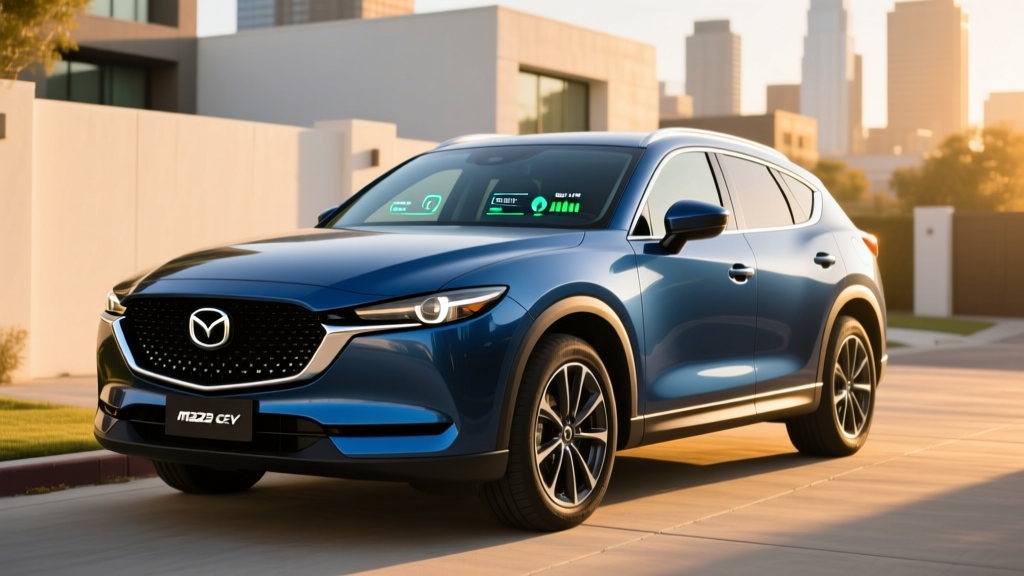
The 2026 Mazda CX-70 PHEV occupies a specific niche: buyers who want electric commuting without range anxiety on longer trips. With an EPA-estimated 26 miles of electric-only range and a combined 327 horsepower from its inline-four and electric motor, it delivers the driving engagement Mazda is known for while offering meaningful fuel savings for those who plug in regularly. Starting at $41,845 (including destination), it undercuts many luxury PHEV SUVs while offering a premium interior that punches above its price class.
But the CX-70 PHEV isn't for everyone. Its electric range is modest compared to rivals like the Toyota RAV4 Prime (42 miles), and its fuel economy once the battery depletes is merely average for the segment. This review breaks down exactly what you'll get — and who should look elsewhere.
HEV vs PHEV: Understanding the CX-70 Lineup
Mazda offers the CX-70 with two distinct electrified powertrains, and confusing them is easy. Here's the critical difference:
Conventional Hybrid (HEV): The CX-70 Hybrid uses a turbocharged inline-six with a mild-hybrid system. You never plug it in — the battery charges through regenerative braking and engine power. It improves fuel economy modestly but offers no electric-only driving.
Plug-In Hybrid (PHEV): The CX-70 PHEV pairs a 2.5-liter inline-four with a larger 17.8 kWh battery pack and a more powerful electric motor. You plug it in to access up to 26 miles of pure electric range before the gasoline engine engages. This is the model we're reviewing here.
If your commute is under 25 miles round-trip and you have home charging access, the PHEV can operate as an EV most weekdays while retaining a gas engine for road trips. If you can't plug in regularly, you'll carry dead battery weight and see minimal benefit over the conventional hybrid.
Fuel Economy and Electric Range: The Numbers
| Metric | EPA Estimate | Real-World Expectation |
|---|---|---|
| Electric-only range | 26 miles | 22-28 miles (varies with temperature and driving style) |
| Combined MPGe (electric + gas) | 56 MPGe | 50-60 MPGe with regular charging |
| Gas-only city MPG | 25 MPG | 24-27 MPG (hybrids often exceed EPA in stop-and-go) |
| Gas-only highway MPG | 27 MPG | 25-28 MPG |
| Gas-only combined MPG | 25 MPG | 24-27 MPG |
| Total combined range | 490 miles | 450-500 miles depending on conditions |
Real-World Range Reality: The EPA's 26-mile electric estimate assumes moderate temperatures and mixed driving. In cold weather (below 40°F), expect 18-22 miles due to battery chemistry limitations and cabin heating demands. Highway-speed electric driving also reduces range — at 70 mph, you may see only 20-22 miles before the engine kicks in. However, city driving with regenerative braking can push you to 28+ miles in ideal conditions.
Once the battery depletes, the CX-70 PHEV operates as a conventional hybrid. The 25 MPG combined figure is respectable but trails the Toyota Highlander Hybrid (35 MPG combined) and Kia Sorento Hybrid (32 MPG combined). The trade-off: the CX-70 PHEV delivers 327 horsepower, significantly more than those efficiency-focused rivals.
Powertrain and Performance Specs
| Specification | 2026 Mazda CX-70 PHEV |
|---|---|
| Engine | 2.5L inline-4 turbocharged |
| Electric motor | Integrated transmission motor |
| Combined horsepower | 327 hp |
| Combined torque | 382 lb-ft |
| Battery capacity | 17.8 kWh (usable: ~14.5 kWh) |
| Battery chemistry | Lithium-ion (NMC) |
| 0-60 mph | 6.3 seconds (est.) |
| Drivetrain | All-wheel drive (standard) |
| Transmission | 8-speed automatic |
| Towing capacity | 3,500 lbs |
The powertrain prioritizes smoothness over aggression. The electric motor fills the torque gap before the turbo spools, eliminating the lag typical of turbocharged four-cylinders. Acceleration is confident for highway merging and passing, though the CX-70 PHEV isn't trying to be a performance SUV. The 8-speed automatic shifts imperceptibly in EV mode and only becomes noticeable under hard acceleration.
One engineering note: the battery pack is mounted under the cargo floor, which preserves interior space but raises the vehicle's center of gravity slightly compared to the inline-six models. In practice, the difference is negligible — the CX-70 PHEV still handles better than most midsize SUVs, with precise steering and controlled body motion.
Charging: Times, Connectors, and Costs
| Charging Level | Power (kW) | Time (0-100%) | Miles Added Per Hour |
|---|---|---|---|
| Level 1 (120V household outlet) | 1.4 kW | ~14 hours | ~2 miles/hour |
| Level 2 (240V home/public charger) | 3.3 kW (max) | ~4.5 hours | ~6 miles/hour |
| DC Fast Charging | Not supported | N/A | N/A |
The CX-70 PHEV uses a standard J1772 connector for Level 1 and Level 2 charging. Here's the limitation that matters: the onboard charger maxes out at 3.3 kW, which is slower than many PHEV rivals. The Toyota RAV4 Prime accepts up to 6.6 kW on Level 2, cutting its charge time in half.
For most owners, this isn't a dealbreaker. Plug in overnight on a Level 2 home charger (a standard 240V outlet or dedicated wallbox), and you'll wake up to a full battery every morning. Level 1 charging from a standard 120V outlet works but is painfully slow — only practical if you drive less than 10 miles per day or use it as a backup.
No DC fast charging: Like most PHEVs, the CX-70 cannot use DC fast chargers. This makes sense given the small battery — DCFC infrastructure is designed for larger EV batteries, and the cost/complexity isn't justified for a 17.8 kWh pack.
Charging cost: At the national average electricity rate of $0.16/kWh, a full charge costs approximately $2.34 (using ~14.5 kWh usable capacity). That's roughly $0.09 per electric mile — about one-third the cost of gasoline at $3.50/gallon and 25 MPG.
Pricing, Trims, and Tax Credit Eligibility
The 2026 CX-70 PHEV is available in three trims, all with all-wheel drive:
- PHEV Preferred: $41,845 — leatherette seats, 10.25-inch infotainment, power liftgate
- PHEV Premium: $47,395 — leather seats, panoramic sunroof, 12-speaker Bose audio
- PHEV Premium Plus: $52,895 — Nappa leather, ventilated front seats, 360-degree camera
All prices include the $1,420 destination charge. These MSRPs position the CX-70 PHEV between mainstream rivals (Toyota Highlander Hybrid at $40,000-$50,000) and luxury options (BMW X5 xDrive50e starting at $67,000).
Federal Tax Credit: Does It Qualify?
Under current IRS §30D rules for 2026:
- The CX-70 PHEV qualifies for a $3,750 federal tax credit (half the maximum $7,500)
- Reason: It meets the critical minerals requirement but not the battery component sourcing threshold
- MSRP cap: The CX-70 PHEV is classified as an SUV, so the cap is $80,000 — all trims qualify
- Buyer income limits: AGI must not exceed $150,000 (single), $225,000 (head of household), or $300,000 (married filing jointly)
- Point-of-sale transfer: You can transfer the credit to the dealer for an immediate price reduction at purchase
Credit rules are subject to change. Verify current eligibility at IRS.gov before purchasing.
After the $3,750 credit, the effective starting price drops to approximately $38,095 for the Preferred trim — a compelling value for a PHEV SUV with premium interior quality and 327 horsepower.
Battery Warranty, Reliability, and Replacement Cost
Mazda Hybrid Battery Warranty:
- Coverage: 8 years / 100,000 miles (whichever comes first)
- Capacity retention threshold: Warranty covers defects and capacity loss below 70% of original capacity
- Transferable: Yes, to subsequent owners within the warranty period
The CX-70 PHEV's lithium-ion battery pack uses proven NMC (nickel-manganese-cobalt) chemistry similar to other Mazda hybrid systems. Based on data from the CX-90 PHEV (which shares this powertrain), degradation has been minimal in early ownership — typically 3-5% capacity loss after 2-3 years of daily cycling.
Realistic battery lifespan: Modern PHEV batteries are designed for 150,000-200,000 miles before significant degradation. Most owners will replace the vehicle before needing a battery swap. However, if you plan to keep the CX-70 PHEV for 10+ years, budget for eventual replacement.
Battery replacement cost: Out-of-warranty replacement currently runs $8,000-$12,000 including parts and labor. This figure is expected to decrease as battery costs continue declining industry-wide, but it's a real long-term ownership consideration.
Reliability outlook: Mazda's hybrid systems have proven reliable in the CX-90 PHEV, with no widespread issues reported. The inline-four engine is a carryover design with years of service history. However, the CX-70 is a newer model, so long-term data is limited. Check NHTSA.gov for any emerging recalls or technical service bulletins.
Who Should Choose the CX-70 PHEV?
Choose the 2026 Mazda CX-70 PHEV if:
- Your daily commute is 15-25 miles round-trip and you can charge at home
- You want a premium interior without luxury-brand pricing
- You prioritize driving dynamics over maximum efficiency
- You need a three-row SUV with towing capability (3,500 lbs)
- You take road trips where charging infrastructure is sparse
Look elsewhere if:
- You want 40+ miles of electric range (consider the Toyota RAV4 Prime or Chrysler Pacifica PHEV)
- You can't charge at home or work — a conventional hybrid makes more sense
- Maximum fuel economy is your priority (the Highlander Hybrid gets 35 MPG combined)
- You need DC fast charging for frequent long-distance travel
The CX-70 PHEV makes the most sense for suburban commuters with predictable routines and home charging access. You'll drive on electricity most weekdays, save significantly on fuel, and still have the flexibility for weekend trips without route planning around chargers.
Pros
- Premium interior quality rivals luxury SUVs
- 327 hp provides confident acceleration
- Quiet, smooth electric-only driving
- Competitive pricing after tax credit
- Excellent build quality and materials
- Standard AWD with 3,500-lb towing
Cons
- Only 26 miles electric range (trails rivals)
- Slow 3.3 kW Level 2 charging
- No DC fast charging capability
- Modest 25 MPG once battery depletes
- Third-row seat is cramped for adults
- Infotainment lacks touchscreen (uses rotary knob)
Frequently Asked Questions
How many MPG does the 2026 Mazda CX-70 PHEV get?
The CX-70 PHEV achieves 56 MPGe combined when using both electric and gas power. Once the battery depletes, it gets 25 MPG combined (25 city / 27 highway) as a conventional hybrid. Real-world results vary: expect 24-27 MPG in gas-only mode, with better city efficiency due to regenerative braking.
How far can the CX-70 PHEV go on electric only?
The EPA estimates 26 miles of electric-only range. Real-world results range from 18-22 miles in cold weather to 28+ miles in ideal city driving conditions. The total combined range (electric + gas) is approximately 490 miles.
Does the CX-70 PHEV qualify for a tax credit?
Yes, it qualifies for a $3,750 federal tax credit under current IRS §30D rules. This is half the maximum $7,500 because it meets critical minerals requirements but not full battery component sourcing thresholds. Income limits apply ($150K single / $300K married filing jointly). The credit can be transferred to the dealer at purchase for an immediate price reduction.
Is the CX-70 PHEV reliable? What about battery replacement cost?
The powertrain has proven reliable in the similar CX-90 PHEV, with no widespread issues. The battery is warrantied for 8 years/100,000 miles against defects and capacity loss below 70%. Out-of-warranty battery replacement costs $8,000-$12,000, though most owners will replace the vehicle before this becomes necessary.
Should I get the CX-70 PHEV or a full EV?
Choose the PHEV if you can't reliably charge at home, frequently drive 200+ miles in a day, or live in an area with sparse charging infrastructure. Choose a full EV (like the Tesla Model Y or Hyundai Ioniq 5) if you have home charging, want lower operating costs, and your daily driving stays under 250 miles. Full EVs also qualify for the full $7,500 tax credit in many cases.
How long does it take to charge the CX-70 PHEV?
On a Level 2 (240V) charger, expect about 4.5 hours from empty to full. On a standard 120V household outlet (Level 1), it takes roughly 14 hours. The CX-70 PHEV does not support DC fast charging, which is typical for plug-in hybrids with smaller battery packs.
What's the difference between the CX-70 Hybrid and CX-70 PHEV?
The CX-70 Hybrid uses a turbocharged inline-six with a mild-hybrid system — you never plug it in, and it has no electric-only range. The CX-70 PHEV has a larger battery, more powerful electric motor, and can be plugged in for up to 26 miles of electric driving. The PHEV is more efficient if you charge regularly, but the conventional hybrid is simpler if you can't plug in.
For official fuel economy data, consult fueleconomy.gov. For complete vehicle specifications and current pricing, visit Mazda's official CX-70 page.