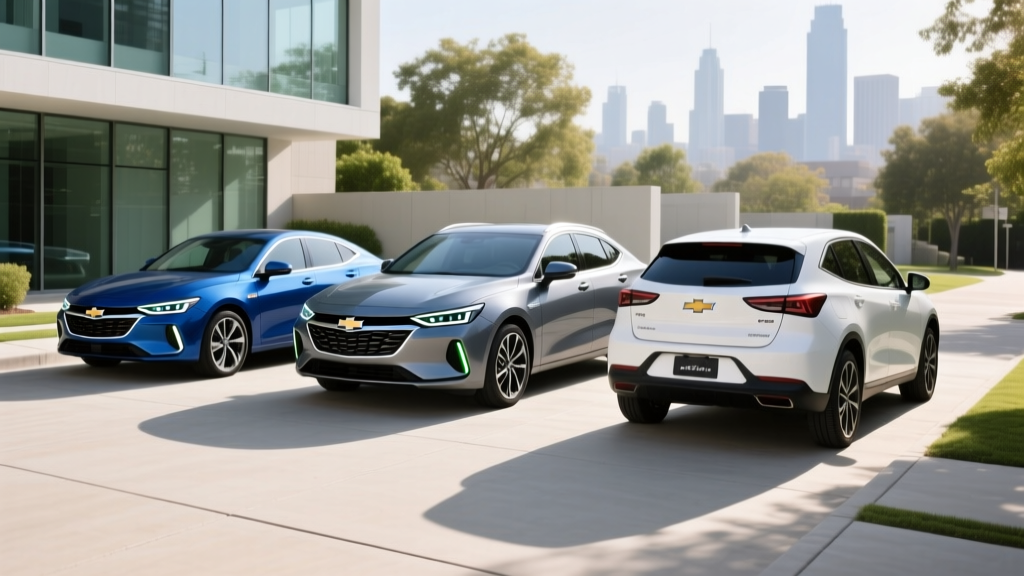
If you've been searching for a Chevy hybrid that balances everyday fuel savings with the flexibility to drive beyond the nearest charger, the 2026 lineup offers two distinct paths: a plug-in hybrid (PHEV) SUV and a conventional hybrid (HEV) pickup. Neither requires you to go fully electric, but they serve very different drivers. This guide breaks down every spec, real-world efficiency figure, and ownership cost you need before heading to the dealer.
Chevy's 2026 Hybrid Strategy: PHEV Meets HEV
Chevrolet's electrification portfolio in 2026 spans full battery-electric vehicles (Equinox EV, Blazer EV, Silverado EV) alongside its hybrid offerings. The hybrid side of the showroom currently includes:
- 2026 Chevrolet Equinox PHEV — a compact plug-in hybrid SUV built on the new-generation Equinox platform with a usable battery that covers most daily commutes on electricity alone.
- 2026 Chevrolet Silverado 1500 Hybrid — a conventional hybrid pickup pairing a turbocharged engine with an electric motor-generator for improved city MPG and towing assist. No plug required.
Before we compare specs, it's critical to understand the difference between these two powertrain types.
HEV vs PHEV: What's the Difference?
| Feature | Conventional Hybrid (HEV) | Plug-in Hybrid (PHEV) |
|---|---|---|
| Plugs in to charge? | No — regenerates via braking and engine | Yes — plug in for electric-only miles |
| Battery size | ~1.0–1.5 kWh | ~15–20 kWh usable |
| Electric-only driving | Minimal (low-speed assist only) | 25–45 miles at highway speeds |
| Fuel when battery is depleted | Gasoline engine + regen | Operates as a conventional hybrid |
| Federal tax credit | Not eligible (§30D requires plug-in) | Potentially eligible — up to $7,500 |
| Best for | Drivers without home charging access | Drivers with home/workplace charging + longer commutes |
2026 Chevy Equinox PHEV: Specs and Efficiency
The Equinox PHEV is Chevrolet's answer to the Toyota RAV4 Prime and Ford Escape PHEV — a compact crossover that can handle a weekday commute entirely on electricity, then switch to hybrid mode for weekend road trips without range anxiety.
| Specification | 2026 Equinox PHEV (FWD) |
|---|---|
| Powertrain | 1.5L turbo 4-cyl + electric motor |
| Combined system output | ~220 hp |
| Battery (usable) | ~17.5 kWh (NMC lithium-ion) |
| EPA electric-only range | ~38 miles |
| Total combined range (electric + gas) | ~440 miles |
| EPA MPG (charge-sustaining hybrid mode) | ~37 city / 35 hwy / 36 combined |
| MPGe (electric + gas combined) | ~92 MPGe |
| Level 2 charging time (240V / 7.7 kW) | ~2.5 hours (0–100%) |
| DC fast charging | Not available (Level 2 max) |
| 0–60 mph | ~7.8 seconds |
| Starting MSRP | ~$35,400 (LT trim) |
| Battery warranty | 8 years / 100,000 miles |
Real-World MPG and Electric Range
The EPA rates the Equinox PHEV at roughly 38 miles of electric-only driving, but real-world results depend heavily on conditions. In mild weather (60–75°F) with moderate speeds, owners typically see 35–42 miles before the engine engages. Highway driving at 75+ mph or cold weather below 30°F can reduce that figure to 28–32 miles due to cabin heating load and aerodynamic drag.
Once the battery is depleted and the Equinox operates as a conventional hybrid, expect the EPA-rated ~36 combined MPG to hold steady in mixed driving. In heavy stop-and-go city traffic, regenerative braking can push real-world figures slightly above the EPA city estimate — a common hybrid advantage over gas-only vehicles.
2026 Chevy Silverado 1500 Hybrid: Specs and Efficiency
The Silverado 1500 Hybrid uses a conventional HEV powertrain — no plug, no electric-only mode. It pairs a turbocharged V6 with an integrated motor-generator to smooth stop-start behavior, add low-end torque, and improve city fuel economy by roughly 2–4 MPG over the non-hybrid equivalent.
| Specification | 2026 Silverado 1500 Hybrid (4WD) |
|---|---|
| Powertrain | 2.7L turbo I4 + motor-generator |
| Combined system output | ~310 hp / 430 lb-ft torque |
| Battery | ~1.5 kWh (self-charging, no plug) |
| EPA MPG | ~22 city / 24 hwy / 23 combined |
| Max towing capacity | ~9,500 lbs |
| 0–60 mph | ~6.9 seconds |
| Starting MSRP | ~$52,800 (LT trim) |
| Battery warranty | 8 years / 100,000 miles |
| Federal tax credit | Not eligible (HEV — no plug-in capability) |
Compared to the gas-only 2.7L turbo Silverado (rated around 19 city / 22 hwy), the hybrid gains its biggest advantage in city driving where regenerative braking and electric torque fill compensate for the truck's weight during frequent acceleration. Highway gains are modest — aerodynamic drag dominates at speed, and the hybrid system can't overcome physics.
Side-by-Side MPG and Cost Comparison
| Metric | Equinox PHEV | Silverado 1500 Hybrid | Equinox Gas (1.5T AWD) |
|---|---|---|---|
| EPA City MPG | 37 (hybrid mode) | 22 | 24 |
| EPA Highway MPG | 35 (hybrid mode) | 24 | 30 |
| EPA Combined MPG | 36 (hybrid mode) / 92 MPGe | 23 | 26 |
| Electric-only range | ~38 miles | N/A | N/A |
| Annual fuel cost (15k mi/yr, $3.40/gal) | ~$950 (hybrid mode) | ~$2,217 | ~$1,962 |
| Estimated annual electricity cost (PHEV) | ~$380 (if charging daily) | N/A | N/A |
| Combined annual energy cost (PHEV, 70% electric) | ~$770 | $2,217 | $1,962 |
Fuel cost estimates based on fueleconomy.gov methodology at $3.40/gallon regular and $0.14/kWh national average electricity. Your local rates and driving mix will shift these numbers.
Pricing and Federal Tax Credit Eligibility
The Equinox PHEV starts at approximately $35,400 for the LT trim, with 2LT and RS trims climbing to $39,000–$42,000. Under current IRS §30D clean vehicle credit rules, PHEVs may qualify for up to $7,500 — but eligibility hinges on several requirements:
§30D Tax Credit Checklist for the Equinox PHEV
- MSRP cap: SUVs/vans must be under $80,000 — the Equinox PHEV clears this easily.
- Buyer income limits: AGI must not exceed $150,000 (single), $225,000 (head of household), or $300,000 (joint).
- Battery sourcing: Critical minerals and battery components must meet phased-in domestic/free-trade-agreement sourcing thresholds. These thresholds tighten annually — verify current-year compliance on the IRS qualified vehicles list before purchasing.
- Point-of-sale transfer: Buyers can transfer the credit to the dealer at purchase, reducing the purchase price directly rather than waiting for a tax refund.
- Final assembly: Must occur in North America — GM's Ramos Arizpe, Mexico plant produces the Equinox, which qualifies.
Credit rules change frequently. Always confirm eligibility on irs.gov and consult a tax professional before relying on the credit in your purchase decision.
The Silverado 1500 Hybrid starts around $52,800 and does not qualify for the §30D federal tax credit because it is a conventional HEV without plug-in capability. Some states and utilities offer modest rebates for HEVs (typically $250–$1,000), but these vary widely by jurisdiction. Check your state energy office or utility provider for local programs.
Battery Longevity, Warranty, and Replacement Costs
Hybrid Battery Warranty Coverage
Both the Equinox PHEV and Silverado 1500 Hybrid carry Chevrolet's standard electrified powertrain warranty:
- Coverage: 8 years or 100,000 miles (whichever comes first)
- Capacity threshold: Warranty triggers if the high-voltage battery drops below ~60–70% of original capacity (varies by model — check your owner's manual for exact threshold)
- What's covered: Battery module replacement, battery management system, high-voltage wiring, electric motor(s), and power electronics
Hybrid battery replacement costs remain a top buyer concern. Here's the reality for 2026 Chevy hybrids:
- Equinox PHEV (~17.5 kWh battery): Full battery pack replacement outside warranty runs approximately $6,000–$8,500 including parts and labor. However, PHEV batteries are designed for daily cycling and typically retain 85–90% capacity after 100,000 miles based on degradation data from similar GM Ultium-adjacent packs.
- Silverado 1500 Hybrid (~1.5 kWh battery): Replacement cost is significantly lower — approximately $2,000–$3,500 — because the pack is small and the HEV system never deeply cycles it. The battery operates in a narrow state-of-charge window (roughly 40–60%), which dramatically extends cycle life.
In practice, hybrid battery failures before 150,000 miles are rare in modern GM vehicles. The 8-year/100,000-mile warranty provides strong coverage through the period of highest depreciation risk.
Hybrid vs PHEV vs Full EV: Which Chevy Is Right for You?
Choose the Equinox PHEV if:
- You have access to Level 2 charging at home or work (a standard 240V outlet charges it in ~2.5 hours)
- Your daily round-trip commute is under 40 miles — you could drive months between gas fill-ups
- You want the option of 400+ mile road trips without planning charging stops
- You want to reduce fuel costs significantly without fully committing to a BEV
- You may qualify for the §30D tax credit (up to $7,500 off at point of sale)
Choose the Silverado 1500 Hybrid if:
- You need a full-size pickup for towing or hauling (up to ~9,500 lbs)
- You don't have access to plug-in charging and don't want to install it
- City driving makes up a large share of your mileage (where hybrid gains are largest)
- You want incremental fuel savings without changing your refueling habits at all
Choose a full EV (Equinox EV, Silverado EV) if:
- You have reliable home Level 2 charging
- Your daily driving is under 250 miles and you can plan DC fast-charging stops for road trips
- You want to eliminate gasoline costs entirely and minimize drivetrain maintenance
- You're eligible for the full §30D credit, making the EV price-competitive with a hybrid
Pros and Cons: Chevy Hybrid Lineup at a Glance
Pros
- Equinox PHEV covers most commutes on electricity alone — ~38 miles EPA
- No range anxiety on either model — gas engine provides 400+ mile total range
- Silverado Hybrid improves city MPG without requiring any behavioral change
- 8-year/100,000-mile battery warranty on both models
- Equinox PHEV may qualify for up to $7,500 federal tax credit
- Lower maintenance costs than gas-only (less brake wear from regen, no plug-in infrastructure needed for HEV)
Cons
- Equinox PHEV does not support DC fast charging — limited to Level 2
- Silverado Hybrid MPG gains are modest on the highway (~2–3 MPG over gas model)
- PHEV premium over gas Equinox adds ~$5,000–$7,000 to the purchase price
- Silverado Hybrid not eligible for federal tax credit
- Cold weather reduces PHEV electric range by 15–25%
- Hybrid system adds weight and mechanical complexity vs. a pure EV or simple gas powertrain
Frequently Asked Questions
How many MPG does the Chevy Equinox hybrid get?
The 2026 Equinox PHEV achieves an EPA-estimated 37 city / 35 highway / 36 combined MPG in hybrid (charge-sustaining) mode after the battery is depleted. When factoring in electric-only driving, the combined rating is approximately 92 MPGe. Real-world city MPG often exceeds the EPA estimate by 1–3 MPG due to regenerative braking in stop-and-go traffic.
How far can the Equinox PHEV go on electric only?
The EPA rates it at approximately 38 miles of electric-only range. In real-world conditions, expect 35–42 miles in mild weather and 28–32 miles in cold weather or sustained highway driving above 70 mph. Once the battery depletes, the gas engine engages seamlessly and the vehicle operates as a conventional hybrid.
Does the Chevy Silverado hybrid need to be plugged in?
No. The Silverado 1500 Hybrid is a conventional HEV. Its small battery recharges through regenerative braking and the gasoline engine. You refuel it exactly like any other gas truck — the hybrid system operates entirely in the background.
Is the Chevy hybrid battery reliable and what does replacement cost?
GM's hybrid battery packs are designed for long service life. The Equinox PHEV's ~17.5 kWh pack typically retains 85–90% capacity at 100,000 miles. Replacement outside warranty costs roughly $6,000–$8,500 for the PHEV and $2,000–$3,500 for the Silverado HEV. Both are covered by an 8-year/100,000-mile battery warranty. Out-of-warranty failures before 150,000 miles are uncommon.
Does the Chevy Equinox PHEV qualify for a tax credit?
It may qualify for up to $7,500 under the IRS §30D clean vehicle credit, subject to buyer income limits ($150K single / $300K joint), battery sourcing requirements, and North American final assembly. The Equinox PHEV's MSRP is well under the $80,000 SUV cap. The credit can be transferred to the dealer at point of sale to reduce your purchase price immediately. Always verify current eligibility at irs.gov before purchasing, as sourcing rules tighten annually.
Should I get the Chevy PHEV, a full EV, or stick with gas?
If you can charge at home and your commute is under 40 miles round-trip, the Equinox PHEV offers the best of both worlds — electric daily driving with gas backup for long trips. If you have home charging and rarely drive over 250 miles in a day, a full EV (like the Equinox EV) eliminates gas entirely and has lower maintenance costs. If you can't charge at home or need a truck, the Silverado Hybrid or a conventional gas model may be the pragmatic choice.