Quick Verdict: Two NX Hybrids, Two Very Different Use Cases
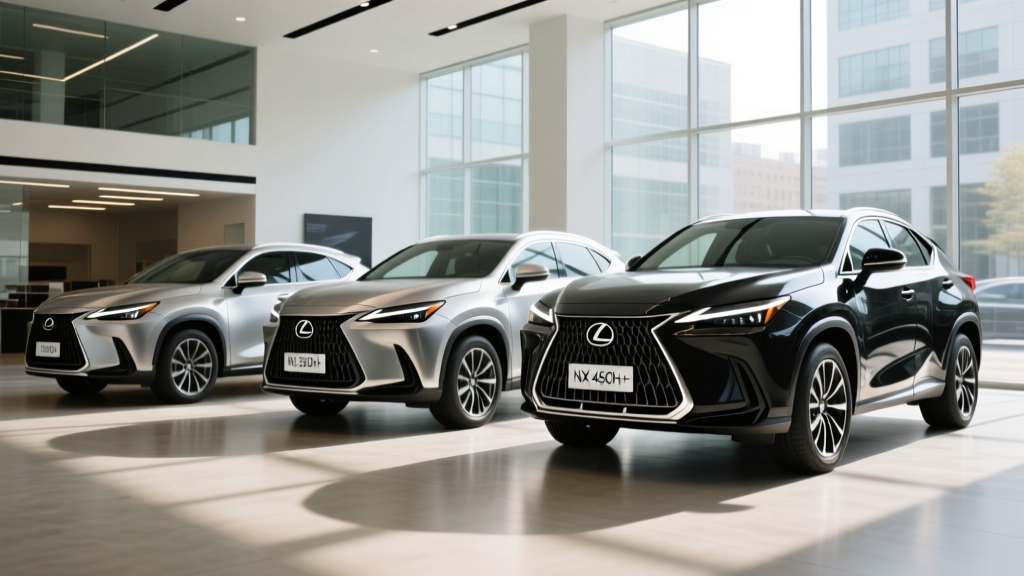
The 2026 Lexus NX hybrid lineup splits into two distinct powertrains: the NX 350h conventional hybrid (HEV) and the NX 450h+ plug-in hybrid (PHEV). Both share the same premium compact SUV body, Lexus Safety System+ 3.0, and 18.9-kWh infotainment screen, but the ownership experience diverges sharply depending on your access to charging.
The NX 350h returns an EPA-estimated 39 MPG combined with no plug-in requirement — ideal for drivers who want hybrid efficiency without altering their routine. The NX 450h+ adds 37 miles of electric-only range and a combined 420+ miles of total range, but demands regular home or workplace charging to justify its ~$15,000 price premium. Neither qualifies for the federal §30D EV tax credit in 2026, a critical factor for cost-conscious buyers.
HEV vs PHEV: Which Lexus NX Hybrid Are You Actually Looking At?
| Feature | NX 350h (HEV) | NX 450h+ (PHEV) |
|---|---|---|
| Powertrain Type | Conventional Hybrid | Plug-in Hybrid |
| Requires Plug-In Charging | No — self-charging via regenerative braking | Yes — for EV-range benefit |
| Battery Capacity | ~1.6 kWh (NiMH) | 18.1 kWh (Lithium-ion) |
| EPA Electric-Only Range | N/A (motor assists only) | 37 miles |
| EPA Combined MPG (hybrid mode) | 39 MPG | 84 MPGe / 36 MPG (gas-only) |
| Total Range | ~550 miles | ~420 miles (EV + gas) |
| DC Fast Charging | No | No (Level 2 AC only) |
| Combined Horsepower | 240 hp | 304 hp |
The distinction matters: a conventional hybrid like the NX 350h uses a small battery and regenerative braking to assist the gasoline engine. You never plug it in. A plug-in hybrid like the NX 450h+ carries a much larger battery that you charge externally, enabling genuine electric-only driving for short commutes before the gas engine takes over.
Fuel Economy: EPA Numbers and Real-World MPG
The NX 350h pairs a 2.5-liter inline-four engine with front and rear electric motors for a net 240 horsepower. The EPA rates it at:
| Model | City | Highway | Combined |
|---|---|---|---|
| NX 350h (AWD) | 41 MPG | 37 MPG | 39 MPG |
| NX 450h+ (EV mode) | 84 MPGe combined | ||
| NX 450h+ (gas-only) | 38 MPG | 35 MPG | 36 MPG |
Source: fueleconomy.gov
Real-world expectation: Lexus hybrids consistently match or exceed their EPA city estimates in stop-and-go traffic because regenerative braking recaptures energy at low speeds. On a predominantly highway commute at 75+ mph, expect the NX 350h to return closer to 34–36 MPG. In mixed suburban driving, owners regularly report 38–42 MPG. Cold weather (below 30°F) typically drops fuel economy by 3–5 MPG due to reduced battery efficiency and cabin heating demands.
For the NX 450h+, the 37-mile EV range holds up well in mild weather. In winter conditions, expect that range to contract to roughly 28–32 miles due to cabin heating load and reduced lithium-ion efficiency. The 450h+ has no DC fast charging — a significant omission shared with the Toyota RAV4 Prime platform it's built on. A full Level 2 charge (240V, 32A) takes approximately 4 hours; on a standard 120V outlet, plan for 12+ hours.
Powertrain Deep Dive: What's Under the Hood
| Specification | NX 350h | NX 450h+ |
|---|---|---|
| Engine | 2.5L I4 + 2 electric motors | 2.5L I4 + 2 electric motors (higher output) |
| Combined Horsepower | 240 hp | 304 hp |
| 0-60 mph | 7.2 seconds | 6.0 seconds |
| Drivetrain | AWD (e-motor rear axle) | AWD (e-motor rear axle) |
| Transmission | eCVT | eCVT |
| Towing Capacity | 2,000 lbs | 2,000 lbs |
| Cargo Volume | 46.9 cu ft (rear seats folded) | 46.9 cu ft (rear seats folded) |
The NX 450h+ is the performance option. Its 304 hp and 6.0-second 0-60 time make it the quickest NX short of the turbocharged NX 450h (discontinued after 2024). The NX 350h's 240 hp is adequate for highway merging and passing, but it's tuned for efficiency, not acceleration.
Pricing, Trims, and Tax Credit Eligibility
The 2026 Lexus NX hybrid pricing starts well above the non-hybrid NX 250, reflecting the added complexity of the hybrid powertrain:
| Model | Trim | Starting MSRP |
|---|---|---|
| NX 350h | Premium | ~$46,500 |
| NX 350h | Luxury | ~$51,000 |
| NX 450h+ | Premium | ~$60,000 |
| NX 450h+ | Luxury | ~$64,000 |
Tax credit reality: As of 2026, neither the NX 350h nor the NX 450h+ qualifies for the federal §30D new clean vehicle tax credit. The §30D credit requires a minimum battery capacity of 7 kWh (eliminating the NX 350h's ~1.6 kWh pack), and the NX 450h+ fails the critical-minerals and battery-component sourcing requirements that have tightened annually under the Inflation Reduction Act. Lexus has not met the domestic-sourcing thresholds for the credit.
Some states offer separate incentives for PHEVs. California's Clean Vehicle Rebate Project (CVRP), for example, has historically offered rebates for PHEVs with 35+ miles of EV range, though funding availability varies. Check your state's energy office for current programs.
Reliability and Battery Warranty: What to Expect Long-Term
Hybrid Battery Warranty
- Hybrid battery coverage: 10 years / 150,000 miles (whichever comes first)
- Powertrain warranty: 6 years / 70,000 miles
- Basic warranty: 4 years / 50,000 miles
Lexus hybrid batteries are engineered for longevity. Toyota/Lexus hybrid systems have an industry-leading track record — many Prius and RX hybrid batteries exceed 200,000 miles with minimal degradation.
Replacement cost: If the hybrid battery fails outside warranty, expect to pay approximately $3,000–$5,000 for the NX 350h's NiMH pack and $8,000–$12,000 for the NX 450h+'s larger 18.1 kWh lithium-ion battery. However, individual module replacement (rather than the full pack) can reduce costs significantly. Lexus dealerships and independent hybrid specialists can diagnose and replace failed modules for $500–$1,500.
According to IIHS, the NX continues to earn top safety ratings, and Lexus consistently ranks at or near the top of J.D. Power's Vehicle Dependability Study. The hybrid system adds complexity but also redundancy — the electric motor can partially compensate if the engine encounters issues, and vice versa.
Who Should Buy the NX Hybrid — and Who Should Look Elsewhere?
NX 350h (HEV) Pros
- 39 MPG combined without plugging in
- No home charging installation needed
- Lower starting price than 450h+
- Proven hybrid reliability track record
- 41 MPG city — excels in stop-and-go traffic
NX 350h (HEV) Cons
- No electric-only driving capability
- No federal tax credit eligibility
- 240 hp may feel modest for some buyers
- Cannot pre-condition cabin on grid power
NX 450h+ (PHEV) Pros
- 37 miles EV range covers most commutes
- 304 hp — quickest NX variant
- 84 MPGe when regularly charged
- Can drive on electricity for weeks without visiting a gas station
NX 450h+ (PHEV) Cons
- ~$15,000 premium over NX 350h
- No DC fast charging
- No federal tax credit to offset cost
- EV range drops to ~28-32 mi in winter
- Requires reliable Level 2 home charging to maximize value
Choose the NX 350h if:
- You don't have access to home or workplace Level 2 charging
- Your priority is fuel savings without lifestyle changes
- You drive more than 15,000 miles per year and want consistent 38+ MPG
- You want the lowest total cost of ownership in the NX lineup
Choose the NX 450h+ if:
- Your daily commute is under 35 miles round-trip
- You can install a Level 2 home charger (240V, 32A minimum)
- You want electric daily driving but need gas flexibility for road trips
- You value the 304 hp performance upgrade
Consider a full BEV instead if:
- You have reliable home charging and your daily driving is under 250 miles
- You want to eliminate gasoline costs entirely and qualify for potential state EV incentives
- You're considering vehicles like the Tesla Model Y, Hyundai Ioniq 5, or BMW iX
Hybrid vs PHEV vs EV: Where Does the NX Fit?
The NX hybrid lineup occupies a specific niche in the electrification spectrum:
| Factor | NX 350h (HEV) | NX 450h+ (PHEV) | Full EV (e.g., Tesla Model Y) |
|---|---|---|---|
| Annual Fuel/Energy Cost | ~$1,600 (15k mi/yr) | ~$800-1,400 (varies by charging) | ~$500-900 |
| Home Charging Required | No | Recommended | Essential |
| Road Trip Convenience | Excellent (gas stations) | Excellent (gas backup) | Requires DC fast charging route planning |
| Maintenance Costs | Low (no oil changes needed as frequently) | Low-moderate | Lowest (no engine maintenance) |
| Federal Tax Credit | None | None (2026) | Up to $7,500 (model-dependent) |
The NX 350h makes the most financial sense for buyers who average 12,000–18,000 miles per year in mixed driving and lack charging access. The NX 450h+ is a harder sell at its price point without the federal credit — you'll need to drive it primarily in EV mode for 5+ years to recoup the premium through fuel savings alone. A full EV like the Tesla Model Y or Hyundai Ioniq 5 will cost less to operate long-term but requires commitment to charging infrastructure.
Frequently Asked Questions
How many MPG does the 2026 Lexus NX 350h hybrid get?
The EPA rates the NX 350h at 41 MPG city, 37 MPG highway, and 39 MPG combined. In real-world suburban and city driving, many owners report 38–42 MPG. Highway-dominant driving at speeds above 70 mph typically yields 34–36 MPG.
How far can the NX 450h+ go on electric only?
The EPA rates the NX 450h+ at 37 miles of electric-only range. In mild weather with moderate acceleration, expect 33–37 miles. In cold weather (below 30°F), plan for 28–32 miles due to cabin heating demand and reduced battery efficiency.
Does the Lexus NX hybrid qualify for any tax credit?
As of 2026, neither the NX 350h nor the NX 450h+ qualifies for the federal §30D clean vehicle tax credit. The NX 350h's battery is too small, and the NX 450h+ does not meet the IRA's critical-mineral and battery-component sourcing requirements. Some state-level PHEV incentives may apply — check your state energy office or the IRS clean vehicle credit page for current eligibility.
Is the Lexus NX hybrid reliable?
Yes. Lexus (and parent company Toyota) has the longest track record in hybrid technology, with millions of hybrid vehicles on the road. The hybrid battery carries a 10-year/150,000-mile warranty. Independent reliability surveys from J.D. Power and Consumer Reports consistently rank Lexus among the top three brands for long-term dependability.
What does it cost to replace the NX hybrid battery?
Out of warranty, the NX 350h's NiMH hybrid battery costs approximately $3,000–$5,000 to replace. The NX 450h+'s 18.1 kWh lithium-ion pack costs $8,000–$12,000. However, hybrid batteries rarely fail completely — individual module replacement for $500–$1,500 often resolves issues. Most Lexus hybrid batteries last well beyond 150,000 miles.
Does the NX 450h+ support DC fast charging?
No. The NX 450h+ only supports AC Level 2 charging (240V). A full charge takes approximately 4 hours on a 32-amp Level 2 charger, or 12+ hours on a standard 120V outlet. This is a notable limitation compared to PHEVs like the Chrysler Pacifica Hybrid, which also lacks DC fast charging, and the Hyundai Tucson PHEV, which offers it. For a PHEV with a 37-mile EV range, however, overnight Level 2 charging is sufficient for daily use.
Should I buy the NX 350h or NX 450h+?
If you lack reliable home charging or your commute exceeds 40 miles, the NX 350h offers the better value — you'll save roughly $15,000 upfront and still achieve 39 MPG combined. If your commute is under 35 miles and you can charge at home, the NX 450h+ lets you drive on electricity most days while retaining gas flexibility for longer trips. Without the federal tax credit, though, the payback period for the 450h+ premium stretches to 7–10 years based on fuel savings alone.