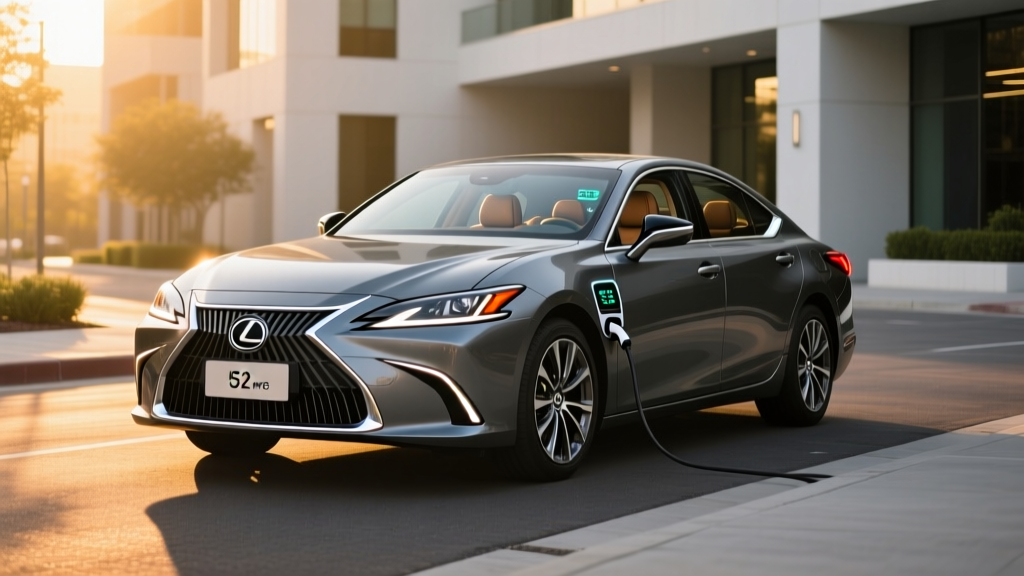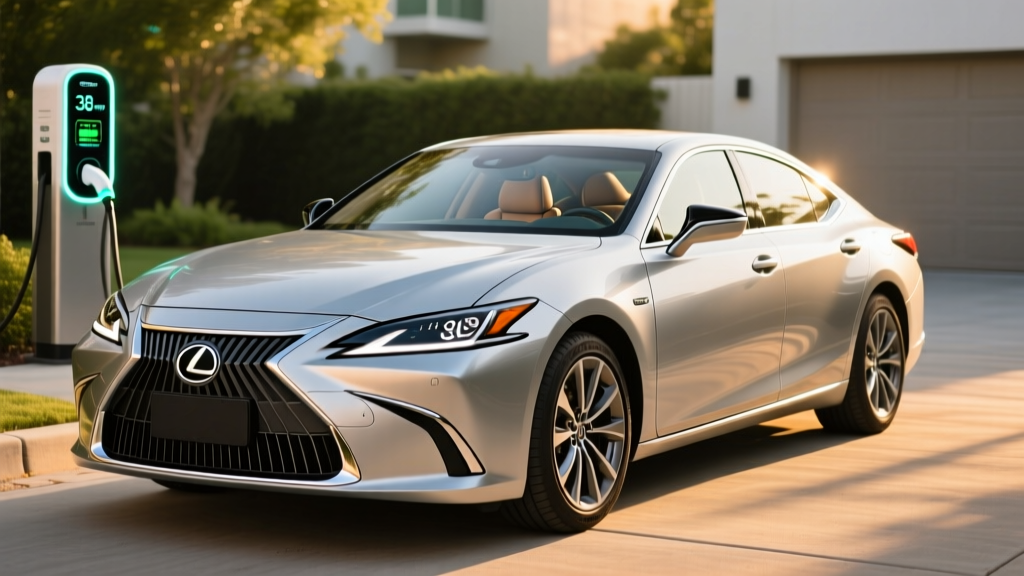
The Lexus ES has long been the benchmark for midsize luxury comfort, and the hybrid variant—the ES 300h—remains one of the most compelling fuel-sippers in the premium sedan segment. For 2026, the Lexus ES hybrid continues with Toyota's proven fourth-generation hybrid system, pairing a 2.5-liter four-cylinder engine with electric motors for a combined 215 horsepower and an EPA-estimated 44 MPG combined. But does the real-world efficiency match the sticker? And how does it stack up against plug-in hybrids and full EVs for buyers cross-shopping electrified luxury sedans?
This guide covers everything a prospective buyer needs: exact EPA fuel economy figures, real-world MPG observations, powertrain specs, battery longevity, warranty coverage, pricing across trims, and a clear decision framework for whether the ES 300h, a PHEV, or a full BEV is the right call.
HEV vs. PHEV: Understanding the Lexus ES Hybrid
Before diving into specs, it's critical to understand what the ES 300h is—and what it isn't. The Lexus ES hybrid is a conventional hybrid electric vehicle (HEV), not a plug-in hybrid (PHEV). This distinction shapes everything from daily use to fuel savings.
Conventional Hybrid (HEV) — Lexus ES 300h
- No plug required. The battery charges via regenerative braking and the gasoline engine.
- Small battery (~1.6 kWh usable) — assists the engine but cannot drive the car on electricity alone for meaningful distances.
- Seamless operation: the car manages gas/electric blending automatically. You just drive it.
- No range anxiety, no charging infrastructure dependency.
Plug-In Hybrid (PHEV) — e.g., BMW 530e, Mercedes E 350e
- Must be plugged in to access electric-only driving (typically 20–45 miles of EV range).
- Larger battery (12–25 kWh) with Level 2 AC charging capability.
- Higher upfront cost and added weight; efficiency drops once the battery is depleted.
- May qualify for federal tax credits if battery sourcing and MSRP caps are met.
The ES 300h has no plug, no EV-only mode for highway driving, and no dependence on charging infrastructure. If you want electric-only commuting in a Lexus, you'd need to look at the Lexus NX 450h+ or RX 450h+ (PHEV SUVs) or a competitor's PHEV sedan. The ES hybrid prioritizes simplicity and consistently strong fuel economy across all driving conditions.
2026 Lexus ES 300h Fuel Economy: EPA vs. Real World
Fuel efficiency is the ES 300h's headline feature. Here are the official EPA figures from fueleconomy.gov for the 2026 model year:
| Metric | EPA Estimate | Real-World Expectation |
|---|---|---|
| City MPG | 43 MPG | 44–48 MPG (hybrids often exceed EPA in stop-and-go) |
| Highway MPG | 44 MPG | 38–42 MPG (sustained 75+ mph reduces regen benefit) |
| Combined MPG | 44 MPG | 40–45 MPG depending on driving mix |
| Annual Fuel Cost | ~$1,450 (15,000 mi/yr at $3.40/gal) | Varies by region and driving habits |
For context, the non-hybrid Lexus ES 250 AWD is rated at 25 city / 34 highway / 28 combined—a 57% improvement in combined fuel economy for the hybrid variant. That translates to roughly 200 fewer gallons of fuel per year for a driver covering 15,000 miles.
Powertrain and Performance Specs
| Specification | 2026 Lexus ES 300h |
|---|---|
| Engine | 2.5L DOHC 16-valve inline-4 (Atkinson cycle) |
| Engine Output | 176 hp / 163 lb-ft torque |
| Electric Motor | 88 kW (118 hp) front-mounted permanent-magnet motor |
| Combined System Output | 215 hp |
| Transmission | eCVT (electronically controlled continuously variable) |
| Drivetrain | Front-wheel drive |
| 0–60 mph | ~7.7 seconds |
| Hybrid Battery | ~1.6 kWh lithium-ion (sealed NiMH on earlier generations; Li-ion since 2019 refresh) |
| Fuel Tank | 13.2 gallons (regular 87 octane) |
| Total Driving Range | ~580 miles (EPA combined) |
The ES 300h is not a performance sedan—that role belongs to the Lexus IS or the ES F Sport with its available dynamic handling package. The hybrid prioritizes smooth, silent, efficient cruising. The eCVT eliminates shift shock, and the electric motor fills in torque at low RPMs, making the ES 300h feel responsive around town despite its modest 215 hp combined output.
One practical note: the hybrid battery pack is mounted beneath the rear seat, which preserves trunk space (16.7 cubic feet—identical to the gas-only ES models). This is a packaging advantage over some competitors whose batteries intrude into cargo areas.
2026 Lexus ES 300h Pricing by Trim
| Trim | MSRP (incl. destination) | Key Features |
|---|---|---|
| ES 300h Base | ~$46,150 | Lexus Safety System+ 3.0, 12.3" touchscreen, wireless CarPlay/Android Auto, heated front seats |
| ES 300h Luxury | ~$50,200 | Semi-aniline leather, wood trim, power rear sunshade, ambient lighting |
| ES 300h F Sport Design | ~$49,600 | F Sport exterior styling, sport seats, unique 19" wheels, aluminum pedal trim |
| ES 300h Ultra Luxury | ~$54,350 | Mark Levinson 17-speaker audio, panoramic roof, rear-seat controls, adaptive suspension |
Note: MSRP figures reflect 2026 model-year pricing as published by Lexus. Actual dealer pricing may vary. Destination charge included.
Federal Tax Credit Eligibility
The Lexus ES 300h is a conventional hybrid (HEV), not a plug-in hybrid or battery electric vehicle. As such, it does not qualify for the federal §30D New Clean Vehicle Credit (up to $7,500), which requires a minimum battery capacity of 7 kWh and plug-in capability. The IRS rules under irs.gov are explicit: only PHEVs and BEVs meeting battery-sourcing, MSRP, and buyer-income thresholds are eligible.
Some states may offer modest incentives for conventional hybrids, but these vary widely by jurisdiction and change frequently. Check your state's energy office or department of environmental quality for current programs. The fuel savings alone—approximately $800–$1,200 per year compared to the gas-only ES 250—remain the primary financial argument for the ES 300h.
Hybrid Battery Warranty, Lifespan, and Replacement Cost
Lexus Hybrid Battery Warranty
Coverage: 10 years / 150,000 miles (whichever comes first) for hybrid battery and related components.
What's covered: The high-voltage hybrid battery pack, battery control module, hybrid control module, and inverter with converter.
Capacity guarantee: Lexus warrants that the hybrid battery will retain sufficient capacity for normal hybrid operation. Unlike EVs, there is no published minimum capacity retention percentage—the system is designed to function with gradual degradation.
Battery longevity is consistently one of the top concerns for hybrid shoppers. Here's what the data shows for Toyota/Lexus hybrid systems:
- Real-world lifespan: Toyota's hybrid battery packs routinely last 150,000–200,000+ miles before requiring replacement. Many first-generation Prius and ES 300h batteries have exceeded 200,000 miles with original packs.
- Failure rate: Hybrid battery failures within the warranty period are uncommon. The system uses a relatively small, conservatively managed battery that avoids deep discharge cycles—the primary cause of lithium-ion degradation.
- Replacement cost: If the hybrid battery does need replacement out of warranty, expect $2,500–$4,500 for a new OEM pack installed at a Lexus dealer. Refurbished/reconditioned packs are available from third-party specialists for $1,500–$2,500. This is dramatically less than EV battery replacements, which can exceed $10,000–$20,000.
- Individual cell replacement: In some cases, individual battery modules can be replaced rather than the entire pack, reducing cost further.
The ES 300h also carries Lexus's standard 4-year/50,000-mile basic warranty and 6-year/70,000-mile powertrain warranty, covering the gasoline engine, eCVT, and related components.
Lexus ES 300h Reliability and Safety
Lexus consistently ranks at or near the top of J.D. Power Vehicle Dependability Studies and Consumer Reports reliability surveys. The ES nameplate specifically benefits from Toyota's mature hybrid architecture—the same system underpins the Camry Hybrid, Highlander Hybrid, and Toyota Sienna, with millions of units on the road providing long-term validation.
The Insurance Institute for Highway Safety (IIHS) has historically rated the ES as a Top Safety Pick, with strong crash-test performance. The 2026 model carries Lexus Safety System+ 3.0 as standard equipment, which includes:
- Pre-Collision System with Pedestrian Detection
- Dynamic Radar Cruise Control (full-speed adaptive cruise)
- Lane Departure Alert with Steering Assist
- Lane Tracing Assist (centering assist on marked roads)
- Road Sign Assist
- Automatic High Beams
Important clarification: Lexus Safety System+ 3.0 is an SAE Level 2 driver-assistance system. The driver must remain attentive, keep hands on the wheel, and supervise the system at all times. It is not autonomous or "self-driving." Lane Tracing Assist provides steering support on highways but will disengage if lane markings are unclear or if the driver fails to respond to alerts.
ES 300h vs. PHEV vs. Full EV: Which Should You Choose?
The ES 300h occupies a specific niche. Here's a decision framework to determine whether it's the right electrified vehicle for your situation:
Choose the Lexus ES 300h (HEV) if:
- You lack access to home or workplace charging (apartment, street parking, no garage outlet).
- You want maximum fuel efficiency with zero behavior change—no plugging in, no range planning.
- Your annual mileage is moderate to high (12,000–20,000+ miles) and fuel cost savings matter.
- You prioritize proven reliability and low long-term maintenance costs.
- You prefer a traditional luxury sedan experience with whisper-quiet hybrid operation.
Choose a PHEV (e.g., BMW 530e, Audi A6 TFS e) if:
- You have reliable Level 2 home charging and a short commute (under 30 miles round-trip).
- You want electric-only daily driving with gas-engine flexibility for road trips.
- You can meet §30D tax credit eligibility (income caps, MSRP limits, battery sourcing requirements) to offset the higher purchase price.
Choose a Full EV (e.g., Tesla Model S, BMW i5, Mercedes EQE) if:
- You have dependable home Level 2 charging and access to DC fast charging for road trips.
- You want zero tailpipe emissions and the lowest per-mile "fuel" cost (electricity vs. gasoline).
- You value instant torque, one-pedal driving, and minimal drivetrain maintenance.
- You're prepared for a higher upfront purchase price and potentially higher insurance premiums.
Cost Comparison: ES 300h vs. Gas ES 250 vs. BMW i5 (Full EV)
| 5-Year Cost Factor | ES 300h (HEV) | ES 250 (Gas AWD) | BMW i5 eDrive40 (BEV) |
|---|---|---|---|
| Base MSRP | ~$46,150 | ~$44,000 | ~$58,000 |
| Fuel/Energy (5 yrs, 15k mi/yr) | ~$7,250 | ~$12,300 | ~$4,500 (home charging) |
| Federal Tax Credit | $0 | $0 | Up to $7,500 (if eligible) |
| Maintenance (5 yrs est.) | ~$2,800 | ~$3,500 | ~$1,800 |
| Est. 5-Year Total | ~$56,200 | ~$59,800 | ~$56,800 |
Estimates based on national averages. Actual costs vary by region, electricity rates, gas prices, driving habits, and individual tax credit eligibility. Source: fueleconomy.gov and manufacturer pricing.
The ES 300h's advantage is clear: it delivers near-EV running costs without requiring any charging infrastructure, and it undercuts the gas-only ES 250 by roughly $3,600 over five years despite a slightly higher purchase price. The BMW i5 is competitive on total cost only if the buyer qualifies for the full federal tax credit and has cheap home electricity.
Pros and Cons: 2026 Lexus ES 300h
Pros
- 44 MPG combined EPA—among the best in luxury sedans
- No plug-in required; zero lifestyle change
- Proven, reliable Toyota hybrid system with 10-year/150k-mile battery warranty
- Excellent ride comfort and cabin quietness
- Strong resale value (Lexus consistently leads luxury depreciation rankings)
- Low hybrid battery replacement cost vs. EV packs ($2,500–$4,500)
- Comprehensive Lexus Safety System+ 3.0 standard on all trims
Cons
- No electric-only driving mode; not a PHEV
- No federal tax credit eligibility (§30D requires plug-in capability)
- FWD only—no AWD option on the hybrid (AWD available on gas ES 250)
- eCVT drone under hard acceleration (common to all Toyota hybrids)
- 215 hp combined is adequate, not sporty—0-60 in ~7.7 seconds
- Infotainment learning curve for first-time Lexus users
- Ultra Luxury trim pushes past $54,000, approaching EV territory
Frequently Asked Questions
How many MPG does the Lexus ES 300h hybrid get?
The 2026 Lexus ES 300h is EPA-rated at 43 MPG city, 44 MPG highway, and 44 MPG combined. In real-world city driving with frequent stops, many owners report 46–50 MPG thanks to regenerative braking. Sustained highway driving above 75 mph typically yields 38–42 MPG. Over 15,000 miles per year, expect to use roughly 340 gallons of regular 87-octane gasoline—about 200 fewer gallons than the gas-only ES 250 AWD.
Does the Lexus ES hybrid need to be plugged in?
No. The ES 300h is a conventional hybrid (HEV). Its small lithium-ion battery charges automatically through regenerative braking and the gasoline engine. There is no plug, no charging cable, and no requirement for any charging infrastructure. You refuel it exactly like a regular gas car.
How far can the ES 300h go on electric only?
The ES 300h can creep at very low speeds (under ~25 mph) on electric power for roughly 0.5–1 mile when the battery is fully charged—for example, in a parking lot or stop-and-go traffic. However, it is not designed for sustained electric-only driving. The gasoline engine engages seamlessly whenever more power is needed or the small battery depletes. If electric-only commuting is a priority, you need a PHEV with at least 20+ miles of EV range.
Is the Lexus ES 300h hybrid reliable?
Yes. The ES 300h uses Toyota's fourth-generation hybrid system, which has been refined over two decades and millions of vehicles (Prius, Camry Hybrid, RAV4 Hybrid, Highlander Hybrid). Lexus as a brand consistently ranks first or second in J.D. Power dependability studies and Consumer Reports reliability surveys. The hybrid battery is warrantied for 10 years / 150,000 miles, and real-world data shows these packs frequently lasting 150,000–200,000+ miles without issue.
What does it cost to replace the ES 300h hybrid battery?
A new OEM hybrid battery replacement at a Lexus dealer typically costs between $2,500 and $4,500 including labor. Refurbished or reconditioned battery packs from qualified third-party shops are available for $1,500–$2,500. This is significantly less expensive than EV traction battery replacements, which can exceed $10,000–$20,000. Given the 10-year/150,000-mile warranty and typical pack longevity, most original owners will never face this expense.
Does the Lexus ES 300h qualify for any federal tax credit?
No. The federal §30D New Clean Vehicle Credit requires a vehicle to have plug-in capability and a battery capacity of at least 7 kWh. The ES 300h's hybrid battery is approximately 1.6 kWh and is not plug-in capable. Only PHEVs and BEVs that meet IRS battery-sourcing, MSRP cap ($55,000 for sedans), and buyer income thresholds are eligible. Check irs.gov for current-year eligibility rules. Some states may offer small incentives for hybrids—check your local energy office.
How does the ES 300h compare to the Toyota Camry Hybrid?
Both use the same fundamental 2.5L hybrid powertrain, but the ES 300h produces 215 hp combined (vs. the Camry Hybrid's 225 hp with AWD) and is tuned for luxury refinement rather than value. The ES 300h offers a quieter cabin, more premium materials, Lexus Safety System+ 3.0, and a more compliant ride—at a roughly $15,000–$18,000 premium over a well-equipped Camry Hybrid. Fuel economy is nearly identical (44 vs. 44–52 MPG combined depending on Camry trim). The ES is the choice for luxury; the Camry Hybrid is the efficiency-per-dollar champion.
Is there a Lexus ES plug-in hybrid or fully electric version?
As of the 2026 model year, Lexus does not offer the ES sedan as a plug-in hybrid (PHEV) or battery electric vehicle (BEV). The ES lineup includes the ES 250 (gas, AWD), ES 350 (gas, V6, FWD), and ES 300h (hybrid, FWD). For a Lexus PHEV, look at the NX 450h+ or RX 450h+ SUVs. For a fully electric Lexus sedan, the upcoming next-generation models on the dedicated EV platform may eventually fill this gap, but nothing has been announced for the ES nameplate specifically.
Bottom Line: Who Should Buy the Lexus ES 300h?
The 2026 Lexus ES 300h is the right car for a specific and large group of buyers: those who want luxury-sedan comfort, exceptional fuel economy, and proven reliability without any dependence on charging infrastructure. If you live in an apartment, park on the street, frequently drive long distances, or simply don't want to think about plugging in, the ES 300h delivers 44 MPG combined with zero lifestyle compromise.
It's not the right choice if you want electric-only commuting (look at a PHEV), all-wheel drive (the ES hybrid is FWD-only), or the lowest possible per-mile energy cost (a full EV with cheap home electricity wins there). But for the buyer who values set-it-and-forget-it efficiency, Lexus build quality, and a 10-year battery warranty backed by decades of hybrid engineering, the ES 300h remains one of the smartest luxury sedan purchases on the market.