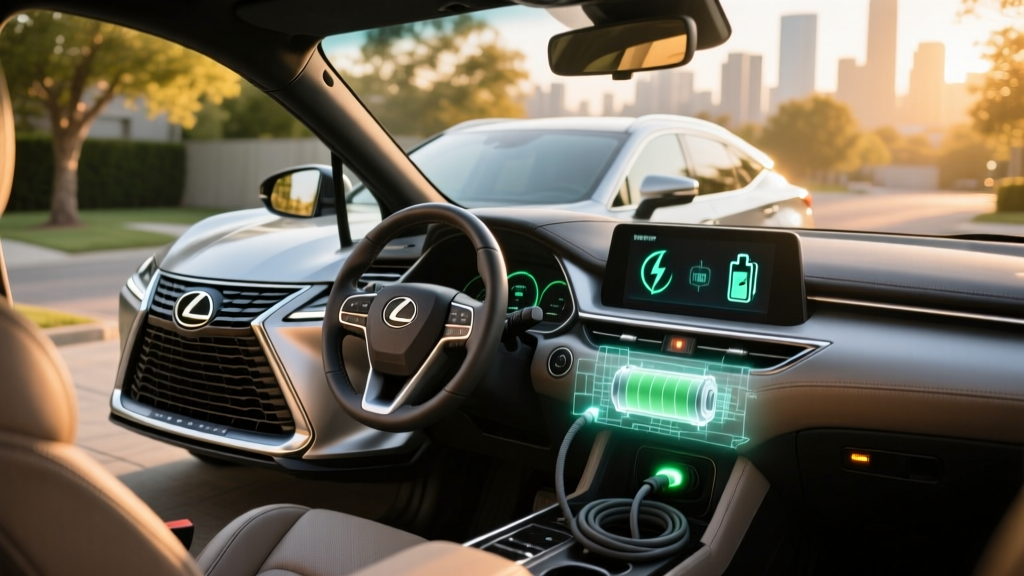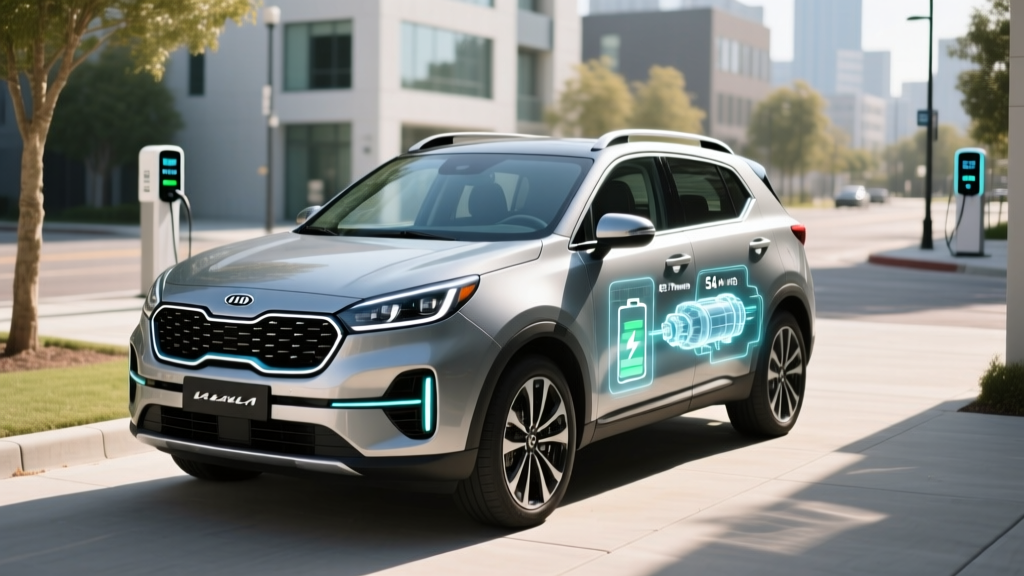
The 2026 Kia Sportage PHEV occupies a compelling middle ground in the compact SUV segment: it offers genuine electric-only commuting range, the cargo versatility of a gas-powered crossover, and zero range anxiety for road trips. For buyers not yet ready to commit to a battery-electric vehicle but who want meaningful fuel savings and daily electric driving, this plug-in hybrid deserves serious consideration.
After examining EPA data, real-world driving patterns, and ownership economics, here is everything you need to know about the 2026 Sportage PHEV before visiting a dealer.
Quick Verdict: Who Should Buy the Sportage PHEV?
The 2026 Sportage PHEV is ideal for drivers with a predictable commute under 30 miles round-trip who have access to Level 2 home charging but also take regular road trips where charging infrastructure is sparse. If you can plug in nightly, you may go months between gas fill-ups. If you cannot charge at home or work, the PHEV premium over the conventional Sportage Hybrid is harder to justify.
Consider the Sportage HEV instead if: You lack plug-in access, your daily mileage regularly exceeds 40 miles, or you want a lower purchase price.
Look at a full BEV (like the EV6) if: You have reliable home charging, rarely drive over 250 miles in a day, and want zero tailpipe emissions with lower operating costs.
Sportage HEV vs. PHEV: What's the Difference?
Kia offers the Sportage in three powertrain flavors for 2026: a conventional gas model, a standard hybrid (HEV), and a plug-in hybrid (PHEV). Understanding the HEV vs. PHEV distinction is critical before you shop.
A conventional hybrid (HEV) charges its small battery through regenerative braking and the gas engine. You never plug it in. It improves fuel economy modestly — typically 5–15 MPG over a gas-only equivalent — but cannot drive on electricity alone for meaningful distances.
A plug-in hybrid (PHEV) carries a substantially larger battery (13.7 kWh usable in the Sportage PHEV) and a more powerful electric motor. You plug it in to charge, and it can operate as a pure electric vehicle for a set range before the gas engine engages. Once the battery depletes, it functions like a conventional hybrid.
| Spec | Sportage HEV | Sportage PHEV |
|---|---|---|
| Plug-in Required | No | Yes (recommended) |
| Battery Capacity | ~1.5 kWh | 13.7 kWh usable |
| Electric-Only Range | ~1 mi (low-speed assist) | 34 mi (EPA) |
| Combined HP | 232 hp | 268 hp |
| EPA Combined MPG/MPGe | 43 MPG (FWD) / 38 MPG (AWD) | 84 MPGe (elec+gas) / 35 MPG (gas-only) |
| Drivetrain | FWD or AWD | AWD standard |
| Starting MSRP | ~$30,090 | ~$39,890 |
Fuel Economy: EPA MPG and Real-World Numbers
The EPA rates the 2026 Sportage PHEV at 84 MPGe when operating in combined electric-and-gas mode, and 35 MPG combined (33 city / 37 highway) once the battery is depleted and it operates as a conventional hybrid. For reference, fueleconomy.gov lists these official figures.
| Mode | City | Highway | Combined |
|---|---|---|---|
| Charge-Depleting (EV+Gas) | — | — | 84 MPGe |
| Charge-Sustaining (Gas-Only Hybrid) | 33 MPG | 37 MPG | 35 MPG |
Real-World MPG vs. EPA
In real-world driving, PHEV efficiency depends entirely on your charging habits. If you charge nightly and your commute is under 34 miles, you could use almost no gasoline for daily driving. Owner reports and testing suggest the gas-only hybrid mode delivers 33–36 MPG in mixed driving — close to the EPA's 35 MPG estimate. Highway cruising at 75+ MPH with a depleted battery may dip to 31–33 MPG due to aerodynamic drag and the added weight of the battery pack (~350 lbs more than the HEV).
City driving in hybrid mode tends to match or slightly exceed EPA figures because regenerative braking recaptures energy in stop-and-go traffic. Cold weather (below 30°F) reduces electric-only range by roughly 20–30%, so expect 24–27 electric miles in winter conditions.
Electric-Only Range, Battery, and Charging
The 2026 Sportage PHEV uses a 13.7 kWh lithium-ion polymer battery (NMC chemistry) paired with a 72 kW (96 hp) permanent-magnet electric motor. The EPA rates electric-only range at 34 miles, and total combined range (electric + full gas tank) at approximately 430 miles.
• Mild weather (50–80°F), city/suburban: 30–34 miles
• Highway at 70 MPH, mild weather: 26–29 miles
• Cold weather (20–35°F), mixed driving: 22–27 miles
• Hot weather with A/C, highway: 28–31 miles
Charging Times
| Level | Power | 0–100% Time | Connector |
|---|---|---|---|
| Level 1 (120V household) | ~1.4 kW | ~10 hours | J1772 |
| Level 2 (240V home/public) | ~7.2 kW | ~2 hours | J1772 |
| DC Fast Charge | Not supported | N/A | N/A |
The Sportage PHEV does not support DC fast charging — a common limitation among plug-in hybrids in this class. The onboard charger maxes out at 7.2 kW, meaning a full charge takes roughly two hours on a Level 2 home charger. For most PHEV owners, overnight charging at home is the primary routine, and a 2-hour top-up is more than adequate given the 34-mile battery.
Powertrain and Performance
The 2026 Sportage PHEV pairs a 1.6-liter turbocharged four-cylinder engine (178 hp, 195 lb-ft torque) with the 72 kW electric motor for a combined system output of 268 horsepower and 258 lb-ft of torque. Power routes through a 6-speed automatic transmission to a standard all-wheel-drive system.
| Specification | Value |
|---|---|
| Gas Engine | 1.6L Turbo I4, 178 hp / 195 lb-ft |
| Electric Motor | 72 kW (96 hp) |
| Combined System Output | 268 hp / 258 lb-ft |
| Transmission | 6-speed automatic |
| Drivetrain | AWD (standard) |
| 0–60 MPH (est.) | ~7.0 seconds |
| Towing Capacity | 2,000 lbs |
| Cargo Volume (rear seats up) | ~32.1 cu ft |
The PHEV's electric motor provides instant torque from a stop, making it feel noticeably quicker off the line than the HEV despite similar peak horsepower. Highway passing is confident, and the transition between electric and gas power is well-managed by Kia's powertrain software — most drivers won't notice the engine engaging unless accelerating hard.
Pricing, Trims, and Tax Credit Eligibility
The 2026 Sportage PHEV is offered in two trims:
- X-Line PHEV: ~$39,890 MSRP (destination included)
- X-Line Prestige PHEV: ~$44,190 MSRP (destination included)
Federal Tax Credit (§30D)
Under current IRS §30D rules, the Sportage PHEV may qualify for a partial federal tax credit — but eligibility depends on several factors that change regularly:
- MSRP Cap: SUVs must be under $80,000 — Sportage PHEV qualifies ✓
- Buyer Income Cap: AGI ≤ $150,000 (single) / $300,000 (joint) — verify your AGI
- Battery Sourcing: Critical minerals and battery components must meet phased-in domestic/FTEA sourcing thresholds — check Kia's current certification
- Final Assembly: Must be assembled in North America — verify VIN on fueleconomy.gov
- Credit Amount: Up to $7,500, split between critical minerals ($3,750) and battery components ($3,750) — the Sportage PHEV may qualify for partial or full credit depending on current sourcing compliance
- Point-of-Sale Transfer: Eligible buyers can transfer the credit to the dealer for an upfront price reduction
Tax credit rules are subject to change. Consult a tax professional and verify current eligibility on IRS.gov before purchasing.
Several states also offer additional PHEV incentives (Colorado, for example, provides a state credit for PHEVs). Check your state's energy office for current programs.
Reliability, Battery Warranty, and Long-Term Costs
Kia backs the 2026 Sportage PHEV with one of the strongest warranty packages in the segment:
• Limited Vehicle Warranty: 5 years / 60,000 miles
• Powertrain Warranty: 10 years / 100,000 miles
• Hybrid/EV Battery Warranty: 10 years / 100,000 miles (covers capacity loss below ~70% of original)
• Roadside Assistance: 5 years / 60,000 miles
Battery Longevity and Replacement
PHEV batteries experience less stress than full EV batteries because they operate in a narrower state-of-charge window (the car's software maintains a buffer, never fully depleting or fully charging the pack during normal hybrid operation). Based on data from similar Hyundai/Kia PHEV platforms, owners can expect 8–12% degradation over 10 years under normal use.
If a battery replacement is needed outside warranty, current estimates for the Sportage PHEV's 13.7 kWh pack run $4,000–$6,500 including labor at a dealership. However, the 10-year/100,000-mile warranty covers most owners through the vehicle's primary ownership period. Kia's hybrid system reliability has been solid in recent model years, with the 1.6T powertrain showing no widespread systemic issues.
Insurance and Maintenance
Insurance premiums for the Sportage PHEV run roughly 5–10% higher than the gas-only Sportage, primarily due to the higher replacement cost of the powertrain. Maintenance costs are lower than a gas-only vehicle — no transmission fluid changes at short intervals, regenerative braking extends brake pad life, and the electric motor has no wearable components. Expect annual maintenance of $300–$450 after the complimentary first-year service.
Ownership Economics: PHEV vs. HEV vs. Full EV
| Cost Factor | Sportage Gas | Sportage HEV | Sportage PHEV |
|---|---|---|---|
| Purchase Price (base) | ~$28,590 | ~$30,090 | ~$39,890 |
| Est. Federal Tax Credit | $0 | $0 | $3,750–$7,500* |
| Fuel/Energy (5 yrs) | ~$11,200 | ~$7,800 | ~$3,600 |
| Maintenance (5 yrs) | ~$2,800 | ~$2,400 | ~$2,000 |
| Insurance (5 yrs) | ~$7,500 | ~$7,500 | ~$8,100 |
*Tax credit depends on buyer eligibility and current sourcing rules. Fuel costs assume $3.50/gal gas, $0.14/kWh electricity. Actual costs vary by region and driving patterns.
The PHEV's higher purchase price is partially offset by the tax credit and dramatically lower fuel costs — if you charge regularly. Without regular charging, you're carrying 350 lbs of battery you never use, and the HEV becomes the smarter financial choice.
Pros and Cons
- 34 miles electric-only covers most commutes
- 430+ miles total range eliminates road-trip anxiety
- 268 hp provides confident acceleration
- Standard AWD on all PHEV trims
- 10-year/100,000-mile battery warranty
- May qualify for up to $7,500 federal credit
- Spacious interior with 32.1 cu ft cargo
- No DC fast charging capability
- ~$10,000 premium over Sportage HEV
- Electric range drops to ~24 mi in cold weather
- AWD-only adds weight, slightly reduces hybrid MPG
- Tax credit eligibility uncertain due to sourcing rules
- 6-speed auto less refined than competitors' CVTs/DCTs
- Only 2 trims available (limited configuration)
Frequently Asked Questions
How many MPG does the 2026 Kia Sportage PHEV get?
The EPA rates the Sportage PHEV at 84 MPGe combined when using both electric and gas power. Once the battery is depleted, it operates as a conventional hybrid at 35 MPG combined (33 city / 37 highway). Real-world gas-only driving typically yields 33–36 MPG in mixed conditions.
How far can the Sportage PHEV go on electric only?
The EPA rates the electric-only range at 34 miles. In real-world conditions, expect 30–34 miles in mild weather city driving, 26–29 miles on the highway, and 22–27 miles in cold weather. Total combined range (electric + gas) is approximately 430 miles.
Does the Sportage PHEV qualify for a tax credit?
It may qualify for a partial or full $7,500 federal tax credit under IRS §30D, depending on battery-sourcing compliance, your income, and the vehicle's final assembly location. Eligibility rules change periodically — verify on IRS.gov and confirm with your dealer before purchase. The credit can be applied at point of sale.
Is the Sportage PHEV reliable? What about battery replacement?
Kia's hybrid powertrain has demonstrated solid reliability in recent years. The PHEV battery is covered by a 10-year/100,000-mile warranty against capacity loss below approximately 70%. Based on similar platforms, expect 8–12% degradation over a decade. Out-of-warranty replacement is estimated at $4,000–$6,500, though most original owners will be covered.
Should I get the Sportage PHEV, HEV, or a full EV?
Choose the PHEV if you can charge at home, commute under 34 miles daily, and need road-trip flexibility. Choose the HEV if you cannot plug in regularly or want a lower purchase price. Choose a full EV (like the Kia EV6) if you want zero tailpipe emissions, lower per-mile energy costs, and have reliable home charging with mostly sub-250-mile daily needs.
Can I charge the Sportage PHEV at a DC fast charger?
No. The 2026 Sportage PHEV does not support DC fast charging. It charges via Level 1 (120V, ~10 hours) or Level 2 (240V, ~2 hours) using a J1772 connector. This is standard for PHEVs in this class — the smaller battery doesn't require DC fast charging for practical daily use.