Quick Verdict: A Three-Row PHEV That Actually Makes Sense
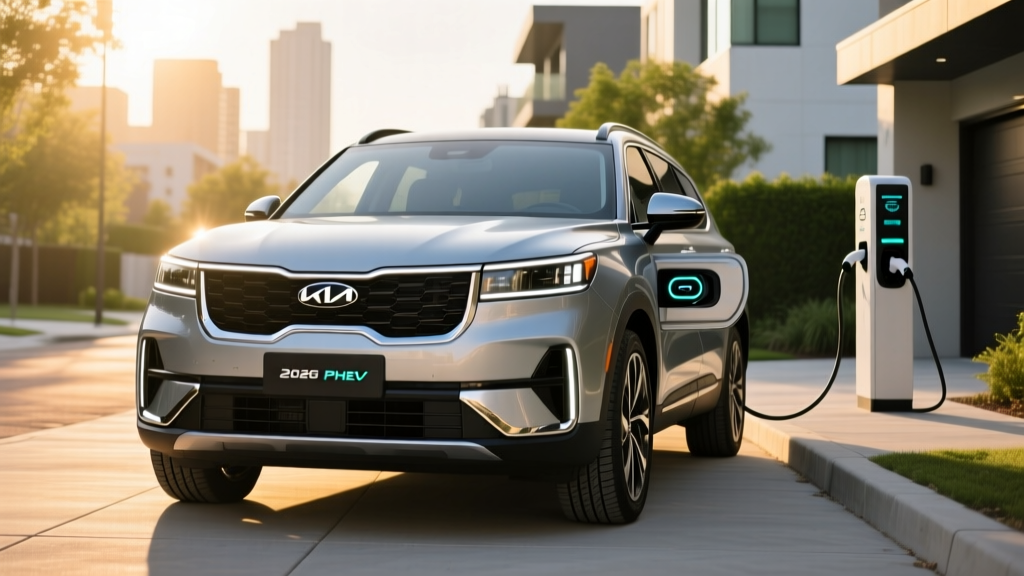
The 2026 Kia Sorento PHEV occupies a narrow but valuable lane: it's one of very few plug-in hybrids offering three rows of seating, all-wheel drive, and over 30 miles of electric-only range. For families who want to commute on electricity most weekdays but need the flexibility for 500-mile road trips without charging stops, the Sorento PHEV makes a compelling case — especially if you can charge at home.
With a combined 261 horsepower, a 13.8 kWh battery pack, and EPA-estimated 32 miles of electric range, the 2026 Sorento PHEV improves on its predecessors with slightly better efficiency and updated infotainment. But the real question buyers need answered isn't just what the sticker says — it's how this PHEV performs in real-world driving, whether it qualifies for federal tax incentives, and how it compares to going full EV or sticking with the conventional Sorento Hybrid.
Starting at $50,990 (including destination), the Sorento PHEV commands a premium over the gas and hybrid variants. Let's break down exactly what you get for that money and whether the math works.
HEV vs PHEV: Which Sorento Is Right for You?
Kia offers the 2026 Sorento in three powertrain flavors, and confusing them is easy at the dealership. Here's the critical distinction:
| Feature | Sorento Hybrid (HEV) | Sorento Plug-In Hybrid (PHEV) |
|---|---|---|
| Plug-in charging? | No — self-charging via regenerative braking and engine | Yes — plug in to access full electric range |
| Electric-only range | ~1 mile at low speed | EPA-est. 32 miles |
| Battery size | 1.49 kWh | 13.8 kWh |
| Combined horsepower | 232 hp | 261 hp |
| EPA combined MPG (gas) | 35 MPG | 34 MPG (after battery depleted) |
| EPA MPGe (electric + gas) | N/A | 79 MPGe |
| Drivetrain | AWD | AWD |
| Starting MSRP | $39,090 | $50,990 |
The conventional HEV never plugs in. It recovers energy through regenerative braking and uses its small battery to assist the gas engine, achieving strong MPG without any change to your routine. The PHEV, by contrast, has a much larger battery and a more powerful electric motor. Plug it in overnight on a Level 2 charger, and you can drive 32 miles on electricity alone before the 1.6-liter turbocharged engine fires up.
If your daily round-trip commute is under 30 miles and you have home charging, the PHEV effectively operates as an EV on weekdays and a hybrid on weekends. If you can't charge at home or at work, the PHEV's extra cost buys you very little — you'd be better off with the HEV.
Fuel Economy and Electric Range: EPA vs Real World
Here are the official EPA numbers for the 2026 Kia Sorento PHEV, per fueleconomy.gov:
| Metric | EPA Estimate | Real-World Expectation |
|---|---|---|
| Electric-only range | 32 miles | 26–30 miles (highway/cold weather) |
| MPGe (electric + gas combined) | 79 MPGe | 70–78 MPGe with regular charging |
| MPG combined (charge-sustaining) | 34 MPG | 30–33 MPG highway; 34–37 city |
| MPG city (gas-only mode) | 35 MPG | Hybrids often beat EPA city estimates in stop-and-go |
| MPG highway (gas-only mode) | 33 MPG | Expect 29–32 MPG at 75+ mph |
| Total combined range | ~440 miles | ~400–430 miles real-world |
A few things worth understanding about these numbers:
Electric range drops in cold weather and at highway speeds. The 32-mile EPA estimate assumes moderate temperatures and mixed driving. In winter conditions (below 40°F), expect that to shrink to roughly 22–26 miles due to battery chemistry limitations and cabin heating demands. At sustained 70+ mph highway speeds, electric-only range also compresses to around 25–28 miles.
Hybrids often exceed EPA city estimates. Because regenerative braking recovers energy in stop-and-go traffic, the Sorento PHEV (and hybrids generally) tends to deliver better real-world MPG in city driving than on the highway. Drivers who do mostly urban driving after the battery is depleted may see 35–37 MPG regularly.
Highway driving hurts efficiency. At 75–80 mph with the battery depleted, the turbocharged 1.6L engine is working hard to move a 4,600-pound vehicle. Expect 29–32 MPG on long interstate trips — noticeably below the EPA combined figure.
Powertrain Specs and Driving Impressions
| Specification | 2026 Kia Sorento PHEV |
|---|---|
| Engine | 1.6L turbocharged 4-cylinder (178 hp) |
| Electric motor | 74 kW (99 hp) |
| Combined system output | 261 hp / 258 lb-ft torque |
| Transmission | 6-speed automatic |
| Drivetrain | AWD (electric motor drives rear axle) |
| 0–60 mph | ~7.5 seconds (est.) |
| Battery capacity | 13.8 kWh (NMC chemistry) |
| Towing capacity | 2,000 lbs |
| Curb weight | ~4,600 lbs |
The Sorento PHEV's powertrain pairs a 178-hp turbocharged engine with a 99-hp electric motor integrated into the transmission housing. Combined output of 261 hp is more than adequate for a family hauler, and the electric motor provides immediate torque from a stop — making the Sorento PHEV feel noticeably quicker off the line than the conventional hybrid.
In EV mode, acceleration is smooth and quiet, though the electric motor alone won't pin you to the seat. Merge onto a highway with a depleted battery and the turbo four-cylinder engages seamlessly, though you'll hear it working under hard acceleration. The 6-speed automatic is a traditional torque-converter unit, which means none of the rubber-band feeling some CVT-equipped hybrids exhibit.
The AWD system is worth noting: the electric motor primarily drives the rear wheels, providing competent traction in rain and light snow. This isn't a hardcore off-roader, but it handles winter commutes with confidence.
Charging: What You Need to Know Before You Buy
The 2026 Sorento PHEV uses a standard J1772 connector for AC charging. Here's what charging looks like in practice:
| Charging Method | Power | 0–100% Time | Practical Notes |
|---|---|---|---|
| Level 1 (120V household outlet) | ~1.4 kW | ~10–11 hours | Works for overnight if you drive <20 miles/day |
| Level 2 (240V home charger) | ~3.3 kW (onboard charger limit) | ~3.5–4 hours | Recommended — fully recharges overnight |
| DC fast charging | Not supported | N/A | No DCFC capability |
Critical detail: the Sorento PHEV's onboard charger is limited to 3.3 kW. Even if you install a 48-amp Level 2 home charger capable of delivering 11.5 kW, the Sorento PHEV will only accept 3.3 kW. That's sufficient for overnight charging — 3.5 to 4 hours refills the 13.8 kWh battery completely — but it means you can't take advantage of faster public Level 2 stations any quicker.
No DC fast charging. Unlike some PHEVs (the Toyota RAV4 Prime, for example, also lacks DCFC), the Sorento PHEV cannot use DC fast chargers. This is typical for plug-in hybrids with smaller batteries, but it means road-trip charging isn't practical — you'll simply drive on gas once the battery depletes.
Home charging cost. At the national average electricity rate of ~$0.16/kWh, fully recharging the 13.8 kWh battery costs roughly $2.20. That 32 miles of electric driving costs about 7¢ per mile — compared to roughly 12–14¢ per mile on gasoline at $3.50/gallon and 34 MPG.
Pricing, Trims, and Tax Credit Eligibility
The 2026 Sorento PHEV is offered in two trims:
| Trim | MSRP (incl. destination) | Key Features |
|---|---|---|
| EX PHEV | $50,990 | 10.25" touchscreen, heated front seats, power liftgate, Highway Driving Assist |
| SX Prestige PHEV | $55,490 | Leather, ventilated front seats, heated rear seats, head-up display, surround-view monitor |
Federal Tax Credit: Does the Sorento PHEV Qualify?
Under the current IRS §30D Clean Vehicle Credit rules, the 2026 Kia Sorento PHEV may qualify for a partial or full $7,500 federal tax credit — but eligibility depends on several factors that change regularly:
- Battery sourcing requirements: The credit is split into two $3,750 halves — one for critical minerals sourcing and one for battery component manufacturing. Kia's supply chain for the Sorento PHEV battery has been evolving, and the exact credit amount varies by model year and production batch. Check the DOE/FuelEconomy tax credit tracker for the current status.
- MSRP cap: The Sorento PHEV qualifies as an SUV under IRS rules, so the MSRP cap is $80,000. Both trims clear this threshold easily.
- Buyer income cap: Modified adjusted gross income must not exceed $150,000 (single), $225,000 (head of household), or $300,000 (joint filing).
- Point-of-sale transfer: As of 2024, buyers can transfer the credit to the dealer at purchase, reducing the purchase price directly rather than waiting to claim it on their tax return.
Important caveat: Tax credit rules are subject to change, and battery sourcing compliance can shift between model years. Always verify current eligibility on IRS.gov and consult a tax professional before relying on the credit in your purchase decision.
Battery Warranty, Reliability, and Long-Term Costs
Kia's PHEV Battery Warranty:
- Coverage: 10 years / 100,000 miles (whichever comes first)
- Capacity threshold: Warranty covers repair or replacement if battery capacity falls below approximately 70% of original capacity
- Transferability: Warranty transfers to subsequent owners
- Hybrid system components: Also covered under the 10-year/100,000-mile powertrain warranty
Kia's 10-year/100,000-mile hybrid battery warranty is among the best in the industry, matching Hyundai's coverage and exceeding the federal minimum requirement of 8 years/80,000 miles for emissions-related components.
Real-world degradation expectations: PHEV batteries are smaller and cycled more frequently than full EV batteries, but Kia's NMC chemistry pack is designed with conservative charge buffers (you never use 100% of the 13.8 kWh — the usable capacity is closer to ~11 kWh). Based on data from earlier Kia/Hyundai PHEV models (Niro PHEV, Tucson PHEV), owners typically see 5–10% range loss over the first 5 years, which translates to losing roughly 2–3 miles of electric range. This is manageable and well within the warranty threshold.
Battery replacement cost: Out of warranty, a Sorento PHEV battery replacement currently runs approximately $5,000–$8,000 including labor. However, given the 10-year warranty and typical PHEV battery longevity data, most owners will never face this expense. Individual module replacement (if only a few cells degrade) can be significantly cheaper.
Overall reliability: Kia's turbocharged 1.6L engine and 6-speed automatic are well-proven across the Hyundai/Kia lineup. The PHEV system adds complexity (electric motor, power electronics, charging hardware), but Kia has been building these powertrains since 2017. The brand's overall reliability ratings have improved substantially, though it still trails Toyota and Honda in long-term dependability surveys.
Who Should Buy the Sorento PHEV — and Who Shouldn't?
Choose the 2026 Sorento PHEV if:
- Your daily commute is 20–30 miles round-trip and you can charge at home
- You need three rows for kids/carpool but don't want a minivan
- You take regular road trips where EV charging infrastructure is sparse
- You want to reduce fuel consumption without range anxiety
- You qualify for the federal tax credit, bringing effective price closer to the hybrid
Choose the Sorento Hybrid (HEV) instead if:
- You can't install a home charger (apartment, street parking)
- Your budget is under $45,000
- You drive mostly highway miles where electric range adds little benefit
- You want simpler ownership with no charging routine
Consider a full EV (like the Kia EV9) if:
- You can charge at home and your daily driving is under 200 miles
- You want zero tailpipe emissions and the lowest per-mile fuel cost
- You're ready to plan road trips around DC fast-charging stops
- You want the strongest federal tax credit eligibility (EVs generally qualify more reliably than PHEVs)
Pros
- 32-mile electric range covers most commutes
- Three-row seating in a PHEV — rare in this segment
- 261 hp provides confident acceleration
- 10-year/100,000-mile battery warranty
- Standard AWD with competent winter capability
- 34 MPG combined even after battery depletes
Cons
- $50,990 starting price is steep vs. hybrid variant
- 3.3 kW onboard charger limits Level 2 speed
- No DC fast charging capability
- Third row is tight for adults on longer trips
- Tax credit eligibility uncertain — verify before purchase
- Electric range drops to ~22–26 miles in cold weather
Frequently Asked Questions
How many MPG does the 2026 Kia Sorento PHEV get?
With the battery depleted, the Sorento PHEV returns an EPA-estimated 34 MPG combined (35 city / 33 highway). When you factor in regular electric driving, the combined rating is 79 MPGe. Real-world results vary: expect 30–32 MPG on highway road trips and 35–37 MPG in city driving after the battery runs out.
How far can the Sorento PHEV go on electric only?
The EPA rates the 2026 Sorento PHEV at 32 miles of electric-only range. In real-world driving, expect 26–30 miles in moderate conditions and 22–26 miles in cold weather or at highway speeds. The total combined range (electric + gas) is approximately 440 miles.
Does the 2026 Sorento PHEV qualify for a federal tax credit?
It may qualify for up to $7,500 under IRS §30D, but eligibility depends on battery sourcing compliance, your income, and the MSRP cap ($80,000 for SUVs — both trims pass). Battery sourcing rules change periodically, so check fueleconomy.gov and IRS.gov for the current status before purchasing. A tax professional can confirm your personal eligibility.
How long does it take to charge the Sorento PHEV?
On a Level 2 (240V) home charger, the 13.8 kWh battery recharges fully in about 3.5–4 hours at the vehicle's 3.3 kW onboard charger limit. On a standard 120V outlet (Level 1), expect 10–11 hours. DC fast charging is not supported.
Is the Sorento PHEV reliable, and what does battery replacement cost?
Kia's PHEV powertrain has a solid track record since 2017, and the 10-year/100,000-mile battery warranty provides strong protection. Real-world data suggests 5–10% battery degradation over 5 years. Out-of-warranty battery replacement costs approximately $5,000–$8,000, though most owners won't face this expense within the warranty period.
Do I need to plug in the Sorento PHEV every night?
You don't have to — the car operates as a conventional hybrid if you never plug it in, getting 34 MPG combined. But to get the value from the PHEV premium, you should plug in whenever possible. Even a standard 120V outlet will recover 5–6 miles of electric range per hour, which may be enough for short-commute drivers.
How does the Sorento PHEV compare to the Kia EV9?
The Kia EV9 is a fully electric three-row SUV with up to 304 miles of EPA range and DC fast charging up to 236 kW. It starts around $54,900 and qualifies more reliably for the full $7,500 federal tax credit. If you can charge at home and don't regularly drive more than 250 miles in a day, the EV9 offers lower running costs and a smoother driving experience. The Sorento PHEV makes sense if you need road-trip flexibility without charging stops or if you're in an area with limited public charging.