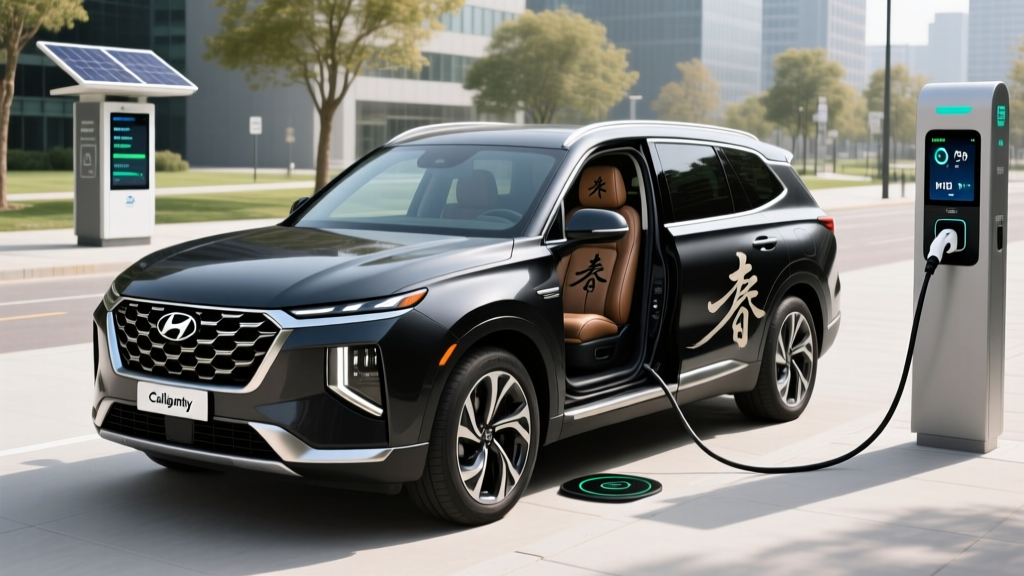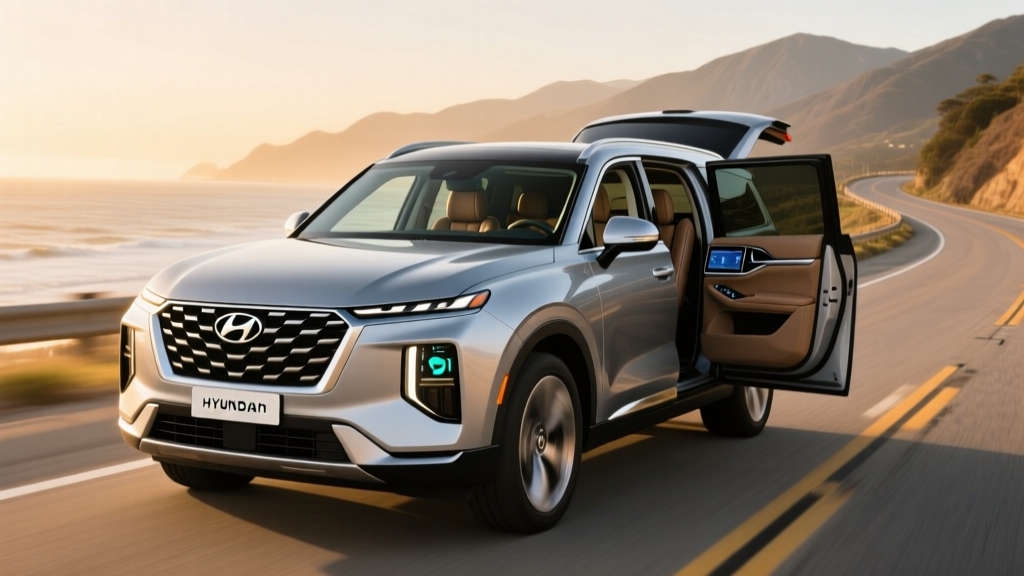
The three-row SUV segment has long been dominated by gasoline V6 engines, but the 2026 Hyundai Palisade Hybrid SUV changes that equation with a turbocharged hybrid powertrain that delivers meaningful fuel savings without sacrificing the cargo space and towing capability families need. Hyundai's flagship SUV enters its second generation with a full redesign, and for the first time in the U.S. market, it offers a conventional hybrid (HEV) variant alongside the familiar internal-combustion model. This guide breaks down every spec, real-world efficiency expectation, and ownership cost you need to evaluate before putting down a deposit.
HEV vs PHEV: What the 2026 Palisade Offers
Hyundai's 2026 Palisade lineup in the United States centers on a conventional hybrid (HEV) — meaning it does not plug in and has no electric-only driving mode. The system pairs a turbocharged gasoline engine with an electric motor and a small battery pack that recharges through regenerative braking and engine operation. You fuel it like any other car; the hybrid system simply makes that fuel go further.
| Feature | HEV (Conventional Hybrid) | PHEV (Plug-In Hybrid) |
|---|---|---|
| Plugs in? | No | Yes |
| Electric-only range | None (motor assists at low speeds) | Typically 25–45 mi |
| Battery size | ~1.5–2.0 kWh | ~13–25 kWh |
| Charging required | No — self-charging | Level 1 or Level 2 recommended |
| Federal tax credit (§30D) | No | Up to $7,500 (if eligible) |
| Best for | Apartment dwellers, no home charging | Home chargers, short commutes |
As of the 2026 model year, Hyundai has not announced a Palisade PHEV for the U.S. market. If plug-in capability is a dealbreaker, the Santa Fe PHEV remains Hyundai's largest plug-in option, though it offers less third-row space. For the Palisade, the HEV is the electrified choice.
Powertrain Specs: Turbo Hybrid Muscle
The 2026 Hyundai Palisade Hybrid uses a 1.6-liter turbocharged four-cylinder engine paired with an electric motor integrated into a six-speed automatic transmission. Combined output lands at an estimated 258 horsepower and 277 lb-ft of torque. The electric motor fills in the torque gap at low RPMs, giving the Palisade Hybrid surprisingly responsive off-the-line acceleration for a 4,700-pound SUV.
| Spec | Value |
|---|---|
| Engine | 1.6L Turbo GDI 4-cylinder |
| Electric Motor | 47.7 kW (64 hp) integrated |
| Combined Horsepower | 258 hp |
| Combined Torque | 277 lb-ft |
| Transmission | 6-speed automatic |
| Drivetrain | FWD standard / HTRAC AWD available |
| Battery (hybrid) | ~1.7 kWh lithium-ion |
| Towing Capacity | Up to 4,000 lbs (AWD, properly equipped) |
| Seating | 7 or 8 passengers |
| Cargo (behind 3rd row) | ~20 cu ft |
The HTRAC all-wheel-drive system uses a conventional mechanical rear differential rather than a dedicated rear electric motor (unlike some competitors). This keeps weight down but means AWD models sacrifice roughly 1–2 MPG compared to FWD.
Fuel Economy: EPA Estimates and Real-World MPG
Fuel economy is the headline reason buyers cross-shop the Palisade Hybrid against the gas-only V6 model. Based on Hyundai's preliminary data and EPA testing patterns for the segment, here's what to expect:
| Drivetrain | City | Highway | Combined |
|---|---|---|---|
| FWD | 34 MPG | 31 MPG | 33 MPG |
| AWD (HTRAC) | 32 MPG | 29 MPG | 31 MPG |
For context, the outgoing gas-only Palisade V6 AWD returns roughly 19 city / 24 highway / 21 combined — a roughly 10 MPG combined improvement from the hybrid. Over 15,000 miles per year, that gap translates to approximately 200 fewer gallons of fuel and roughly $700–$900 in annual savings at $3.50/gallon.
Pricing, Trims, and Tax Credit Eligibility
The 2026 Hyundai Palisade Hybrid is expected to slot between the mid-range SEL and top-tier Calligraphy trims. Based on Hyundai's pricing strategy and the hybrid premium seen on the Santa Fe and Tucson, here's the projected MSRP structure:
- SEL Hybrid: ~$44,500
- XRT Hybrid: ~$47,500
- Limited Hybrid: ~$50,500
- Calligraphy Hybrid: ~$54,000
Destination charges add approximately $1,495.
Battery Warranty, Reliability, and Replacement Cost
Hybrid Battery Warranty
Coverage: 10 years / 100,000 miles (whichever comes first)
What's covered: Hybrid battery pack, hybrid control unit, and related hybrid-system components against defects and capacity loss below functional thresholds.
CARB states: In California Air Resources Board states, hybrid battery warranty extends to 10 years / 150,000 miles.
The 1.7 kWh hybrid battery in the Palisade is far smaller and less stressed than a full EV battery pack. Hyundai's turbo-hybrid system uses a shallow charge-discharge window (typically cycling between 40–60% state of charge), which dramatically reduces degradation. Based on data from Hyundai's Tucson and Santa Fe hybrids now reaching 100,000+ miles, hybrid battery failures before the warranty period are rare.
Should the battery need replacement out of warranty, a hybrid battery swap for a vehicle of this size typically runs $2,500–$4,000 including labor — a fraction of the $10,000–$20,000+ costs associated with full EV battery replacements. The smaller capacity and lower voltage of HEV batteries keep costs manageable.
Hyundai's overall vehicle warranty remains one of the strongest in the industry: 5 years / 60,000 miles bumper-to-bumper and 10 years / 100,000 miles powertrain. The brand's reliability ratings have climbed steadily, and IIHS testing of the new Palisade platform is expected to yield strong safety scores.
Who Should Buy the Palisade Hybrid — And Who Shouldn't
✓ Pros
- ~10 MPG improvement over gas V6
- No charging infrastructure needed
- Full three-row seating and cargo space retained
- Strong low-end torque from electric motor assist
- 10-year hybrid battery warranty
- 4,000-lb towing (AWD)
✗ Cons
- No electric-only driving mode
- No federal tax credit eligibility
- ~$3,000 hybrid premium over gas model
- Highway MPG gains smaller than city
- No PHEV option available
- Towing drops slightly vs. turbo V6 gas model
Palisade Hybrid vs. Full EV vs. Gas: Which Fits You?
| Factor | Gas V6 | Palisade Hybrid (HEV) | Full EV (e.g., Kia EV9) |
|---|---|---|---|
| Upfront Price | Lowest (~$39K) | Mid (~$44K) | Highest (~$55K+) |
| Fuel Cost / Year | ~$2,800 | ~$1,900 | ~$600–$900 |
| Home Charging Needed? | No | No | Yes (strongly recommended) |
| Road-Trip Convenience | Excellent | Excellent | Good (plan charging stops) |
| Federal Tax Credit | None | None | Up to $7,500 (if eligible) |
| Maintenance Cost | Highest | Lower | Lowest |
| 5-Year TCO Winner | Low-mileage drivers | High-mileage, no home charging | Home chargers, high mileage |
Choose the 2026 Palisade Hybrid If:
- You drive 12,000+ miles/year and want fuel savings without lifestyle changes
- You live in an apartment or lack access to home/workplace charging
- You regularly take long road trips and don't want to plan charging stops
- You need three rows and towing but want lower running costs
Look at a Full EV Instead If:
- You have a garage or driveway where you can install a Level 2 charger
- Your daily commute is under 50 miles round-trip
- You qualify for the full $7,500 federal credit and state incentives
- You want the lowest possible per-mile energy cost and maintenance
Frequently Asked Questions
How many MPG does the 2026 Hyundai Palisade Hybrid get?
The estimated EPA rating is 34 city / 31 highway / 33 combined for FWD models, and 32 city / 29 highway / 31 combined for AWD. Real-world city driving may slightly exceed EPA estimates thanks to regenerative braking, while sustained highway driving at 75+ mph typically returns 2–3 MPG below the sticker.
Does the Palisade Hybrid plug in?
No. The 2026 Palisade Hybrid is a conventional HEV. It has no plug, no charging port, and no electric-only range. The hybrid battery recharges through regenerative braking and the gasoline engine. Hyundai has not announced a plug-in hybrid (PHEV) Palisade for the U.S. market as of the 2026 model year.
Does it qualify for any federal tax credit?
No. Under current IRS §30D rules, only plug-in vehicles (BEVs and qualifying PHEVs) are eligible for the federal clean vehicle credit. The Palisade Hybrid, as a conventional HEV, does not qualify. Check your state's energy office for possible local hybrid incentives.
Is the hybrid system reliable, and what does battery replacement cost?
Hyundai's hybrid systems in the Tucson and Santa Fe have shown strong reliability records, with hybrid battery failures before the 10-year/100,000-mile warranty period being uncommon. The Palisade Hybrid battery carries a 10-year/100,000-mile warranty (10/150,000 in CARB states). Out-of-warranty replacement typically costs $2,500–$4,000 — far less than a full EV battery.
How far can it go on electric only?
Zero miles. The Palisade Hybrid has no electric-only driving mode. The electric motor assists the gasoline engine during acceleration and low-speed maneuvering, but the engine is always available and frequently active. If electric-only driving matters to you, consider a PHEV like the Santa Fe Plug-In Hybrid (31 miles electric-only) or a full BEV.
Can it tow as much as the gas Palisade?
Hybrid towing capacity is slightly reduced compared to the turbo V6 gas model. The Palisade Hybrid AWD is rated for up to 4,000 lbs when properly equipped, versus 5,000 lbs for the gas V6 AWD. For most family trailers, boat slips, and bike racks, 4,000 lbs is sufficient, but heavy-duty towing buyers should note the difference.
Is the 2026 Palisade Hybrid worth the premium over the gas model?
The hybrid premium is approximately $3,000 depending on trim. At 15,000 miles per year and $3.50/gallon, the fuel savings of ~$800/year pay back that premium in roughly 3.5–4 years. If you plan to keep the vehicle 5+ years, the math strongly favors the hybrid — and you also benefit from lower brake wear (regen braking extends pad life) and reduced engine strain.