Quick Verdict: A 3-Row Hybrid Built for Real Families
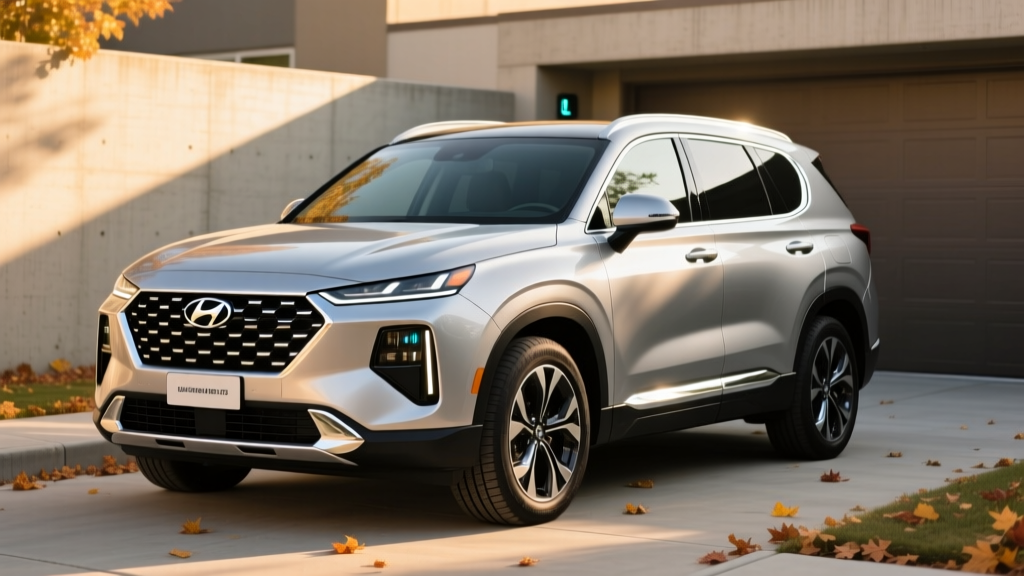
The 2026 Hyundai Palisade hybrid enters a crowded segment of three-row SUVs with a straightforward value proposition: keep the cargo room, seating for up to eight, and towing capability of the gas model while cutting fuel costs by roughly 30%. Hyundai has offered the Palisade with a conventional hybrid (HEV) powertrain since the 2024 model year refresh, and the 2026 version carries over with a turbocharged 1.6-liter four-cylinder paired with an electric motor and a six-speed automatic transmission. There is no plug-in hybrid (PHEV) variant of the Palisade in the U.S. market for 2026 — this is a self-charging hybrid that never needs to be plugged in.
For buyers cross-shopping against the Toyota Grand Highlander Hybrid, Kia Sorento Hybrid, and Mazda CX-90 PHEV, the Palisade hybrid's advantage is interior space and standard-feature density at a competitive starting price. Its trade-off is that it does not offer any electric-only driving range and does not qualify for the federal §30D clean vehicle tax credit, which is reserved for plug-in vehicles.
2026 Hyundai Palisade Hybrid Specs at a Glance
| Specification | 2026 Palisade Hybrid |
|---|---|
| Powertrain Type | Conventional Hybrid (HEV) |
| Engine | 1.6L Turbocharged 4-Cylinder |
| Electric Motor | 44.2 kW (59 hp) integrated motor |
| Combined Horsepower | 232 hp (combined system output) |
| Combined Torque | 271 lb-ft |
| Transmission | 6-Speed Automatic |
| Drivetrain | FWD standard; HTRAC AWD available |
| EPA Fuel Economy (AWD) | 34 city / 31 highway / 33 combined MPG |
| EPA Fuel Economy (FWD) | 36 city / 32 highway / 34 combined MPG |
| Fuel Tank Capacity | 16.9 gallons |
| Estimated Total Range | ~557 miles (AWD combined) |
| Towing Capacity | 4,000 lbs (AWD, properly equipped) |
| Seating Capacity | 7 or 8 passengers |
| Cargo Volume (behind 3rd row) | 20.4 cu ft |
| Base MSRP (SEL Premium, FWD) | ~$45,500 |
| Hybrid Battery Warranty | 10 years / 100,000 miles |
Source: EPA Fuel Economy, Hyundai Newsroom. Figures represent best available 2026 model-year data. Confirm trim-level specs with your dealer, as mid-year adjustments can occur.
Fuel Economy: EPA Numbers vs. Real-World MPG
The EPA rates the 2026 Palisade Hybrid with HTRAC all-wheel drive at 34 MPG city, 31 MPG highway, and 33 MPG combined. The front-wheel-drive variant gains slightly, at 36 city / 32 highway / 34 combined. These numbers are competitive with the Toyota Grand Highlander Hybrid (35 combined with AWD) and significantly better than the gas-only Palisade's 22 MPG combined.
In mixed driving, most Palisade Hybrid owners report 30–34 MPG combined, with city-heavy commutes occasionally pushing past 35 MPG thanks to regenerative braking and low-speed electric motor assist. Highway-only driving at 75+ MPH tends to drop efficiency to 27–29 MPG — the turbo engine works harder at sustained speed, and the hybrid system's advantages diminish at high velocity. In cold weather (below 30°F), expect a 2–4 MPG reduction as the engine runs more frequently for cabin heat and battery warmup.
How many MPG does the 2026 Palisade Hybrid actually get?
For the AWD model most buyers will choose, plan on 33 MPG combined in moderate conditions. That translates to roughly 557 miles of total range on a single 16.9-gallon tank — enough for most families to go two weeks between fill-ups. The FWD model adds about 30 more miles of range.
Powertrain and Performance: What's Under the Hood
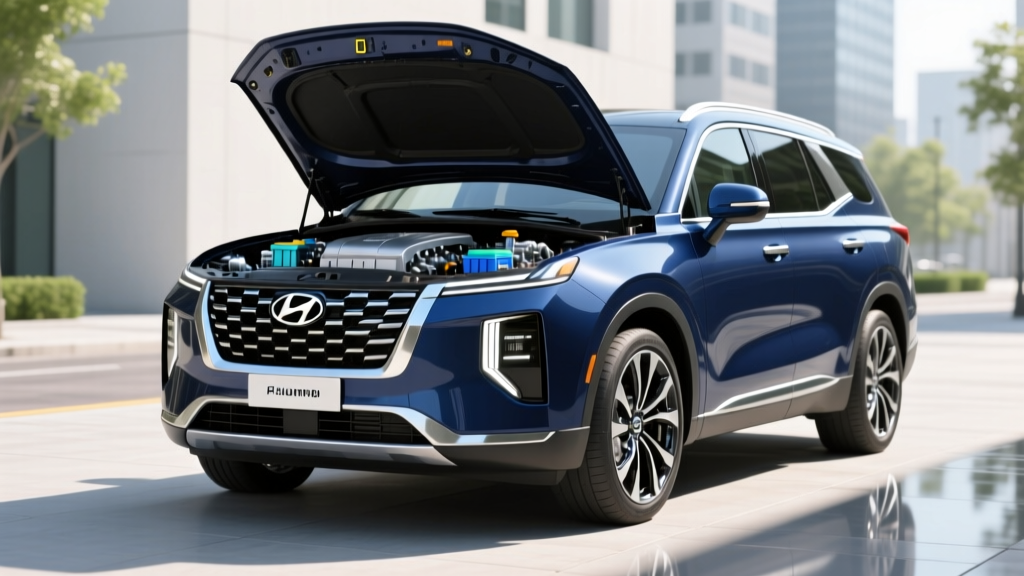
The Palisade Hybrid uses Hyundai's Smartstream 1.6-liter turbocharged inline-four, producing approximately 178 horsepower and 195 lb-ft of torque on its own. A 44.2 kW electric motor (about 59 hp) sits between the engine and transmission, filling in torque gaps at low RPMs and enabling brief electric-only propulsion at very low speeds — such as parking lot maneuvers or stop-and-go traffic crawling.
The combined system output is 232 horsepower and 271 lb-ft of torque. That's less than the gas-only Palisade's 2.5L turbo (277 hp) but the electric motor's instant torque makes the hybrid feel responsive from a stop. The 0–60 MPH time lands around 7.8 seconds for the AWD model, which is adequate for highway merging but not quick by modern standards.
The six-speed automatic transmission is a conventional torque-converter unit, not a CVT. This is a deliberate choice — Hyundai prioritizes natural shift feel and towing durability over the marginal efficiency gains a CVT would provide. The trade-off is slightly less seamless acceleration compared to Toyota's e-CVT planetary gearset in the Grand Highlander.
HEV vs. PHEV vs. EV: Which Powertrain Fits You?
The Palisade is available only as a conventional hybrid (HEV) in the U.S. for 2026. Understanding the differences between the three electrified powertrains is essential before you commit.
Conventional Hybrid (HEV)
How it works: Gas engine + small electric motor + small battery (~1.5 kWh). Battery charges via regenerative braking and engine power. Never plugs in.
Best for: Drivers without home charging access who want better MPG without changing habits.
Palisade Hybrid: 33–34 MPG combined. No plug. No range anxiety.
Plug-In Hybrid (PHEV)
How it works: Larger battery (12–25 kWh) + more powerful motor. Offers 25–40 miles electric-only, then operates as a regular hybrid. Plugs in to charge.
Best for: Households with home Level 2 charging and commutes under 35 miles who want EV-like daily driving plus gas-engine road-trip flexibility.
Palisade: Not offered as PHEV in the U.S.
Battery Electric (BEV)
How it works: No gas engine. Large battery (60–100+ kWh). Must plug in to recharge. 250–350+ miles of range.
Best for: Households with reliable home charging and access to DC fast charging for road trips.
Comparable: Hyundai Ioniq 9 (3-row electric SUV).
Hybrid vs. PHEV vs. EV — which fits the reader?
Choose the Palisade Hybrid (HEV) if you lack home charging access, regularly drive more than 300 miles between stops, tow a trailer, or simply want a simpler ownership experience with no plugs or charging apps. Choose a PHEV like the Mazda CX-90 PHEV (26 miles electric-only, 56 MPGe) if you have a garage with a 240V outlet and most daily drives are under 25 miles. Choose a full EV like the Hyundai Ioniq 9 or Kia EV9 if you have home charging, rarely tow, and want the lowest per-mile fuel cost plus eligibility for the federal §30D tax credit.
Pricing, Trims, and Tax Credit Eligibility
The 2026 Hyundai Palisade Hybrid is offered in multiple trims, with pricing starting around $45,500 MSRP for the SEL Premium FWD and climbing to approximately $55,000 for a fully loaded Calligraphy AWD. Hyundai typically positions the hybrid powertrain as a premium upgrade over the gas V6, adding roughly $2,000–$3,000 to the equivalent trim's base price.
Does the Palisade Hybrid qualify for any tax credit?
No. The federal §30D New Clean Vehicle Credit applies only to plug-in electric vehicles (PHEVs and BEVs) with a minimum battery capacity of 7 kWh. The Palisade Hybrid's small traction battery (approximately 1.5 kWh) does not meet this threshold. Conventional hybrids are not eligible for the federal EV tax credit, the point-of-sale transfer, or most state-level EV rebate programs.
- Vehicle type: Plug-in EV (PHEV or BEV) with ≥7 kWh battery
- MSRP cap: $80,000 for SUVs, vans, and pickups; $55,000 for sedans
- Income cap: $300,000 joint / $225,000 head of household / $150,000 single filers
- Battery sourcing: Critical minerals and battery components must meet escalating domestic-content thresholds per IRS rules
- Palisade Hybrid: Does not qualify — conventional HEV, not a plug-in vehicle
Some states and utilities offer rebates for conventional hybrids, but these are uncommon and vary by jurisdiction. Check your state energy office or utility provider for current programs.
Hybrid Battery Warranty and Longevity
Hybrid battery longevity is consistently the top concern for first-time hybrid buyers. The 2026 Palisade Hybrid uses a lithium-ion polymer battery pack positioned under the rear seats. Hyundai covers this battery with a 10-year / 100,000-mile warranty, which is among the best in the industry and matches Toyota's hybrid battery coverage.
- Warranty: 10 years / 100,000 miles (whichever comes first)
- Coverage: Defects and capacity loss below a manufacturer-defined threshold (typically ~70% of original capacity)
- Hybrid system warranty: 10 years / 100,000 miles (covers motor, inverter, and related components)
- Estimated replacement cost (out of warranty): $2,500–$4,500 for the hybrid battery pack, based on current Hyundai hybrid parts pricing
- Real-world lifespan: Most Hyundai/Kia hybrid batteries last well beyond 150,000 miles with minimal degradation, based on fleet data from the Sonata Hybrid and Tucson Hybrid
Is the Palisade Hybrid reliable, and what does battery replacement cost?
Hyundai's hybrid powertrain has demonstrated solid reliability since its introduction in the Sonata Hybrid over a decade ago. The 1.6L turbo-hybrid system in the Palisade shares architecture with the Tucson Hybrid and Santa Fe Hybrid, both of which have logged millions of fleet miles. The hybrid battery is not a wear item in the way a 12V lead-acolic battery is — it rarely needs replacement during the vehicle's normal lifespan. If it does fail outside warranty, budget $2,500–$4,500 for parts and labor, which is significantly less than a full EV battery replacement. The hybrid system's overall reliability is bolstered by the fact that the electric motor reduces strain on the gas engine and the conventional automatic transmission avoids the long-term durability questions that some CVTs face.
Who Should Buy the Palisade Hybrid — and Who Shouldn't
✓ Choose the Palisade Hybrid If
- You need 3-row seating and 4,000-lb towing in a fuel-efficient package
- You don't have access to home or workplace charging
- Your daily commute is long (40+ miles) and you want to cut fuel costs without plugging in
- You frequently drive in stop-and-go traffic where hybrid efficiency shines
- You want a simpler ownership experience — no charging apps, no plug-in routines
- You plan to keep the vehicle 8–10+ years and value the long hybrid warranty
✗ Look Elsewhere If
- You want electric-only driving for short commutes (consider a PHEV like the CX-90 PHEV)
- You want to qualify for the $7,500 federal tax credit (requires a PHEV or BEV)
- You prioritize maximum acceleration — the gas Palisade 2.5T and EV9 are quicker
- You have reliable home charging and mostly drive under 30 miles daily (a BEV may save more)
- You want the absolute highest MPG in a 3-row SUV (Grand Highlander Hybrid edges it slightly)
Frequently Asked Questions
How many MPG does the 2026 Hyundai Palisade Hybrid get?
The EPA rates the AWD Palisade Hybrid at 34 city / 31 highway / 33 combined MPG. The FWD model achieves 36 city / 32 highway / 34 combined. Real-world results typically fall within 1–2 MPG of these figures, with city-heavy driving often exceeding the EPA city rating and sustained highway driving coming in slightly below.
Does the Palisade Hybrid need to be plugged in?
No. The Palisade Hybrid is a conventional self-charging hybrid (HEV). The small battery recharges through regenerative braking and the gas engine. There is no plug, no charging cable, and no electric-only driving range to manage.
Can the Palisade Hybrid tow?
Yes. When properly equipped with the factory tow package and AWD, the Palisade Hybrid is rated to tow up to 4,000 pounds — sufficient for a small boat, utility trailer, or a pair of personal watercraft. Towing will reduce fuel economy to roughly 18–22 MPG depending on trailer weight and terrain.
How does the Palisade Hybrid compare to the Toyota Grand Highlander Hybrid?
The Grand Highlander Hybrid achieves 35 MPG combined with AWD (slightly better than the Palisade's 33) and offers a hybrid MAX powertrain with 362 hp for those prioritizing performance. The Palisade counters with a more premium interior at lower trims, a longer hybrid battery warranty (10 years vs. Toyota's 10 years — a tie, but Hyundai includes more standard features per trim), and a lower starting price for the hybrid powertrain.
What is the total cost of ownership advantage over the gas Palisade?
At 15,000 miles per year and $3.50/gallon fuel, the gas Palisade (22 MPG combined) costs about $2,386 annually in fuel. The Palisade Hybrid (33 MPG combined) costs about $1,591 — a savings of roughly $795 per year. Over five years, that's nearly $4,000 in fuel savings, which offsets most of the hybrid's price premium. Maintenance costs are comparable, though the hybrid's regenerative braking extends brake pad life.