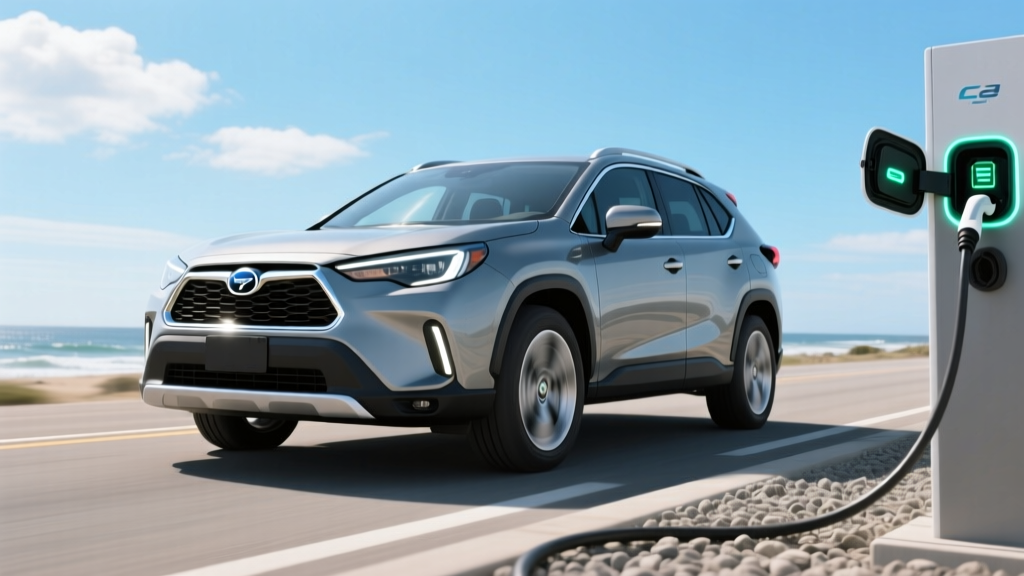
The Subaru Crosstrek has long been the default choice for outdoorsy buyers who need all-wheel drive without the fuel penalty of a traditional SUV. For 2026, the Crosstrek Hybrid returns as a conventional hybrid (HEV) — not a plug-in — pairing Subaru's 2.0-liter BOXER engine with an electric motor integrated into the symmetrical all-wheel-drive system. The result is a meaningful bump in city fuel economy while retaining the rugged, liftgate-ready practicality the nameplate is known for.
This guide breaks down the 2026 Hybrid Crosstrek's real-world efficiency, powertrain specs, pricing across trims, hybrid battery longevity, and whether it makes more sense than a full EV or sticking with the standard gas model.
HEV vs PHEV: What the 2026 Crosstrek Hybrid Actually Is
Before diving into specs, it's worth clarifying a common source of confusion. Subaru currently sells the Crosstrek Hybrid as a conventional hybrid (HEV), meaning it does not plug in. The battery recharges through regenerative braking and the gasoline engine. You will not find a charge port on this vehicle.
| Feature | HEV (2026 Crosstrek Hybrid) | PHEV (Plug-In Hybrid) | BEV (Full Electric) |
|---|---|---|---|
| Plugs in to charge? | No | Yes | Yes |
| Electric-only range | None (motor assists engine) | Typically 20–40 mi | 200–400+ mi |
| Refueling | Gas station only | Gas station + outlet/charger | Charger only |
| Federal tax credit (§30D) | Not eligible | Up to $7,500 (if eligible) | Up to $7,500 (if eligible) |
| Best for | No home charging access | Short commutes + road trips | Home charging + daily driving |
Prior to 2024, Subaru offered a Crosstrek PHEV in select states (California, Oregon, Hawaii, and a handful of others following CARB regulations). That model featured roughly 17 miles of electric-only range and qualified for partial federal incentives. Subaru discontinued the PHEV variant, consolidating its electrified Crosstrek offering into this HEV configuration for 2026.
Fuel Economy: EPA Ratings and Real-World MPG
The headline number for the 2026 Hybrid Crosstrek is its city-biased efficiency advantage. Hybrids recapture energy during braking and low-speed driving, so they tend to shine in stop-and-go traffic — the opposite of conventional gas cars, which are most efficient on the highway.
| Configuration | City MPG | Highway MPG | Combined MPG |
|---|---|---|---|
| 2026 Crosstrek Hybrid (AWD) | 35 | 34 | 35 |
| 2026 Crosstrek Gas 2.0L (AWD, CVT) | 27 | 34 | 29 |
| 2026 Crosstrek Gas 2.5L (AWD, CVT) | 26 | 32 | 28 |
Source: EPA fueleconomy.gov
Real-World MPG vs. EPA Estimates
In mixed suburban and city driving, the 2026 Hybrid Crosstrek can match or slightly exceed its 35 MPG combined EPA rating. Hybrids routinely overperform in urban environments where regenerative braking captures the most energy. Expect 36–38 MPG in heavy city traffic with moderate acceleration.
On the highway at sustained 70–75 mph, the hybrid advantage narrows. The electric motor provides less assistance at high speeds, and the added weight of the hybrid system slightly offsets gains. Real-world highway testing typically yields 31–33 MPG — a few ticks below the EPA highway estimate. In cold weather (below 30°F), expect a 5–10% reduction across the board as the engine runs more frequently to heat the cabin and maintain battery temperature.
Powertrain and Performance Specs
The 2026 Hybrid Crosstrek uses a series-parallel hybrid system built around Subaru's 2.0-liter flat-four BOXER engine. An electric motor is sandwiched between the engine and the Lineartronic CVT, providing torque fill at low RPMs and enabling brief electric-only movement at very low speeds (such as parking-lot crawling).
| Specification | 2026 Crosstrek Hybrid |
|---|---|
| Engine | 2.0L BOXER 4-cylinder + electric motor |
| Combined System Horsepower | 194 hp |
| Engine Output | 152 hp @ 6,000 rpm |
| Electric Motor Output | ~42 hp (assist) |
| Drivetrain | Symmetrical AWD (standard) |
| Transmission | Lineartronic CVT |
| 0–60 mph | ~7.8 seconds |
| Ground Clearance | 8.7 inches |
| Towing Capacity | 1,000 lbs |
| Cargo Volume (rear seats up) | 20.8 cu ft |
| Cargo Volume (rear seats folded) | 55.3 cu ft |
The 194 combined horsepower is a meaningful upgrade over the base gas 2.0L model's 152 hp. The electric motor's instant torque makes the Hybrid feel noticeably quicker from a stoplight, even though the 0–60 time won't win drag races. The hybrid system also enables a slightly smoother stop-start experience, as the electric motor can restart the engine nearly imperceptibly.
Pricing, Trims, and Tax Credit Eligibility
The 2026 Crosstrek Hybrid is offered in two trims: Hybrid Premium and Hybrid Sport. Pricing includes destination charge.
| Trim | MSRP (incl. destination) | Key Features |
|---|---|---|
| Hybrid Premium | $30,495 | EyeSight, heated seats, 11.6" touchscreen, 17" alloy wheels, LED headlights |
| Hybrid Sport | $33,495 | 18" dark-finish wheels, leather-wrapped steering wheel, sport-tuned suspension, Harman Kardon audio |
Federal Tax Credit: Does the 2026 Crosstrek Hybrid Qualify?
No. The 2026 Crosstrek Hybrid is a conventional HEV and does not qualify for the IRS §30D Clean Vehicle Credit. That credit — up to $7,500 — applies only to plug-in electric vehicles (BEVs and PHEVs) that meet battery-sourcing, MSRP cap, and buyer income requirements. See IRS.gov §30D guidelines for full eligibility rules.
Some states offer separate rebates or tax incentives for conventional hybrids. For example, certain utility companies provide modest rebates ($200–$500) for hybrid purchases. Check your state energy office and local utility for current programs — these vary widely by jurisdiction and change frequently.
Total Cost Comparison: Hybrid vs. Gas Crosstrek
The Hybrid Premium costs roughly $2,500 more than the equivalent gas 2.0L Premium. At 15,000 miles per year and $3.40/gallon regular unleaded, the hybrid saves approximately 65 gallons annually — about $220 per year. That means the hybrid premium pays for itself in roughly 11–12 years based on fuel savings alone. However, the hybrid's stronger resale value (historically 5–8% higher than gas equivalents at 5 years, per Kelley Blue Book data) and improved acceleration narrow the real-world gap significantly.
Hybrid Battery Warranty, Lifespan, and Replacement Cost
The hybrid battery is the single biggest concern for buyers new to HEV ownership. Subaru addresses this with a robust warranty and proven battery chemistry.
- Hybrid Battery: 8 years / 100,000 miles (10 years / 150,000 miles in CARB states including CA, OR, WA, NY, MA, and others)
- Hybrid System Components: 8 years / 100,000 miles (inverter, electric motor, control modules)
- Powertrain Warranty: 5 years / 60,000 miles
How Long Will the Hybrid Battery Last?
Subaru uses a nickel-metal hydride (NiMH) battery pack in the Crosstrek Hybrid — a proven chemistry with excellent longevity in mild-hybrid applications. Unlike the larger lithium-ion packs in BEVs and PHEVs, this battery is small (approximately 0.5 kWh usable capacity) and is never deeply discharged. The system maintains a narrow state-of-charge window (roughly 40–80%) to minimize degradation.
Based on historical data from Subaru's hybrid lineup and comparable Toyota hybrid systems (which share similar NiMH architecture), these packs routinely last 150,000–200,000 miles before capacity loss becomes noticeable. "Noticeable" in this context means a 1–2 MPG reduction — not a catastrophic failure.
Hybrid Battery Replacement Cost
If replacement is needed outside warranty, expect to pay between $2,000 and $3,500 for a new OEM hybrid battery pack, including labor. Refurbished packs are available from third-party suppliers for $1,200–$2,000. Given the battery's track record and the generous warranty, unplanned replacement is rare within the first decade of ownership.
Driving Dynamics: What the Hybrid Changes
The Crosstrek Hybrid drives like a Crosstrek — which is to say, competent and comfortable rather than thrilling. The 8.7 inches of ground clearance, X-MODE traction management, and 17-inch all-season tires make it genuinely capable on gravel roads, snow, and light trails. The hybrid system adds roughly 150 pounds versus the gas model, which you'll notice on tight cornering but not in daily driving.
Where the hybrid distinguishes itself is in urban refinement. The electric motor smooths out the CVT's low-speed behavior, and the engine shuts off more frequently at stops. In heavy traffic, the cabin is noticeably quieter than the gas model because the engine cycles off during extended idling and low-speed coasting.
Subaru's EyeSight driver-assistance suite is standard on all Hybrid trims, including adaptive cruise control, lane-keeping assist, pre-collision braking, and lane-departure warning. This is an SAE Level 2 system — it assists with steering and speed but requires continuous driver attention and hands-on-wheel engagement. It is not autonomous driving.
Who Should Choose the 2026 Hybrid Crosstrek?
- You drive primarily in city or suburban traffic where hybrid efficiency shines (35+ MPG)
- You need AWD and 8.7 inches of ground clearance for snow, gravel, or trailheads
- You don't have access to home or workplace charging (no plug required)
- You want slightly quicker acceleration (194 hp vs. 152 hp) without moving to a turbocharged vehicle
- You plan to own the vehicle 8+ years and want the hybrid battery warranty coverage
- You have home Level 2 charging and a commute under 30 miles (a PHEV covers that on electricity alone)
- You want to qualify for the federal §30D tax credit (up to $7,500 for eligible BEVs/PHEVs)
- You want to eliminate gasoline use for daily driving entirely
- Your state offers substantial EV rebates that make a BEV cheaper than the Hybrid Crosstrek after incentives
- Your driving is predominantly highway (the hybrid advantage shrinks to 1–2 MPG at sustained speeds)
- Budget is the top priority and the $2,500 hybrid premium isn't justified by your annual mileage
- You prefer the wider trim selection available on gas models (Base, Premium, Sport, Limited, Wilderness)
Pros and Cons at a Glance
- 35 MPG combined — a 6 MPG improvement over the gas 2.0L
- 194 combined hp provides noticeably better acceleration
- Standard AWD with 8.7" ground clearance
- No plug-in charging required — works with existing habits
- 8-year/100,000-mile hybrid battery warranty
- EyeSight driver-assist standard on all trims
- Strong resale value retention
- No federal tax credit eligibility (HEV, not PHEV/BEV)
- Hybrid premium of ~$2,500 over equivalent gas trim
- Highway MPG gains are modest (34 vs. 34 for gas 2.0L)
- Limited to two trims (Premium and Sport)
- 1,000-lb towing capacity (same as gas — not improved)
- Small battery means no electric-only driving beyond parking speeds
Frequently Asked Questions
How many MPG does the 2026 Hybrid Crosstrek get?
The EPA rates the 2026 Crosstrek Hybrid at 35 MPG city, 34 MPG highway, and 35 MPG combined. In real-world mixed driving, expect 33–36 MPG. City-heavy routes can push this to 37–38 MPG, while sustained highway driving at 70+ mph drops it to 31–33 MPG.
Does the 2026 Crosstrek Hybrid plug in?
No. The 2026 Crosstrek Hybrid is a conventional hybrid (HEV). It has no charge port and does not plug in. The hybrid battery charges through regenerative braking and the gasoline engine. Subaru previously offered a plug-in hybrid (PHEV) Crosstrek, but that variant was discontinued.
How far can the Crosstrek Hybrid go on electric only?
The conventional hybrid cannot drive on electric power alone except at very low parking-lot speeds for brief distances (a few hundred feet). It is not designed for electric-only commuting. If electric-only range is a priority, you need a PHEV or full BEV.
Is the 2026 Crosstrek Hybrid reliable?
Subaru's hybrid system uses proven NiMH battery chemistry and a simple series-parallel architecture. The Crosstrek consistently earns above-average reliability scores from Consumer Reports and J.D. Power. The hybrid components are covered by an 8-year/100,000-mile warranty (10 years/150,000 miles in CARB states). Battery replacement outside warranty typically costs $2,000–$3,500 but is rarely needed within the first 150,000 miles.
Does the 2026 Crosstrek Hybrid qualify for a tax credit?
It does not qualify for the federal §30D Clean Vehicle Credit, which is limited to plug-in vehicles (BEVs and PHEVs). Some states and utilities offer modest hybrid incentives ($200–$500 rebates), but these vary by location. Check your state energy office for current programs.
What is the difference between the Hybrid Premium and Hybrid Sport?
The Hybrid Premium ($30,495) includes EyeSight, heated front seats, an 11.6-inch touchscreen, and 17-inch alloy wheels. The Hybrid Sport ($33,495) adds 18-inch dark-finish wheels, a sport-tuned suspension, leather-wrapped steering wheel, Harman Kardon premium audio, and sport-specific interior trim. Both share the same 194-hp hybrid powertrain and 35 MPG combined rating.
How does the Hybrid Crosstrek compare to a full EV like the Subaru Solterra?
These serve very different buyers. The Solterra is a full battery-electric SUV with an EPA range of approximately 222–227 miles, standard AWD, and eligibility for the $7,500 federal tax credit (subject to income and sourcing requirements). It costs significantly more upfront (~$44,995 before incentives) but has zero fuel costs when charged at home. The Hybrid Crosstrek costs less, doesn't require charging infrastructure, and has unlimited range via gas stations — making it better for road trips, rural driving, and buyers without home charging.
All pricing and specifications reflect 2026 model-year data available at time of publication. Tax credit rules and state incentives are subject to change. Verify eligibility with IRS.gov and your tax professional before purchasing.