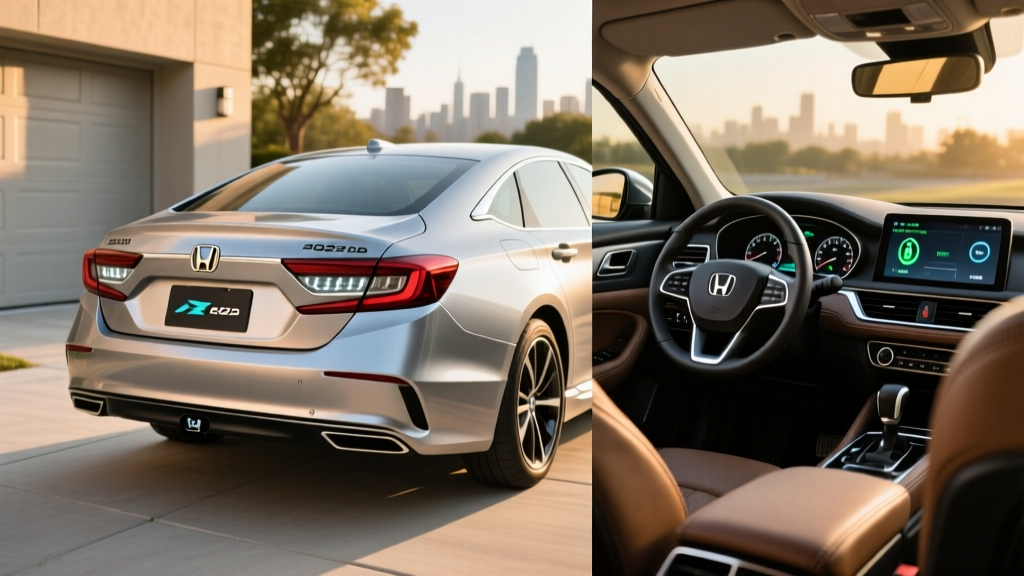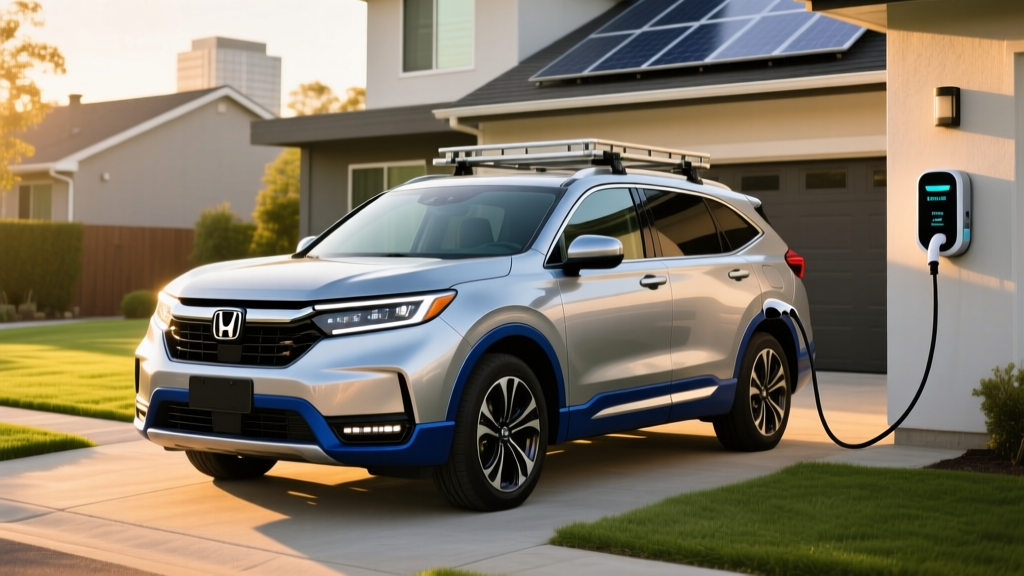
The three-row SUV segment has been slow to adopt hybrid powertrains, but the 2026 Honda Pilot Hybrid changes that equation for families who want better fuel economy without the range compromises of a full electric vehicle. Honda's two-motor hybrid system pairs with the proven 3.5-liter V6 to deliver meaningful MPG gains — especially around town — while preserving the Pilot's towing capacity and seating for eight.
This guide breaks down everything buyers need to know: EPA fuel economy numbers, the hybrid powertrain specs, real-world efficiency expectations, battery warranty coverage, and whether this conventional hybrid (HEV) qualifies for any federal tax credits in 2026.
HEV vs PHEV: What Kind of Hybrid Is the 2026 Pilot?
Conventional Hybrid (HEV) — No Plug Required
The 2026 Honda Pilot Hybrid is a conventional hybrid (HEV), not a plug-in hybrid (PHEV). This is a critical distinction:
- No plug-in charging: The battery recharges through regenerative braking and the gasoline engine — you never plug it in.
- No electric-only driving range: The electric motor assists the engine but cannot propel the vehicle for meaningful distances on battery alone (typically under 1 mile at very low speeds).
- No home charging required: Ownership is identical to a gas car — just fill up at the pump.
- Lower upfront cost: HEVs carry a smaller price premium over gas models than PHEVs, and their smaller batteries cost less to replace.
How It Differs From a PHEV
A plug-in hybrid (like the Toyota RAV4 Prime or Chrysler Pacifica Hybrid) has a larger battery (typically 15-20 kWh) that provides 25-45 miles of electric-only range before the gas engine kicks in. PHEVs require plug-in charging to realize their efficiency benefits and qualify for the federal §30D tax credit (up to $7,500, subject to income, MSRP caps, and battery-sourcing rules). The Pilot Hybrid does none of this — it's a simpler, self-charging system.
2026 Honda Pilot Hybrid: Powertrain and Performance Specs
| Specification | 2026 Honda Pilot Hybrid |
|---|---|
| Engine | 3.5L V6 + two-motor hybrid system |
| Combined Horsepower | 290 hp (estimated) |
| Combined Torque | 290 lb-ft (estimated) |
| Transmission | e-CVT (electronic continuously variable) |
| Drivetrain | FWD standard; AWD available |
| Hybrid Battery | ~1.3 kWh lithium-ion (self-charging, not plug-in) |
| 0-60 mph | ~6.5 seconds (estimated, AWD) |
| Towing Capacity | Up to 5,000 lbs (AWD) |
| Seating | 7 or 8 passengers (trim dependent) |
| Cargo Volume | 18.4 cu ft (behind 3rd row) / 48.5 cu ft (behind 2nd) |
Honda's two-motor hybrid system uses one motor primarily as a generator and the other as the drive motor, allowing the V6 to operate in its most efficient RPM range more often. Under light acceleration, the electric motor handles propulsion while the engine generates electricity. Under hard acceleration or highway speeds, the engine connects directly to the wheels through a lock-up clutch for better efficiency.
The ~290 hp combined output represents a meaningful bump over the gas-only Pilot's 285 hp, and the electric motor's instant torque delivery makes the hybrid feel noticeably quicker off the line in stop-and-go traffic.
Fuel Economy: EPA MPG and Real-World Expectations
| Configuration | City MPG | Highway MPG | Combined MPG |
|---|---|---|---|
| Pilot Hybrid FWD | 22 | 27 | 24 |
| Pilot Hybrid AWD | 21 | 26 | 23 |
| Pilot Gas AWD (baseline) | 19 | 25 | 21 |
Source: fueleconomy.gov — EPA estimates. Actual mileage will vary.
Real-World MPG: What to Actually Expect
Hybrid vehicles tend to outperform their EPA city estimates in real-world stop-and-go driving because regenerative braking recovers more energy in traffic. Conversely, highway MPG may fall slightly short of the EPA sticker since hybrids benefit less from electric assist at sustained speeds.
- City driving: Expect 23-25 MPG in mixed urban commuting with frequent stops. The hybrid system shines here.
- Highway driving: Expect 24-26 MPG at 65-70 mph. The engine does most of the work at speed.
- Cold weather penalty: Hybrids lose 5-10% efficiency in freezing temperatures because the engine runs more often to provide cabin heat and because battery chemistry is less efficient when cold.
- Towing: Expect 14-17 MPG when towing near the 5,000-lb limit. No hybrid eliminates the physics of pulling a heavy trailer.
Total Range: With an 18.5-gallon fuel tank and 23-24 MPG combined, the 2026 Pilot Hybrid delivers approximately 425-445 miles of total range per fill-up — roughly 40-50 more miles than the gas-only AWD model.
Pricing, Trims, and Tax Credit Eligibility
The 2026 Honda Pilot Hybrid is expected to start at approximately $42,500 MSRP for the base FWD Sport Hybrid trim, with AWD adding roughly $2,000. Fully loaded Touring and Elite Hybrid trims are expected to reach $52,000-$55,000.
Does the Pilot Hybrid Qualify for a Federal Tax Credit?
No. The 2026 Honda Pilot Hybrid does not qualify for the federal §30D clean vehicle tax credit. Under current IRS rules, only plug-in electric vehicles (BEVs) and plug-in hybrids (PHEVs) with battery capacity of at least 7 kWh are eligible. The Pilot Hybrid's ~1.3 kWh self-charging battery falls far below this threshold.
However, some states offer their own incentives for conventional hybrids. Check your state's energy office or department of environmental quality for current programs, as these vary widely by jurisdiction and change frequently.
Cost of Ownership vs. Gas-Only Pilot
At $4.00/gallon gas and 15,000 miles/year, the hybrid's 2-3 MPG advantage saves roughly $350-$500 per year in fuel costs compared to the gas AWD Pilot. With a typical hybrid premium of $1,500-$2,500 over an equivalent gas trim, the payback period is approximately 3-5 years — reasonable for buyers planning long-term ownership.
Battery Warranty, Reliability, and Replacement Cost
Honda Hybrid Battery Warranty
- Hybrid battery: 8 years / 100,000 miles (10 years / 150,000 miles in CARB states including CA, NY, MA, and others)
- Hybrid system components: 8 years / 100,000 miles
- Capacity retention threshold: Honda covers the battery if it falls below approximately 60-70% of original capacity during the warranty period
How Long Will the Hybrid Battery Last?
Honda's two-motor hybrid systems have proven durable in long-term use. The small ~1.3 kWh battery operates in a narrow state-of-charge window (typically 40-80%), which dramatically reduces degradation compared to full EVs that cycle from 10-90%. Based on data from Honda's existing hybrid lineup (Accord Hybrid, CR-V Hybrid), owners should expect 150,000-200,000+ miles before any meaningful battery capacity loss.
Battery Replacement Cost
If replacement is needed outside warranty, expect $2,000-$3,500 for a new OEM hybrid battery pack for the Pilot Hybrid. This is substantially less than full EV battery replacements ($8,000-$20,000+) because the pack is much smaller. Third-party refurbishment options may be available for $1,200-$2,000 as the vehicle ages.
For reliability data, consult IIHS ratings and NHTSA safety ratings once published, as well as long-term owner surveys from Consumer Reports and J.D. Power.
Who Should Buy the Pilot Hybrid — and Who Shouldn't?
Choose the 2026 Pilot Hybrid If:
- You drive a lot of city and suburban miles with frequent stops (where hybrids save the most fuel)
- You want better MPG without changing your fueling habits — no plug, no charging, no range anxiety
- You need three rows and towing capability but want to reduce fuel costs
- You plan to keep the vehicle 5+ years (justifying the hybrid premium)
- You don't have access to home or workplace charging (making a PHEV or EV impractical)
Look at a Full EV or PHEV Instead If:
- You have reliable home Level 2 charging and want to eliminate gas entirely (consider the Kia EV9, Hyundai Ioniq 9, or Tesla Model X)
- You want 30+ miles of electric-only commuting before the gas engine starts (no PHEV three-row SUV currently exists in the US market with this capability)
- You want to claim the $7,500 federal §30D tax credit (only available for BEVs and qualifying PHEVs)
- Your daily commute is under 40 miles round-trip and you can charge at home (a full EV would cost far less per mile)
Pros
- 2-3 MPG improvement over gas Pilot, most noticeable in city driving
- No charging infrastructure needed — fuel like a regular car
- Instant electric torque improves off-the-line responsiveness
- Proven Honda hybrid system reliability with strong warranty
- Preserves 5,000-lb towing and full three-row practicality
- Lower battery replacement cost than PHEVs or full EVs
Cons
- No federal tax credit eligibility
- Highway MPG gains are modest (hybrids benefit most in stop-and-go)
- $1,500-$2,500 price premium over equivalent gas trims
- Cannot drive on electric-only power for any meaningful distance
- Three-row hybrid SUV competition is growing (Toyota Grand Highlander Hybrid, Mazda CX-90 PHEV)
Frequently Asked Questions
How many MPG does the 2026 Honda Pilot Hybrid get?
The EPA rates the Pilot Hybrid at 22 city / 27 highway / 24 combined (FWD) and 21 city / 26 highway / 23 combined (AWD). Real-world city driving often matches or slightly exceeds EPA estimates due to regenerative braking, while highway driving may fall 1-2 MPG short.
Does the Honda Pilot Hybrid need to be plugged in?
No. The 2026 Pilot Hybrid is a conventional HEV — it charges its own battery through regenerative braking and the gasoline engine. There is no plug, no charging cable, and no home charger needed.
Can the Pilot Hybrid drive on electric power alone?
Only at very low speeds (under ~15 mph) for very short distances (under 1 mile). The battery is too small (~1.3 kWh) for meaningful electric-only driving. If you need 25+ miles of electric range, you need a PHEV — and no three-row PHEV SUV is currently available from Honda.
Is the hybrid battery reliable and expensive to replace?
Honda's hybrid batteries have demonstrated strong longevity, typically lasting 150,000-200,000+ miles. The battery is covered by an 8-year/100,000-mile warranty (10 years/150,000 miles in CARB states). Out-of-pocket replacement runs $2,000-$3,500 — far less than a full EV battery.
Does the 2026 Pilot Hybrid qualify for any tax credit?
No federal tax credit is available. The IRS §30D clean vehicle credit applies only to plug-in vehicles (BEVs and PHEVs) with at least 7 kWh of battery capacity. The Pilot Hybrid's ~1.3 kWh battery does not qualify. Check your state's energy office for any local hybrid incentives.
How does the Pilot Hybrid compare to the Toyota Grand Highlander Hybrid?
The Grand Highlander Hybrid is rated at up to 36 MPG combined (FWD) — significantly higher than the Pilot Hybrid's 24 MPG combined. However, the Toyota uses a smaller turbocharged 4-cylinder engine, which may feel less refined under load and offers lower towing capacity. The Pilot Hybrid trades peak efficiency for V6 smoothness, stronger towing, and Honda's driving dynamics.
Is the hybrid worth the extra cost over the gas Pilot?
If you drive 15,000+ miles per year with significant city driving and plan to keep the vehicle 5+ years, the fuel savings ($350-$500/year) can offset the $1,500-$2,500 hybrid premium. For low-mileage drivers or those who primarily drive highway miles, the payback period stretches longer and the gas model may make more financial sense.