Quick Verdict: The 2026 Honda CR-V Hybrid Sport at a Glance
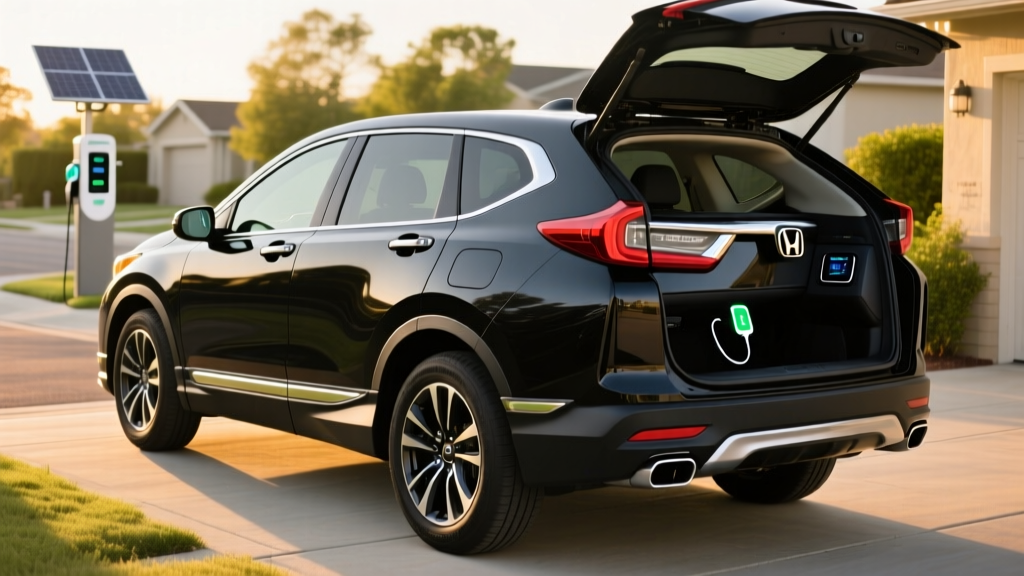
The 2026 Honda CR-V Hybrid Sport occupies a sweet spot in the compact crossover segment: it pairs a 204-horsepower dual-motor hybrid system with standard all-wheel drive, delivers up to 43 MPG in city driving, and starts around $37,000. It is a conventional hybrid (HEV), meaning it never needs to be plugged in — the gasoline engine and regenerative braking handle all battery charging. For buyers who want EV-like city efficiency without changing their refueling habits, the CR-V Hybrid Sport is one of the most compelling choices in its class.
| Spec | Value |
|---|---|
| Powertrain | 2.0L 4-cyl Atkinson-cycle + dual electric motors (AWD) |
| Combined Horsepower | 204 hp |
| Combined Torque | 247 lb-ft |
| EPA MPG (City / Hwy / Combined) | 43 / 36 / 40 |
| Fuel Tank Capacity | 15.3 gallons |
| Total Driving Range | ~612 miles (EPA est.) |
| Drivetrain | Standard AWD (rear-motor driven) |
| Cargo Volume (behind rear seats) | 36.3 cu ft |
| Towing Capacity | 1,000 lbs |
| Base MSRP (Sport AWD) | ~$37,250 (est.) |
| Federal Tax Credit (§30D) | Not eligible (HEV) |
| Battery Warranty | 8 years / 100,000 miles |
HEV vs PHEV: Where the CR-V Hybrid Sport Fits
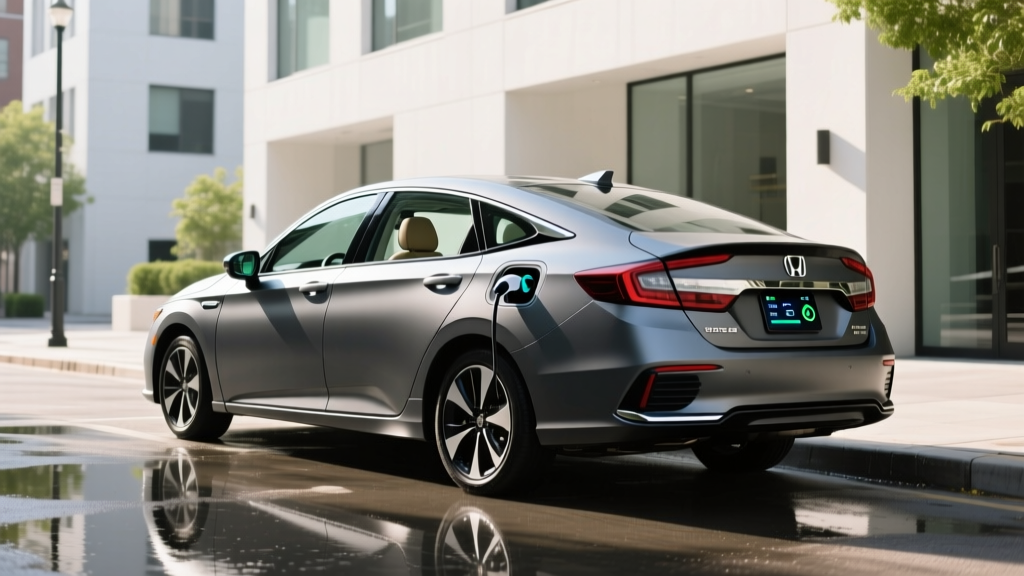
Honda offers the CR-V exclusively as a conventional hybrid (HEV) in the Sport, Sport-L, and Sport Touring trims. There is no plug-in hybrid (PHEV) variant of the CR-V for the 2026 model year. Understanding this distinction is critical before you shop:
| Feature | Conventional Hybrid (HEV) | Plug-In Hybrid (PHEV) |
|---|---|---|
| Plug-in charging? | No — gasoline + regen only | Yes — plug in to charge battery |
| Electric-only range | None (EV assist at low speeds only) | 20–50 miles typical |
| Battery size | ~1–2 kWh (small buffer) | 12–25 kWh (usable) |
| Federal tax credit | Not eligible | Up to $7,500 (varies) |
| Refueling | Gas station only | Gas + home/public charging |
| Best for | No home charging access, simpler ownership | Home chargers, short commutes on electric |
The CR-V Hybrid Sport is an HEV. You fill it at the gas station like any conventional car. Its hybrid system recaptures energy during braking and deceleration, storing it in a small lithium-ion battery that assists the gasoline engine during acceleration and enables brief electric-only operation at very low speeds (typically under 25 mph for short distances). This architecture is what allows the 43 MPG city rating — a number that actually beats its highway figure, a hallmark of series-parallel hybrid systems that excel in stop-and-go traffic.
Fuel Economy: EPA Ratings and Real-World MPG
According to EPA estimates on fueleconomy.gov, the 2026 Honda CR-V Hybrid AWD achieves:
| Driving Condition | EPA MPG |
|---|---|
| City | 43 MPG |
| Highway | 36 MPG |
| Combined | 40 MPG |
Real-world expectations: Hybrid SUVs like the CR-V frequently exceed their EPA city rating in actual driving because stop-and-go conditions maximize regenerative braking and electric-motor assist. Owners who do predominantly urban and suburban driving commonly report 42–46 MPG in warmer months. Highway fuel economy, however, tends to fall slightly below the EPA estimate — expect 33–35 MPG at sustained 70–80 mph speeds, where the gasoline engine does most of the work and aerodynamic drag dominates.
Cold weather impacts hybrid efficiency less dramatically than it impacts full EVs, but you should still anticipate a 5–10% drop in combined MPG during winter months (roughly 36–38 MPG combined). This is because the engine runs more frequently to provide cabin heat and because the battery is less efficient at low temperatures. Using the seat heaters instead of cranking the cabin temperature can reclaim a fraction of that loss.
With a 15.3-gallon fuel tank and a 40 MPG combined rating, total range lands around 612 miles per tank — meaning most drivers will visit the gas station once every two weeks or less.
Powertrain Deep Dive: How the 204-HP System Works
The 2026 CR-V Hybrid Sport uses Honda's two-motor hybrid system, which pairs a 2.0-liter Atkinson-cycle four-cylinder engine with two electric motors and an electronically controlled continuously variable transmission (e-CVT). Here is how the power flows:
- Gasoline engine: ~146 hp, primarily serves as a generator at low speeds and directly drives the front wheels at highway cruising speeds where it operates most efficiently.
- Front electric motor: ~181 hp, handles propulsion during city driving and acceleration. This is the motor that gives the CR-V Hybrid its responsive, EV-like feel from a stop.
- Rear electric motor: Provides AWD traction by powering the rear axle when additional grip is needed. There is no mechanical driveshaft connecting the engine to the rear wheels — the AWD system is entirely electric.
- Combined system output: 204 hp and 247 lb-ft of torque.
The result is a 0–60 mph time in the mid-7-second range, which is competitive for the segment. The e-CVT delivers smooth, stepless acceleration without the rubber-band effect that plagued older CVTs. At highway speeds, the system can lock the engine directly to the front axle via a clutch, bypassing the electric motors for maximum efficiency — this is why Honda's hybrid architecture is classified as a series-parallel system rather than a pure series hybrid like the older Chevrolet Volt.
Pricing, Trims, and Tax Credit Eligibility
The 2026 Honda CR-V Hybrid is available in three trims, all with standard AWD:
| Trim | Est. MSRP | Key Features |
|---|---|---|
| Sport | ~$37,250 | 18" black alloy wheels, Apple CarPlay/Android Auto, Honda Sensing suite, heated front seats |
| Sport-L | ~$40,250 | Leather-trimmed seats, power liftgate, wireless Apple CarPlay, heated steering wheel |
| Sport Touring | ~$43,250 | Bose 12-speaker audio, panoramic moonroof, wireless phone charger, heated rear seats, navigation |
Federal tax credit status: The CR-V Hybrid does not qualify for the IRS §30D Clean Vehicle Credit. Under current rules, only battery electric vehicles (BEVs) and plug-in hybrids (PHEVs) with sufficient battery capacity and compliant critical-mineral/battery-component sourcing are eligible. Conventional hybrids like the CR-V HEV are excluded from the $7,500 federal credit regardless of price or buyer income.
Some states offer separate incentives for hybrid purchases, but these vary widely by jurisdiction. Check your state energy office or department of revenue for current programs. A few states offer modest rebates ($500–$1,500) for hybrid vehicles, though most incentive funding has shifted toward BEVs and PHEVs.
Battery Longevity, Warranty, and Replacement Costs
Battery lifespan is consistently the top concern among first-time hybrid buyers. Here is what the data shows for Honda's hybrid systems:
2026 CR-V Hybrid Battery Coverage
- Warranty: 8 years / 100,000 miles (10 years / 150,000 miles in CARB states including CA, NY, MA, and others)
- Chemistry: Lithium-ion
- Capacity: ~1.3 kWh (small buffer — not a traction battery like an EV)
- Warranty threshold: Honda covers the hybrid battery if it falls below approximately 60–70% of original capacity during the warranty period
Real-world longevity: Honda's hybrid battery packs have proven durable. The small battery capacity means the cells operate in a narrow state-of-charge window (roughly 40–80%), which significantly reduces degradation stress compared to a full EV battery that cycles from near-empty to full. Based on data from earlier-generation Honda hybrids (Insight, Accord Hybrid), most hybrid battery packs last well beyond 150,000 miles without significant capacity loss. Failures within the warranty period are uncommon.
Replacement cost if out of warranty: A replacement hybrid battery pack for the CR-V Hybrid typically costs between $2,000 and $4,000 installed at a dealership, depending on labor rates. Independent hybrid specialists often offer refurbished packs for $1,200–$2,500. Given that the battery is far smaller than an EV traction battery (which can cost $10,000–$20,000+ to replace), the financial risk is considerably lower.
For additional reliability data, IIHS safety ratings and Consumer Reports owner surveys are worth consulting as they update through the model year.
CR-V Hybrid Sport vs. Full EV vs. Gas: Which Is Right for You?
Choosing between the CR-V Hybrid, a plug-in hybrid alternative, and a full battery electric vehicle depends on your driving patterns, charging access, and budget. Here is a practical decision framework:
Choose the CR-V Hybrid Sport (HEV) If:
- You lack reliable home or workplace charging access
- You want maximum simplicity — no plugs, no charging apps, no route planning
- Your driving is a mix of city and highway with occasional long road trips
- You want strong fuel economy (40 MPG combined) without behavioral changes
- You prefer a lower purchase price versus a comparable EV
Consider a PHEV or Full EV Instead If:
- You have Level 2 home charging and a commute under 40 miles (PHEV covers it on electric)
- You want to qualify for the $7,500 federal tax credit (BEV/PHEV only)
- You drive mostly in the city and want zero tailpipe emissions on daily trips
- Your state offers significant EV rebates or HOV lane access for plug-in vehicles
- You want the lowest per-mile "fuel" cost (electricity at $0.12/kWh ≈ $0.04/mile vs. gas at $3.50/gal and 40 MPG ≈ $0.09/mile)
The cost math: At 40 MPG and $3.50/gallon, the CR-V Hybrid costs roughly $0.088 per mile in fuel. A comparable EV achieving 3.5 miles/kWh at the national average electricity rate of $0.16/kWh costs about $0.046 per mile — roughly half. Over 15,000 miles per year, that is a savings of about $630 annually for the EV. However, the EV's higher purchase price, potential home charging installation ($500–$2,000), and insurance premiums partially offset this. For most buyers without the $7,500 tax credit, the CR-V Hybrid's lower upfront cost and 40 MPG efficiency make the total cost of ownership very competitive over a 5-year horizon.
Who Should Buy the 2026 Honda CR-V Hybrid Sport?
The CR-V Hybrid Sport is best suited for:
- Urban and suburban commuters who rack up city miles in stop-and-go traffic, where the hybrid system delivers its peak 43 MPG advantage
- Apartment dwellers and renters who cannot install a home charger and rely on gas stations exclusively
- Families needing cargo versatility — 36.3 cu ft behind the rear seats is competitive with non-hybrid rivals
- Buyers in snow-belt states who value standard AWD without the fuel-economy penalty of a conventional AWD gas SUV
- Cost-conscious shoppers who want hybrid efficiency at a mainstream price point without waiting for EV charging infrastructure to mature
It is less ideal for drivers who do almost exclusively highway miles (where a diesel or efficient gas car may match its MPG), buyers who specifically want electric-only daily driving, or those who need more than 1,000 lbs of towing capacity.
Frequently Asked Questions
How many MPG does the 2026 Honda CR-V Hybrid Sport get?
The EPA rates the CR-V Hybrid AWD at 43 MPG city, 36 MPG highway, and 40 MPG combined. Real-world city driving often yields 42–46 MPG, while sustained highway driving at 75+ mph typically returns 33–35 MPG. Expect a 5–10% drop in cold weather.
Does the CR-V Hybrid need to be plugged in?
No. The CR-V Hybrid is a conventional hybrid (HEV), not a plug-in hybrid. It charges its small battery through regenerative braking and the gasoline engine. You refuel it exclusively at gas stations.
Does the 2026 CR-V Hybrid qualify for a federal tax credit?
No. Under current IRS §30D rules, only battery electric vehicles (BEVs) and plug-in hybrids (PHEVs) are eligible for the federal Clean Vehicle Credit. Conventional hybrids do not qualify. Some states may offer separate hybrid incentives — check your local regulations.
Is the CR-V Hybrid reliable, and what does battery replacement cost?
Honda's hybrid systems have a strong reliability track record. The hybrid battery is covered by an 8-year/100,000-mile warranty (extended in CARB states). Out-of-warranty replacement typically costs $2,000–$4,000 at a dealer, or $1,200–$2,500 from an independent hybrid specialist. Most packs last well beyond 150,000 miles.
How far can the CR-V Hybrid drive on electric power alone?
As a conventional hybrid, the CR-V does not have a meaningful electric-only range. The electric motor assists at low speeds (typically under 25 mph for brief distances in EV mode), but the gasoline engine is always available and engages seamlessly. For true electric-only commuting, you would need a PHEV or full BEV.
How does the CR-V Hybrid compare to the Toyota RAV4 Hybrid?
The RAV4 Hybrid is rated at 41 MPG city / 38 highway / 41 combined with 219 hp, making it slightly more efficient on the highway and more powerful. The CR-V Hybrid counters with a more refined interior, slightly more cargo space, and a more car-like driving feel. Both are strong choices — the decision often comes down to brand preference and dealership experience.
What is the towing capacity of the CR-V Hybrid?
The 2026 CR-V Hybrid is rated to tow up to 1,000 lbs, which is sufficient for a small utility trailer or a pair of dirt bikes but not for a boat or camper. If you need serious towing, a body-on-frame SUV or a full EV like the Ford F-150 Lightning (7,700+ lbs) is a better fit.