Quick Verdict: The Mercedes Hybrid GLC Balances Electric Commuting and Gas Road Trips
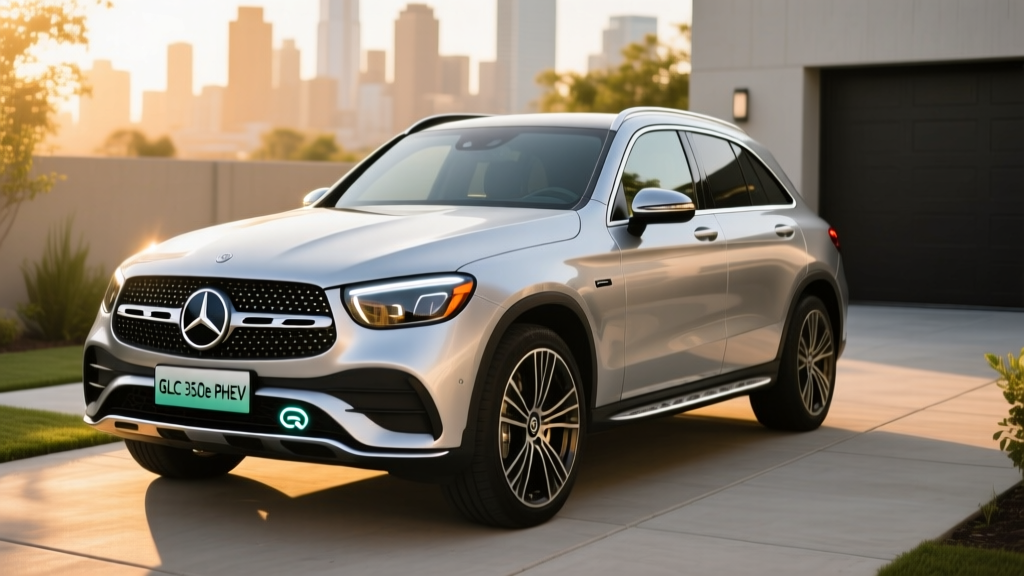
The 2026 Mercedes-Benz GLC 350e 4MATIC is the brand's plug-in hybrid (PHEV) compact luxury SUV, pairing a 2.0-liter turbocharged four-cylinder engine with a 134-hp electric motor and a 21.2 kWh (usable) lithium-ion battery. The result is an EPA-rated 48 miles of electric-only driving, 56 MPGe combined when blending electric and gas power, and a total system output of 312 horsepower. Starting at approximately $59,900, it targets luxury buyers who want daily electric commuting without sacrificing the range flexibility of a gasoline engine for longer trips.
Unlike a conventional hybrid (HEV) that never plugs in, the GLC 350e charges from a wall outlet or public charger to unlock its full electric range. It also supports DC fast charging — a rarity among compact luxury PHEVs — reaching 10-80% in roughly 28 minutes at up to 60 kW. For buyers weighing a Mercedes hybrid GLC against a full battery-electric vehicle (BEV) or a traditional HEV, this PHEV occupies a distinct middle ground.
| Spec | Value |
|---|---|
| Powertrain | 2.0L Turbo I4 + Electric Motor (PHEV) |
| Combined Horsepower | 312 hp |
| Combined Torque | 406 lb-ft |
| Battery (Usable) | 21.2 kWh, Lithium-Ion |
| EPA Electric-Only Range | 48 miles |
| EPA MPGe (Combined) | 56 MPGe |
| EPA MPG (Gas Only, Combined) | 27 MPG |
| Total Combined Range | |
| Max DC Fast Charge | 60 kW |
| 10-80% DC Fast Charge | ~28 minutes |
| Level 2 Charge (240V, 7.4 kW) | ~2.5 hours (0-100%) |
| 0-60 mph | 6.5 seconds |
| Drivetrain | 4MATIC AWD |
| Base MSRP | ~$59,900 |
| Federal Tax Credit (§30D) | Up to $3,750 (see eligibility below) |
| Battery Warranty | 6 years / 62,000 miles |
HEV vs. PHEV: What "Mercedes Hybrid GLC" Actually Means
When shoppers search for a "Mercedes hybrid GLC," they may encounter two distinct powertrain concepts. Understanding the difference is essential before visiting a dealer.
| Feature | HEV (Conventional Hybrid) | PHEV (Plug-In Hybrid) |
|---|---|---|
| Plugs In? | No — charges via regenerative braking and engine | Yes — charges from outlet or charger |
| Electric-Only Range | 1-2 miles at low speed | 30-50+ miles at full speed |
| Battery Size | ~1-2 kWh | ~15-30 kWh |
| Typical MPG | Higher combined MPG (no plug needed) | High MPGe on electric; moderate MPG on gas |
| Best For | Drivers without home charging access | Drivers with home charging who commute short distances |
The 2026 GLC 350e is a PHEV. Mercedes-Benz currently does not offer a conventional HEV version of the GLC in the U.S. market. If you see references to a "GLC hybrid" in older model years (such as the GLC 350e from 2020-2023), those were also PHEVs, though with smaller batteries and shorter electric ranges. The 2026 model's 21.2 kWh battery represents a substantial upgrade over previous generations.
Fuel Economy: EPA MPG, MPGe, and Real-World Expectations
| Mode | City | Highway | Combined |
|---|---|---|---|
| Electric + Gas (MPGe) | 59 MPGe | 53 MPGe | 56 MPGe |
| Gas Only (MPG) | 26 MPG | 29 MPG | 27 MPG |
How MPGe works: MPGe (miles per gallon equivalent) converts the energy in electricity to a gasoline-gallon equivalent so you can compare electric and gas efficiency on one scale. The 56 MPGe combined figure applies when you're driving on a mix of battery charge and gasoline. Once the battery depletes, the vehicle operates as a hybrid and returns the gas-only rating of 27 MPG combined.
Real-world MPG vs. EPA: PHEVs behave differently from conventional hybrids in daily use. If your commute is under 48 miles and you charge nightly, you may burn almost zero gasoline for weeks — effectively achieving "infinite MPG" for daily driving. On a long road trip where the battery depletes within the first hour, expect the gas-only 27 MPG combined figure. Highway driving at 75+ mph may return 24-26 MPG in real-world conditions due to aerodynamic drag and the vehicle's 4,600-pound curb weight. In cold weather (below 32°F), electric-only range typically drops 15-25%, reducing the battery portion to roughly 36-40 miles.
According to fueleconomy.gov, the EPA rates the GLC 350e at 48 miles of electric-only range. Owners who precondition the cabin while plugged in (using grid power rather than battery) can preserve more of that range for actual driving.
Electric-Only Range and Charging: What to Expect
The GLC 350e's 48-mile EPA electric range covers the majority of American commutes. The U.S. Census Bureau reports the average one-way commute at approximately 26 miles, meaning most drivers can complete a round trip on battery alone before the gasoline engine ever starts.
Total combined range — electric plus a full tank of gasoline — reaches approximately 440 miles, eliminating any range anxiety on road trips.
Charging Speeds and Times
| Charging Level | Power | Time (0-100%) | Miles of Range per Hour |
|---|---|---|---|
| Level 1 (120V household) | ~1.4 kW | ~16 hours | ~4 miles/hr |
| Level 2 (240V home/public) | 7.4 kW | ~2.5 hours | ~19 miles/hr |
| DC Fast Charge | Up to 60 kW | ~28 min (10-80%) | N/A |
kW vs. kWh reminder: kW (kilowatts) measures the rate of charging power — like water pressure from a hose. kWh (kilowatt-hours) measures the battery's energy capacity — like the size of the tank. The GLC 350e has a 21.2 kWh battery and can accept up to 60 kW of charging power.
DC fast charging is a standout feature. Most competing PHEVs — the BMW X3 xDrive30e, Volvo XC60 Recharge, Audi Q5 TFSI e — offer only Level 2 AC charging. The GLC 350e's 60 kW DC capability means you can top up the battery at a highway rest stop in under 30 minutes, making it practical to drive electric on longer trips if you plan stops around chargers. However, note that charging slows significantly above 80% state of charge (SoC) to protect battery health — the 10-80% time is 28 minutes, but 80-100% adds another 20+ minutes.
For daily home charging, a Level 2 wallbox at 7.4 kW replenishes the battery in about 2.5 hours — easily done overnight. A standard 120V outlet works in a pinch but requires roughly 16 hours for a full charge, making it impractical as a primary charging method.
Powertrain and Performance
The GLC 350e pairs Mercedes' 2.0-liter turbocharged inline-four (producing 215 hp on its own) with a 134-hp electric motor integrated into the nine-speed automatic transmission. Combined output is 312 horsepower and 406 lb-ft of torque, routed through 4MATIC all-wheel drive.
The 0-60 mph time of 6.5 seconds is brisk for a luxury compact SUV and noticeably quicker than the gas-only GLC 300 (which hits 60 mph in about 6.2 seconds with 258 hp, per Mercedes-Benz USA). The electric motor provides instant torque from standstill, making the PHEV feel responsive in city driving and passing maneuvers.
Five drive modes manage the powertrain:
- Electric — battery-only driving up to 87 mph; engine stays off unless you floor the accelerator
- Hybrid — the system blends electric and gas automatically for optimal efficiency
- Battery Hold — preserves current charge level (useful on highways to save battery for city driving later)
- Comfort — balanced powertrain and suspension tuning
- Sport — maximum combined power output, sharper throttle response
The Battery Hold mode deserves special mention. On a road trip, engage it at highway speeds to run primarily on gasoline, then switch to Electric mode when you reach city traffic or your destination — where electric driving is most efficient and quietest.
Pricing, Trims, and Federal Tax Credit Eligibility
The 2026 GLC 350e 4MATIC starts at approximately $59,900 (including destination). A fully optioned example with AMG Line exterior, MBUX premium package, head-up display, and driver-assistance packages can reach $72,000-$75,000.
Does the GLC 350e Qualify for a Federal Tax Credit?
Under IRS §30D, the GLC 350e may qualify for a partial federal tax credit — but eligibility depends on several factors that change frequently. Key requirements include:
- MSRP cap: SUVs must have an MSRP at or below $80,000 (most GLC 350e trims qualify)
- Buyer income cap: Modified AGI must not exceed $150,000 (single), $225,000 (head of household), or $300,000 (joint)
- Battery sourcing: Critical minerals and battery components must meet phased-in domestic-content thresholds — this determines whether you receive $3,750 or the full $7,500
- Point-of-sale transfer: As of 2024, eligible buyers can transfer the credit to the dealer for an immediate price reduction at purchase
As of the 2026 model year, the GLC 350e is expected to qualify for up to $3,750 (the critical-minerals half of the credit), though battery-component sourcing rules continue to tighten. Always verify current eligibility at IRS.gov before purchasing, as rules change with little notice.
Many states also offer additional PHEV incentives — California's Clean Vehicle Rebate, Colorado's state tax credit, and utility-company rebates are among the most common. Check your state's energy office or local utility for current programs.
Battery Longevity, Warranty, and Reliability
Mercedes-Benz High-Voltage Battery Warranty: 6 years or 62,000 miles (whichever comes first), covering defects and capacity loss below 70% of original capacity. This is shorter than the 8-year/100,000-mile warranties offered by most competitors, including Toyota, Hyundai, and BMW.
How long will the GLC 350e battery last? Modern lithium-ion PHEV batteries are engineered for 10-15 years of service with gradual capacity loss. Most owners experience 10-15% degradation over the first 5-7 years, meaning the 48-mile range might settle to approximately 40-43 miles over time. Mercedes' thermal management system actively cools and heats the battery to minimize degradation, but the 6-year/62,000-mile warranty remains a weak point relative to the industry norm of 8 years/100,000 miles.
Battery replacement cost: If the high-voltage battery fails out of warranty, replacement costs for PHEV batteries in this class typically range from $8,000 to $14,000 (parts and labor). This is significantly less than a full EV battery replacement because the PHEV battery is smaller (21.2 kWh vs. 75-100+ kWh in a BEV). However, it remains a meaningful expense — factor this into long-term ownership planning.
Reliability outlook: Mercedes-Benz's overall reliability ratings from J.D. Power and Consumer Reports tend to fall in the average to below-average range for the luxury segment. The GLC's 2.0L turbo engine is well-proven across the Mercedes lineup. The primary risk areas for PHEVs are the power electronics and charging system rather than the battery itself. The 9-speed transmission and electric motor integration add complexity compared to a conventional HEV like the Toyota RAV4 Hybrid.
Who Should Choose the Mercedes Hybrid GLC — and Who Shouldn't?
Pros
- 48-mile electric range covers most daily commutes
- DC fast charging (rare for PHEVs) enables electric road-trip top-ups
- 312 hp with smooth, quiet electric-first acceleration
- No range anxiety — 440+ mile total range on gas + electric
- Premium MBUX interior, ride quality, and cabin insulation
- Luxury SUV practicality with AWD and towing capability
Cons
- Battery warranty (6 yr/62k mi) falls short of the 8 yr/100k mi industry standard
- Gas-only MPG (27 combined) is mediocre once battery depletes
- Partial tax credit (~$3,750) vs. full $7,500 for some competitors
- $59,900+ starting price is steep vs. non-luxury PHEVs
- Cargo space reduced slightly vs. gas GLC due to battery placement
- Cold weather cuts electric range by 15-25%
Decision Framework: Is the GLC 350e Right for You?
Choose the Mercedes hybrid GLC 350e if:
- You have home Level 2 charging and a commute under 50 miles
- You want a luxury compact SUV but aren't ready for a full EV
- You take road trips where charging infrastructure is uncertain
- You value DC fast charging for occasional highway top-ups
Choose a full EV (like the Mercedes EQB or BMW iX3) if:
- Your daily driving rarely exceeds 200 miles and you have reliable home charging
- You want zero gasoline maintenance and lower per-mile fuel costs
- You qualify for the full $7,500 federal tax credit on a BEV
Choose a conventional HEV (like the Lexus NX 350h) if:
- You cannot install home charging (apartment, street parking)
- You want simpler ownership with no plug-in routine
- You prioritize higher gas-only MPG (35+ combined) over electric-only driving
Frequently Asked Questions
How many MPG does the Mercedes hybrid GLC get?
The 2026 GLC 350e achieves 56 MPGe combined when using both electric and gasoline power, and 27 MPG combined once the battery is depleted and the vehicle operates on gasoline alone. In real-world use, your effective fuel economy depends heavily on how often you charge. Drivers who charge nightly and commute under 48 miles may go weeks without visiting a gas station.
How far can the GLC 350e go on electric only?
The EPA rates the GLC 350e at 48 miles of electric-only range. In real-world conditions — particularly highway speeds above 65 mph or cold weather below freezing — expect 36-44 miles. City driving at moderate temperatures with regenerative braking will get you closest to the 48-mile sticker figure.
Hybrid vs. PHEV vs. EV — which fits my lifestyle?
A conventional hybrid (HEV) never plugs in and improves MPG modestly — ideal if you lack home charging. A PHEV like the GLC 350e plugs in for 30-50 miles of electric range but retains a gas engine for long trips — ideal if you can charge at home but take road trips. A full EV (BEV) eliminates gasoline entirely with 200-350+ miles of range — ideal if your daily driving is predictable and you have reliable charging access.
Is the Mercedes GLC 350e reliable, and what does battery replacement cost?
The GLC's powertrain is proven, though Mercedes-Benz reliability ratings trend average for the luxury segment. The high-voltage battery is warrantied for 6 years/62,000 miles. Out-of-warranty replacement typically costs $8,000-$14,000. Most PHEV batteries last 10-15 years with gradual capacity loss of 10-20% over that period.
Does the GLC 350e qualify for a federal tax credit?
The GLC 350e may qualify for up to $3,750 under the IRS §30D clean vehicle credit, depending on battery-sourcing compliance, your income level, and the vehicle's MSRP (must be under $80,000 for SUVs). Eligibility rules change frequently — verify current status at IRS.gov before purchasing. The credit can be transferred to the dealer at point of sale for an immediate price reduction.
Can the GLC 350e DC fast charge?
Yes. The GLC 350e supports DC fast charging at up to 60 kW via a CCS connector, reaching 10-80% in approximately 28 minutes. This is uncommon among compact luxury PHEVs and makes it practical to top up the battery on road trips at Electrify America, EVgo, or other DC fast-charging networks.
How long does it take to charge the GLC 350e at home?
On a Level 2 home charger (240V, 7.4 kW), the GLC 350e charges from empty to full in approximately 2.5 hours. On a standard 120V household outlet (Level 1), a full charge takes about 16 hours. For daily use, a Level 2 home charger is strongly recommended.