Quick Verdict: The 2026 Crosstrek Hybrid at a Glance
The 2026 Subaru Crosstrek Hybrid returns as a plug-in hybrid (PHEV), pairing Subaru's signature symmetrical all-wheel drive with a modest electric-only range and strong fuel economy once the battery depletes. For buyers who want electrified efficiency without committing to a full battery-electric vehicle — especially those in snowy or rural areas where charging infrastructure remains sparse — the Crosstrek PHEV occupies a practical middle ground. But with only around 17–18 miles of EPA-rated electric range and a price premium over the gas-only Crosstrek, the math requires careful consideration.
| Specification | 2026 Crosstrek Hybrid (PHEV) |
|---|---|
| Powertrain | 2.0L flat-4 + electric motors (PHEV) |
| Combined Horsepower | ~188 hp (system net) |
| Battery Capacity | ~13.5 kWh (usable ~10.5 kWh) |
| EPA Electric-Only Range | ~17 miles |
| Total Combined Range | ~430 miles |
| EPA MPG (Charge-Sustaining) | 35 city / 33 highway / 34 combined |
| MPGe (Electric + Gas) | ~90 MPGe combined |
| Level 2 Charge Time (0–100%) | ~2.5 hours at 3.3 kW |
| DC Fast Charging | Not available |
| 0–60 mph | ~7.5 seconds (est.) |
| Drivetrain | Symmetrical AWD (standard) |
| Base MSRP | ~$36,995 |
| Battery Warranty | 8 years / 100,000 miles |
HEV vs PHEV: What the 2026 Crosstrek Hybrid Actually Is
Before we dig into numbers, it's essential to clarify terminology, because "hybrid" gets thrown around loosely. The 2026 Crosstrek Hybrid is a plug-in hybrid electric vehicle (PHEV), not a conventional hybrid (HEV) like the Toyota Prius.
| Feature | Conventional Hybrid (HEV) | Plug-In Hybrid (PHEV) |
|---|---|---|
| Battery Size | ~1–2 kWh | ~10–20 kWh |
| Electric-Only Range | None (motor assists engine) | 15–45 miles typical |
| External Charging | Not required — regenerates via braking/engine | Plug in to maximize EV range |
| Fuel Economy After Depletion | Excellent (40–57 MPG) | Good (30–40 MPG) |
| Federal Tax Credit | Not eligible under §30D | May qualify (partial, based on battery kWh) |
| Purchase Premium | Lower | Higher |
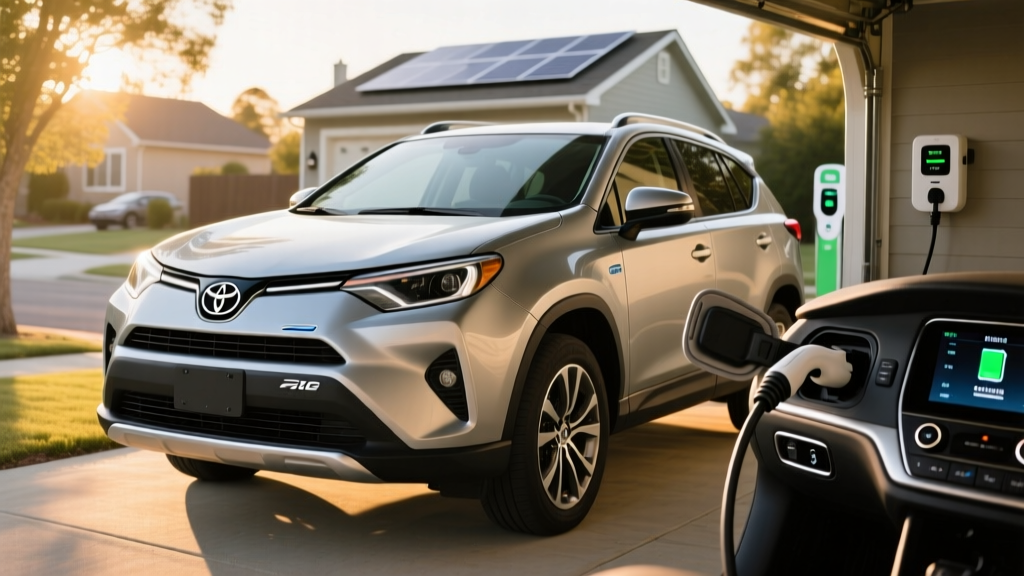
The Crosstrek PHEV can be plugged into a standard 120V outlet (Level 1) or a 240V Level 2 home charger to replenish its larger battery. If you never plug it in, it still functions as a conventional hybrid — but you'll miss the entire point of paying the PHEV premium. If you can't charge at home or at work, a conventional HEV or a full EV may serve you better.
Fuel Economy: EPA Numbers vs Real-World MPG
The EPA rates the 2026 Crosstrek Hybrid at approximately 35 MPG city / 33 MPG highway / 34 MPG combined in charge-sustaining mode (after the battery is depleted). In electric mode, it achieves roughly 90 MPGe combined. These figures come from fueleconomy.gov, the official EPA source.
| Driving Scenario | EPA Estimate | Real-World Expectation |
|---|---|---|
| City (charge-sustaining) | 35 MPG | 34–38 MPG (regen helps in stop-and-go) |
| Highway (70+ mph) | 33 MPG | 29–32 MPG (aero drag, AWD losses) |
| Combined | 34 MPG | 30–35 MPG depending on conditions |
| Electric-only (city) | ~90 MPGe | 85–95 MPGe (short trips maximize regen) |
| Cold weather (below 32°F) | N/A | Expect 15–25% MPG reduction + reduced EV range |
In practice, PHEV owners who charge daily and drive less than 20 miles between charges may use almost no gasoline for weeks. But once the battery depletes on a road trip, you're carrying ~400 lbs of battery and motor hardware, which slightly hurts highway efficiency compared to the lighter gas-only Crosstrek (rated at 27/34/29 MPG for the 2.0L AWD model). The hybrid advantage shines most in city and suburban driving where regenerative braking recaptures energy.
Electric-Only Range and Charging: What to Expect
The 2026 Crosstrek PHEV offers approximately 17 miles of EPA-rated electric-only range. That's on the low end of the current PHEV spectrum — the Toyota RAV4 Prime delivers 42 miles, and the Hyundai Tucson PHEV manages 33 miles. Subaru's modest battery size (~13.5 kWh total, ~10.5 kWh usable) keeps weight and cost down but limits electric commuting utility.
For context, 17 miles covers a short round-trip commute or a few local errands, but most suburban drivers will deplete the battery before lunch. If your one-way commute exceeds 15 miles, you'll be in hybrid mode for a meaningful portion of your drive.
Charging Speeds and Connector Details
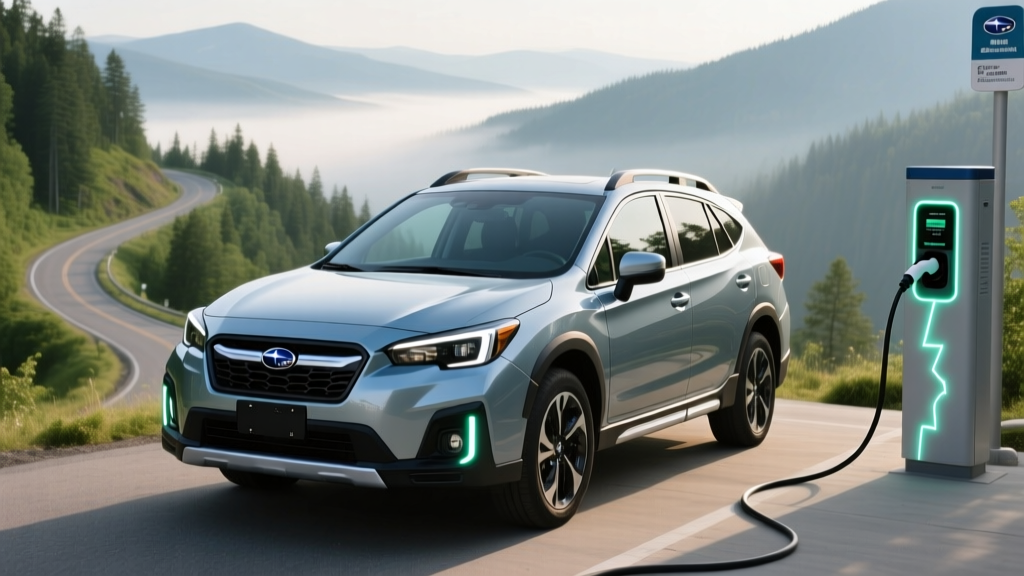
The Crosstrek PHEV uses a J1772 connector for AC charging and does not support DC fast charging. This is typical for PHEVs with smaller batteries — the added cost and weight of DC fast hardware isn't justified when Level 2 replenishes the pack in under three hours.
| Charging Level | Power (kW) | 0–100% Time | Practical Notes |
|---|---|---|---|
| Level 1 (120V household) | ~1.2 kW | ~9 hours | Overnight top-up; slow but functional for daily 17-mi range |
| Level 2 (240V, 16A) | ~3.3 kW | ~2.5 hours | Recommended home setup; midday top-up possible |
| DC Fast Charge | N/A | N/A | Not supported — J1772 AC only |
A Level 2 home charger (240V) is strongly recommended. At 3.3 kW, you can fully recharge during a work-from-home lunch break or between errands. Installation typically costs $500–$1,500 depending on panel proximity and local permitting. Because the battery is small, you don't need a high-amperage (48A) charger — a basic 16A unit suffices.
Powertrain and Performance
Subaru pairs its 2.0-liter horizontally opposed ("boxer") four-cylinder engine with two electric motor-generators integrated into the Lineartronic CVT transmission. Combined system output is approximately 188 horsepower, a meaningful bump over the gas-only Crosstrek's 152 hp. The electric motors provide instant torque off the line, making the PHEV noticeably quicker in city acceleration.
The 0–60 mph time is estimated at around 7.5 seconds — respectable for a compact crossover and roughly 1.5 seconds quicker than the base 2.0L gas model. Subaru's symmetrical all-wheel drive remains standard, with the rear wheels driven mechanically by the engine and assisted by the electric motors. This is not a "through-the-road" hybrid system where electric motors drive a separate axle.
Driving modes typically include EV-only (prioritizes electric), Auto (blends seamlessly), and a battery-save mode that preserves charge for later electric use — useful if you're driving to a low-emission zone or want electric power for the return leg of a trip.
Pricing, Trims, and Tax Credit Eligibility
The 2026 Subaru Crosstrek Hybrid starts at approximately $36,995 (including destination), placing it roughly $8,000–$10,000 above the base gas-only Crosstrek. It typically comes in a single well-equipped trim, bundling features like EyeSight driver assistance, an 11.6-inch infotainment screen, heated seats, and the Starlink connected-services suite.
Federal Tax Credit: The §30D Reality
Under current IRS rules (IRS §30D), plug-in hybrids may qualify for a partial federal tax credit based on battery capacity. However, the 2026 rules have become significantly more restrictive:
- Battery capacity: Must be ≥7 kWh (Crosstrek qualifies at ~13.5 kWh gross)
- MSRP cap: SUVs/vans/pickups capped at $80,000; sedans at $55,000 (Crosstrek qualifies)
- Buyer income cap: Modified AGI ≤ $150,000 (single) / $300,000 (joint) / $225,000 (head of household)
- Critical minerals & battery sourcing: Must meet escalating domestic-content thresholds — many PHEVs with Japanese-sourced batteries do NOT qualify for the full $7,500
- Assembly: Final assembly must be in North America (Subaru assembles the Crosstrek in Gunma, Japan — this may disqualify it entirely)
- Point-of-sale transfer: If eligible, the credit can be applied at purchase rather than waiting for tax filing
Bottom line: Because Subaru manufactures the Crosstrek in Japan, the 2026 Crosstrek Hybrid likely does not qualify for the federal §30D new clean vehicle credit, which requires North American final assembly. Some states offer their own PHEV rebates (California's CVRP, Colorado's state credit, etc.), but these vary by jurisdiction. Always verify current eligibility with your tax professional and your state's energy office before counting on incentives.
Battery Longevity, Warranty, and Replacement Cost
Hybrid and PHEV battery longevity is a top concern for buyers, and Subaru addresses this with a solid warranty.
Subaru Hybrid Battery Warranty: 8 years / 100,000 miles (whichever comes first), covering defects and capacity loss below a specified threshold (typically 60–70% of original capacity, per the warranty booklet). In California-emission states, the warranty extends to 10 years / 150,000 miles.
The Crosstrek PHEV uses a lithium-ion battery pack (likely NMC chemistry given the energy density requirements in a compact package). Real-world data from Toyota and Subaru's shared hybrid architecture suggests these packs routinely last 150,000+ miles with minimal degradation, thanks to conservative state-of-charge management — the system never fully charges or fully depletes the battery, keeping it in the healthiest middle range.
If replacement is needed out of warranty, expect a cost between $4,000 and $7,000 for the battery pack plus labor, based on current Subaru and Toyota PHEV replacement pricing. This is significantly less than a full EV battery replacement ($10,000–$20,000+), reflecting the smaller pack size. Third-party remanufactured packs may become available as the fleet ages, potentially reducing costs further.
IIHS and NHTSA safety ratings for the Crosstrek platform have historically been strong, with the gas model earning Top Safety Pick recognition. The PHEV variant shares the same structure and restraint systems.
Who Should Choose the 2026 Crosstrek Hybrid — and Who Shouldn't
Pros
- Standard AWD — excellent for snow, rain, and light off-road
- 188 hp makes it the quickest Crosstrek variant
- Short electric range eliminates gas for very brief commutes
- No range anxiety — gas engine covers any distance
- Strong resale value (Subaru brand strength)
- Ground clearance (8.7 in) exceeds most PHEV crossovers
Cons
- Only ~17 miles EV range — trails RAV4 Prime, Tucson PHEV
- No DC fast charging
- ~$8,000+ premium over gas Crosstrek with slow payback
- Likely ineligible for federal §30D credit (Japan assembly)
- Cargo space reduced vs gas model (battery packaging)
- CVT drone under hard acceleration
Choose the 2026 Crosstrek Hybrid if: You need AWD for harsh winters or dirt roads, your daily driving is under 20 miles and you can charge at home, and you want a compact crossover that can handle weekend adventures without range planning.
Choose the gas-only Crosstrek if: You can't charge at home, your budget is tight, and you don't need the extra horsepower. The fuel economy penalty is modest, and the lower purchase price means thousands in immediate savings.
Choose a full EV (e.g., Hyundai Ioniq 5, Subaru Solterra) if: You have reliable home charging, your daily mileage is within EV range (200–300 miles), and you want zero tailpipe emissions with minimal maintenance.
Choose the RAV4 Prime or Tucson PHEV if: You want a PHEV but need 30+ miles of electric range to meaningfully reduce gasoline consumption on a daily commute.
Frequently Asked Questions
How many MPG does the 2026 Crosstrek Hybrid get?
The EPA rates it at approximately 35 MPG city / 33 MPG highway / 34 MPG combined in hybrid (charge-sustaining) mode. Real-world results vary: expect 34–38 MPG in city driving where regenerative braking helps, and 29–32 MPG on sustained highway trips above 70 mph. Cold weather and mountain driving will reduce these numbers by 15–25%.
How far can the 2026 Crosstrek Hybrid go on electric only?
The EPA rates it at approximately 17 miles of electric-only range. In mild weather with conservative driving, you might stretch that to 19–20 miles in the city. In cold weather or at highway speeds, expect 12–14 miles. Once depleted, the gas engine takes over seamlessly.
Hybrid vs PHEV vs EV — which is right for me?
A conventional hybrid (HEV) requires no behavioral change — you fuel up normally and get better MPG. A PHEV like the Crosstrek Hybrid rewards you for plugging in with short electric-only trips but still offers a gas engine for longer drives. A full EV eliminates gasoline entirely, offers the lowest per-mile energy cost, but requires charging planning for road trips. If you have home charging and drive under 200 miles daily, a full EV usually offers the best ownership experience. If you regularly exceed that or lack charging access, a PHEV or HEV is more practical.
Is the 2026 Crosstrek Hybrid reliable, and what does battery replacement cost?
Subaru's hybrid system shares engineering DNA with Toyota's proven hybrid architecture, and long-term reliability data is encouraging. The battery is warranted for 8 years/100,000 miles (10/150,000 in CARB states). Out-of-warranty replacement runs approximately $4,000–$7,000. Most PHEV batteries from Japanese manufacturers last well beyond the warranty period with proper thermal management.
Does the 2026 Crosstrek Hybrid qualify for a tax credit?
Under current §30D rules, the federal new clean vehicle credit requires final assembly in North America. Since Subaru assembles the Crosstrek in Japan, it likely does not qualify for the federal credit. State-level incentives may still apply — check with your state's energy office. Consult a tax professional for your specific situation, as rules are subject to legislative change.
Do I have to plug in the Crosstrek Hybrid?
No — it operates as a conventional hybrid if you never plug it in. However, you'll forfeit the electric-only range you paid extra for, and the vehicle will run on gasoline exclusively. To get the benefit of the PHEV system, plan to plug in at home overnight (a standard 120V outlet works, though Level 2 is faster).
How does the Crosstrek Hybrid compare to the Subaru Solterra?
The Solterra is Subaru's all-electric SUV (co-developed with Toyota's bZ4X), offering approximately 222–228 miles of EPA range. It's larger, heavier, and more expensive (~$44,995+), but delivers zero tailpipe emissions and lower running costs if you can charge at home. The Crosstrek PHEV is smaller, more affordable, and eliminates range anxiety — but still burns gasoline for most driving beyond short trips.