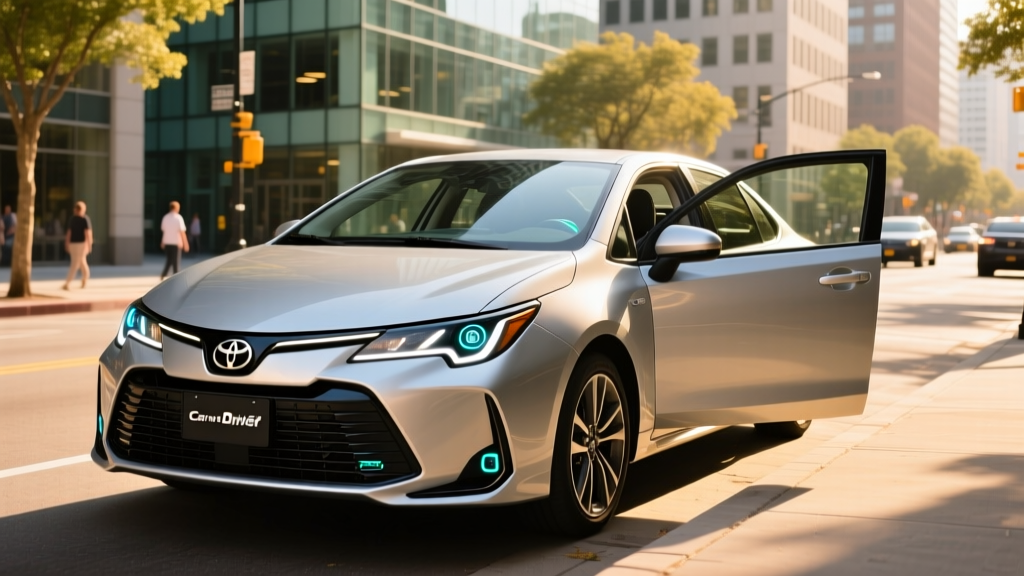
The 2026 Corolla LE Hybrid occupies a narrow but important lane in the electrified-car market: it delivers serious fuel savings without requiring a plug, a lifestyle change, or a five-figure premium over its gas sibling. With an EPA-estimated 53 MPG combined and a starting MSRP near $24,000, the LE Hybrid trim is the value anchor of Toyota's hybrid lineup. But spec sheets only tell half the story. Below, we break down what the numbers mean in real-world driving, what the battery warranty actually covers, and whether this conventional hybrid (HEV) or a plug-in alternative makes more sense for your commute.
HEV vs PHEV: What the 2026 Corolla Hybrid Actually Is
Before diving into specs, it's critical to distinguish what you're buying. The 2026 Corolla LE Hybrid is a conventional hybrid (HEV) — not a plug-in hybrid (PHEV). You never plug it in. The car's 1.8-liter gasoline engine and regenerative braking system recharge a small traction battery automatically. That battery assists the engine during acceleration and enables brief electric-only motoring at low speeds, but it does not provide a meaningful electric-only driving range the way a PHEV does.
| Feature | HEV (Corolla LE Hybrid) | PHEV (e.g., Prius Prime) | BEV (e.g., bZ4X) |
|---|---|---|---|
| Plug-in charging required? | No | Yes | Yes |
| Electric-only range | ~1 mi at low speed | ~39-44 mi (Prius Prime) | 220-252 mi |
| Battery size (usable) | ~0.9 kWh (NiMH) | ~10.3 kWh (Li-ion) | ~64-71 kWh (Li-ion) |
| Fueling | Gas only | Gas + plug | Plug only |
| Federal tax credit (§30D) | Not eligible | Up to $7,500* | Up to $7,500* |
| Home charger needed? | No | Recommended (Level 2) | Required (Level 2) |
*§30D credit subject to MSRP caps, buyer income limits, and battery-sourcing rules per IRS guidelines. Verify eligibility with a tax professional.
The takeaway: if you want electric-only commuting and have access to a plug at home or work, a PHEV like the Prius Prime is the play. If you want maximum simplicity — just fill up with gas and drive — the Corolla LE Hybrid delivers exceptional efficiency with zero behavioral change.
Fuel Economy: EPA Ratings and Real-World MPG
Toyota publishes strong EPA numbers for the Corolla LE Hybrid, and they're among the best in the compact-sedan segment. Here's the official breakdown from fueleconomy.gov:
| Driving Cycle | EPA Estimate | Real-World Expectation |
|---|---|---|
| City | 53 MPG | 52-58 MPG (hybrids often exceed EPA city) |
| Highway | 52 MPG | 46-50 MPG (highway favors gas engine) |
| Combined | 53 MPG | 48-54 MPG depending on driving mix |
Why does the city number match or beat the highway figure? In stop-and-go traffic, the hybrid system recovers energy through regenerative braking and uses the electric motor to launch from stops — the exact conditions where a gas-only car wastes the most fuel. On sustained highway runs above 65 mph, the gasoline engine does most of the work, and aerodynamic drag erodes efficiency.
Real-world note: In mixed suburban driving with moderate A/C use, owners consistently report 48-54 MPG on the Corolla Hybrid platform. Short trips in cold weather (below 40°F) can drop observed economy to the low-to-mid 40s, as the engine runs longer to heat the cabin and the battery operates less efficiently at low temperatures. Over a full year of varied driving, plan for roughly 50 MPG combined as a realistic baseline.
Powertrain and Performance Specs
| Specification | 2026 Corolla LE Hybrid |
|---|---|
| Engine | 1.8L 4-cylinder Atkinson-cycle |
| Electric motor | Permanent-magnet synchronous (front axle) |
| Combined net horsepower | 138 hp |
| Transmission | Continuously variable (eCVT) |
| Drivetrain | Front-wheel drive (FWD) |
| 0-60 mph (est.) | ~9.0 seconds |
| Traction battery | ~0.9 kWh, Nickel-Metal Hydride (NiMH) |
| Fuel tank capacity | 11.4 gallons |
| Total driving range (est.) | ~600 miles |
The 138-hp combined output comes from Toyota's fifth-generation hybrid system, which pairs the 1.8L engine with a more compact and efficient transaxle housing two motor-generators. The result is smooth, linear acceleration that feels adequate for daily commuting and highway merging, though it won't win any stoplight races. The eCVT eliminates shift shock entirely — there are no gears to shift.
One nuance: the Corolla Hybrid LE is FWD only. If you need all-wheel drive, Toyota offers the Hybrid AWD-e variant on higher trims (XLE), which adds a rear-axle electric motor for an additional ~40 hp and all-weather traction, at a small fuel-economy penalty (typically 2-3 MPG combined).
Pricing, Trims, and Tax Credit Eligibility
The 2026 Corolla LE Hybrid is positioned as the entry point into Toyota's hybrid sedan lineup. Pricing by trim (MSRP, before destination):
- LE Hybrid (FWD): ~$24,050
- SE Hybrid (FWD): ~$26,550
- XLE Hybrid (FWD): ~$28,550
- SE Hybrid AWD-e: ~$27,950
Federal tax credit: The Corolla LE Hybrid, as a conventional HEV, does not qualify for the §30D Clean Vehicle Credit. That credit is reserved for plug-in vehicles (PHEVs and BEVs) with a minimum 7 kWh battery. However, some states and utilities offer modest rebates for conventional hybrids — check your local programs.
If the federal credit is a priority, the Toyota Prius Prime (PHEV, starting ~$33,445) may qualify for up to $7,500 depending on your income, the vehicle's MSRP category, and battery critical-mineral sourcing requirements. Consult the IRS §30D guidance and a tax professional before banking on credit eligibility.
Battery Longevity, Warranty, and Replacement Cost
Battery anxiety is the top concern for hybrid buyers, and it deserves a direct answer. Toyota's hybrid batteries have a strong track record — the Prius platform has accumulated billions of real-world miles with relatively low battery-failure rates.
2026 Corolla Hybrid Battery Warranty
- Hybrid battery warranty: 10 years / 150,000 miles (whichever comes first)
- Hybrid system components: 8 years / 100,000 miles
- Powertrain warranty: 5 years / 60,000 miles
- Capacity retention threshold: Toyota does not publish a specific SoH percentage trigger; coverage applies to defects and premature failure
Replacement cost if out of warranty: A new OEM hybrid battery pack for the Corolla Hybrid typically runs $2,000–$3,500 including installation at a dealership. Independent hybrid specialists and refurbished packs can reduce that to $1,200–$2,000. Given the 10-year/150,000-mile warranty and the NiMH chemistry's proven durability, most original owners will never face this cost.
How long do they actually last? Real-world data from the Prius (which shares the same hybrid architecture) suggests hybrid batteries commonly reach 150,000–200,000+ miles before significant degradation. NiMH chemistry is less energy-dense than lithium-ion but extremely robust in shallow-cycle, temperature-managed applications — exactly how Toyota's hybrid system operates.
Who Should Buy the Corolla LE Hybrid (and Who Shouldn't)
Pros
- 53 MPG EPA combined — among the best non-plug vehicles available
- No plug, no charger install, no range anxiety
- Low starting price (~$24,050) for a hybrid
- 10-year/150,000-mile hybrid battery warranty
- Toyota reliability reputation and strong resale value
- ~600-mile total range on a single tank
Cons
- No electric-only commuting range (not a PHEV)
- No federal tax credit eligibility
- Modest 138 hp — not a performance vehicle
- FWD only on LE trim (AWD-e requires higher trims)
- Small NiMH battery — older chemistry vs. lithium-ion
- Highway MPG dips below city (common for HEVs)
Choose the Corolla LE Hybrid if:
- You don't have reliable access to a plug at home or work
- You want maximum MPG with zero lifestyle change
- Your budget is under $26,000 and you want a new car
- You drive a mix of city and suburban miles where hybrid efficiency shines
- You plan to keep the car 8-10+ years (warranty coverage matters)
Look elsewhere if:
- You have home charging and want electric-only commuting — consider a PHEV like the Prius Prime
- You want zero tailpipe emissions — consider a BEV like the Tesla Model 3 or Hyundai Ioniq 6
- You need AWD in the LE trim — step up to the SE/XLE Hybrid AWD-e
- You prioritize acceleration — the 9-second 0-60 time is functional, not fun
Frequently Asked Questions
How many MPG does the 2026 Corolla LE Hybrid get?
The EPA rates it at 53 MPG city, 52 MPG highway, and 53 MPG combined. In real-world mixed driving, expect 48-54 MPG depending on conditions. Cold weather and sustained highway speeds above 70 mph will pull numbers toward the lower end.
Does the Corolla LE Hybrid need to be plugged in?
No. It is a conventional hybrid (HEV). The battery recharges through the gasoline engine and regenerative braking. You fuel it exactly like a regular gas car — at the pump.
How far can it drive on electric power alone?
Effectively less than one mile, at very low speeds (under 25 mph in ideal conditions). This is not a plug-in hybrid and does not offer meaningful electric-only range. If electric-only commuting is your goal, you need a PHEV with at least 20+ miles of EV range, such as the Toyota Prius Prime.
Is the hybrid battery reliable and what does replacement cost?
Toyota's hybrid batteries are among the most proven in the industry, commonly lasting 150,000-200,000+ miles. The battery carries a 10-year/150,000-mile warranty. Out-of-warranty replacement runs approximately $2,000-$3,500 for a new OEM pack, or $1,200-$2,000 through independent specialists with refurbished units.
Does the 2026 Corolla Hybrid qualify for a tax credit?
No federal §30D tax credit is available for conventional hybrids. The §30D credit requires a plug-in vehicle with at least 7 kWh of battery capacity. Some state or utility programs may offer small hybrid incentives — check your local resources. For federal credit eligibility, you would need to look at PHEVs or BEVs.
How does the Corolla Hybrid compare to the Prius?
The Prius (57 MPG combined, 196 hp, ~$28,350) is more efficient and more powerful, but costs roughly $4,000 more at the base trim. The Corolla LE Hybrid is the budget-friendly efficiency pick; the Prius is the technology-and-performance upgrade. Both share Toyota's hybrid reliability and warranty coverage. See Toyota's official Corolla Hybrid page for current trim details and specifications.