Quick Verdict: The Everyday Hybrid Done Right
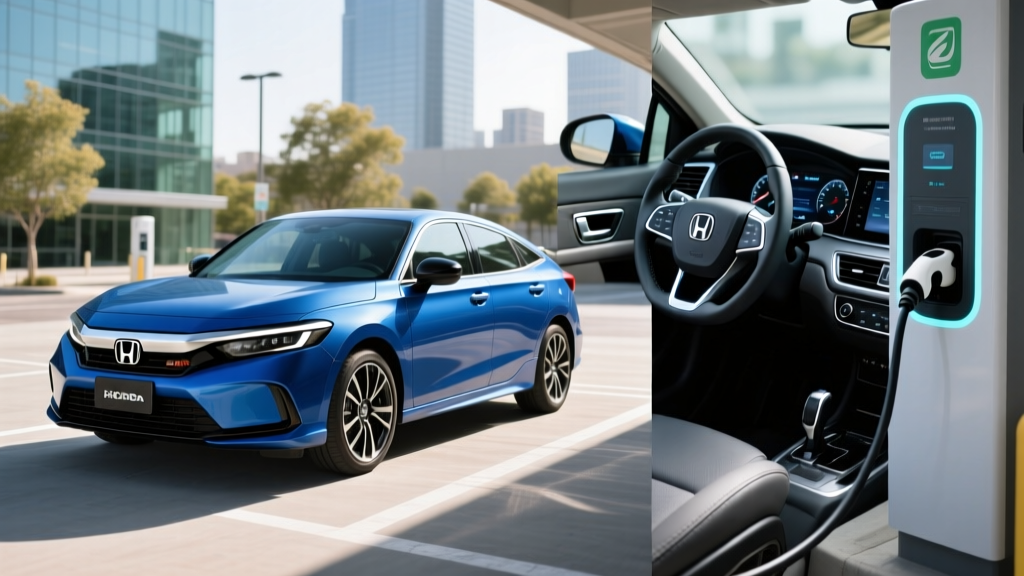
The 2026 Honda Civic Hatchback Hybrid Sport Touring occupies a specific niche: a practical, tech-loaded hatchback that sips fuel without demanding any change in your routine. Unlike a plug-in hybrid (PHEV) or a battery-electric vehicle (BEV), this is a conventional hybrid (HEV) — it generates its own electricity through regenerative braking and its gasoline engine. You never plug it in. You just drive it, and it returns fuel economy numbers that make frequent gas-station visits a distant memory.
For 2026, Honda continues the two-motor hybrid system introduced with the 11th-generation Civic refresh, pairing a 2.0-liter Atkinson-cycle four-cylinder with dual electric motors for a combined 200 horsepower and 232 lb-ft of torque. The Sport Touring trim sits at the top of the hatchback hybrid lineup, adding features like a Bose 12-speaker audio system, wireless Apple CarPlay and Android Auto, a 9-inch touchscreen, heated front seats, and Honda's full Honda Sensing suite of driver-assistance features.
But the real story is efficiency. With an EPA-estimated 50 MPG combined, the Civic Hatchback Hybrid delivers Prius-rivaling numbers in a package that looks and drives like a conventional compact car. Below, we break down every number that matters — from real-world fuel economy to battery warranty to total cost of ownership — so you can decide if this is the right electrified vehicle for your garage.
Fuel Economy: EPA Ratings vs. Real-World MPG
The EPA fuel economy numbers for the 2026 Civic Hatchback Hybrid are strong across the board, but the city figure is where Honda's two-motor system truly shines. In stop-and-go driving, the electric motors do the heavy lifting while the gasoline engine acts primarily as a generator, keeping the battery charged without a direct mechanical connection to the wheels at low speeds.
| Driving Cycle | EPA MPG | Real-World Expectation |
|---|---|---|
| City | 50 MPG | 48–54 MPG (hybrids often beat EPA in city) |
| Highway | 47 MPG | 42–46 MPG (sustained 70+ mph reduces regen benefit) |
| Combined | 49 MPG | 45–50 MPG depending on driving mix |
Why real-world city MPG can exceed the EPA sticker: Conventional hybrids recapture energy during braking and deceleration, feeding it back into the battery. In urban driving with frequent stops, this regenerative cycle is maximized. Owners who do mostly city and suburban driving routinely report 51–54 MPG on forums and fuel-tracking apps. Highway driving, by contrast, relies more on the gasoline engine at sustained speeds, where aerodynamic drag dominates and regenerative opportunities are minimal.
Cold-weather impact: Expect a 5–10% fuel economy reduction in winter months (roughly 43–46 MPG combined). The engine runs more frequently to provide cabin heat and maintain battery temperature. This is far less severe than the 20–30% range loss a BEV experiences in cold weather, but it's worth budgeting for if you live in northern climates.
With an 11.1-gallon fuel tank, the Civic Hatchback Hybrid delivers a theoretical range of approximately 544 miles on a single fill-up at the combined EPA estimate. Real-world mixed driving will yield roughly 490–520 miles between fill-ups — enough for most drivers to visit the gas station only once or twice a month.
EPA Combined: 49 MPG | Tank: 11.1 gal | EPA Range: ~544 mi
Expect ~490–520 mi real-world mixed driving; ~430–470 mi sustained highway; ~540–580 mi city-dominant routes.
Powertrain Deep Dive: Two-Motor Hybrid System
Honda's hybrid system is fundamentally different from the single-motor assist systems found in older hybrids. The 2026 Civic Hatchback Hybrid uses a series-parallel architecture with two electric motors and a 2.0-liter Atkinson-cycle inline-four.
| Component | Specification |
|---|---|
| Engine | 2.0L Atkinson-cycle DOHC i-VTEC inline-4 |
| Engine Output | 143 hp @ 6,000 rpm / 134 lb-ft @ 4,500 rpm |
| Drive Motor | AC permanent-magnet synchronous |
| Drive Motor Output | 181 hp / 232 lb-ft |
| Combined System Output | 200 hp / 232 lb-ft |
| Transmission | Electronic continuously variable (e-CVT), no traditional gears |
| Drivetrain | Front-wheel drive |
| Hybrid Battery | Lithium-ion, ~1.1 kWh (small buffer, not plug-in capable) |
| 0–60 mph | ~7.2 seconds (estimated, Honda does not publish official figure) |
How it works in practice: At low speeds and under light loads, the drive motor propels the car using electricity stored in the small lithium-ion battery. The gasoline engine spins a second motor (the generator motor) to produce electricity on demand — it doesn't drive the wheels directly. At highway speeds, a lock-up clutch engages, connecting the engine directly to the wheels for maximum efficiency. Under hard acceleration, both the engine and drive motor contribute simultaneously for the full 200 hp.
The result is a powertrain that feels responsive off the line — electric motors deliver peak torque instantly — while remaining efficient at cruise. The e-CVT avoids the rubber-band sensation of older CVTs because the system operates primarily in electric drive mode, with the engine RPM largely decoupled from vehicle speed.
This Civic is a conventional hybrid (HEV). It has a small ~1.1 kWh battery that charges itself through regenerative braking and the gasoline engine. You never plug it in. There is no meaningful electric-only driving range — the battery assists the engine but cannot power the car alone for more than brief, low-speed coasting.
A plug-in hybrid (PHEV), such as the Toyota Prius Prime or Hyundai Tucson PHEV, carries a much larger battery (typically 11–18 kWh), can be plugged into a Level 2 charger, and offers 25–44 miles of electric-only driving before the gasoline engine kicks in. PHEVs qualify for federal tax credits up to $7,500 under IRS §30D (subject to income, MSRP, and battery-sourcing rules). This Civic HEV does not.
Bottom line: If you want electric-only commuting and have home charging, a PHEV may suit you better. If you want maximum simplicity — no plugs, no range calculations, just excellent MPG — this HEV is the answer.
HEV vs. PHEV vs. BEV: Which Electrified Vehicle Fits You?
Choosing between a conventional hybrid, a plug-in hybrid, and a full battery-electric vehicle depends on your driving patterns, charging access, and budget. Here's how the 2026 Civic Hatchback Hybrid compares across key decision factors.
| Factor | HEV (This Civic) | PHEV (e.g., Prius Prime) | BEV (e.g., Tesla Model 3) |
|---|---|---|---|
| Plug-in required? | No | Yes (for EV range benefit) | Yes (always) |
| Electric-only range | ~0 mi | 25–44 mi | 250–360 mi |
| Fuel/energy cost per mile | ~$0.08–0.10 | ~$0.04–0.10 (varies) | ~$0.03–0.06 |
| Federal tax credit (§30D) | Not eligible | Up to $7,500* | Up to $7,500* |
| Home charging needed? | No | Recommended (Level 2) | Essential (Level 2) |
| Cold-weather efficiency loss | 5–10% MPG drop | 20–30% EV range drop | 20–35% range drop |
| Upfront price premium vs. gas | ~$1,500–2,500 | ~$3,000–5,000 | ~$5,000–15,000 |
| Best for | No home charging, simplicity | Short commute + home charger | Home charging + lower mi/day |
* Federal tax credit eligibility under IRS §30D depends on buyer income caps, vehicle MSRP caps, battery component and critical-mineral sourcing requirements, and point-of-sale transfer rules. Consult a tax professional before relying on credit estimates.
- You don't have access to home or workplace charging
- You want excellent fuel economy with zero behavior change
- You take frequent road trips and don't want to plan around charging stops
- You want a lower upfront price than a PHEV or BEV
- You drive a mix of city and highway and want strong MPG in both
- You have a Level 2 charger at home and a commute under 40 miles (PHEV covers it on electricity)
- You want the lowest per-mile energy cost and can charge at home (BEV)
- You want to qualify for the federal tax credit to offset a higher purchase price
Pricing, Trims, and Tax Credit Eligibility
The 2026 Honda Civic Hatchback Hybrid is available in two trims: Sport and Sport Touring. The Sport Touring is the fully loaded variant and the focus of this review.
| Trim | MSRP (est.) | Key Additions Over Sport |
|---|---|---|
| Sport Hybrid | $30,450 | Base hybrid hatch — 7-inch display, Honda Sensing, cloth seats |
| Sport Touring Hybrid | $33,450 | 9-inch touchscreen, Bose 12-speaker audio, wireless CarPlay/Android Auto, leather-trimmed seats, heated front seats, wireless phone charger, low-speed braking control |
Federal tax credit status: The 2026 Civic Hatchback Hybrid is a conventional HEV and does not qualify for the federal §30D clean vehicle credit. That credit is reserved for plug-in vehicles (PHEVs and BEVs) meeting battery-sourcing, MSRP, and buyer-income requirements. However, some states offer rebates or HOV lane access for hybrids — check your state's energy office or Alternative Fuels Data Center for local incentives.
Value proposition: At $33,450, the Sport Touring Hybrid is roughly $1,500–$2,000 more than a comparably equipped gas-only Civic Hatchback Sport Touring. That premium is recovered through fuel savings. At 12,000 miles per year and $3.40/gallon gasoline, the hybrid saves approximately $450–$550 annually in fuel costs compared to the non-hybrid (rated at ~33 MPG combined). Payback period: roughly 3–4 years.
Battery Warranty, Reliability, and Replacement Cost
Hybrid battery longevity is the single most common concern among first-time hybrid buyers. Here's what Honda provides and what real-world data shows.
- Hybrid battery: 8 years / 100,000 miles (10 years / 150,000 miles in CARB states including CA, NY, MA, and others)
- Hybrid system components: 8 years / 100,000 miles
- Powertrain warranty: 5 years / 60,000 miles
- Limited vehicle warranty: 3 years / 36,000 miles
Degradation reality: Honda's lithium-ion hybrid battery is small (~1.1 kWh) and is managed conservatively — the system never fully charges or fully depletes it, keeping the battery in a narrow state-of-charge window (roughly 40–60% SoC). This shallow-cycling strategy dramatically extends battery life. Based on long-term data from Honda's hybrid fleet (Insight, Accord Hybrid, CR-V Hybrid), significant hybrid battery degradation before 150,000 miles is uncommon.
Replacement cost: If the hybrid battery does fail outside warranty, a replacement from Honda runs approximately $2,000–$3,500 including labor. Third-party refurbishers offer rebuilt packs for $1,200–$2,000. Given the battery's small size and conservative management, this is a low-probability expense — but one worth knowing.
Reliability track record: Honda's two-motor hybrid system has been in production since 2014 (Accord Hybrid) and has proven robust. The system has fewer wear components than a conventional automatic transmission — there are no traditional gear sets, torque converters, or clutch packs to fail. According to IIHS and long-term owner surveys, the Civic Hybrid platform rates above average for compact car reliability.
Interior, Tech, and Safety in the Sport Touring
The Sport Touring trim justifies its price premium with a well-equipped cabin that competes with entry-level luxury compacts. The 9-inch touchscreen runs Honda's latest infotainment interface, which is responsive and logically organized. Wireless Apple CarPlay and Android Auto are standard, eliminating cable clutter.
The Bose 12-speaker audio system is a genuine upgrade over the base 8-speaker setup, with clear midrange and respectable bass for a compact hatch. Leather-trimmed seats, heated front seats, and a wireless phone charger round out the comfort features.
Cargo practicality: The hatchback body style provides 24.5 cubic feet of cargo space behind the rear seats — significantly more than the Civic sedan's 14.8 cubic feet. Folding the 60/40-split rear seats opens up roughly 46 cubic feet, enough for luggage for a family road trip or bulky items from a home-improvement store.
Safety and driver assistance: Every 2026 Civic Hatchback Hybrid includes the Honda Sensing suite:
- Adaptive cruise control with low-speed follow
- Lane keeping assist and road departure mitigation
- Collision mitigation braking system
- Traffic sign recognition
- Blind spot information system (Sport Touring standard)
- Low-speed braking control (Sport Touring standard)
Note: Honda Sensing is an SAE Level 1–2 driver-assistance system. It supports steering and speed control but requires the driver to remain fully engaged at all times. It is not a self-driving system.
Pros, Cons, and Ownership Reality
- 49 MPG combined EPA — real-world city driving often exceeds 50 MPG
- 200 hp provides confident acceleration (232 lb-ft from electric motor)
- No plug-in required — zero behavior change from a gas car
- Hatchback cargo versatility (24.5 cu ft / ~46 cu ft folded)
- Honda Sensing safety suite standard on all trims
- Strong resale value and proven hybrid reliability
- Sport Touring trim is well-equipped at $33,450
- No federal tax credit eligibility (HEV, not PHEV/BEV)
- No electric-only driving capability — always uses gasoline
- Front-wheel drive only — no AWD option (unlike some competitors)
- ~$1,500–$2,000 premium over gas-only Civic Hatchback
- e-CVT can drone under sustained hard acceleration (highway merging)
- Rear seat legroom is average for the class (37.4 inches)
Frequently Asked Questions
How many MPG does the 2026 Civic Hatchback Hybrid get?
The EPA rates it at 50 MPG city, 47 MPG highway, and 49 MPG combined. In real-world city-dominant driving, owners commonly report 51–54 MPG thanks to regenerative braking. Highway-dominant driving at sustained speeds above 70 mph typically returns 42–46 MPG.
Is the Civic Hatchback Hybrid a plug-in? Do I need a charger?
No. This is a conventional hybrid (HEV). It charges its own small battery through regenerative braking and the gasoline engine. You never plug it in, and you don't need any home charging equipment. Simply fill it with gasoline as you would any other car.
How far can it drive on electric power alone?
Effectively zero miles. The hybrid battery is too small (~1.1 kWh) to provide meaningful electric-only propulsion. The electric motor assists the gasoline engine and can power the car at very low speeds for brief moments (such as coasting in a parking lot), but the engine is always the primary power source. If you want 25–40 miles of electric-only range, you need a PHEV like the Toyota Prius Prime.
Does the 2026 Civic Hatchback Hybrid qualify for any tax credit?
Not at the federal level. The IRS §30D clean vehicle credit applies only to plug-in vehicles (PHEVs and BEVs). As a conventional HEV, the Civic Hybrid does not qualify. Some states or municipalities may offer separate incentives for hybrids — check your local programs. A tax professional can confirm your specific eligibility.
Is the hybrid battery reliable and what does replacement cost?
Honda covers the hybrid battery for 8 years/100,000 miles (10 years/150,000 miles in CARB states). Real-world data from Honda's hybrid fleet shows that significant degradation before 150,000 miles is rare due to conservative battery management (shallow charge cycles). If replacement is needed outside warranty, expect $2,000–$3,500 from Honda or $1,200–$2,000 for a refurbished pack from a third party.
How does it compare to the Toyota Prius or Prius Prime?
The Toyota Prius (HEV) returns slightly higher EPA MPG (up to 57 combined) but offers less power (194 hp) and a more polarizing design. The Prius Prime (PHEV) offers 44 miles of electric-only range and qualifies for a federal tax credit, but starts at a higher price. The Civic Hatchback Hybrid trades a few MPG for more horsepower, a more conventional driving feel, and Honda's hatchback cargo space. If you want plug-in capability, the Prius Prime is the better pick. If you want a no-plug hybrid with strong performance, the Civic is compelling.
Should I choose this hybrid over a full EV like the Tesla Model 3 or Hyundai Ioniq 6?
If you lack reliable home charging, drive more than 300 miles regularly, or want to avoid upfront cost premiums, the Civic Hybrid is the pragmatic choice. A BEV like the Model 3 offers lower per-mile energy costs (~$0.04/mi vs. ~$0.09/mi for the hybrid), zero tailpipe emissions, and tax credit eligibility — but requires home Level 2 charging, costs more upfront, and demands route planning on long road trips. The hybrid is the lower-risk, lower-commitment path to electrified efficiency.