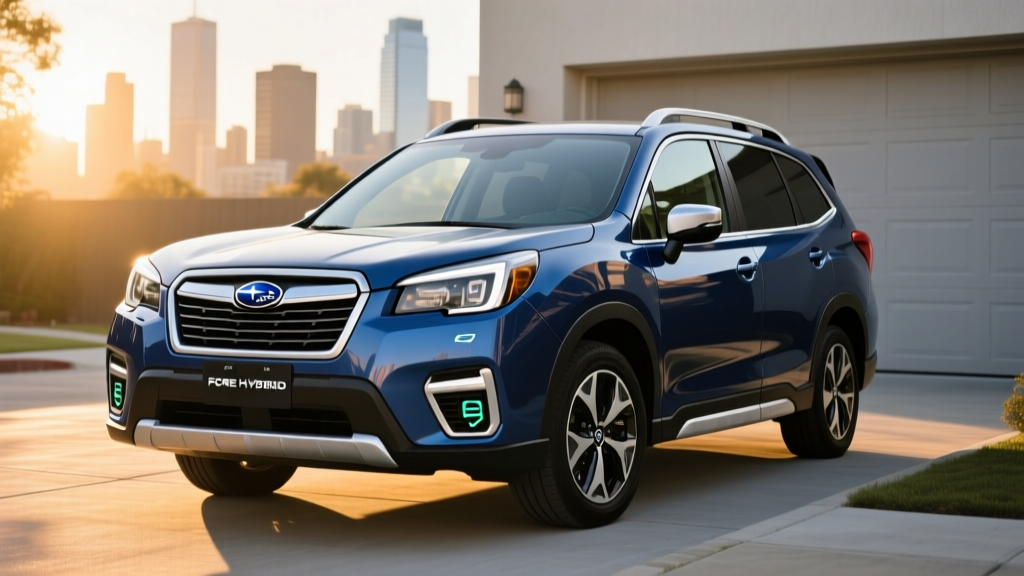
The 2026 Subaru Forester Hybrid marks the nameplate's return to electrification after a multi-year hiatus. Unlike Subaru's earlier mild-hybrid attempts, this is a full parallel hybrid (HEV) paired with Subaru's signature symmetrical all-wheel drive. It doesn't plug in, doesn't offer electric-only driving, and doesn't chase EV-level efficiency — but it does deliver a meaningful MPG bump over the gas-only Forester without asking buyers to change their refueling habits.
For 2026, Subaru positions the Forester Hybrid squarely between the standard Forester and the all-electric Solterra. It's aimed at AWD-loyal buyers who want better fuel economy but aren't ready — or able — to charge at home. Here's everything you need to know about specs, real-world efficiency, pricing, and how it stacks up against PHEVs and full EVs.
2026 Forester Hybrid: Key Specifications at a Glance
| Spec | 2026 Subaru Forester Hybrid |
|---|---|
| Powertrain Type | Parallel Hybrid (HEV) — no plug-in |
| Engine | 2.5L 4-cylinder BOXER + electric motor |
| Combined Horsepower | ~194 hp (combined system output) |
| Drivetrain | Symmetrical AWD (standard) |
| Transmission | Lineartronic CVT |
| EPA MPG (City / Hwy / Combined) | 40 / 37 / 39 MPG |
| Hybrid Battery | ~1.1 kWh lithium-ion (self-charging) |
| Towing Capacity | 1,500 lbs |
| Cargo Volume (behind rear seats) | ~28.9 cu ft |
| Starting MSRP | $36,495 (Hybrid Premium trim) |
| Hybrid Battery Warranty | 8 years / 100,000 miles |
Source: Subaru and fueleconomy.gov. Specifications reflect 2026 model-year data. Final EPA figures may vary by trim and option package.
Fuel Economy: EPA Estimates vs. Real-World MPG
The headline number for the 2026 Forester Hybrid is 39 MPG combined (40 city / 37 highway) according to the EPA. That's a substantial improvement over the gas-only 2026 Forester, which rates at 29 MPG combined (26 city / 33 highway).
Hybrids typically exceed their EPA city estimate in stop-and-go traffic, where regenerative braking recaptures the most energy. Expect the Forester Hybrid to deliver 42–45 MPG in city driving under moderate conditions. Highway driving is less favorable — at sustained 70–75 mph speeds, aerodynamic drag dominates and the electric motor provides minimal assist. Plan on 34–36 MPG on the highway, especially with AWD engaged on wet or snowy roads. In cold weather (below 30°F), expect a 5–10% drop across the board as the engine runs more frequently to heat the cabin and maintain battery temperature.
The Forester Hybrid's advantage over the gas model is most pronounced in city driving, where the electric motor handles low-speed propulsion and the engine shuts off at stops. Highway efficiency gains are more modest — roughly 4 MPG — because the 2.5L BOXER engine still does most of the work at cruising speeds.
Hybrid vs. PHEV vs. EV: Which Powertrain Fits You?
Subaru's 2026 lineup spans three electrification philosophies. Here's how the Forester Hybrid compares to a plug-in hybrid (PHEV) and a full battery-electric vehicle (BEV) like the Solterra:
| Factor | Forester Hybrid (HEV) | Typical Compact SUV PHEV | Subaru Solterra (BEV) |
|---|---|---|---|
| Plug-in Required? | No — gas only | Yes — 120V or 240V | Yes — Level 2 or DC fast |
| Electric-Only Range | None | 25–38 miles | 222 miles (EPA) |
| Fuel / Energy Cost per Mile | ~$0.11 (gas at $3.50/gal) | ~$0.04 (electric) / ~$0.11 (gas) | ~$0.04–$0.06 (electric) |
| AWD Availability | Standard | Varies by model | Standard |
| Home Charging Needed? | No | Recommended | Essential |
| Federal Tax Credit (§30D) | Not eligible | Up to $7,500 (if eligible) | Up to $7,500 (if eligible) |
| Upfront Price Premium vs. Gas | ~$3,000–$4,000 | ~$6,000–$10,000 | ~$10,000+ |
Choose the Forester Hybrid (HEV) if: You want better fuel economy with zero lifestyle change. No charging, no range planning, no plug. You live somewhere cold, drive in mixed conditions, and value AWD. You don't have reliable home charging access.
Choose a PHEV (like the Toyota RAV4 Prime) if: You can charge at home and most daily trips are under 35 miles. You want electric-only commuting with the safety net of a gas engine for road trips. You may qualify for the §30D federal tax credit, which significantly narrows the price gap.
Choose a full EV (like the Solterra) if: You have home Level 2 charging, your daily commute fits within ~180 miles round-trip, and you want the lowest per-mile operating cost. You're willing to plan around DC fast-charging stops on longer road trips.
Powertrain and Driving Dynamics
The 2026 Forester Hybrid pairs Subaru's 2.5-liter naturally aspirated BOXER four-cylinder engine with an electric motor integrated into the Lineartronic CVT. Combined system output is approximately 194 horsepower. The hybrid system uses a compact lithium-ion battery pack (~1.1 kWh) mounted under the cargo floor, preserving the Forester's standard cargo volume of roughly 28.9 cubic feet behind the rear seats.
This is a conventional parallel hybrid, meaning the engine and motor can drive the wheels independently or together. The electric motor provides torque fill at low RPMs, smoothing out the CVT's typical rubber-band feel during acceleration. The result is a more responsive launch from stoplights and quieter operation in parking lots, where the vehicle can creep short distances on electric power alone — though this is not sustained EV-mode driving.
Subaru's symmetrical AWD remains standard, distributing torque front-to-rear via the CVT. The hybrid system adds negligible weight compared to the gas Forester (~100 lbs), so handling and ride quality are virtually unchanged. Ground clearance holds at 8.7 inches, maintaining the Forester's reputation for light off-road competence.
Pricing, Trims, and Tax Credit Eligibility
The 2026 Forester Hybrid is offered in two trims:
- Hybrid Premium: Starting at $36,495 (including destination). Adds hybrid-specific badging, LED fog lights, and the 11.6-inch infotainment display.
- Hybrid Sport: Starting at $39,495. Adds sport-tuned suspension, unique 18-inch wheels, and heated front seats.
For comparison, the gas-only 2026 Forester Premium starts at $32,495, making the hybrid a roughly $4,000 premium. At current gas prices (~$3.50/gallon) and 12,000 miles per year, the 10 MPG combined advantage saves approximately $365 per year in fuel. That means the hybrid premium pays for itself in roughly 11 years on fuel savings alone — or sooner if gas prices rise or you drive more than average.
The Forester Hybrid is a conventional hybrid (HEV), not a plug-in vehicle. Under IRS §30D rules, only plug-in electric vehicles (PHEVs and BEVs) with sufficient battery capacity qualify for the federal clean vehicle credit. The Forester Hybrid does not qualify for the $7,500 federal credit or the point-of-sale transfer option. Some states may offer minor incentives for hybrid purchases — check your state energy office for current programs.
Hybrid Battery Warranty and Long-Term Reliability
Subaru backs the Forester Hybrid's lithium-ion battery pack with an 8-year / 100,000-mile warranty (10 years / 150,000 miles in California and states that follow CARB emissions standards). This covers battery capacity loss below a defined threshold, typically 60–70% of original capacity, as well as defects in the hybrid control system, inverter, and electric motor.
If the hybrid battery fails outside warranty, replacement cost is estimated at $2,500–$4,000 (parts and labor) based on comparable Toyota and Honda hybrid systems. However, modern lithium-ion hybrid batteries are designed for the life of the vehicle. Toyota's Prius fleet — the most data-rich hybrid population — shows battery failure rates below 5% at 150,000 miles. Subaru's smaller battery pack (~1.1 kWh vs. the Prius's ~1.3 kWh) undergoes shallower charge/discharge cycles, which further reduces degradation stress. Realistically, most owners will never need a hybrid battery replacement.
Subaru's overall reliability record is strong, with the Forester consistently earning above-average marks from Consumer Reports and Top Safety Pick+ ratings from the IIHS. The hybrid system adds complexity, but its components (motor, inverter, battery) are well-proven across the industry.
Who Should Buy the 2026 Forester Hybrid?
✔ Pros
- 39 MPG combined — best in the Forester lineup
- Standard AWD with no efficiency penalty vs. FWD competitors
- No plug-in charging required — works with existing gas-station habits
- Strong city MPG (40 EPA, often 42+ real-world)
- Proven Subaru safety and reliability record
- Preserves cargo space and ground clearance
✘ Cons
- Not eligible for federal §30D tax credit
- Highway MPG gains are modest (~4 MPG over gas model)
- $4,000 price premium with an 11-year fuel payback
- No electric-only driving mode
- Towing limited to 1,500 lbs (same as gas Forester)
- CVT can drone under hard acceleration
The Forester Hybrid is the right choice for buyers who want all-weather AWD capability, don't have access to home charging, and drive a mix of city and highway miles. It's especially compelling for cold-climate owners — hybrid efficiency degrades far less in winter than EV range does, and you never have to worry about charging infrastructure in rural or mountain areas.
It's the wrong choice if you're chasing maximum fuel savings (a PHEV with daily charging will save more), if you want electric-only commuting, or if you were counting on the $7,500 federal tax credit to offset a price premium.
Frequently Asked Questions
How many MPG does the 2026 Forester Hybrid get?
The EPA rates the 2026 Forester Hybrid at 40 MPG city, 37 MPG highway, and 39 MPG combined. In real-world city driving with frequent stops, many owners will see 42–45 MPG. Highway driving at 70+ mph typically yields 34–36 MPG.
Does the Forester Hybrid need to be plugged in?
No. The Forester Hybrid is a conventional hybrid (HEV). It charges its small battery through regenerative braking and the gasoline engine. You fuel it exclusively at gas stations, just like a non-hybrid car.
Does the 2026 Forester Hybrid qualify for a federal tax credit?
No. Under current IRS §30D rules, only plug-in electric vehicles (PHEVs and BEVs) qualify for the federal clean vehicle credit. Conventional hybrids like the Forester Hybrid are not eligible. Some states may offer separate incentives — check your state's energy or environmental agency.
Is the Forester Hybrid reliable? What about battery replacement?
Subaru's hybrid components are well-proven, and the Forester carries a strong reliability record. The hybrid battery is warrantied for 8 years / 100,000 miles (10 years / 150,000 miles in CARB states). Out-of-warranty replacement is estimated at $2,500–$4,000, but failure rates for modern hybrid batteries are very low — most will outlast the vehicle.
How does the Forester Hybrid compare to the Toyota RAV4 Hybrid?
The 2026 RAV4 Hybrid rates at 40 MPG combined (41 city / 38 highway) with AWD — nearly identical to the Forester Hybrid's 39 combined. The RAV4 Hybrid starts slightly lower (~$34,000) and offers a broader trim range. The Forester Hybrid counters with better visibility, more standard safety tech, and Subaru's X-Mode for off-road traction. Both are excellent choices; the decision often comes down to brand preference and dealer experience.
Should I get the Forester Hybrid or wait for a Forester PHEV?
Subaru has not announced a Forester PHEV as of the 2026 model year. If you need plug-in electric range now, look at the Toyota RAV4 Prime (42 miles EV range) or Hyundai Tucson PHEV (33 miles). If Subaru's AWD system and safety record are non-negotiable, the Forester Hybrid is currently the most efficient option in the lineup.