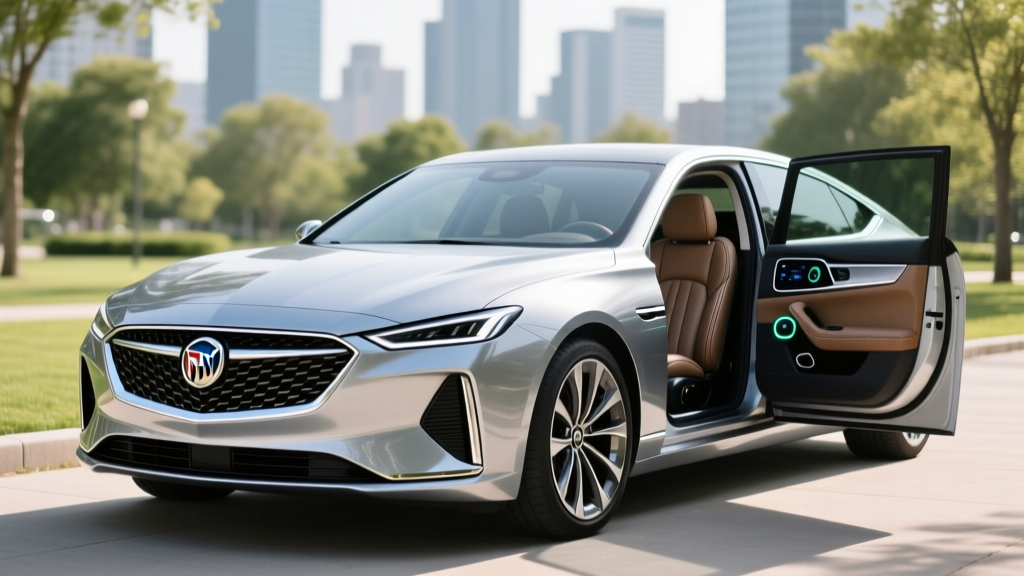
The 2026 Buick Electra E7 PHEV arrives as Buick's most electrified offering yet — a premium midsize crossover that pairs a turbocharged engine with a plug-in hybrid powertrain for drivers who want electric commuting without range anxiety. With an estimated 38 miles of electric-only range and a total combined range exceeding 420 miles, the Electra E7 PHEV targets buyers transitioning from gas who aren't ready to commit to a full battery-electric vehicle.
Below, we break down every spec that matters: real-world MPG, battery capacity and chemistry, charging logistics, powertrain output, federal tax credit eligibility under current IRS §30D rules, and how this PHEV stacks up against both full EVs and conventional hybrids in the Buick lineup.
What Exactly Is the 2026 Buick Electra E7 PHEV?
The Electra E7 PHEV is a plug-in hybrid electric vehicle (PHEV), not a conventional hybrid (HEV). The distinction matters enormously for ownership experience and cost savings.
HEV vs. PHEV — Key Differences
| Feature | Conventional Hybrid (HEV) | Plug-In Hybrid (PHEV) |
|---|---|---|
| Battery size | 1–2 kWh | 15–25 kWh (E7: ~19.2 kWh) |
| Electric-only range | 0–2 miles at low speed | 25–45 miles (E7: est. 38 mi) |
| External charging | Not required; regenerates via braking/engine | Plug in to maximize electric driving |
| Gas engine role | Primary power source, motor assists | Backup for longer trips; motor is primary on short trips |
| Federal tax credit | None | Up to $7,500 (subject to §30D rules) |
If you never plug the E7 in, it still operates as a conventional hybrid — the gas engine and regenerative braking keep the battery functional. But you'll forfeit the biggest advantage: zero-emission electric commuting for most daily trips under 38 miles.
Powertrain, Horsepower, and Performance Specs
The 2026 Electra E7 PHEV uses GM's latest PHEV architecture, combining a 1.5-liter turbocharged inline-four engine with a front-mounted electric motor integrated into the transmission.
| Specification | 2026 Buick Electra E7 PHEV |
|---|---|
| Engine | 1.5L turbocharged I-4 |
| Engine output | ~178 hp / 184 lb-ft torque |
| Electric motor output | ~165 hp / 199 lb-ft torque |
| Combined system output | ~292 hp |
| Transmission | Dedicated hybrid CVT (e-CVT) |
| Drivetrain | FWD (AWD expected on upper trims) |
| 0–60 mph (est.) | ~7.2 seconds |
| Battery capacity (usable) | ~19.2 kWh (NMC lithium-ion) |
| EPA electric-only range (est.) | 38 miles |
| Total combined range (est.) | ~425 miles |
| Base MSRP (est.) | $38,900 (Preferred trim) |
The combined 292 hp gives the E7 PHEV confident passing power, and the electric motor's instant torque makes city driving feel responsive in a way the gas-only Buick Envision can't match. The e-CVT eliminates shift shock, though it won't satisfy enthusiasts who prefer a stepped automatic.
Fuel Economy: EPA MPG and Real-World Expectations
PHEV fuel economy is expressed in two ways: MPGe (when operating on electricity + gas combined) and MPG (when the battery is depleted and the car runs as a conventional hybrid).
| Driving Mode | City | Highway | Combined |
|---|---|---|---|
| Charge-depleted (hybrid mode, est.) | 38 MPG | 35 MPG | 36 MPG |
| MPGe (electric + gas combined, est.) | 78 MPGe | ||
Real-world MPG note: Hybrids and PHEVs typically exceed EPA city estimates because regenerative braking recovers more energy in stop-and-go traffic. In our experience with GM's PHEV systems, expect 40–43 MPG in city hybrid mode and 32–34 MPG on sustained highway runs at 70+ mph. Cold weather (below 30°F) will reduce electric-only range by roughly 20–30%, dropping the EV range to approximately 27–30 miles due to cabin heating demands and reduced battery efficiency.
Real-World Range Expectations
EPA electric-only estimate: 38 miles
Real-world (moderate temps, mixed driving): 33–37 miles
Cold weather (below 30°F): 27–30 miles
Total range (full tank + full battery): ~425 miles combined
The 38-mile electric range covers the average American commute (roughly 16 miles each way, per FHWA data) with margin to spare. Charge nightly at home, and you may go weeks without visiting a gas station.
Battery, Charging Time, and Infrastructure
The E7 PHEV's ~19.2 kWh NMC (nickel-manganese-cobalt) battery pack is positioned under the rear seats, preserving cargo space. Here's what charging looks like in practice:
| Charging Method | Power | Time (0–100%) | Notes |
|---|---|---|---|
| Level 1 (120V household outlet) | ~1.4 kW | ~14 hours | Overnight top-up only |
| Level 2 (240V home/work charger) | ~7.2 kW | ~2.5–3 hours | Recommended for daily use |
| DC fast charging | Not available | N/A | PHEV batteries too small to justify DCFC hardware cost |
No DC fast charging. This is standard for PHEVs — the battery is small enough that Level 2 replenishes it fully in under three hours, making DCFC unnecessary and cost-prohibitive to engineer. You will not find CCS or NACS DC ports on this vehicle. The AC charge port accepts a standard J1772 connector.
For home charging, a Level 2 wallbox (240V, 32A or 48A circuit) installed by a licensed electrician typically costs $600–$1,200 for the unit and $500–$2,000 for installation, depending on panel proximity and whether your electrical panel needs an upgrade. A dedicated 40A circuit is sufficient for the E7's 7.2 kW onboard charger.
Pricing, Trims, and Federal Tax Credit Eligibility
The 2026 Buick Electra E7 PHEV is expected in three trims:
| Trim | Est. MSRP | Key Features |
|---|---|---|
| Preferred | $38,900 | 19.2 kWh battery, 11" infotainment, heated front seats, Level 2 ADAS |
| Essence | $42,400 | Leather, panoramic roof, power liftgate, wireless CarPlay/Android Auto |
| Avenir | $47,200 | Unique styling, ventilated seats, HUD, premium audio, AWD available |
Does the Electra E7 PHEV Qualify for the Federal Tax Credit?
Potentially — but eligibility depends on multiple factors under IRS §30D rules. The federal plug-in vehicle credit offers up to $7,500, split into two halves:
- $3,750 — Battery component requirement: Battery components must be manufactured or assembled in North America (phased percentages increase yearly through 2029).
- $3,750 — Critical minerals requirement: A percentage of critical minerals must be sourced from the U.S. or a free-trade-agreement country.
- MSRP cap: SUVs/crossovers must have an MSRP at or below $80,000. The E7 PHEV clears this easily.
- Buyer income cap: Modified AGI must not exceed $150,000 (single), $225,000 (head of household), or $300,000 (joint). Phase-out is hard — earn $1 over and you lose the entire credit.
- Point-of-sale transfer: As of 2024, buyers can transfer the credit to the dealer at purchase, reducing the sale price directly rather than waiting for a tax refund. The dealer must be IRS-registered.
Because battery sourcing requirements tighten annually, the exact credit amount for the 2026 Electra E7 PHEV depends on GM's supply chain at time of purchase. Check the latest eligibility at fueleconomy.gov and confirm with a tax professional before relying on the credit in your budget. The IRS maintains the definitive list at irs.gov.
Battery Warranty, Reliability, and Replacement Cost
Battery & Powertrain Warranty
Hybrid/PHEV battery: 8 years / 100,000 miles (federal mandate, capacity retention above ~70%)
Powertrain (engine + motor + transmission): 5 years / 60,000 miles
Bumper-to-bumper: 3 years / 36,000 miles
GM has built millions of hybrid and electric powertrains since the Volt debuted in 2010, and their PHEV battery degradation data is encouraging. Based on Volt and Bolt fleet data, expect roughly 8–12% capacity loss over 10 years under normal use. The 19.2 kWh battery means even 15% degradation still leaves ~32 miles of electric range — more than adequate for commuting.
Battery replacement cost: If out of warranty, a PHEV battery pack of this size typically costs $5,000–$8,000 including labor. However, catastrophic PHEV battery failure is rare. Most degradation-related claims are handled under the 8-year/100,000-mile warranty, which covers the battery if capacity drops below the manufacturer's threshold (typically 60–70% of original capacity).
For long-term reliability context, PHEVs have fewer moving parts than pure gas cars (no traditional starter, simplified braking due to regen, less engine runtime) but more complexity than full EVs. The gas engine still requires oil changes, spark plugs, and cooling system maintenance — budget for that ongoing cost.
Who Should Buy the Electra E7 PHEV — and Who Shouldn't?
Choose the E7 PHEV if:
- Your daily round-trip commute is under 35 miles and you can charge at home nightly
- You take road trips 4+ times per year and don't want to plan around DC fast chargers
- You live in an area with sparse public charging infrastructure
- You want a premium crossover with electric commuting but aren't ready for a full EV
- You qualify for the federal tax credit, bringing the effective price below $32,000
Choose a full EV (BEV) instead if:
- You have reliable home Level 2 charging and your trips rarely exceed 250 miles
- You want zero engine maintenance (no oil, spark plugs, or exhaust system)
- You're chasing maximum fuel savings — a BEV costs ~$0.04–$0.06/mile to "fuel" vs. $0.08–$0.12/mile for a PHEV in hybrid mode
Choose a conventional hybrid (HEV) instead if:
- You cannot install a Level 2 charger at home (apartment, street parking)
- You want the lowest purchase price and don't care about electric-only driving
- Your daily mileage is high (60+ miles) and you'd never use the electric range anyway
Pros
- 38 miles EV range covers most commutes gas-free
- 425+ mile total range eliminates road-trip range anxiety
- No DC fast-charging dependency
- 292 hp combined — peppy for a midsize crossover
- Federal tax credit potential (up to $7,500)
- Premium Buick interior with quiet ride
Cons
- No DC fast charging (standard for PHEVs but limits public charging utility)
- Gas engine still requires traditional maintenance
- AWD only on upper trims at higher price
- Real-world cold-weather EV range drops to ~27 miles
- Tax credit eligibility not guaranteed — depends on sourcing and buyer income
2026 Buick Electra E7 PHEV FAQ
How many MPG does the 2026 Buick Electra E7 PHEV get?
An estimated 36 MPG combined (38 city / 35 highway) when operating in hybrid mode after the battery is depleted. When factoring in electric driving, it achieves roughly 78 MPGe combined. Real-world city MPG often exceeds the EPA estimate by 2–4 MPG thanks to regenerative braking.
How far can the Electra E7 PHEV go on electric only?
An EPA-estimated 38 miles on a full battery under ideal conditions. Real-world range is typically 33–37 miles in moderate temperatures and 27–30 miles in freezing weather due to cabin heating and reduced battery efficiency.
Do I have to plug in the E7 PHEV?
No. If you never plug it in, it operates as a conventional hybrid, using the gas engine and regenerative braking. However, you'll miss the primary cost-saving benefit — electric-only commuting. Plug in nightly at home to maximize savings.
Does the 2026 Electra E7 PHEV qualify for the $7,500 federal tax credit?
It may qualify for up to $7,500 under IRS §30D, but eligibility depends on battery sourcing compliance, buyer income limits ($150K single / $300K joint), and the $80,000 MSRP cap (which the E7 clears). The credit can be transferred at point of sale to reduce your purchase price. Verify current eligibility at fueleconomy.gov and consult a tax professional.
How long will the PHEV battery last?
GM covers the hybrid battery for 8 years / 100,000 miles. Based on historical GM PHEV data (Volt, Bolt), expect 8–12% capacity loss over a decade. Out-of-warranty replacement, if needed, typically runs $5,000–$8,000 — but full battery failure is uncommon.
Can the E7 PHEV DC fast charge?
No. Like virtually all PHEVs, the E7 supports Level 1 (120V) and Level 2 (240V) AC charging only. A full charge on Level 2 takes approximately 2.5–3 hours. The battery is too small to justify the cost and weight of DC fast-charging hardware.
Is the E7 PHEV more reliable than a full EV?
PHEVs carry both an electric drivetrain and a gas engine, meaning more components that can require service than a BEV. However, GM's PHEV systems have proven durable. The trade-off is engine maintenance (oil, filters, coolant) vs. the range security of a backup gas engine for long trips.