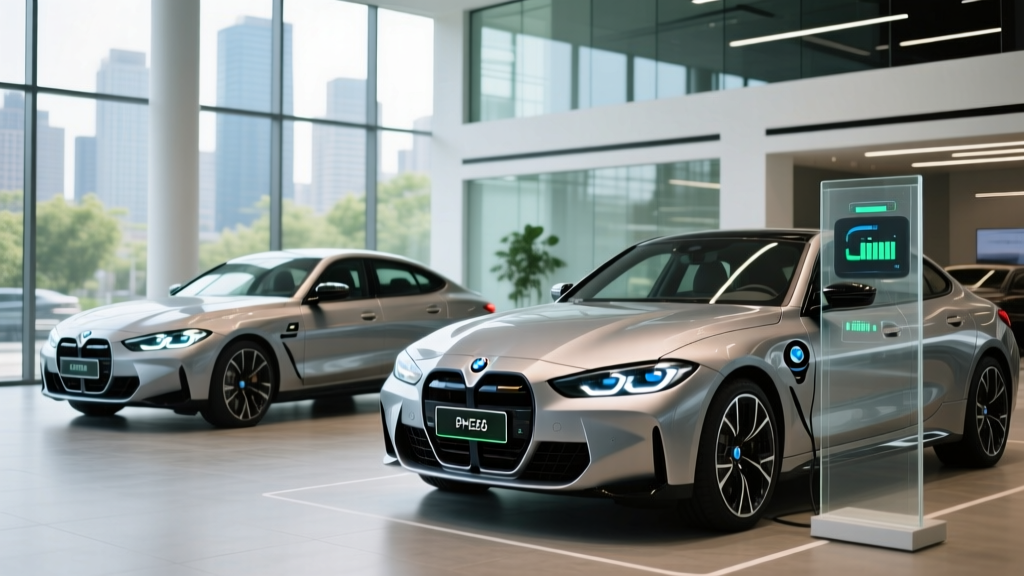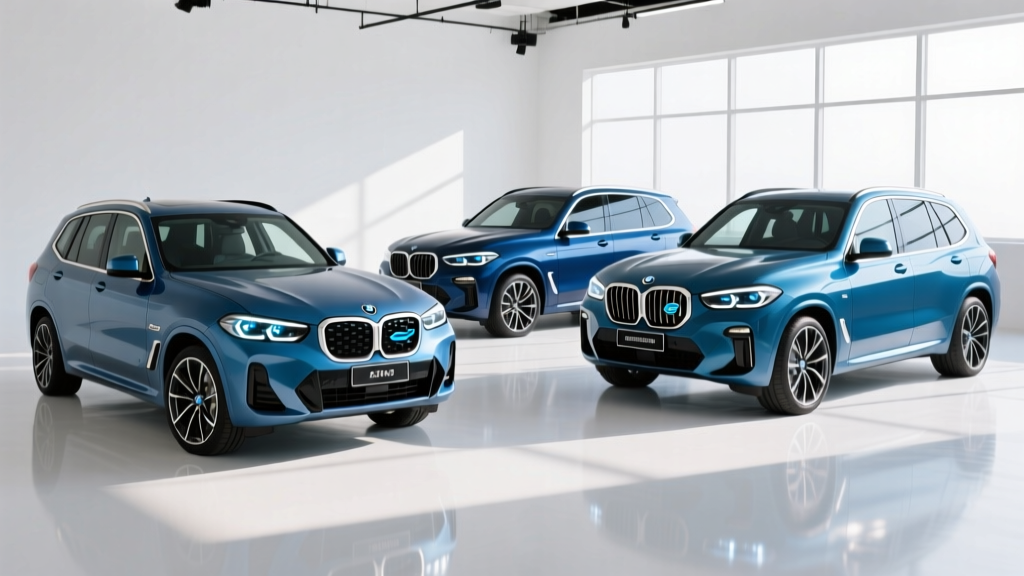
If you want BMW performance without committing to a full battery-electric vehicle, the automaker's 2026 plug-in hybrid (PHEV) SUV lineup offers a practical middle ground. These models pair turbocharged engines with electric motors and usable battery packs that deliver real electric-only commuting range. But with three distinct options — the compact X3 xDrive30e, the midsize X5 xDrive50e, and the high-performance XM — choosing the right one requires understanding the exact trade-offs in range, efficiency, charging, and price.
This guide breaks down every current BMW plug-in hybrid SUV with the numbers that matter: EPA-estimated MPG and MPGe, electric-only range, battery capacity in kWh, charging times, combined horsepower, and federal tax credit eligibility under current IRS §30D rules.
HEV vs PHEV: What BMW Actually Offers in 2026
Before diving into specs, it's worth clarifying what BMW sells in the US market. BMW does not currently offer a conventional hybrid (HEV) SUV in the United States — models like the X3 or X5 do not come in a Toyota-style self-charging hybrid variant. Every electrified BMW SUV stateside is a plug-in hybrid (PHEV), meaning it has a larger battery you charge from a wall outlet or charger, and it can drive on electricity alone for a meaningful distance before the gas engine takes over.
| Feature | Conventional Hybrid (HEV) | Plug-In Hybrid (PHEV) |
|---|---|---|
| Plugs in to charge? | No — charges via regenerative braking and engine | Yes — via Level 1 or Level 2 charging |
| Electric-only range | 0–2 miles at low speed | 20–40+ miles at highway speeds |
| Battery size | ~1–2 kWh | ~19–29 kWh (usable) |
| Federal tax credit | Generally not eligible | Up to $7,500 if §30D requirements met |
| Example | Toyota RAV4 Hybrid | BMW X5 xDrive50e |
If you see a BMW SUV badge that ends in "e" (like xDrive50e), it's a PHEV. That means you will need access to a plug — ideally a Level 2 home charger — to get the full efficiency and electric-range benefit.
2026 BMW X3 xDrive30e: The Entry PHEV
The redesigned X3 xDrive30e is BMW's most accessible plug-in hybrid SUV, built on the latest-generation X3 platform. It pairs a 2.0-liter turbocharged four-cylinder engine with an electric motor integrated into the transmission, sending combined power to all four wheels via xDrive.
| Spec | 2026 BMW X3 xDrive30e |
|---|---|
| Combined Horsepower | 292 hp |
| Engine | 2.0L turbo I4 + electric motor |
| Battery (usable) | ~19.7 kWh (NMC lithium-ion) |
| EPA Electric-Only Range | ~35 miles |
| EPA Combined MPGe (electric + gas) | ~68 MPGe |
| EPA MPG (gas-only, combined) | ~28 MPG combined (26 city / 31 highway) |
| Total Combined Range | ~420 miles |
| AC Charging (Level 2) | 7.4 kW max — 0–100% in ~3.25 hours |
| DC Fast Charging | Not available |
| 0–60 mph | 6.0 seconds |
| Starting MSRP | ~$52,400 (including destination) |
The X3 xDrive30e does not support DC fast charging — a limitation shared with most compact PHEVs. For daily use, a home Level 2 charger at 7.4 kW replenishes the battery fully in just over three hours, which is more than adequate for overnight charging.
2026 BMW X5 xDrive50e: The Sweet-Spot PHEV SUV
The X5 xDrive50e is the volume leader in BMW's PHEV SUV lineup and arguably the most compelling. It replaces the older xDrive45e with a larger battery, more power, and improved electric range. The inline-six engine is a hallmark of the X5 line, and here it teams with a more potent electric motor.
| Spec | 2026 BMW X5 xDrive50e |
|---|---|
| Combined Horsepower | 483 hp |
| Engine | 3.0L turbo I6 + electric motor |
| Battery (usable) | ~25.7 kWh (NMC lithium-ion) |
| EPA Electric-Only Range | ~38 miles |
| EPA Combined MPGe (electric + gas) | ~56 MPGe |
| EPA MPG (gas-only, combined) | ~24 MPG combined (22 city / 27 highway) |
| Total Combined Range | ~440 miles |
| AC Charging (Level 2) | 7.4 kW max — 0–100% in ~4 hours |
| DC Fast Charging | Not available |
| 0–60 mph | 4.6 seconds |
| Starting MSRP | ~$74,900 (including destination) |
According to fueleconomy.gov, the X5 xDrive50e achieves its best efficiency when you regularly charge and use the electric range for daily commuting. Once the battery depletes, the inline-six and 8-speed automatic deliver a respectable 24 MPG combined — not class-leading for a hybrid, but competitive for a luxury midsize SUV of this weight and power.
2026 BMW XM: The Performance PHEV
The XM is BMW's standalone M-performance PHEV — a large, aggressive, polarizing SUV built for power first and efficiency second. It uses a twin-turbo V8 paired with an electric motor, delivering supercar-rivaling output in a luxury SUV package.
| Spec | 2026 BMW XM |
|---|---|
| Combined Horsepower | 644 hp (base) / 738 hp (Label Red) |
| Engine | 4.4L twin-turbo V8 + electric motor |
| Battery (usable) | ~25.7 kWh (NMC lithium-ion) |
| EPA Electric-Only Range | ~31 miles |
| EPA Combined MPGe | ~46 MPGe |
| EPA MPG (gas-only, combined) | ~18 MPG combined |
| Total Combined Range | ~360 miles |
| AC Charging (Level 2) | 7.4 kW max — 0–100% in ~4 hours |
| DC Fast Charging | Not available |
| 0–60 mph | 4.1 sec (base) / 3.7 sec (Label Red) |
| Starting MSRP | ~$160,000 (base) / ~$185,000 (Label Red) |
The XM's electric range is the shortest in the lineup, and its gas-only MPG is the lowest. This is not an efficiency play — it's a performance SUV that happens to offer silent electric motoring around town. Buyers here are cross-shopping the Porsche Cayenne Turbo E-Hybrid and Mercedes-AMG GLE 63 S E Performance.
Side-by-Side: Which BMW PHEV SUV Fits You?
| Attribute | X3 xDrive30e | X5 xDrive50e | XM |
|---|---|---|---|
| Electric Range | ~35 mi | ~38 mi | ~31 mi |
| Combined HP | 292 | 483 | 644–738 |
| Gas MPG (combined) | 28 | 24 | 18 |
| 0–60 mph | 6.0s | 4.6s | 3.7–4.1s |
| Battery (usable kWh) | 19.7 | 25.7 | 25.7 |
| Level 2 Charge Time | ~3.25 hr | ~4 hr | ~4 hr |
| MSRP (from) | $52,400 | $74,900 | $160,000 |
| Cargo (rear seats up) | ~28 cu ft | ~33 cu ft | ~27 cu ft |
Federal Tax Credit Eligibility for BMW PHEVs
Federal tax credits for plug-in hybrids fall under IRS §30D, the same Clean Vehicle Credit that covers full EVs. However, eligibility depends on battery sourcing, critical minerals content, MSRP caps, and buyer income limits — all of which are subject to change. Here's the current framework:
- MSRP Cap: SUVs must have an MSRP at or below $80,000 to qualify. This eliminates the XM entirely and most well-optioned X5 xDrive50e builds.
- Buyer Income Cap: Modified adjusted gross income must not exceed $150,000 (single), $225,000 (head of household), or $300,000 (joint filers).
- Battery Sourcing: The battery's critical minerals and components must meet phased-in domestic/free-trade-partner sourcing thresholds. BMW's supply chain has been adjusting, but not all PHEV builds may qualify for the full $7,500.
- Point-of-Sale Transfer: Eligible buyers can transfer the credit to the dealer at purchase, reducing the purchase price directly rather than waiting for a tax refund.
- Credit Amount for PHEVs: PHEVs with batteries ≥7 kWh can qualify for up to $7,500, split between a $3,750 battery component credit and a $3,750 critical minerals credit. Meeting only one requirement yields $3,750.
The X3 xDrive30e, with an MSRP around $52,400, clears the price cap easily and is the strongest candidate for a partial or full credit. A base X5 xDrive50e at ~$74,900 also qualifies on price, but options packages can push it over $80,000. Always verify current eligibility on fueleconomy.gov and consult a tax professional, as IRS rules and manufacturer sourcing compliance shift periodically. See IRS.gov §30D guidance for the latest requirements.
Battery Warranty, Reliability, and Replacement Costs
PHEV batteries are smaller than full-EV packs and typically experience less stress because they operate in a narrower state-of-charge window — BMW's battery management system maintains a buffer at the top and bottom to reduce degradation. The NMC chemistry used in BMW's PHEV batteries is well-established, and real-world degradation data from earlier-generation BMW PHEVs (like the X5 xDrive45e) suggests most packs retain 90%+ capacity after five years of normal use.
If you do face an out-of-warranty battery replacement, expect costs in the range of $8,000–$14,000 depending on the model, including parts and labor. This is significantly less than a full-EV battery replacement because the PHEV packs are smaller. For most owners who trade or sell within the warranty period, this is a non-issue.
BMW's overall reliability ratings have improved in recent years, though the brand typically lands mid-pack in J.D. Power and Consumer Reports rankings. The PHEV powertrain adds complexity (two power sources, power electronics, charging hardware) compared to a conventional gas SUV, but the electric motor and battery have far fewer moving parts than a traditional transmission or turbocharger.
Who Should Buy a BMW PHEV vs a Full EV or Gas SUV?
Choose a BMW PHEV if:
- Your daily commute is under 35–40 miles and you can charge at home overnight
- You take regular road trips where charging infrastructure is sparse or unreliable
- You want electric-around-town driving without range anxiety on long drives
- You're not ready to commit to a full EV but want to reduce fuel consumption
Choose a full EV (like the BMW iX) if:
- You have reliable home Level 2 charging and your daily driving is under 250 miles
- You want zero tailpipe emissions and minimal maintenance (no oil changes, no engine)
- You want access to the full $7,500 federal tax credit without PHEV sourcing ambiguities
Choose a gas-only SUV if:
- You cannot charge at home or at work (apartment, street parking)
- Your annual mileage is very low and the PHEV price premium won't pay back in fuel savings
- You prefer the simplest possible ownership experience with no charging cables or apps
- 30–38 miles of silent, zero-emission electric commuting
- No range anxiety — gas engine for road trips
- Strong combined horsepower and smooth power delivery
- Lower fuel cost if you charge regularly
- Eligible for partial or full federal tax credit (model-dependent)
- No DC fast charging on any BMW PHEV
- Higher MSRP than gas-only equivalents
- Must plug in nightly to realize efficiency gains
- Added powertrain complexity vs pure EV or pure gas
- XM's poor gas MPG and extreme price limit practicality
Frequently Asked Questions
How many MPG does a BMW plug-in hybrid SUV get?
It depends on the model and whether the battery is charged. With a depleted battery (gas-only driving), the X3 xDrive30e returns about 28 MPG combined, the X5 xDrive50e about 24 MPG combined, and the XM about 18 MPG combined. When the battery is charged and you're driving within the electric range, MPGe figures jump to 46–68 MPGe. The key to PHEV efficiency is charging regularly — a PHEV you never plug in is just a heavier, more expensive gas car.
How far can a BMW PHEV SUV go on electric only?
The 2026 X3 xDrive30e delivers approximately 35 miles of EPA-estimated electric-only range, the X5 xDrive50e about 38 miles, and the XM about 31 miles. Real-world range varies with temperature, speed, and terrain — expect 25–32 miles in cold weather or sustained highway driving, and potentially 1–3 miles more than EPA in mild city conditions.
Do BMW PHEV SUVs support DC fast charging?
No. None of BMW's current PHEV SUVs (X3, X5, or XM) support DC fast charging. All three accept Level 2 AC charging at up to 7.4 kW, which fully replenishes the battery in roughly 3.25 to 4 hours. For PHEVs with 20–26 kWh batteries, this is generally sufficient since you're charging overnight at home, not mid-road-trip.
Is the BMW PHEV battery reliable and what does replacement cost?
BMW covers the high-voltage battery for 8 years or 80,000 miles with a 70% capacity retention guarantee. PHEV batteries are smaller and less stressed than full-EV packs, and real-world data suggests strong longevity. An out-of-warranty replacement runs approximately $8,000–$14,000 depending on the model — expensive, but far less than a full-EV battery swap.
Does a BMW plug-in hybrid SUV qualify for a tax credit?
Potentially yes, under the IRS §30D Clean Vehicle Credit. The X3 xDrive30e and base X5 xDrive50e are the strongest candidates, as both fall under the $80,000 SUV MSRP cap. The XM does not qualify due to its MSRP exceeding the cap. Eligibility also depends on your income, the battery's critical-mineral and component sourcing, and current-year IRS rules. The credit can be up to $7,500 and may be transferred to the dealer at point of sale. Always verify on fueleconomy.gov and consult a tax professional before purchasing.
Can I charge a BMW PHEV on a regular household outlet?
Yes, but slowly. Level 1 charging on a standard 120V outlet delivers roughly 1.4 kW, meaning a full charge takes 14–18 hours depending on battery size. For practical daily use, a 240V Level 2 home charger is strongly recommended — it cuts charge time to 3.25–4 hours and ensures you start every morning with a full battery.
What's the difference between the BMW X5 xDrive50e and the older xDrive45e?
The xDrive50e replaces the xDrive45e with a larger usable battery (~25.7 kWh vs ~21 kWh), more combined horsepower (483 vs 389), and slightly improved electric range. The powertrain still uses BMW's turbocharged inline-six, but the electric motor output has increased, and the overall system is more refined.