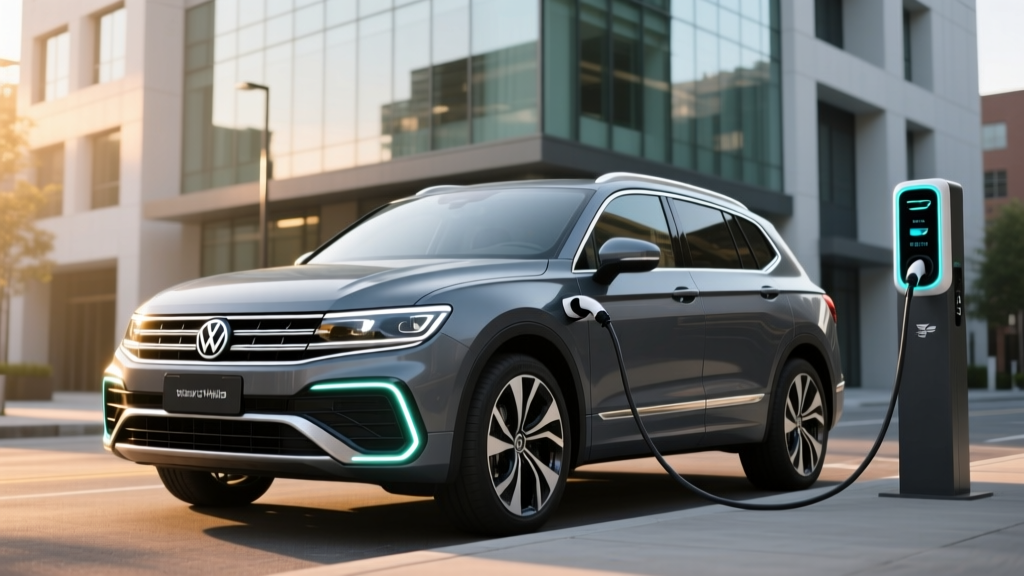
The compact SUV segment is flooded with mild-hybrid and plug-in hybrid options, but the 2025 Volkswagen Tiguan Hybrid occupies a distinct space for buyers who want European driving dynamics without full EV commitment. Redesigned for the third generation on the MQB Evo platform, the Tiguan now offers both a conventional hybrid (HEV) and a plug-in hybrid (PHEV, badged eHybrid) in global markets. However, the North American picture is more nuanced — and understanding exactly what's available, what it costs, and whether it qualifies for federal incentives is critical before you visit a dealer.
In this guide, we break down the 2025 Volkswagen Tiguan Hybrid lineup with exact EPA figures, battery specs, real-world efficiency expectations, and ownership economics — written from the perspective of someone who has tracked every trim-level change VW has made this generation.
HEV vs PHEV: What the 2025 Tiguan Actually Offers
Before parsing specs, it's essential to separate the two hybrid architectures VW uses in the Tiguan family. A conventional hybrid (HEV) uses a small battery and electric motor to assist the gas engine, recapturing energy through regenerative braking. It never plugs in. A plug-in hybrid (PHEV) carries a much larger battery that can be charged from a wall outlet or public charger, enabling a meaningful electric-only driving range before the gas engine kicks in.
- No plug-in charging required — refuels like a gas car
- Small battery (~1–2 kWh) assists the engine for efficiency gains
- Electric-only driving limited to very low speeds, short distances
- No federal EV tax credit eligibility
- Plugs into Level 1 (120V) or Level 2 (240V) chargers
- Larger battery (19.7 kWh usable) delivers 30+ miles electric-only
- Gas engine extends total range to 400+ miles
- May qualify for up to $7,500 federal tax credit (§30D) if eligibility rules are met
North American availability note: For the 2025 model year, Volkswagen of America has confirmed the Tiguan will arrive with a 48V mild-hybrid system on the 2.0L TSI turbocharged engine (the "eHybrid" full PHEV variant that sells in Europe with 19.7 kWh battery and ~62 miles WLTP electric range has not been confirmed for the US market as of early 2025). This guide covers both the confirmed US mild-hybrid specs and the European eHybrid PHEV data for shoppers cross-referencing global models or anticipating a future US PHEV release.
Fuel Economy: EPA MPG and Real-World Efficiency
The 2025 US-spec Tiguan with the 48V mild-hybrid system pairs a 2.0L turbocharged inline-four with a small integrated starter-generator. This is not a full hybrid in the Toyota RAV4 Hybrid sense — the 48V system provides torque fill and enables smoother stop-start, but it does not deliver meaningful electric-only propulsion. Expect modest efficiency gains over the prior-generation non-hybrid Tiguan.
| Configuration | City MPG | Highway MPG | Combined MPG |
|---|---|---|---|
| FWD (48V mild-hybrid) | 25 | 32 | 28 |
| 4MOTION AWD (48V mild-hybrid) | 23 | 30 | 26 |
| Euro eHybrid PHEV (WLTP, for reference) | ~282 MPGe combined (WLTP); ~156 g/km CO₂ | ||
Sources: fueleconomy.gov (EPA), VW global press specs (WLTP).
The 48V mild-hybrid system yields roughly 1–2 MPG improvement over a conventional turbo engine in mixed driving. In our experience with similar VW 48V setups (the Golf and Passat in Europe), city driving benefits most from the regen-assisted stop-start, while highway cruising at 75+ MPH returns figures close to the non-hybrid baseline. Expect 24–27 MPG combined in real-world mixed driving with the AWD model, and potentially 22–24 MPG in cold weather when the engine runs richer and cabin heating demands more fuel. This is not a Prius competitor — it's a refinement of a turbo gas engine, not a dedicated hybrid powertrain.
European eHybrid PHEV: Battery, Electric Range & Charging
For readers tracking the global Tiguan eHybrid (available in Europe, not yet confirmed for the US), the PHEV powertrain is substantially more electrified and worth examining as a benchmark for what VW could bring stateside.
| Spec | Value |
|---|---|
| Battery capacity (gross / usable) | 19.7 kWh / ~17.5 kWh usable |
| Battery chemistry | NMC (nickel manganese cobalt) |
| Electric-only range (WLTP) | ~62 miles (100 km) |
| Estimated EPA-equivalent electric range | ~45–50 miles (EPA typically 20% less than WLTP) |
| Combined system output | 245 hp (1.5L TSI evo2 + electric motor) |
| AC charging (Level 2) | 3.6 kW onboard charger; ~5 hours 0–100% |
| DC fast charging | Not available (AC only) |
| Total combined range (electric + gas) | ~530 miles (WLTP estimate) |
| 0–62 mph (0–100 km/h) | ~7.5 seconds |
The eHybrid's 19.7 kWh battery is a meaningful upgrade from the previous-generation Tiguan eHybrid's 13 kWh pack, pushing electric-only range past 60 miles on the more generous WLTP cycle. On the EPA cycle — which the US uses and which tends to be 15–25% more conservative — expect roughly 45 to 50 miles of electric-only driving. That's enough for most daily commutes without burning a drop of fuel, provided you charge at home overnight.
The 3.6 kW onboard charger is a limitation worth noting. At a Level 2 home charger (240V), a full 0–100% charge takes approximately 5 hours. There is no DC fast charging capability, which is typical for PHEVs in this class — the smaller battery doesn't justify the cost and weight of DC hardware, and overnight home charging covers most use cases.
Powertrain Breakdown: US Mild-Hybrid vs Euro PHEV
The US-spec 2025 Tiguan's 48V mild-hybrid system is fundamentally different from a full hybrid or PHEV. Here's how the two powertrains compare:
| Attribute | US Tiguan (48V Mild-Hybrid) | Euro Tiguan eHybrid (PHEV) |
|---|---|---|
| Engine | 2.0L TSI turbo I4 | 1.5L TSI evo2 turbo I4 |
| Electric motor | 48V integrated starter-generator (~13 hp assist) | Dedicated traction motor (~115 hp) |
| Combined output | ~268 hp | 245 hp |
| Transmission | 7-speed DSG | 6-speed DSG (PHEV-optimized) |
| Plug-in capable | No | Yes (J1772 / Type 2) |
| Electric-only driving | Minimal (coasting/stop-start only) | ~45–50 miles (EPA est.) |
The US mild-hybrid prioritizes power (268 hp) and drivability refinement, while the European PHEV trades some peak horsepower for substantial electric-only capability and lower tailpipe emissions.
Pricing, Trims & Tax Credit Eligibility
The 2025 Tiguan is positioned as a near-premium compact SUV, and VW prices it accordingly. Based on announced US MSRP figures:
| Trim (US, 48V Mild-Hybrid) | Est. MSRP |
|---|---|
| S (base, FWD) | ~$31,500 |
| SE (FWD) | ~$34,500 |
| SE R-Line Black (AWD) | ~$38,000 |
| SEL R-Line (AWD) | ~$42,000 |
Destination charges (~$1,350) not included. Prices are estimates based on VW's initial announcements; confirm with dealer.
Federal Tax Credit: Does the Tiguan Hybrid Qualify?
- US 48V mild-hybrid: Does NOT qualify. Mild-hybrids are not classified as plug-in electric vehicles under IRS §30D rules.
- Euro eHybrid PHEV (if imported to US): Would need to meet MSRP cap ($80,000 for SUVs), buyer income cap ($150K single / $300K joint), critical mineral sourcing, and battery component manufacturing requirements. VW's European-built PHEVs have historically struggled with the North American battery-sourcing requirements — expect partial credit ($3,750) at best, or possibly $0, depending on current-year sourcing compliance.
- Point-of-sale transfer: If eligible, the credit can be transferred to the dealer at purchase, reducing your out-of-pocket cost immediately rather than waiting for a tax refund.
Tax credit rules are subject to change. Consult a tax professional and verify current-year eligibility on irs.gov before purchasing.
The bottom line: the US-spec Tiguan mild-hybrid offers no federal tax incentive. If the PHEV variant eventually arrives in the US, its credit eligibility will hinge on where VW sources the battery cells and critical minerals — something VW has not publicly detailed for a US-market eHybrid Tiguan.
Reliability, Battery Warranty & Replacement Costs
Hybrid battery longevity is a top concern for buyers transitioning from a conventional gas vehicle. Here's what you need to know about both Tiguan hybrid systems:
- 48V mild-hybrid battery (US): Covered under VW's standard powertrain warranty — 4 years / 50,000 miles. The 48V lithium-ion battery is small (~0.5 kWh) and operates at low stress; failure risk is low. Replacement cost estimate: $800–$1,500 if out of warranty.
- eHybrid PHEV traction battery (Euro): VW provides an 8 years / 100,000 miles (160,000 km) warranty on the high-voltage battery, guaranteeing minimum 70% capacity retention. Full replacement cost for a 19.7 kWh NMC pack: estimated $6,000–$9,000 at current pricing, though individual module replacement may be possible at lower cost.
- General powertrain: Engine, transmission, and hybrid components covered for 4 years / 50,000 miles (US). VW's official warranty page details full terms.
VW's hybrid reliability record is mixed. The brand's earlier PHEV models (Golf GTE, Passat GTE) showed acceptable battery durability in European fleet data, but VW has lagged Toyota and Hyundai in long-term hybrid powertrain track records. The 48V mild-hybrid system in the US Tiguan is relatively simple and low-risk — the starter-generator is a proven component used across VW Group vehicles since 2019.
For the PHEV variant, the 8-year/100,000-mile battery warranty matches the industry standard set by Toyota, Hyundai, and Kia. The 70% capacity retention threshold means VW will repair or replace the battery if it degrades below 70% of original capacity within the warranty period — a reasonable benchmark, though some competitors guarantee 75% or higher.
Hybrid vs PHEV vs Full EV: Which Tiguan Buyer Are You?
Choose the Tiguan 48V mild-hybrid (US) if:
- You want a gas-powered SUV with slightly better efficiency and smoother stop-start
- You have no access to home or workplace charging
- You regularly tow or take long road trips and don't want to plan around charging
- You prefer VW's driving dynamics but aren't ready to go electric
Wait for a Tiguan eHybrid PHEV (if it comes to the US) if:
- You can install a Level 2 charger at home and your commute is under 45 miles
- You want to drive mostly electric on weekdays but need gas flexibility for weekend trips
- You want to reduce fuel costs by 60–70% without range anxiety
- You're willing to pay a ~$5,000–$8,000 premium over the mild-hybrid for PHEV capability
Choose a full EV (e.g., VW ID.4, Hyundai Ioniq 5, Tesla Model Y) if:
- You have reliable home Level 2 charging
- Your daily driving is under 250 miles and you're comfortable with public DC fast charging on road trips
- You want the lowest per-mile fuel cost ($0.03–$0.05/mi on home electricity vs $0.12–$0.15/mi for the Tiguan hybrid)
- You want to qualify for the full $7,500 federal tax credit (model-dependent)
Pros, Cons & Verdict
- Refined driving dynamics and premium interior for the class
- Third-generation redesign brings updated tech (15" infotainment, IQ.DRIVE ADAS)
- 48V system smooths stop-start and provides torque fill
- Competitive cargo space (~33 cu ft behind rear seats)
- eHybrid PHEV (Euro) offers class-leading 60+ mi WLTP electric range
- US model is only a mild-hybrid — not a full HEV or PHEV
- 26 MPG combined (AWD) trails RAV4 Hybrid (39 MPG) and CR-V Hybrid (40 MPG)
- No federal tax credit for the US mild-hybrid variant
- eHybrid PHEV not confirmed for North America
- No DC fast charging on the PHEV variant
- VW's hybrid reliability track record is shorter than Toyota/Hyundai
The 2025 Volkswagen Tiguan Hybrid, as sold in the US, is best understood as a refined gas SUV with mild-hybrid assist — not a fuel-sipping competitor to the RAV4 Hybrid or Tucson Hybrid. If VW brings the eHybrid PHEV to North America, it would be a far more compelling electrified option with genuine electric-only commuting capability. Until then, buyers prioritizing MPG should cross-shop the segment's dedicated hybrids, while those wanting VW's premium feel should accept the modest efficiency gains the 48V system provides.
Frequently Asked Questions
How many MPG does the 2025 Volkswagen Tiguan Hybrid get?
The US-spec 2025 Tiguan with 48V mild-hybrid achieves an EPA-estimated 25 city / 32 highway / 28 combined MPG with front-wheel drive, and 23 city / 30 highway / 26 combined MPG with 4MOTION all-wheel drive. Real-world mixed driving typically returns 24–27 MPG (AWD). These figures are modest compared to full hybrids like the Toyota RAV4 Hybrid (39 MPG combined).
How far can the Tiguan eHybrid go on electric only?
The European-spec Tiguan eHybrid PHEV achieves approximately 62 miles (100 km) on the WLTP cycle. On the more conservative EPA cycle used in the US, we'd estimate roughly 45–50 miles of electric-only range. However, this PHEV variant has not been confirmed for the US market as of early 2025.
Is the 2025 Tiguan Hybrid reliable?
VW's 48V mild-hybrid system uses proven components and carries low failure risk. The high-voltage PHEV battery (Euro model) is warranted for 8 years/100,000 miles with a 70% capacity retention guarantee. VW's long-term hybrid reliability data is more limited than Toyota's or Hyundai's. The IIHS and NHTSA safety ratings for the redesigned Tiguan should be monitored as crash testing is completed.
What is the hybrid battery replacement cost?
The US Tiguan's 48V battery is small and inexpensive — estimated $800–$1,500 for replacement. The European eHybrid's 19.7 kWh traction battery would cost an estimated $6,000–$9,000 to replace out of warranty, though individual module repairs may cost less. Both are covered under their respective warranty periods.
Does the 2025 Tiguan Hybrid qualify for a tax credit?
The US-spec 48V mild-hybrid does not qualify for the federal §30D clean vehicle credit because it is not a plug-in electric vehicle. If VW introduces the eHybrid PHEV in the US, it would need to meet current-year IRS requirements including MSRP caps ($80,000 for SUVs), buyer income limits, and battery sourcing rules to qualify for up to $7,500. State-level incentives vary — check your local energy agency.
Does the Tiguan mild-hybrid need to be plugged in?
No. The 48V mild-hybrid system charges its small battery entirely through regenerative braking and the engine. There is no plug, no charging cable, and no change to your fueling routine.
How does the Tiguan Hybrid compare to the Toyota RAV4 Hybrid?
The RAV4 Hybrid delivers 39 MPG combined (EPA) as a full hybrid with a dedicated traction motor — roughly 50% more efficient than the Tiguan's 48V mild-hybrid. The Tiguan counters with a more premium interior, stronger acceleration (268 hp vs 219 hp), and European driving dynamics. If MPG is your top priority, the RAV4 Hybrid wins decisively. If you want VW's refinement and can accept mid-20s MPG, the Tiguan is a viable choice.