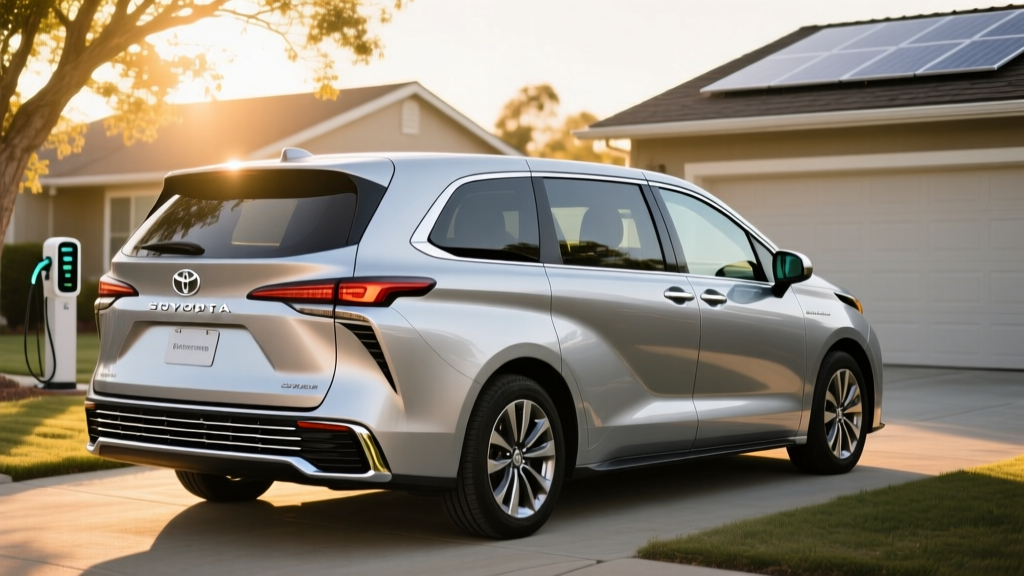
The Toyota Sienna has been a hybrid-only minivan since the 2021 model year, and the 2025 Toyota Sienna hybrid continues that strategy with a proven fourth-generation powertrain. Unlike competitors that still offer gas-only variants, every Sienna sold today pairs a 2.5-liter four-cylinder engine with Toyota's hybrid system — meaning you get exceptional fuel economy without ever plugging in. This is a conventional hybrid (HEV), not a plug-in hybrid (PHEV), and that distinction matters for buyers weighing options in the minivan segment.
With the Chrysler Pacifica Hybrid (a PHEV) and the Kia Carnival Hybrid joining the segment, the Sienna's positioning is clear: maximum simplicity, proven reliability, and fuel costs that undercut every gas-only rival. Here's the full breakdown of what the 2025 Sienna hybrid delivers in real-world driving.
Fuel Economy: EPA Ratings and Real-World MPG
The 2025 Toyota Sienna hybrid carries over the same powertrain introduced with the current generation, and its EPA ratings remain among the best in the minivan class. Front-wheel-drive (FWD) models achieve slightly higher numbers than all-wheel-drive (AWD) variants due to the additional drivetrain losses of the rear electric motor.
| Drivetrain | City MPG | Highway MPG | Combined MPG |
|---|---|---|---|
| FWD | 36 | 36 | 36 |
| AWD (AWD-e) | 35 | 36 | 35 |
Source: fueleconomy.gov
Real-World MPG vs. EPA Sticker
Toyota's hybrid system excels in stop-and-go city driving, where regenerative braking and electric-motor assist do the heavy lifting. In real-world ownership, many Sienna drivers report matching or slightly exceeding the EPA city estimate — 37–38 MPG is common on suburban routes with frequent stops. Highway driving at sustained 70–75 mph speeds tends to yield 32–34 MPG, a few ticks below the EPA highway figure. On a combined daily cycle of mixed driving, expect 34–36 MPG, which aligns closely with the sticker.
Cold weather impacts the Sienna's hybrid system less severely than a full EV's range, but you'll still see a 2–4 MPG drop in sub-freezing temperatures as the engine runs more frequently to provide cabin heat and maintain battery temperature.
Powertrain and Performance Specs
The 2025 Sienna uses Toyota's fourth-generation hybrid synergy drive system. It pairs a 2.5-liter Atkinson-cycle inline-four with one or two electric motors (one front, plus a rear motor on AWD-e models). The result is adequate power for a family hauler, with seamless transitions between electric and gas operation.
| Specification | Detail |
|---|---|
| Engine | 2.5L 4-cylinder Atkinson-cycle |
| Combined System Horsepower | 245 hp |
| Front Motor Output | 134 hp / 199 lb-ft torque |
| Rear Motor (AWD-e only) | 40 hp / 89 lb-ft torque |
| Transmission | Electronically controlled CVT (eCVT) |
| Hybrid Battery | 1.9 kWh nickel-metal hydride (NiMH) |
| 0–60 mph | ~7.1 seconds (FWD) |
| Towing Capacity | 3,500 lbs (with tow package) |
| Drivetrain Options | FWD or AWD-e (electronic on-demand AWD) |
The 245 combined horsepower is competitive with the Honda Odyssey's 280 hp V6 and the Kia Carnival's 290 hp turbo-four, though the Sienna prioritizes efficiency over acceleration. The eCVT provides smooth, linear power delivery without the shift shock of conventional automatics. The AWD-e system engages the rear motor only when slip is detected — it's not a full-time AWD system, but it handles rain and light snow confidently.
HEV vs. PHEV: Where the Sienna Fits
The 2025 Sienna is a conventional hybrid (HEV). It does not plug in, has no electric-only driving range, and requires no charging infrastructure. This is a deliberate choice by Toyota and a key differentiator from the Chrysler Pacifica Hybrid, which is a plug-in hybrid (PHEV).
HEV vs. PHEV — Key Differences
| Factor | HEV (Toyota Sienna) | PHEV (e.g., Pacifica Hybrid) |
|---|---|---|
| Plugs in? | No — charges via regen & engine | Yes — Level 1 or Level 2 |
| Electric-only range | None (EV assist only at low speed) | ~32 miles (Pacifica Hybrid) |
| Battery size | 1.9 kWh (NiMH) | 16 kWh (lithium-ion) |
| Home charging needed? | No | Yes (Level 2 recommended) |
| Federal tax credit | Not eligible | Eligible (up to $7,500, subject to §30D rules) |
| Complexity | Lower — proven system | Higher — larger battery, charging hardware |
| Best for | No garage/outlet access; simplicity | Home charging access; short daily commutes |
If you have reliable access to a Level 2 home charger and your daily driving is under 30 miles, a PHEV like the Pacifica Hybrid lets you do most trips on electricity alone. But if you live in an apartment, lack a garage, or simply don't want to think about charging, the Sienna HEV delivers outstanding efficiency with zero behavioral change from a gas vehicle.
Pricing and Tax Credit Eligibility
The 2025 Toyota Sienna hybrid starts at $37,985 for the LE FWD trim (including destination charge) and climbs to approximately $52,000 for the top Platinum AWD trim. Toyota offers seven trims: LE, XLE, XSE, SE, Woodland Edition, Limited, and Platinum.
| Trim | Drivetrain | Starting MSRP |
|---|---|---|
| LE | FWD | $37,985 |
| LE | AWD-e | $38,785 |
| XLE | FWD | $41,985 |
| XSE | FWD | $44,485 |
| Woodland Edition | AWD-e | $46,785 |
| Limited | FWD | $48,485 |
| Platinum | AWD-e | $52,185 |
Federal Tax Credit: Not Eligible
Under current IRS §30D rules, the federal clean vehicle credit applies only to plug-in electric vehicles — battery-electric vehicles (BEVs) and plug-in hybrids (PHEVs) with a battery capacity of at least 7 kWh. Because the Sienna is a conventional hybrid with a 1.9 kWh NiMH battery and no plug-in capability, it does not qualify for the federal §30D tax credit. The same applies to all non-plug-in hybrids.
Some states offer separate incentives for conventional hybrids, though these are increasingly rare as state programs shift focus to zero-emission vehicles. Check your state's energy or environmental agency for current programs. A tax professional can confirm eligibility for any local credits.
Reliability and Hybrid Battery Warranty
Toyota's hybrid systems carry one of the strongest reliability records in the automotive industry. The Hybrid Synergy Drive in the Sienna is a mature, fourth-generation design shared across millions of Toyota vehicles globally. There is no high-voltage plug, no complex turbocharger, and no conventional starter motor or alternator to fail — the hybrid system handles those functions.
Battery & Hybrid System Warranty
Hybrid Battery: 10 years / 150,000 miles (whichever comes first)
Hybrid System Components: 8 years / 100,000 miles
Basic Vehicle Warranty: 3 years / 36,000 miles
Powertrain Warranty: 5 years / 60,000 miles
Toyota covers the hybrid battery for capacity loss that brings it below a defined performance threshold. In practice, Toyota NiMH hybrid batteries routinely last 150,000–200,000+ miles before needing replacement.
Hybrid Battery Replacement Cost
If the hybrid battery does need replacement outside of warranty, expect to pay between $2,500 and $4,500 for a new OEM battery pack installed at a Toyota dealer, depending on labor rates. Refurbished or aftermarket NiMH packs are available for $1,500–$2,500 installed. This is significantly less than a full EV battery replacement ($8,000–$20,000+) because the Sienna's 1.9 kWh pack is small and physically compact. Independent hybrid specialists in most metro areas can perform the swap for less than dealer pricing.
Sienna Hybrid vs. Full EV vs. Gas Minivan
Choosing between a conventional hybrid, a plug-in hybrid, a full battery-electric vehicle, or a traditional gas minivan depends on your daily driving pattern, charging access, and budget. Here's a practical decision framework:
Which Powertrain Fits Your Family?
Choose the Sienna Hybrid (HEV) if:
- You don't have access to home or workplace charging
- You want minivan efficiency (36 MPG) with zero lifestyle changes
- You value Toyota's long-term reliability and 10-year hybrid battery warranty
- You take frequent long road trips and don't want to plan around charging stops
Choose a PHEV minivan (Pacifica Hybrid) if:
- You have a garage or driveway with Level 2 charging access
- Most daily trips are under 30 miles (electric-only covers them)
- You want to reduce fuel consumption to near-zero on weekdays
- You can benefit from the §30D federal tax credit (up to $7,500, subject to income and sourcing rules — see IRS.gov)
Choose a full EV (e.g., upcoming electric minivans) if:
- You have reliable home Level 2 charging
- You want zero tailpipe emissions and the lowest per-mile fuel cost
- You're comfortable with 250–300+ mile range and DC fast charging on road trips
Stick with a gas minivan if:
- Upfront price is the primary concern (gas minivans start lower)
- You drive very few miles per year, making fuel savings negligible
Ownership Costs: Fuel Savings Over 5 Years
The Sienna's 36 MPG combined rating translates into meaningful savings versus a gas-only minivan. Consider a comparison with the Honda Odyssey, which achieves an EPA 22 MPG combined:
| Vehicle | EPA Combined MPG | Annual Fuel Cost | 5-Year Fuel Cost |
|---|---|---|---|
| 2025 Toyota Sienna Hybrid (FWD) | 36 | $1,417 | $7,083 |
| 2025 Honda Odyssey | 22 | $2,318 | $11,591 |
| 2025 Kia Carnival (gas) | 22 | $2,318 | $11,591 |
Over five years, the Sienna hybrid saves approximately $4,500 in fuel costs versus a gas-only minivan. That savings nearly covers the Sienna's price premium over base gas competitors, and it compounds further if gas prices rise. Factor in the Sienna's strong resale value — Toyota minivans historically retain value well — and the total cost of ownership becomes very compelling.
Pros and Cons
Pros
- Class-leading 36 MPG combined (FWD)
- No plug-in required — zero infrastructure needed
- 10-year / 150,000-mile hybrid battery warranty
- Standard Toyota Safety Sense 2.5+ (adaptive cruise, lane-keeping, AEB)
- Available AWD-e for snow/rain traction
- Spacious interior with up to 101 cu ft cargo volume (seats folded)
- Strong resale value and proven reliability
Cons
- 245 hp is adequate, not quick — highway passing requires planning
- No federal tax credit (HEV, not PHEV/BEV)
- CVT drone under hard acceleration
- No Stow 'n Go second-row seats (Toyota uses fixed captain's chairs for comfort)
- Infotainment system lags behind competitors in responsiveness
- AWD-e adds $800 and drops MPG by 1
Frequently Asked Questions
How many MPG does the 2025 Toyota Sienna hybrid get?
The EPA rates the FWD Sienna hybrid at 36 city / 36 highway / 36 combined MPG. The AWD-e model is rated at 35/36/35 MPG. In real-world driving, expect 34–36 MPG combined, with city driving often exceeding the EPA estimate and highway cruising returning slightly less.
Does the Toyota Sienna hybrid need to be plugged in?
No. The Sienna is a conventional hybrid (HEV). Its 1.9 kWh battery charges entirely through regenerative braking and the gasoline engine. There is no charging port and no electric-only driving range. You fuel it like any other vehicle at a gas station.
Is the Sienna hybrid battery reliable, and what does replacement cost?
Toyota's hybrid batteries have an exceptional track record, with many lasting 150,000–200,000+ miles. Toyota covers the hybrid battery for 10 years / 150,000 miles. If replacement is needed out of warranty, expect $2,500–$4,500 for a new OEM pack at a dealer, or $1,500–$2,500 for a refurbished unit from an independent hybrid shop.
Does the 2025 Toyota Sienna hybrid qualify for any tax credit?
No. Under IRS §30D rules, the federal clean vehicle credit is limited to plug-in electric vehicles (BEVs and PHEVs with at least 7 kWh of battery capacity). The Sienna's 1.9 kWh conventional hybrid system does not qualify. Some states may offer minor hybrid incentives — check your local programs.
Hybrid vs. PHEV vs. EV — which minivan should I buy?
If you lack home charging or take frequent long road trips, the Sienna HEV is the most practical choice. If you have Level 2 charging and drive under 30 miles daily, a PHEV minivan (like the Pacifica Hybrid) lets you commute on electricity. A full EV minivan makes sense only if you have reliable home charging and want the lowest operating costs — though the EV minivan segment is still limited as of 2025. The Sienna hybrid offers the best balance of efficiency, simplicity, and no-compromise road-trip capability for most families.
Can the Sienna hybrid run on electric power alone?
Only at very low speeds (typically under 25 mph) and for short distances (a few hundred yards), such as creeping through a parking lot. The 1.9 kWh battery is too small to sustain electric-only driving. The system is designed for electric assist, not electric propulsion.
How does the Sienna AWD-e system work?
The AWD-e system uses a separate 40-hp electric motor on the rear axle — there is no mechanical driveshaft connecting the front and rear. The rear motor activates automatically when the front wheels slip, providing traction in rain, snow, and loose surfaces. During normal dry-road driving, the Sienna operates as a front-wheel-drive vehicle to maximize efficiency.