Quick Verdict: The Commuter's Compromise Machine
The 2025 Toyota Prius Plug-In Hybrid SE occupies a precise niche: drivers who want genuine electric-only commuting during the week and unrestricted gas-hybrid road trips on weekends. With an EPA-rated 45 miles of electric-only range and 50 MPG combined once the battery depletes, the SE trim represents the value-oriented entry point into Toyota's redesigned plug-in Prius lineup. Starting at approximately $33,445 MSRP, it undercuts many competitors while delivering the reliability reputation Toyota hybrids have built over two decades.
But the SE trim involves deliberate trade-offs. You sacrifice some premium features found in the XSE and XSE Premium trims, and the 13.6 kWh battery pack means DC fast charging is not available. For the right buyer — someone with home charging access and a sub-40-mile round-trip commute — this car can run on electricity nearly every day while eliminating range anxiety entirely.
HEV vs PHEV: Understanding What You're Buying
Conventional Hybrid (HEV): The standard 2025 Toyota Prius hybrid uses a small battery (1.0-1.3 kWh) that recharges through regenerative braking and the gasoline engine. You never plug it in. EPA ratings reach up to 57 MPG combined, but it cannot drive on electricity alone for meaningful distances.
Plug-In Hybrid (PHEV): The Prius Plug-In Hybrid (also called Prius Prime in some markets) carries a much larger 13.6 kWh lithium-ion battery pack. You plug it into a wall outlet or Level 2 charger to fully recharge. It can travel up to 45 miles on electricity alone before the gasoline engine engages, functioning as a conventional hybrid afterward.
The distinction matters for your wallet and your routine. If you can charge at home nightly and your daily driving stays under 45 miles, the PHEV operates as an electric vehicle most days, consuming gasoline only on longer trips. If you lack home charging access, the conventional HEV delivers excellent fuel economy without any plug-in requirement — and costs less upfront.
Fuel Economy and Electric-Only Range
The EPA rates the 2025 Toyota Prius Plug-In Hybrid SE at 127 MPGe combined when operating on electricity and 50 MPG combined after the battery depletes. Here's the detailed breakdown according to fueleconomy.gov:
| Mode | City | Highway | Combined |
|---|---|---|---|
| Electric (MPGe) | 127 MPGe | 127 MPGe | 127 MPGe |
| Gas Hybrid (MPG) | 50 MPG | 47 MPG | 50 MPG |
EPA Electric-Only Range: 45 miles
Real-World Expectation: Expect 35-42 miles in mixed driving with moderate climate control use. In cold weather (below 40°F), battery efficiency drops and cabin heating demands energy, reducing electric range to approximately 28-35 miles. Highway speeds above 65 mph also decrease electric range due to aerodynamic drag.
Total Combined Range: Approximately 440-480 miles (electric + gasoline tank)
In real-world testing, Toyota's hybrid system excels in city driving where regenerative braking frequently recaptures energy. Many owners report exceeding the EPA city MPG estimate in stop-and-go traffic. Highway fuel economy tends to fall slightly below the EPA estimate at sustained 75-80 mph speeds, where aerodynamic drag dominates and regenerative braking opportunities disappear.
Powertrain, Battery, and Charging Specifications
| Specification | 2025 Prius PHEV SE |
|---|---|
| Combined System Horsepower | 220 hp |
| Gasoline Engine | 2.0L 4-cylinder (150 hp) |
| Electric Motor | 161 hp (front axle) |
| Battery Capacity (Gross) | 13.6 kWh (lithium-ion) |
| Battery Usable Capacity | ~10.5 kWh |
| Electric-Only Top Speed | 84 mph |
| 0-60 mph | 6.6 seconds |
| Level 1 Charging (120V) | ~11 hours (full charge) |
| Level 2 Charging (240V) | ~4 hours (full charge) |
| DC Fast Charging | Not available |
| Charge Port | J1772 |
| EPA Electric Range | 45 miles |
| EPA Combined MPG (hybrid mode) | 50 MPG |
| Fuel Tank Capacity | 10.6 gallons |
| Cargo Volume (rear seats up) | 20.3 cu ft |
The 220 combined horsepower represents a dramatic improvement over the previous-generation Prius Prime, which mustered only 121 hp. The 2.0-liter Dynamic Force engine paired with Toyota's fifth-generation hybrid transaxle delivers genuinely responsive acceleration — the 6.6-second 0-60 time puts it in company with sporty compact hatchbacks, not the lethargic eco-boxes of the past.
Charging happens exclusively through AC power via the J1772 connector. The onboard charger accepts up to 3.3 kW on Level 2 power, meaning a full charge from empty takes approximately 4 hours on a 240V home charger. On a standard 120V household outlet (Level 1), expect roughly 11 hours — adequate for overnight charging if your daily electric needs stay under 40 miles. The absence of DC fast charging is a deliberate engineering choice: adding DC capability would increase cost, weight, and complexity for a battery pack small enough to replenish overnight on AC power.
Battery Warranty, Reliability, and Replacement Costs
Hybrid Battery Warranty: 10 years / 150,000 miles (whichever comes first) in states following California Air Resources Board (CARB) emissions standards, or 8 years / 100,000 miles in other states. This covers defects and capacity loss below a defined threshold.
Hybrid System Warranty: 8 years / 100,000 miles nationwide, covering the electric motor, inverter, and related components.
Toyota's hybrid reliability track record spans over 25 years since the original 1997 Prius. Independent fleet data and owner surveys consistently show Toyota hybrid battery packs lasting 150,000-200,000+ miles before significant degradation requires attention. The lithium-ion pack in the 2025 Prius PHEV uses conservative charge-discharge windows — Toyota never fully charges or fully depletes the battery in normal operation, maintaining buffer zones that extend cell lifespan.
If replacement becomes necessary out of warranty, current pricing for a Prius PHEV traction battery ranges from approximately $3,500-$5,500 including labor at a dealership, though third-party refurbished options may reduce this cost. However, the 10-year/150,000-mile warranty in CARB states (which include California, New York, Massachusetts, and several others) provides substantial coverage. Most original owners will sell the vehicle before approaching these limits.
The conventional hybrid components — the gasoline engine, planetary gearset, and regenerative braking system — are proven technology with minimal failure rates. The Prius platform consistently earns top reliability scores from Consumer Reports and J.D. Power surveys.
Pricing, Trims, and Tax Credit Eligibility
The 2025 Toyota Prius Plug-In Hybrid SE starts at an MSRP of approximately $33,445 (including destination charge). Higher trims add features:
| Trim | MSRP (approx.) | Key Additions |
|---|---|---|
| SE | $33,445 | Base PHEV, 17" wheels, heated front seats, 8" touchscreen |
| XSE | $36,695 | 19" wheels, SofTex seats, wireless charging, power liftgate |
| XSE Premium | $39,670 | JBL audio, panoramic roof, heated/ventilated seats, digital key |
Federal Tax Credit (§30D): As of 2025-2026, the Prius Plug-In Hybrid qualifies for a partial federal tax credit — typically $3,750 — under the IRS Clean Vehicle Credit rules. The credit amount depends on whether the battery's critical minerals and components meet domestic sourcing thresholds defined in the Inflation Reduction Act. The full $7,500 credit requires both critical mineral AND battery component compliance; partial credit applies when only one threshold is met.
Critical eligibility requirements per IRS guidelines:
- MSRP Cap: Vehicle MSRP must not exceed $55,000 for sedans/hatchbacks (all Prius PHEV trims qualify)
- Buyer Income Cap: Modified adjusted gross income must not exceed $150,000 (single), $225,000 (head of household), or $300,000 (joint filing)
- Battery Sourcing: Critical minerals and battery components must meet phased domestic content requirements that tighten annually
- Point-of-Sale Transfer: Buyers can transfer the credit to the dealer at purchase, reducing the sale price directly rather than waiting for a tax refund
State incentives vary widely. California's CVRP program, Colorado's state credit, and various utility rebates may stack on top of federal incentives. Check your state energy office and local utility for current programs.
Who Should Choose the Prius PHEV vs a Full EV or Gas Car?
Reasons to Choose the Prius PHEV SE
- Your daily commute is under 40 miles round-trip and you can charge at home
- You take frequent road trips where charging infrastructure remains uncertain
- You want electric commuting without committing to a full EV's higher purchase price
- You live in an apartment or area where public charging access is limited but home charging is possible
- You value Toyota's long-term reliability reputation and plan to keep the car 8+ years
- You want to reduce gasoline consumption 70-90% on typical weekday driving
Reasons to Look Elsewhere
- You cannot charge at home or work — without regular plug-in charging, you're just carrying dead battery weight and should buy the conventional Prius HEV instead
- Your daily driving consistently exceeds 50 miles — a full EV like the Hyundai Ioniq 5 (303-mile range) or Tesla Model 3 (341-mile range) offers greater electric range
- You want DC fast charging for apartment living or quick top-ups on road trips
- You need more than 20.3 cu ft of cargo space (consider an EV SUV)
- You prefer a fully electric driving experience with one-pedal regenerative braking (the Prius PHEV blends regen with friction brakes traditionally)
Choose the Prius PHEV if: You have home charging, drive under 45 miles daily, take road trips monthly, and want to minimize gasoline use without range anxiety. Effective cost after federal credit: ~$29,700.
Choose the conventional Prius HEV if: You cannot plug in regularly, you drive 30,000+ miles annually, or you want the lowest possible purchase price with excellent MPG.
Choose a full BEV if: You have reliable home and workplace charging, your daily driving exceeds 50 miles, you want zero tailpipe emissions, and you're comfortable planning road-trip charging stops.
Real-World Ownership Considerations
Cold Weather Performance: Lithium-ion batteries lose efficiency in cold temperatures. Expect electric-only range to drop 20-30% when temperatures fall below freezing. The gasoline engine will engage more frequently to provide cabin heat unless you precondition the car while plugged in. The Prius PHEV includes a heat pump for more efficient electric heating, partially mitigating this loss.
Highway Driving: At sustained 75+ mph speeds, the electric-only range drops to approximately 32-36 miles due to aerodynamic drag. Once the battery depletes, highway fuel economy settles around 44-47 MPG — still excellent, but below the EPA's 47 MPG highway estimate in real-world conditions with headwinds or elevation changes.
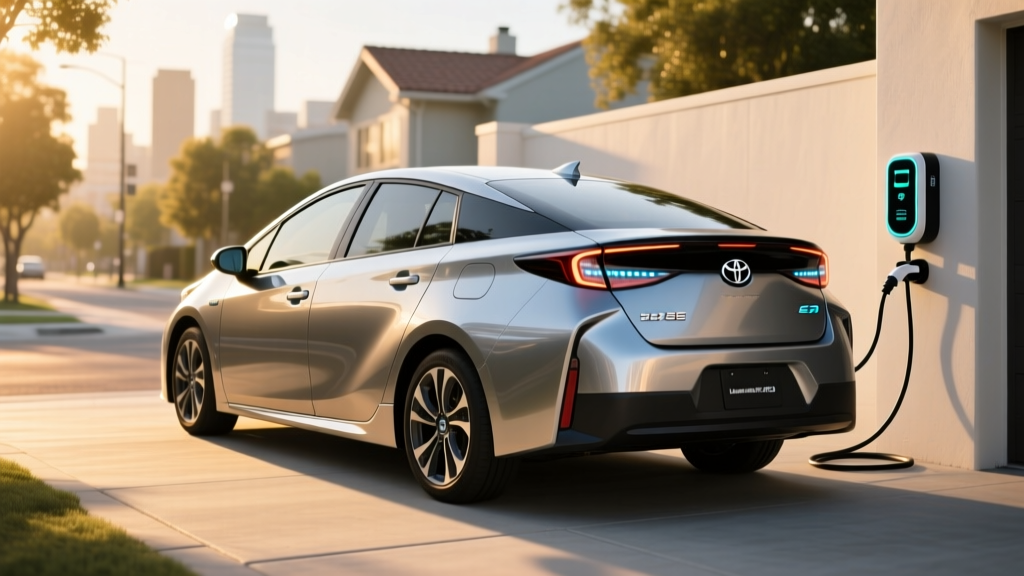
Charging Routine: Most PHEV owners develop a simple habit: plug in when you park at home, unplug when you leave. The 4-hour Level 2 charge time means even a short evening session substantially replenishes the battery. A dedicated home Level 2 charger (240V, 16-amp circuit) costs approximately $500-$1,200 installed, depending on your electrical panel's proximity to the parking spot.
Maintenance: Hybrid maintenance costs are typically lower than conventional gasoline cars. Regenerative braking reduces brake pad wear — many Prius owners report 80,000-100,000 miles on original brake pads. The gasoline engine requires standard oil changes (0W-16 synthetic, approximately every 10,000 miles), and the hybrid system needs no regular service.
Frequently Asked Questions
How many MPG does the 2025 Prius Plug-In Hybrid SE get?
The EPA rates it at 50 MPG combined (50 city / 47 highway) when operating as a hybrid after the battery depletes. When operating on electricity, it achieves 127 MPGe combined. In real-world city driving with frequent regenerative braking, many owners report 52-56 MPG in hybrid mode.
How far can the Prius PHEV go on electric only?
The EPA rates the 2025 Prius PHEV SE at 45 miles of electric-only range. Real-world results typically fall between 35-42 miles in moderate weather with mixed driving. Cold weather (below 40°F) and sustained highway speeds reduce this to approximately 28-36 miles.
Can I charge the Prius PHEV at a DC fast charger?
No. The 2025 Prius Plug-In Hybrid only accepts AC charging through its J1772 port. It charges at up to 3.3 kW on Level 2 (240V), taking approximately 4 hours for a full charge. DC fast charging capability is not included — Toyota determined the 13.6 kWh battery recharges quickly enough on AC power overnight.
Does the 2025 Prius Plug-In Hybrid qualify for a federal tax credit?
Yes, but likely a partial credit of $3,750 rather than the full $7,500, depending on battery component and critical mineral sourcing compliance with current IRS rules. Eligibility also depends on your income (capped at $150K single / $300K joint) and the vehicle's MSRP (capped at $55K for cars — all Prius PHEV trims qualify). Consult a tax professional and verify current rules at irs.gov before purchase.
Is the Prius PHEV reliable and what does battery replacement cost?
Toyota's hybrid systems have demonstrated exceptional reliability over 25+ years of production. The hybrid battery carries a 10-year/150,000-mile warranty in CARB states and 8-year/100,000-mile warranty elsewhere. Out-of-warranty battery replacement currently costs approximately $3,500-$5,500, though most batteries last well beyond 150,000 miles based on historical data.
Should I buy the Prius PHEV or the regular Prius hybrid?
Buy the PHEV if you can charge at home and your daily driving is under 45 miles — you'll use little to no gasoline on weekdays. Buy the conventional HEV if you cannot plug in regularly; it still delivers 57 MPG combined without any charging requirement and costs approximately $4,000-$5,000 less upfront.
What's the difference between Prius Plug-In Hybrid and Prius Prime?
They are the same vehicle. Toyota used the "Prius Prime" nameplate for the plug-in variant through 2024. For 2025, Toyota consolidated naming to "Prius Plug-In Hybrid" to clarify the distinction from the conventional Prius hybrid, though some markets and documentation may still reference the Prime name.