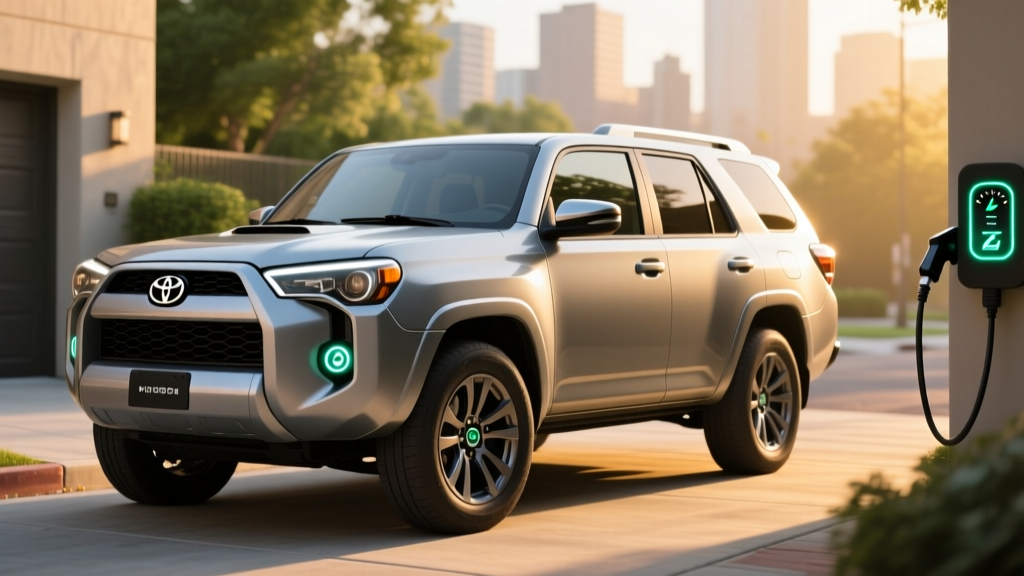
For decades, the Toyota 4Runner has been the body-on-frame SUV of choice for buyers who need real off-road capability but also want Toyota reliability. The 2025 model year marks the biggest generational shift in the nameplate's history: a move to the TNGA-F platform and, critically, the introduction of the i-FORCE MAX hybrid powertrain. If you've been searching for 2025 Toyota 4Runner Hybrid MPG figures, the short answer is a manufacturer-estimated 35 MPG combined — a dramatic improvement over the outgoing V6's 17 MPG combined. But as with any hybrid, the real-world story is more nuanced depending on how and where you drive.
This guide breaks down every fuel economy figure, the powertrain engineering behind the numbers, real-world expectations, battery warranty details, and whether the 4Runner Hybrid is the right fit versus a full EV or conventional gas SUV.
HEV vs. PHEV: What the 4Runner Hybrid Actually Is
Before diving into MPG data, it's essential to understand what you're buying. The 2025 4Runner Hybrid is a conventional hybrid (HEV), not a plug-in hybrid (PHEV). This distinction changes everything about how you own and operate the vehicle.
HEV vs. PHEV — Key Differences for the 4Runner
| Feature | 4Runner Hybrid (HEV) | Typical PHEV (e.g., RAV4 Prime) |
|---|---|---|
| Plug-in charging required? | No — regenerative braking and engine charge the battery | Yes — plug in for electric-only range |
| Electric-only range | N/A (motor assists engine, no EV-only mode for sustained driving) | 25–42 miles typical |
| Battery size | ~1.87 kWh (nickel-metal hydride, sealed) | 14–18 kWh (lithium-ion) |
| Federal tax credit (§30D) | Not eligible | Up to $7,500 if PHEV meets sourcing rules |
| Driving experience | Seamless gas-like; motor fills torque gaps | EV-quiet on short trips, gas on longer ones |
The 4Runner's hybrid system uses a small battery that charges itself through regenerative braking and engine power. You never plug it in, you never manage a charge schedule, and there's no range anxiety about depleted batteries. You simply drive it like a normal gas vehicle and benefit from better fuel economy and substantially more torque.
2025 Toyota 4Runner Hybrid MPG: EPA Estimates and Real-World Data
The i-FORCE MAX powertrain delivers its efficiency gains primarily in city and mixed driving, which is where hybrid systems shine. Here's the EPA-estimated breakdown as published on fueleconomy.gov:
| Configuration | City MPG | Highway MPG | Combined MPG |
|---|---|---|---|
| 4x2 (RWD) | 36 | 36 | 36 |
| 4x4 (4WD) | 34 | 34 | 34 |
For comparison, the non-hybrid i-FORCE turbo-four 4Runner (same platform, no electric motor) is rated at approximately 20 city / 26 highway / 22 combined MPG. The hybrid nearly doubles city efficiency.
Real-World MPG Expectations
Hybrids typically meet or exceed their EPA city estimates because stop-and-go traffic maximizes regenerative braking. Expect the 4Runner Hybrid 4x4 to deliver 33–37 MPG in city driving under normal conditions. Highway driving at sustained 75–80 MPH will likely drop to 28–32 MPG due to the vehicle's 4,800+ lb curb weight and boxy aerodynamic profile. Cold weather (below 30°F) will reduce city MPG by roughly 10–15% as the engine runs more frequently to generate cabin heat. Towing will significantly reduce economy — expect 15–18 MPG combined when pulling near the 6,000-lb max tow rating.
i-FORCE MAX Powertrain: Engine, Motor, and Horsepower
The fuel economy gains come paired with a massive performance upgrade. The outgoing 4.0L V6 produced 270 hp and 278 lb-ft of torque. The 2025 i-FORCE MAX is a completely different animal:
| Specification | Value |
|---|---|
| Engine | 2.4L turbocharged inline-4 |
| Electric motor | 48-hp permanent-magnet motor (integrated between engine and transmission) |
| Combined output | 326 hp / 465 lb-ft torque |
| Transmission | 8-speed automatic |
| Hybrid battery | ~1.87 kWh, nickel-metal hydride (NiMH), sealed |
| 0–60 MPH (est.) | ~6.5 seconds (4x4) |
| Max towing capacity | 6,000 lbs |
The 465 lb-ft of torque is the headline figure. Because the electric motor sits between the engine and transmission (a P2 hybrid layout), torque delivery is instant from low RPM. This is the same powertrain architecture shared with the 2025 Tacoma i-FORCE MAX and the Land Cruiser, tuned specifically for low-end grunt — exactly what you want for off-road crawling and towing.
Pricing, Trims, and Tax Credit Eligibility
The i-FORCE MAX hybrid powertrain is available on multiple 4Runner trims for 2025. Pricing below reflects manufacturer MSRP at launch; dealer markups may apply in high-demand markets.
| Trim Level | MSRP (approx.) | Hybrid Standard? |
|---|---|---|
| TRD Off-Road Hybrid | $52,675 | Yes |
| Limited Hybrid | $57,825 | Yes |
| TRD Pro Hybrid | $66,860 | Yes (hybrid only) |
| Platinum Hybrid | $62,870 | Yes (hybrid only) |
Federal Tax Credit: Not Eligible
Because the 4Runner Hybrid is a conventional HEV (not a PHEV or BEV), it does not qualify for the IRS §30D Clean Vehicle Credit. That credit — up to $7,500 — is reserved for plug-in electric vehicles that meet battery sourcing, MSRP, and buyer income requirements (see IRS.gov §30D guidelines). Some states may offer minor rebates for hybrid purchases, but there is no federal incentive. Check your state's energy office for local programs.
Hybrid Battery Warranty, Lifespan, and Replacement Cost
Hybrid battery longevity is consistently the top concern among first-time hybrid buyers. Toyota has the deepest track record in the industry here, with over 25 years of hybrid production since the original Prius.
Battery Warranty Coverage
Toyota covers the 4Runner Hybrid battery under its Hybrid Battery Warranty: 10 years or 150,000 miles (whichever comes first), applicable in all 50 states. This is one of the longest hybrid battery warranties in the industry. The broader hybrid system components (inverter, control module, electric motor) are also covered under the same 10-year/150,000-mile term.
Real-world lifespan data: Toyota's NiMH hybrid batteries have demonstrated exceptional longevity. Taxi fleets running Toyota hybrid powertrains routinely exceed 300,000 miles on the original battery pack. The 4Runner's relatively small 1.87 kWh battery operates within a narrow state-of-charge window (roughly 40–80% SoC), which dramatically reduces cell stress compared to a full EV battery that cycles between 10–90%.
Replacement cost: If the hybrid battery does require replacement outside warranty, expect to pay approximately $3,000–$4,500 for a new OEM pack including labor. Refurbished packs are available from third-party suppliers for $1,500–$2,500. Given the 10-year/150,000-mile warranty and Toyota's track record, this is a low-probability expense for most owners.
4Runner Hybrid vs. Gas 4Runner vs. Full EV: Which Is Right for You?
The 2025 4Runner lineup gives buyers three distinct paths. Here's a decision framework based on real ownership patterns:
Choose the 4Runner Hybrid (HEV) If:
- You want 34+ MPG without changing any habits — no plugging in, no range planning
- You tow regularly (6,000-lb capacity) and need body-on-frame durability
- You do a mix of city commuting and weekend off-road/trail use
- You plan to keep the vehicle 10+ years and want proven Toyota hybrid reliability
- You live in an area with limited charging infrastructure
Consider a Full EV (e.g., Rivian R1S) If:
- You have reliable home Level 2 charging and want $0 gas spend
- Your daily driving is under 250 miles and you rarely tow over 5,000 lbs
- You want the $7,500 federal tax credit (if eligible) and lower per-mile fuel cost
- You prioritize instant torque, quiet operation, and minimal maintenance
- You're comfortable with public DC fast charging on road trips
The gas-only 4Runner (i-FORCE turbo-four, ~22 MPG combined) makes sense only if your budget is tight on purchase price and you drive primarily highway miles where the hybrid advantage shrinks. The ~$3,000 hybrid premium pays for itself in roughly 3–4 years at 15,000 miles/year and current fuel prices.
Fuel Cost Savings: Hybrid vs. Gas 4Runner Over 5 Years
Let's quantify the hybrid premium with real numbers. Using the EPA combined figures and a national average gas price of $3.40/gallon (regular unleaded, the 4Runner's required fuel):
| Metric | Gas 4Runner 4x4 (22 MPG) | Hybrid 4Runner 4x4 (34 MPG) |
|---|---|---|
| Gallons consumed | 3,409 | 2,206 |
| Total fuel cost | $11,591 | $7,500 |
| 5-year savings | — | ~$4,091 |
The hybrid premium over the equivalent gas trim is typically $2,500–$3,500. At 15,000 miles/year, the hybrid pays for itself in fuel savings within 3–4 years, and continues saving you money for the remainder of ownership. If gas prices rise above $4.00/gallon in your area, payback accelerates to under 3 years.
Pros and Cons: The Honest Assessment
✓ Pros
- 34 MPG combined — more than 50% improvement over the outgoing V6
- 465 lb-ft torque transforms low-speed and off-road performance
- No behavior change required — no plugging in, no range management
- 10-year/150,000-mile hybrid battery warranty
- Body-on-frame capability with 6,000-lb towing
- Toyota's proven hybrid reliability track record
- Fuel savings recoup hybrid premium in 3–4 years
✗ Cons
- No federal tax credit (HEV, not PHEV)
- Starting MSRP above $52,000 for the cheapest hybrid trim
- Highway MPG drops to ~28–32 at sustained 75+ MPH
- Heavy curb weight (~4,800+ lbs) limits efficiency ceiling
- Dealer markups likely in the first 12–18 months of availability
- No plug-in/electric-only option for short commutes
- Towing drops MPG significantly (15–18 MPG)
Frequently Asked Questions
How many MPG does the 2025 Toyota 4Runner Hybrid get?
The 4Runner Hybrid 4x4 is EPA-rated at 34 city / 34 highway / 34 combined MPG. The 4x2 model is rated at 36 MPG combined. In real-world city driving, many owners report meeting or slightly exceeding these figures thanks to regenerative braking. Highway-only driving at high speeds will yield 28–32 MPG.
Does the 4Runner Hybrid need to be plugged in?
No. The 4Runner Hybrid is a conventional HEV. Its small hybrid battery charges through regenerative braking and the gasoline engine. You never plug it in — you fuel it at a gas station like any other vehicle.
Is the 4Runner Hybrid reliable? What about battery replacement?
Toyota's hybrid systems have an industry-leading reliability record spanning 25+ years and millions of vehicles. The 4Runner's hybrid battery is covered by a 10-year/150,000-mile warranty. Out-of-warranty replacement runs $3,000–$4,500 for a new OEM pack, though real-world data shows these batteries frequently last well beyond 200,000 miles.
Does the 2025 4Runner Hybrid qualify for any tax credit?
No. The federal §30D Clean Vehicle Credit applies only to plug-in electric vehicles (BEVs and PHEVs) that meet battery sourcing and MSRP requirements. As a conventional hybrid, the 4Runner is ineligible. Some states may offer minor incentives for hybrid purchases — check your state energy office.
How does the 4Runner Hybrid compare to the old V6 4Runner?
The outgoing 4th-gen 4Runner with the 4.0L V6 was rated at 16 city / 19 highway / 17 combined MPG and produced 270 hp / 278 lb-ft. The 2025 i-FORCE MAX hybrid delivers 326 hp / 465 lb-ft and 34 MPG combined — effectively doubling fuel economy while adding 56 hp and 187 lb-ft of torque. It is a generational leap in every measurable metric.
Hybrid vs. PHEV vs. EV — which fits my lifestyle?
Choose the 4Runner Hybrid if you want better MPG without any lifestyle change, need serious towing/off-road capability, and lack home charging. Choose a PHEV (like the Toyota RAV4 Prime or Jeep Wrangler 4xe) if you want 25–40 miles of electric-only commuting with a gas backup for road trips. Choose a full EV (like the Rivian R1S or Tesla Model X) if you have home charging, want maximum fuel savings, qualify for the $7,500 federal credit, and don't need body-on-frame trail capability.
Sources: EPA fuel economy data via fueleconomy.gov, Toyota Motor Corporation official specifications, IRS Clean Vehicle Credit guidelines at irs.gov. All MPG figures are EPA estimates; real-world results vary by driving conditions, climate, and vehicle configuration. Pricing reflects MSRP at time of publication and excludes destination charges, taxes, and dealer fees.