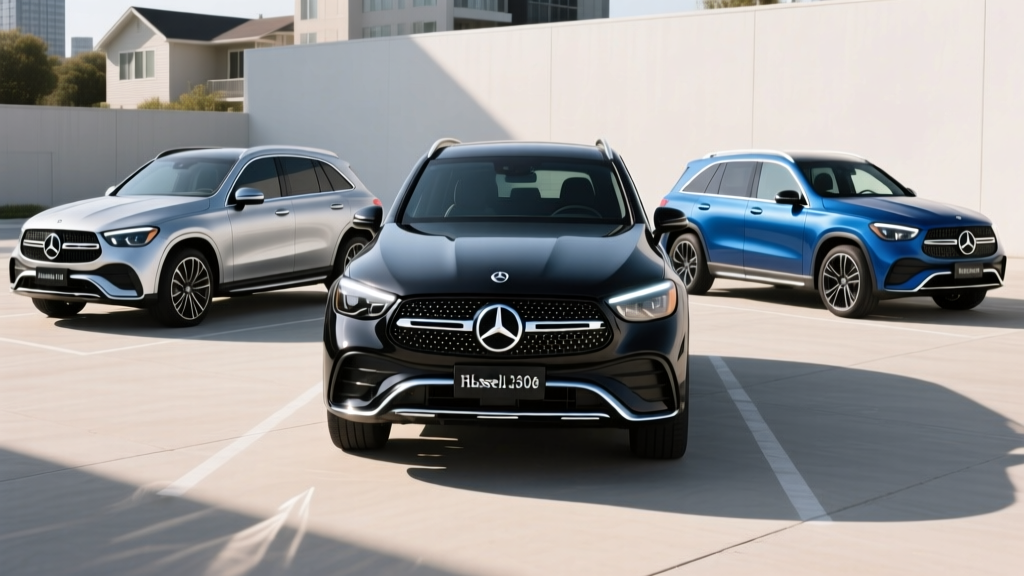
Mercedes-Benz has committed heavily to plug-in hybrid electrification across its SUV lineup. For 2026, the brand offers PHEV variants of its two highest-volume SUVs — the compact GLC 350e 4MATIC and the midsize GLE 350e 4MATIC — both pairing turbocharged gasoline engines with substantially sized battery packs and electric motors. Unlike conventional hybrids (HEVs) that you simply fuel and drive, these are plug-in hybrids (PHEVs): they offer meaningful electric-only range, can be charged at home, and deliver a bridge between gas-car convenience and full-EV efficiency.
This guide breaks down every hybrid Mercedes SUV available for 2026, with exact EPA figures, real-world expectations, charging logistics, pricing, tax credit eligibility, and a decision framework to help you choose between a PHEV, a full EV, or a conventional hybrid.
HEV vs. PHEV: What Mercedes Actually Offers
Before examining specific models, it is essential to understand the distinction between hybrid types — because Mercedes-Benz's current U.S. SUV lineup includes only PHEVs, not conventional HEVs.
| Feature | Conventional Hybrid (HEV) | Plug-in Hybrid (PHEV) |
|---|---|---|
| Plugs in to charge? | No — charges via regenerative braking and engine | Yes — Level 1 (120V) or Level 2 (240V) |
| Electric-only range | 0–2 miles at very low speeds | 30–50+ miles at full highway speeds |
| Battery size | 1–2 kWh | 15–31 kWh (usable) |
| Gas engine | Primary propulsion, motor assists | Engine + motor both capable of solo propulsion |
| Federal tax credit (§30D) | Not eligible | Potentially up to $7,500 (see rules below) |
| Best for | Drivers who cannot charge at home | Drivers with home/workplace charging who want EV-like daily driving with gas backup |
If you cannot install a charger at home and have no workplace charging, a PHEV still functions perfectly as a conventional hybrid once the battery depletes — you just lose the efficiency and cost advantage of electric driving. But to maximize value, daily plug-in access is strongly recommended.
2026 GLC 350e 4MATIC: Compact PHEV SUV
The GLC is Mercedes-Benz's best-selling SUV in the United States, and the 350e variant adds a substantial electrified powertrain to the formula. For 2026, the GLC 350e continues with the 2.0-liter turbocharged inline-four paired with a permanently excited synchronous electric motor integrated into the 9G-TRONIC transmission.
Powertrain and Performance
- Engine: 2.0L turbocharged I4, 208 hp / 236 lb-ft
- Electric motor: 134 hp / 325 lb-ft
- Combined system output: 312 hp / 406 lb-ft
- Transmission: 9-speed automatic (9G-TRONIC)
- Drivetrain: 4MATIC all-wheel drive
- 0–60 mph: 6.2 seconds (manufacturer estimate)
Battery, Range, and Efficiency
| Specification | GLC 350e 4MATIC |
|---|---|
| Battery (gross / usable) | 31.2 kWh / ~25.4 kWh |
| Battery chemistry | NMC (nickel manganese cobalt) |
| EPA electric-only range | 47 miles |
| EPA combined MPGe (electric mode) | 79 MPGe |
| EPA MPG (gas-only, battery depleted) | 28 city / 31 hwy / 29 combined |
| Total combined range (electric + gas) | ~440 miles |
| Fuel tank capacity | 14.8 gallons |
Real-world range note: The EPA's 47-mile electric-only estimate assumes moderate temperatures and mixed driving. In practice, expect 38–44 miles of electric range in cold weather (below 40°F) due to cabin heating loads and reduced battery efficiency. In warm-weather city driving with regenerative braking, some owners report exceeding the EPA figure, reaching 50+ miles. Highway driving at 75+ mph reduces electric range to approximately 35–40 miles.
Charging
| Charging Level | Power | 0–100% Time |
|---|---|---|
| Level 1 (120V household) | ~1.4 kW | ~18 hours |
| Level 2 (240V, home/public) | 11 kW (onboard charger) | ~2.5 hours |
| DC fast charging | Not available on GLC 350e |
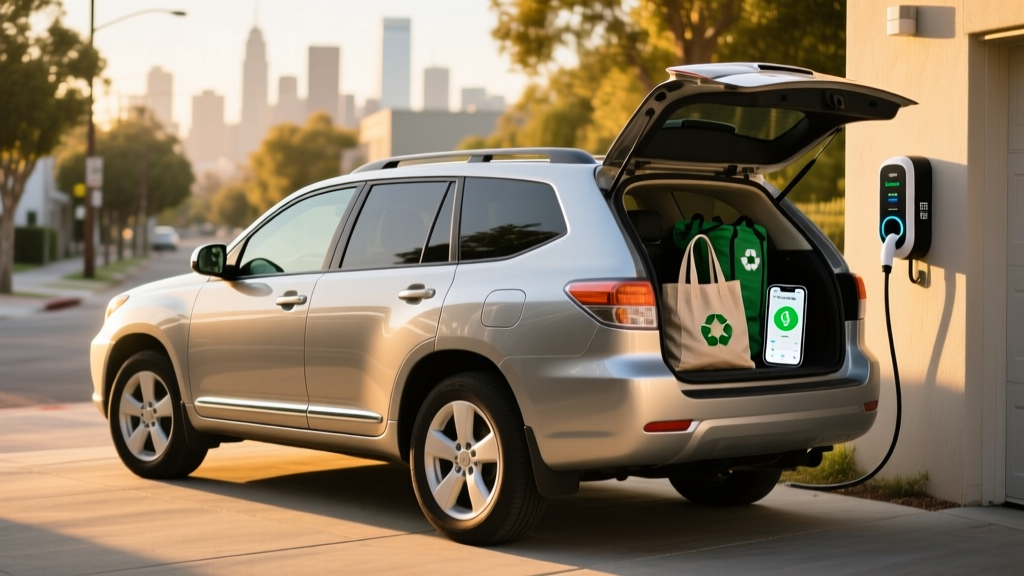
The 11 kW onboard AC charger is among the fastest in the PHEV segment — most competitors offer 3.6–7.2 kW. A full charge on a Level 2 home charger in under three hours means you can easily top up during the workday or between errands. However, the GLC 350e does not support DC fast charging, which is a limitation on longer road trips where you might want a quick battery replenishment.
Pricing
- GLC 350e 4MATIC base MSRP: $58,750 (2026 model year)
- Premium trim: ~$62,000
- Destination charge: $1,150
2026 GLE 350e 4MATIC: Midsize PHEV SUV
For buyers needing three-row-capable space (with the optional third row) or simply a larger, more luxurious cabin, the GLE 350e applies the same PHEV philosophy to Mercedes' midsize SUV platform.
Powertrain and Performance
- Engine: 2.0L turbocharged I4, 248 hp / 295 lb-ft
- Electric motor: 134 hp / 325 lb-ft
- Combined system output: 375 hp / 480 lb-ft
- Transmission: 9-speed automatic (9G-TRONIC)
- Drivetrain: 4MATIC all-wheel drive
- 0–60 mph: 5.8 seconds (manufacturer estimate)
- Towing capacity: 5,950 lbs (with towing package)
Battery, Range, and Efficiency
| Specification | GLE 350e 4MATIC |
|---|---|
| Battery (gross / usable) | 31.2 kWh / ~25.4 kWh |
| Battery chemistry | NMC |
| EPA electric-only range | 45 miles |
| EPA combined MPGe (electric mode) | 67 MPGe |
| EPA MPG (gas-only, battery depleted) | 23 city / 26 hwy / 24 combined |
| Total combined range | ~420 miles |
| Fuel tank capacity | 16.9 gallons |
Real-world range note: The GLE's greater mass and frontal area reduce its electric-only range slightly compared to the GLC. Expect 36–42 miles of real-world electric driving in moderate conditions, dropping to approximately 30–35 miles in cold weather or sustained highway speeds above 70 mph. The gas-only MPG of 24 combined is respectable for a 5,000+ lb luxury SUV, and real-world highway driving with a depleted battery often yields 26–28 MPG.
Charging
The GLE 350e shares the GLC's charging hardware: an 11 kW onboard AC charger enabling a 0–100% Level 2 charge in approximately 2.5 hours. Like the GLC, it does not support DC fast charging. For a vehicle in this class, most owners charge overnight at home, making the lack of DC capability a minor concern for daily use but a tradeoff on road trips.
Pricing
- GLE 350e 4MATIC base MSRP: $66,200 (2026 model year)
- Exclusive trim: ~$70,500
- Destination charge: $1,150
Federal Tax Credit Eligibility for Mercedes PHEVs
Under IRS §30D Clean Vehicle Credit rules, plug-in hybrids with sufficient battery capacity may qualify for a federal tax credit of up to $7,500. However, eligibility depends on several conditions that change periodically and vary by buyer:
- MSRP cap: SUVs must have an MSRP at or below $80,000. Both the GLC 350e and GLE 350e base trims fall under this threshold, but optioned-up GLE models may exceed it.
- Buyer income cap: Modified adjusted gross income must not exceed $150,000 (single), $225,000 (head of household), or $300,000 (joint filing).
- Battery sourcing requirements: The critical minerals and battery component requirements under the Inflation Reduction Act have tightened annually. For 2026, a significant percentage of battery minerals must be sourced from the U.S. or free-trade-agreement countries, and battery components must be manufactured or assembled in North America. Mercedes-Benz has been adjusting its supply chain, but final eligibility should be verified at the point of sale.
- Point-of-sale transfer: As of 2024, eligible buyers can transfer the credit to the dealer at purchase, reducing the sale price directly rather than waiting for a tax refund. This is available for PHEVs meeting all requirements.
- Final assembly: The vehicle must undergo final assembly in North America. The GLC and GLE for the U.S. market are assembled in Alabama (Tuscaloosa plant for GLE) and other facilities — verify the specific VIN via the DOE's VIN lookup tool.
Important: Tax credit eligibility can change mid-year based on IRS guidance and supply-chain shifts. Consult a tax professional and verify the specific VIN's eligibility before purchase. The Mercedes dealer should be able to confirm current credit status.
Battery Warranty, Reliability, and Replacement Cost
Mercedes-Benz PHEV Battery Warranty:
- Coverage: 6 years or 62,000 miles (whichever comes first) for high-voltage battery capacity retention
- Capacity threshold: Mercedes warrants the battery will retain at least 70% of its original capacity within the warranty period
- Hybrid system components: 6 years / 62,000 miles (power electronics, electric motor, associated wiring)
Mercedes' PHEV battery warranty is slightly shorter than the 8-year/100,000-mile coverage typical of dedicated EV platforms (and mandated by CARB states for EVs). This is an area where buyers accustomed to Toyota's 10-year hybrid battery warranty may find Mercedes' coverage less generous. That said, PHEV batteries are smaller and less stressed than full-EV packs, and real-world degradation data from the previous-generation GLC 350e (introduced in 2023) suggests capacity loss of approximately 5–8% over the first three years of normal use — well within the warranty threshold.
Reliability
The current-generation GLC (X254) and GLE (V167 facelift) platforms are relatively new, and long-term reliability data specific to the 350e powertrains is still accumulating. Mercedes-Benz as a brand ranks mid-pack in Consumer Reports' reliability surveys, and the added complexity of a PHEV system (high-voltage battery, power electronics, dual power sources) introduces more potential failure points than a conventional HEV. However, the hybrid components are well-proven in Mercedes' European-market PHEVs, which have been on sale since 2019.
Battery Replacement Cost
Out-of-warranty high-voltage battery replacement for a Mercedes PHEV is estimated at $12,000–$18,000 including parts and labor, based on current dealer pricing for the 31.2 kWh pack. This is a significant sum, though it is unlikely to be needed during typical ownership — modern NMC PHEV batteries are designed for 150,000+ miles before reaching the 70% capacity threshold. Extended warranty options are available from Mercedes-Benz and third-party providers.
How Many MPG Does a Hybrid Mercedes SUV Get?
| Model | City MPG (gas) | Hwy MPG (gas) | Combined MPG (gas) | Combined MPGe (electric) | Electric Range |
|---|---|---|---|---|---|
| GLC 350e 4MATIC | 28 | 31 | 29 | 79 | 47 mi |
| GLE 350e 4MATIC | 23 | 26 | 24 | 67 | 45 mi |
Real-world MPG context: When the battery is charged and you're driving primarily within the electric range (e.g., a 30-mile round-trip commute), your effective fuel consumption approaches zero — you might use gasoline only once or twice a month. For drivers who charge daily and travel under 45 miles, real-world "MPG" is functionally infinite most days. When operating on gas alone (depleted battery), expect the EPA figures above, with highway driving often slightly exceeding the EPA city number thanks to the engine's efficiency at steady speeds.
For comparison, a non-hybrid GLC 300 4MATIC achieves 24 city / 30 hwy / 26 combined — so the 350e delivers a meaningful 3 MPG improvement even without plug-in charging, and vastly superior efficiency when charged regularly. Data sourced from fueleconomy.gov.
Hybrid Mercedes SUV vs. Full EV vs. Conventional Hybrid: Which Fits You?
Choose a Mercedes PHEV (GLC 350e or GLE 350e) if:
- You have access to Level 2 charging at home or work
- Your daily driving is under ~45 miles but you take road trips several times a year
- You want EV-like daily operating costs without range anxiety on long trips
- You prefer the Mercedes cabin, ride quality, and dealer network
- You tow (GLE 350e: up to 5,950 lbs)
Choose a full EV (e.g., Mercedes EQB, EQE SUV, or a competitor like the BMW iX) if:
- You have reliable home charging and access to DC fast-charging networks
- You want zero tailpipe emissions and minimal maintenance (no oil changes, no engine)
- Your daily range needs are under 250 miles and you're comfortable planning road-trip charging
- You want maximum federal tax credit certainty (full EVs have clearer eligibility paths)
Choose a conventional HEV (e.g., Toyota RAV4 Hybrid, Honda CR-V Hybrid) if:
- You cannot charge at home or work
- You want maximum simplicity — no plugs, no charging apps, no battery management
- Budget is a primary concern (HEVs start $15,000–$25,000 less than Mercedes PHEVs)
- You prioritize proven long-term reliability above luxury features
Pros and Cons of the 2026 Hybrid Mercedes SUV Lineup
Pros
- 45–47 miles of electric-only range covers most daily commutes
- 11 kW onboard AC charging is among the fastest in the PHEV segment
- Seamless transitions between electric and gas power — no mode-switching required
- Strong combined output (312–375 hp) with smooth, quiet electric acceleration
- Premium interior, ride quality, and technology (MBUX, ambient lighting, air suspension on GLE)
- Eligible for up to $7,500 federal tax credit (verify VIN eligibility)
- Gas backup eliminates range anxiety on long trips
Cons
- No DC fast charging — a limitation for road-trip battery replenishment
- Starting prices of $58,750–$66,200 are steep for the segment
- Battery warranty (6 yr / 62,000 mi) is shorter than many competitors
- Complex powertrain with more potential maintenance points than an HEV or EV
- Cargo space slightly reduced vs. gas-only GLC/GLE due to battery placement
- Real-world electric range drops to ~30–38 miles in cold weather
Frequently Asked Questions
How far can a hybrid Mercedes SUV go on electric only?
The 2026 GLC 350e achieves an EPA-rated 47 miles of electric-only range, while the GLE 350e delivers 45 miles. Real-world range typically falls between 35–44 miles depending on temperature, speed, and terrain. Both vehicles can sustain highway speeds (up to 87 mph) in electric-only mode.
Do Mercedes hybrid SUVs need to be plugged in?
Mercedes' current U.S. hybrid SUVs are plug-in hybrids (PHEVs). They do not require plug-in charging to operate — the gasoline engine and regenerative braking will keep the battery functional. However, without regular plug-in charging, you lose the primary efficiency and cost advantage. Think of it as a capable hybrid with an optional electric commute mode.
Is a Mercedes PHEV reliable compared to a Toyota hybrid?
Toyota's hybrid system (used in the RAV4 Hybrid, Highlander Hybrid) has decades of proven reliability and a 10-year/150,000-mile battery warranty. Mercedes' PHEV system is newer and more complex, with a 6-year/62,000-mile battery warranty. Early data is promising, but long-term Mercedes PHEV reliability remains less proven. If absolute reliability is your top priority, Toyota and Lexus hybrids have the stronger track record.
Does the Mercedes GLC 350e or GLE 350e qualify for the $7,500 tax credit?
Both models potentially qualify under §30D rules, but eligibility depends on the specific VIN's battery sourcing compliance, the buyer's income, and the vehicle's MSRP (must be ≤$80,000 for SUVs). Credit availability has tightened under 2026 sourcing requirements. Verify eligibility using the DOE VIN lookup and consult a tax professional before purchase.
What does it cost to charge a Mercedes PHEV at home?
A full charge of the ~25.4 kWh usable battery costs approximately $3.50–$5.00 at the U.S. average residential electricity rate of ~$0.16/kWh. That translates to roughly $0.08–$0.11 per electric mile — compared to $0.15–$0.20 per mile on gasoline (at $3.50/gallon and 25 MPG). Daily charging adds about $100–$150/month to your electric bill but saves $150–$250/month in fuel costs for a typical commuter.
Can the Mercedes PHEV battery be replaced, and what does it cost?
Yes. Out-of-warranty replacement of the 31.2 kWh high-voltage battery is estimated at $12,000–$18,000 including labor. However, PHEV batteries are designed for long service life, and significant degradation before 150,000 miles is uncommon based on current data. The 6-year/62,000-mile warranty provides coverage during the most critical early ownership period.
Should I buy a Mercedes PHEV or wait for a full-electric Mercedes SUV?
Mercedes has delayed several planned EV launches and is investing more heavily in hybrid powertrains through the end of the decade. If your lifestyle involves frequent long trips, rural driving, or uncertain charging access, a PHEV is the pragmatic choice today. If you have reliable home charging and mostly drive under 250 miles daily, the EQE SUV or EQB are viable full-electric alternatives already on sale — though at higher prices and with less total range flexibility.