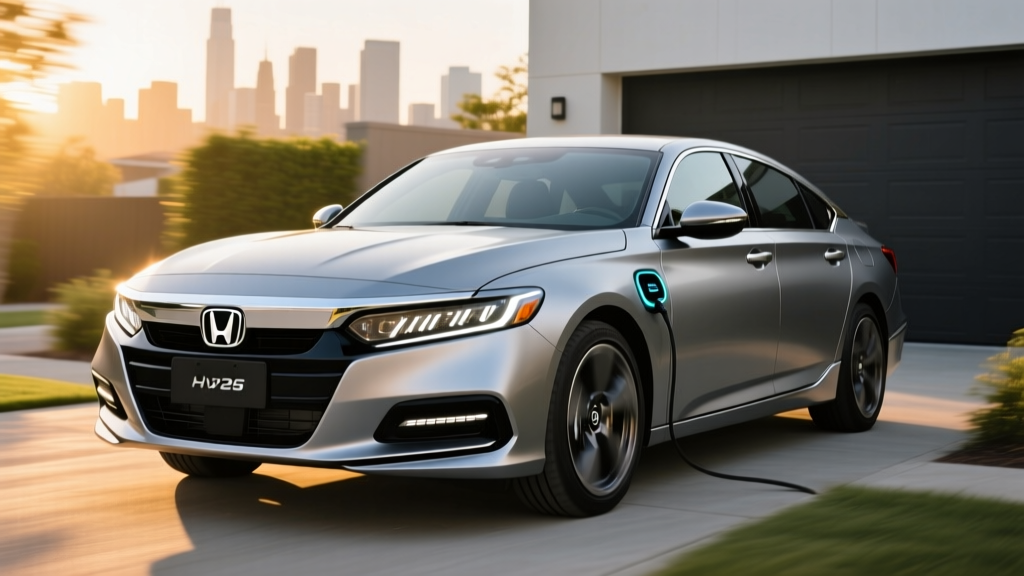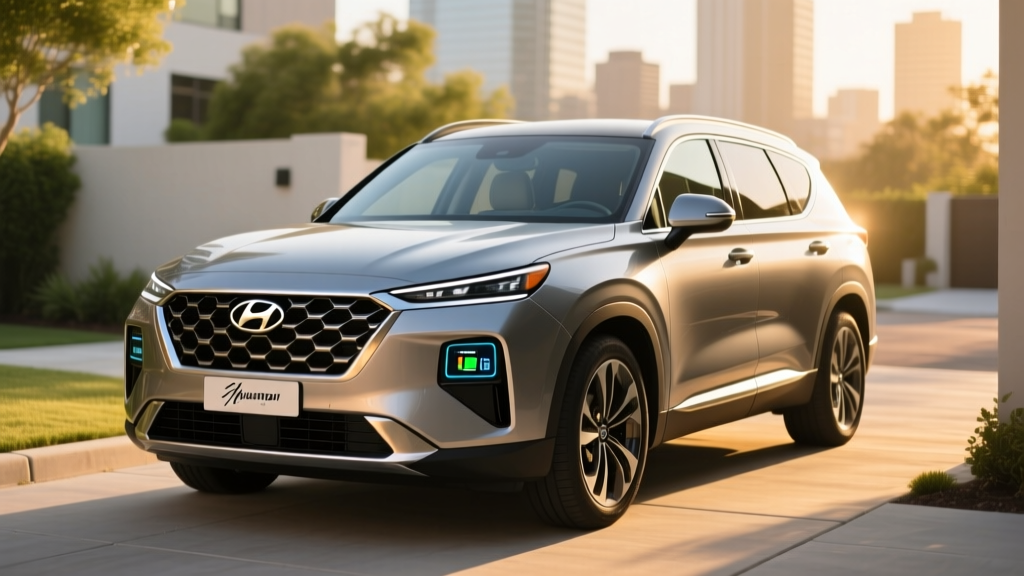
The 2025 Hyundai Santa Fe Hybrid Calligraphy sits at the intersection of family-SUV practicality and genuine fuel efficiency — no plug required. With its boxy, Land Rover-esque redesign and a hybrid powertrain that delivers an EPA-estimated 36 MPG combined, it targets buyers who want electric-like city efficiency without the charging logistics or range anxiety of a full BEV. But does the top-trim Calligraphy justify its premium price, and how does its real-world fuel economy hold up? Let's break down every number that matters.
Quick Verdict: Who Should Buy the Santa Fe Hybrid Calligraphy?
The Calligraphy trim is Hyundai's luxury play within the Santa Fe lineup. You're paying for Nappa leather, a head-up display, dual 12.3-inch screens, a premium Harman Kardon audio system, and Hyundai's full suite of driver-assistance features. Underneath, it shares the same 1.6-liter turbocharged hybrid powertrain found in lower trims, producing 230 combined horsepower. If you want the most fuel-efficient three-row family hauler without plugging in, this is a strong contender — just know that the Calligraphy premium is substantial over the SEL or Limited hybrid trims.
HEV vs PHEV: Which Santa Fe Hybrid Is Right for You?
Hyundai offers the Santa Fe in both conventional hybrid (HEV) and plug-in hybrid (PHEV) forms. Understanding the difference is critical before you visit the dealer.
Conventional Hybrid (HEV) — This Article's Focus
No plug needed. The HEV charges its small battery entirely through regenerative braking and the gas engine. You simply fill up at the gas station like any other car. The electric motor assists the engine to reduce fuel consumption, especially in stop-and-go driving.
Plug-In Hybrid (PHEV) — The Santa Fe Plug-In Hybrid
Requires a plug for maximum benefit. The PHEV variant carries a larger battery (approximately 13.8 kWh usable) that delivers roughly 30 miles of electric-only driving before the gas engine kicks in. Total combined range exceeds 400 miles. If you have home charging and a short commute, the PHEV can run almost entirely on electricity on weekdays while retaining gas-engine range for road trips. However, the PHEV costs more upfront and carries added weight.
Bottom line: If you can't charge at home or don't want to think about plugging in, the HEV (covered here) is the simpler, more affordable path. If you have a garage with a 120V or 240V outlet and a commute under 30 miles, the PHEV is worth considering separately.
Fuel Economy: EPA Ratings vs Real-World MPG
The 2025 Hyundai Santa Fe Hybrid is rated by the EPA as follows:
| Driving Cycle | EPA Estimate | Real-World Expectation |
|---|---|---|
| City | 35 MPG | 36–40 MPG (hybrids often beat EPA in city) |
| Highway | 34 MPG | 30–33 MPG (aerodynamic drag hurts at 70+ mph) |
| Combined | 36 MPG | 33–37 MPG depending on driving mix |
| Total Range | ~620 miles | ~570–640 miles (18.5-gal tank) |
Why real-world often beats EPA in the city: Conventional hybrids recapture kinetic energy during braking to recharge the battery. Stop-and-go traffic means more braking events, more regenerative energy, and more electric-motor assist. On the highway, the gas engine does most of the work, and the boxy Santa Fe shape creates aerodynamic drag that reduces efficiency at sustained high speeds.
Cold-weather note: Expect a 5–10% MPG reduction in winter months (roughly 30–33 MPG combined). The engine runs longer to warm the cabin and the battery, and winter fuel blends are slightly less energy-dense.
Powertrain and Performance Specs
| Specification | 2025 Santa Fe Hybrid Calligraphy |
|---|---|
| Engine | 1.6L turbocharged 4-cylinder + electric motor |
| Combined Horsepower | 230 hp |
| Combined Torque | 271 lb-ft |
| Transmission | 6-speed automatic |
| Drivetrain | HTRAC AWD (standard on Calligraphy) |
| 0–60 mph | ~7.8 seconds (est.) |
| Towing Capacity | 2,000 lbs |
| Hybrid Battery | ~1.5 kWh (lithium-ion, self-charging) |
| Seating | 3 rows / 7 passengers |
| Cargo (behind 3rd row) | ~14.6 cu ft |
| Cargo (3rd row folded) | ~40.5 cu ft |
The 230 hp output puts the Santa Fe Hybrid in the adequate-not-thrilling category. The electric motor fills in torque at low RPMs, so around-town acceleration feels responsive. The 6-speed automatic is a conventional torque-converter unit — not a CVT — which means shifts feel natural and there's no rubber-band sensation under hard acceleration. HTRAC AWD comes standard on the Calligraphy trim, giving you confidence in rain and light snow without a significant MPG penalty.
Pricing, Trim Value, and Tax Credit Eligibility
The 2025 Hyundai Santa Fe Hybrid Calligraphy starts at approximately $47,400 MSRP (including destination). This positions it $8,000–$10,000 above the entry-level Santa Fe Hybrid SE and roughly $3,000 above the Limited Hybrid.
What the Calligraphy premium gets you:
- Nappa leather seating surfaces with quilted stitching
- Head-up display (HUD)
- Harman Kardon premium audio (12 speakers)
- Dual 12.3-inch panoramic curved displays
- Remote Smart Parking Assist
- Highway Driving Assist 2 (HDA2) with lane-change assist
- Digital Key 2 with NFC/UWB
- Surround View Monitor with 3D view
- Heated and ventilated front seats, heated second-row seats
Federal Tax Credit: Does the Santa Fe Hybrid Qualify?
No. The conventional hybrid (HEV) Santa Fe does not qualify for the IRS §30D Clean Vehicle Credit. That credit applies only to plug-in electric vehicles (BEVs and PHEVs) meeting specific battery capacity, critical-mineral sourcing, MSRP caps, and buyer income requirements. The Santa Fe PHEV variant may qualify for a partial or full credit depending on current-year IRS sourcing rules, but the HEV is ineligible regardless of buyer income.
Some states and utilities offer separate rebates for conventional hybrids, but these vary widely by jurisdiction. Check your state energy office or utility provider for local incentive programs.
Hybrid Battery Warranty and Long-Term Reliability
Battery and Powertrain Warranty Coverage
| Hybrid Battery | 10 years / 100,000 miles |
| Hybrid System Components | 10 years / 100,000 miles |
| Powertrain (Engine/Trans) | 10 years / 100,000 miles |
| New Vehicle Limited | 5 years / 60,000 miles |
Hyundai's hybrid battery warranty is among the most generous in the industry. The 1.5 kWh lithium-ion pack in the HEV is small and operates within a narrow state-of-charge window (the system never fully charges or fully depletes it), which significantly reduces degradation stress. Based on industry data from Toyota and Hyundai's earlier hybrid platforms, conventional hybrid batteries routinely last 150,000–200,000+ miles before any significant capacity loss.
Battery replacement cost (out of warranty): If the hybrid battery does need replacement after 10 years or 100,000 miles, expect a dealer quote in the range of $2,000–$3,500 for the HEV pack. This is substantially less than a full EV battery replacement ($10,000–$20,000+) because the HEV battery is small. Third-party hybrid battery rebuilders may offer refurbished packs for $1,000–$1,800.
Reliability outlook: Hyundai's 1.6L turbo hybrid powertrain has been in the Tucson Hybrid and Santa Fe Hybrid since 2022 with no widespread failure patterns reported. The conventional 6-speed automatic avoids the reliability questions that have plagued some CVT-equipped hybrids from competitors. IIHS ratings and NHTSA data should be checked for the most current safety scores as they're released.
Hybrid vs PHEV vs Full EV: Which Fits Your Life?
Choose the Santa Fe HEV (This Vehicle) If:
- You can't charge at home (apartment, street parking, no garage outlet)
- You want zero behavior change — just fill up at gas stations
- Your budget is under $48,000 and you need three rows
- You regularly take road trips exceeding 400 miles
- You want the lowest upfront cost among electrified options
Choose the Santa Fe PHEV Instead If:
- You have a garage or driveway with at least a 120V outlet
- Your daily commute is under 30 miles round-trip
- You want to run mostly on electricity during the week
- You may qualify for the §30D federal tax credit (check IRS eligibility)
- You don't mind paying ~$3,000–$5,000 more upfront
Choose a Full BEV (e.g., Hyundai Ioniq 5, Kia EV9) If:
- You have reliable Level 2 home charging
- You want zero tailpipe emissions and minimal maintenance
- You want to maximize the §30D federal tax credit (up to $7,500)
- Your typical trips are under 250 miles, or you're willing to plan DC fast-charging stops
- You want the lowest per-mile fuel cost (electricity vs. gas)
Pros and Cons at a Glance
Pros
- 36 MPG combined is excellent for a 3-row AWD SUV
- No plug-in charging required — zero lifestyle change
- 620+ mile total range eliminates range anxiety entirely
- 10-year/100,000-mile hybrid battery warranty
- Calligraphy trim offers near-luxury interior quality
- Conventional 6-speed auto avoids CVT complaints
- HDA2 is one of the best Level 2 driver-assist systems
Cons
- No federal tax credit eligibility (HEV)
- Calligraphy trim is expensive — $47K+ for a Hyundai
- 230 hp feels merely adequate for a vehicle this size
- Third-row space is tight for adults on longer trips
- 2,000-lb towing capacity is below body-on-frame rivals
- Highway MPG drops noticeably at 75+ mph
- ~14.6 cu ft cargo behind 3rd row is modest
Frequently Asked Questions
How many MPG does the 2025 Santa Fe Hybrid get?
The EPA rates it at 35 city / 34 highway / 36 combined MPG. In real-world driving, expect 33–37 MPG combined depending on your city/highway mix. City-heavy routes often yield 38+ MPG thanks to regenerative braking, while sustained highway driving at 75+ mph can drop to 30–32 MPG.
How far can the Santa Fe Hybrid drive on electric only?
The conventional hybrid (HEV) cannot drive on electric power alone for any meaningful distance. The small ~1.5 kWh battery assists the gas engine during acceleration and low-speed maneuvers, but the engine is always running at highway speeds. If you want electric-only driving, you need the Santa Fe PHEV, which offers approximately 30 miles of electric-only range from its larger ~13.8 kWh battery.
Is the Santa Fe Hybrid reliable, and what does battery replacement cost?
Hyundai's hybrid powertrain has proven reliable since its 2022 introduction, with no widespread failure reports. The hybrid battery is covered for 10 years / 100,000 miles. Out-of-warranty replacement runs approximately $2,000–$3,500 — far less than an EV battery. Most hybrid batteries last 150,000–200,000+ miles based on industry-wide data.
Does the Santa Fe Hybrid qualify for any tax credit?
No. The conventional hybrid (HEV) does not qualify for the federal §30D Clean Vehicle Credit, which is reserved for plug-in vehicles (BEVs and PHEVs). The Santa Fe PHEV may qualify depending on current IRS battery-sourcing rules and your income level. Some state or utility programs may offer hybrid-specific rebates — check locally.
Do I need to plug in the Santa Fe Hybrid?
No. The HEV charges its own battery through regenerative braking and the gas engine. You never plug it in. You simply refuel at any gas station. If you want a plug-in experience, look at the Santa Fe PHEV variant instead.
How does the Calligraphy trim compare to the Limited Hybrid?
The Limited Hybrid (~$44,000) includes most of the tech — HDA2, panoramic displays, heated/ventilated front seats, and leather. The Calligraphy adds Nappa leather, head-up display, Harman Kardon audio, Remote Smart Parking, and Digital Key 2. If you don't care about the luxury-touch upgrades, the Limited saves ~$3,000 with the same powertrain and MPG.
Is HDA2 actually self-driving?
No. Highway Driving Assist 2 is a SAE Level 2 driver-assistance system. It combines adaptive cruise control with lane-centering and can assist with lane changes, but you must keep your hands on the wheel and your eyes on the road at all times. It is not autonomous driving.