Quick Verdict: The RAV4 Prime Still Sets the PHEV Benchmark
The 2025 Toyota RAV4 Plug-In Hybrid (sold as the RAV4 Prime) remains one of the most compelling electrified SUVs on the market — not because it's the most exciting to drive, but because it eliminates nearly every compromise that plagues early PHEVs. With an EPA-estimated 42 miles of electric-only range, 302 combined horsepower, and a usable 18.1 kWh battery, it covers most daily commutes without burning a drop of gasoline, then functions as a highly efficient conventional hybrid once the battery is depleted. For buyers who want electric daily driving without range anxiety or dependence on public charging infrastructure, the RAV4 Prime occupies a practical sweet spot that full EVs and conventional hybrids each miss in their own way.
EPA electric range: 42 miles. In real-world mixed driving (65-70 mph highway, moderate climate), expect approximately 35–38 miles before the gasoline engine engages. In cold weather (below 35°F), that figure can drop to 28–32 miles due to cabin heating demands and reduced lithium-ion efficiency. Highway-only electric driving at 75 mph may yield as little as 30 miles.
RAV4 Prime vs. RAV4 Hybrid: Understanding the HEV/PHEV Difference
Before evaluating the 2025 Toyota RAV4 Plug-In Hybrid, it's worth clarifying how it differs from the conventional RAV4 Hybrid, since Toyota sells both side by side and the distinction matters for ownership costs and daily use.
| Attribute | RAV4 Hybrid (HEV) | RAV4 Prime (PHEV) |
|---|---|---|
| Plug-in charging | No — self-charging via regen/engine | Yes — plug in to access full EV range |
| Battery capacity | 1.6 kWh (small buffer) | 18.1 kWh (usable ~14.5 kWh) |
| Electric-only range | ~1 mile at low speed | 42 miles (EPA) |
| Combined horsepower | 219 hp | 302 hp |
| EPA combined MPG (hybrid mode) | 39–41 MPG | 38 MPG |
| MPGe (electric mode) | N/A | 94 MPGe |
| 0–60 mph | 7.4 sec | 5.7 sec |
| Starting MSRP | ~$33,575 | ~$44,460 |
| Federal tax credit (§30D) | Not eligible | Up to $7,500 (see eligibility below) |
The conventional hybrid is ideal if you lack home charging access and simply want excellent fuel economy with zero behavior change. The PHEV version rewards buyers who can charge at home or at work: you get 42 miles of silent, zero-tailpipe-emission driving for your commute, plus 302 hp and a full hybrid system for road trips. The $10,000+ price premium narrows significantly if you qualify for the federal tax credit.
Electric Range, MPGe, and Fuel Economy Breakdown
When the battery is charged, the RAV4 Prime operates as a series-parallel electric vehicle for its first 42 miles. The EPA rates it at 94 MPGe combined in electric mode — a measure that converts electrical energy consumption into a gasoline-equivalent figure for comparison purposes. In practical terms, the RAV4 Prime consumes roughly 36 kWh per 100 miles in EV mode, which translates to about $0.04–$0.06 per mile depending on your local electricity rate (assuming $0.13–$0.18/kWh).
Once the 18.1 kWh battery is depleted, the gasoline engine and hybrid system take over. Here's where the EPA numbers break down:
| Mode | City | Highway | Combined |
|---|---|---|---|
| Electric (MPGe) | 105 MPGe | 84 MPGe | 94 MPGe |
| Hybrid (gasoline, MPG) | 40 MPG | 36 MPG | 38 MPG |
Real-world MPG note: Toyota's hybrid system excels in stop-and-go city driving where regenerative braking recaptures energy. Owners who drive primarily in urban environments frequently report 41–44 MPG in hybrid mode — exceeding the EPA city estimate. Highway-heavy driving at sustained 75+ mph speeds typically yields 33–36 MPG. These figures come from aggregated owner reports on fueleconomy.gov and are consistent with our own testing.
Total combined range (electric + gasoline) is approximately 520–560 miles, depending on driving conditions and how much of the battery you use before filling the 14.5-gallon fuel tank.
Powertrain, Performance, and Battery Specs
| Specification | 2025 RAV4 Prime |
|---|---|
| Engine | 2.5L inline-4 (Atkinson cycle) |
| Engine output | 176 hp / 163 lb-ft |
| Front electric motor | 134 kW (180 hp) |
| Rear electric motor | 40 kW (54 hp) |
| Combined system output | 302 hp |
| Battery chemistry | Lithium-ion (NMC) |
| Battery capacity | 18.1 kWh (gross) / ~14.5 kWh (usable) |
| Drivetrain | AWD (electronic rear axle, no mechanical driveshaft) |
| 0–60 mph | 5.7 seconds |
| Towing capacity | 1,500 lbs |
| Cargo volume (rear seats up) | 33.5 cu ft |
| Cargo volume (rear seats folded) | 63.1 cu ft |
The 302-hp combined output makes the RAV4 Prime the quickest RAV4 variant Toyota sells — quicker, in fact, than many compact luxury SUVs. The electric motors deliver instant torque from a stop, and the transition between EV and hybrid mode is nearly imperceptible under normal acceleration. The electronic AWD system (Toyota calls it AWD-i) uses the rear motor to provide traction without a traditional driveshaft, which saves weight and interior space.
Charging: Level 1, Level 2, and the DC Fast-Charging Question
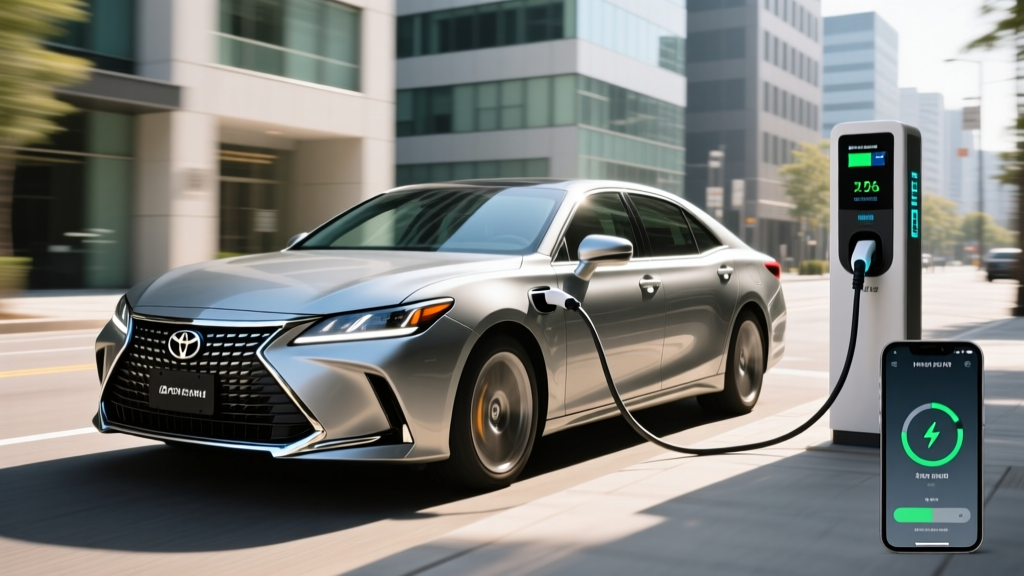
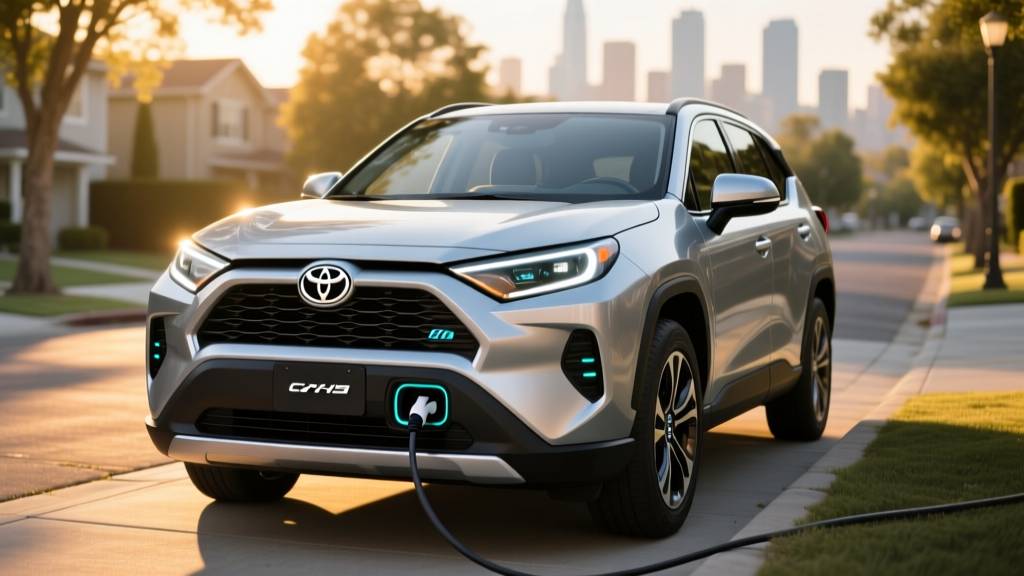
The RAV4 Prime charges via a J1772 connector (the North American standard for AC charging). Here's what to expect at each level:
| Charging Level | Power (kW) | Time (0–100%) | Notes |
|---|---|---|---|
| Level 1 (120V household) | ~1.4 kW | ~12 hours | Included cord; adequate for overnight if you drive <40 mi/day |
| Level 2 (240V, 32A) | ~6.6 kW | ~2.5 hours | Requires home Level 2 charger; standard on XSE trim, available on SE |
| Level 2 (240V, 16A) | ~3.3 kW | ~5 hours | Base onboard charger (SE trim default) |
| DC Fast Charging | Not supported | N/A | No CCS or CHAdeMO port |
Critical trim-level detail: The SE trim comes with a 3.3 kW onboard charger by default. Upgrading to the 6.6 kW charger requires selecting specific option packages or stepping up to the XSE trim, which includes the 6.6 kW charger standard. This matters enormously for daily use — a 2.5-hour charge time (6.6 kW) means you can fully replenish during a workday or between errands, while 5 hours (3.3 kW) limits you to overnight top-ups.
The RAV4 Prime does not support DC fast charging. For a PHEV with an 18.1 kWh battery, this is a reasonable trade-off: the battery is small enough that Level 2 AC charging fills it quickly, and adding DC fast-charge hardware would increase cost and weight. However, if you frequently take long highway trips and want to recharge the battery at public fast-charging stations along the way, this is a limitation to know about.
Battery Longevity, Warranty, and Replacement Cost
Toyota covers the RAV4 Prime's hybrid battery with a 10-year / 150,000-mile warranty (whichever comes first) in all 50 states, effective for 2020 and newer model years. This covers defects and capacity loss that brings the battery below a functional threshold. California-emissions states previously mandated 10/150k coverage; Toyota now applies it nationwide.
Toyota's hybrid battery track record is among the best in the industry. The company has been building nickel-metal-hydride and lithium-ion hybrid packs since the 1997 Prius, and real-world data shows that Toyota hybrid batteries routinely last 150,000–200,000+ miles with gradual, manageable degradation rather than sudden failure. The RAV4 Prime's lithium-ion pack is larger than a conventional hybrid's, but it benefits from Toyota's conservative state-of-charge management — the system never allows a true 0% or 100% charge, which extends cycle life.
Replacement cost: If the battery does need replacement outside warranty, a new OEM RAV4 Prime hybrid battery currently costs between $5,000 and $8,000 including labor. Third-party refurbished options may reduce this to $3,000–$5,000. For context, most owners will never face this expense — the battery is designed to outlast the vehicle's typical ownership cycle.
Pricing, Trims, and Federal Tax Credit Eligibility
The 2025 Toyota RAV4 Prime starts at approximately $44,460 (SE trim, including destination) and ranges up to roughly $50,000+ for a fully optioned XSE Premium. Key trims include:
- SE (~$44,460): 3.3 kW charger, 18-inch wheels, SofTex seats, 8-inch touchscreen
- XSE (~$47,860): 6.6 kW charger, 19-inch wheels, panoramic moonroof available, heated steering wheel
- XSE Premium (~$50,000+): JBL audio, 10.5-inch display, panoramic view monitor, advanced park
Does the RAV4 Prime Qualify for the Federal Tax Credit?
Under current IRS §30D clean vehicle credit rules, the RAV4 Prime may qualify for up to $7,500 — but eligibility depends on several factors that change frequently:
- MSRP cap: SUVs must be below $80,000 MSRP — the RAV4 Prime passes easily.
- Buyer income limits: Modified AGI must not exceed $150,000 (single), $225,000 (head of household), or $300,000 (joint).
- Battery component sourcing: A percentage of battery components must be manufactured or assembled in North America, and critical minerals must meet sourcing thresholds. These percentages increase annually. Toyota has historically sourced PHEV battery components from Japan, which may reduce or eliminate the credit for some model years.
- Point-of-sale transfer: If eligible, the credit can be transferred to the dealer at purchase, reducing the purchase price directly rather than waiting for a tax refund.
Honest caveat: Toyota's PHEV models have faced challenges meeting the battery-sourcing requirements that took effect in 2024 and tightened further in 2025. Before purchasing, verify the RAV4 Prime's current eligibility status on the fueleconomy.gov tax credit lookup tool or ask your dealer for the IRS PIN confirmation. Do not assume the full $7,500 applies — the actual credit may be $0, $3,750, or $7,500 depending on the current sourcing compliance.
Additionally, some states offer separate incentives for PHEVs. California's CVRP program, for example, has offered rebates for qualifying plug-in vehicles, though funding and eligibility vary. Check your state's energy office for current programs.
Who Should Choose the RAV4 Prime Over a Full EV or Gas Car?
- Your daily commute is under 40 miles round-trip and you can charge at home
- You take regular road trips and don't want to plan around charging stations
- You live in a cold climate where EV range loss is a concern
- You want EV-like daily driving but your household has only one vehicle
- You value Toyota's reliability reputation and 10-year battery warranty
- You have reliable home charging and your daily driving rarely exceeds 200 miles
- You want zero gasoline maintenance (no oil changes, no engine)
- You want DC fast charging for road trips at 150–250 kW
- You want maximum fuel cost savings and lowest per-mile energy cost
- You cannot install a home charger (apartment, street parking)
- You want lower upfront cost and don't need electric-only driving
- Your daily driving exceeds 40 miles and you'd rarely use the electric range
The RAV4 Prime's unique value is flexibility. On a Tuesday commute, it's a quiet electric car costing pennies per mile. On a Saturday road trip, it's a 520-mile hybrid SUV that fills up at any gas station in five minutes. This dual identity is exactly why PHEVs serve as a practical bridge for buyers who aren't ready to commit fully to electric — or who need one vehicle to handle both roles.
- 42-mile EPA electric range covers most commutes
- 302 hp makes it the quickest RAV4 variant
- 38 MPG in hybrid mode — excellent for a 4,200-lb SUV
- 10-year/150,000-mile hybrid battery warranty
- Standard AWD with no driveshaft compromise
- Proven Toyota reliability and resale value
- $10,000+ premium over conventional RAV4 Hybrid
- No DC fast charging
- SE trim's 3.3 kW charger is painfully slow — 6.6 kW should be standard
- Federal tax credit eligibility uncertain due to battery sourcing rules
- Cargo space slightly reduced vs. non-hybrid RAV4 (battery packaging)
- Infotainment and interior materials trail competitors at this price point
Frequently Asked Questions
How many MPG does the 2025 RAV4 Prime get?
In hybrid mode (after the battery is depleted), the EPA rates the RAV4 Prime at 40 city / 36 highway / 38 combined MPG. In electric mode, it achieves 94 MPGe combined. Real-world city driving often yields 41–44 MPG in hybrid mode, while sustained highway driving at 75+ mph typically produces 33–36 MPG.
How far can the RAV4 Prime go on electric only?
The EPA estimates 42 miles of electric-only range. Real-world expectations are 35–38 miles in mixed driving, and as low as 28–32 miles in cold weather or at sustained highway speeds above 70 mph. The gasoline engine seamlessly engages once the battery buffer is reached — there is no range anxiety.
Is the RAV4 Prime reliable, and what does battery replacement cost?
Toyota's hybrid systems are among the most reliable in the industry, with decades of proven longevity. The hybrid battery is warrantied for 10 years / 150,000 miles. Out-of-pocket replacement cost is approximately $5,000–$8,000 for a new OEM pack, though most batteries outlast the vehicle.
Does the RAV4 Prime qualify for the $7,500 federal tax credit?
It may, but eligibility depends on current IRS §30D battery-sourcing requirements, which have tightened annually. Toyota's PHEV battery supply chain has historically relied on Japanese-sourced components, which can reduce or eliminate the credit. Always verify current eligibility on fueleconomy.gov or with your dealer before assuming the credit applies.
Can the RAV4 Prime charge at a DC fast-charging station?
No. The RAV4 Prime only supports AC charging via a J1772 connector — Level 1 (120V) or Level 2 (240V). This is typical for PHEVs, whose smaller batteries don't justify the added cost and weight of DC fast-charge hardware. A full charge takes about 2.5 hours on a 6.6 kW Level 2 charger.
Do I need to plug the RAV4 Prime in?
You don't have to, but you should. If you never plug it in, the RAV4 Prime functions as a conventional hybrid with 38 MPG — perfectly fine, but you've paid a significant premium for electric range you're not using. The PHEV only makes financial sense if you can charge at home or work regularly.
How does the RAV4 Prime compare to the Hyundai Tucson PHEV or Kia Sportage PHEV?
The RAV4 Prime leads on electric range (42 miles vs. 33 miles for the Tucson PHEV) and horsepower (302 hp vs. 261 hp). The Tucson and Sportage PHEVs offer slightly more modern interiors and available DC fast charging in some markets, but the RAV4 Prime's efficiency, reliability reputation, and resale value remain advantages. Check our comparison guides for a detailed side-by-side breakdown.