Quick Verdict: The PHEV That Refuses to Compromise
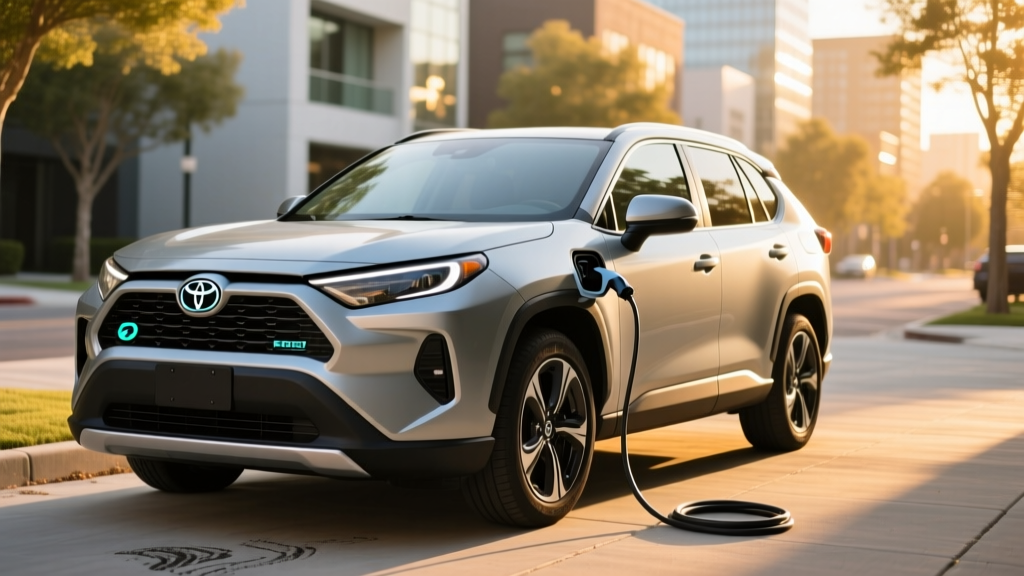
The 2025 Toyota RAV4 Plug-In Hybrid (formerly known as the RAV4 Prime through the 2024 model year) remains one of the most compelling electrified SUVs on the market. With an EPA-rated 42 miles of electric-only range, 302 combined horsepower, and a conventional hybrid fallback that returns 38 MPG combined, it bridges the gap between full EV commitment and gas-car convenience. For buyers who can charge at home but aren't ready to abandon the gas station entirely, this is the sweet spot — and it's priced starting at $43,690 before incentives.
The conventional RAV4 Hybrid (HEV) cannot be plugged in; it generates electricity through regenerative braking and the engine, delivering ~41 MPG combined with zero lifestyle change. The RAV4 Plug-In Hybrid (PHEV) adds a larger 18.1 kWh battery and more powerful electric motors, giving you 42 miles of pure electric driving before seamlessly reverting to hybrid operation. You plug it in to unlock that electric range — but if you never plug it in, it still functions as a very efficient hybrid.
Range, Efficiency, and the Numbers That Matter
The EPA rates the 2025 RAV4 Plug-In Hybrid at 94 MPGe when operating in electric mode and 38 MPG combined (40 city / 36 highway) once the battery depletes and the 2.5-liter four-cylinder engine takes over. Total combined range — electric plus gas — exceeds 520 miles on a full tank and full charge.
| Metric | EPA Rating | Real-World Expectation |
|---|---|---|
| Electric-only range | 42 miles | 35–40 mi (highway/cold); up to 45 mi (city, mild weather) |
| MPGe (EV mode) | 94 MPGe | Varies with driving style and temperature |
| MPG (hybrid mode, city) | 40 MPG | 38–43 MPG (hybrids often beat EPA in stop-and-go) |
| MPG (hybrid mode, highway) | 36 MPG | 33–37 MPG (aerodynamic drag at 75+ mph reduces efficiency) |
| MPG (hybrid mode, combined) | 38 MPG | 36–40 MPG |
| Total combined range | ~520 miles | 480–540 mi depending on conditions |
Powertrain: 302 Horsepower With Seamless Transitions
Toyota pairs a 2.5-liter Atkinson-cycle four-cylinder engine (177 hp, 165 lb-ft) with two electric motors — a front motor producing 134 kW (180 hp) and a rear motor rated at 40 kW (54 hp). Combined system output is 302 horsepower, making this the quickest RAV4 in the lineup with a 0–60 mph time of approximately 5.7 seconds.
| Component | Specification |
|---|---|
| Engine | 2.5L 4-cyl Atkinson cycle, 177 hp / 165 lb-ft |
| Front electric motor | 134 kW (180 hp) |
| Rear electric motor | 40 kW (54 hp) |
| Combined system output | 302 hp |
| Drivetrain | Electronic AWD (eAWD) |
| 0–60 mph | ~5.7 seconds |
| Towing capacity | 1,500 lbs |
| Transmission | eCVT (planetary gearset, no traditional gears) |
The eAWD system operates differently from mechanical AWD: there is no driveshaft connecting the front and rear axles. Instead, the rear motor engages independently when traction is needed, which means response is instant but the rear motor's 54 hp limits aggressive all-wheel-drive scenarios. For snow and rain, it's excellent. For off-roading, it's not designed for that purpose.
Battery, Charging, and What to Expect at the Plug
The 2025 RAV4 Plug-In Hybrid carries an 18.1 kWh lithium-ion battery pack (usable capacity approximately 14.9 kWh, with the remainder serving as a buffer to protect long-term battery health). This battery is notably larger than the ~1.6 kWh pack in the conventional RAV4 Hybrid, which is why the PHEV can drive 42 miles on electricity alone.
| Charging Level | Power / Voltage | Time (0–100%) | Notes |
|---|---|---|---|
| Level 1 (standard outlet) | 1.4 kW / 120V | ~10–12 hours | Trickle charge; suitable for overnight if daily driving <42 mi |
| Level 2 (home/public) | 6.6 kW / 240V | ~2.5 hours | Recommended; requires 30A+ circuit |
| DC Fast Charging | Not supported | N/A | No CCS or CHAdeMO port |
A critical detail for buyers: this vehicle does not support DC fast charging. The charge port is a J1772 connector for Level 1 and Level 2 AC charging only. This is typical for PHEVs — the battery is small enough that Level 2 fully replenishes it in about 2.5 hours, making DC fast charging less necessary. However, if you rely exclusively on public charging and have no home or workplace Level 2 access, this limitation matters.
Toyota covers the hybrid battery pack with a 10-year / 150,000-mile warranty (whichever comes first) in all 50 states, a significant improvement from the older 8-year/100,000-mile standard. This warranty covers capacity loss below a specified threshold and manufacturing defects. Based on Toyota's extensive hybrid track record (over two decades with the Prius lineage), PHEV battery replacements are rare within this window. If replacement is needed out of warranty, expect a cost in the range of $4,000–$6,500 for parts and labor, though third-party refurbishment options are increasingly available at lower cost.
Pricing, Trims, and Federal Tax Credit Eligibility
The 2025 RAV4 Plug-In Hybrid is offered in two trims:
| Trim | MSRP | Key Features |
|---|---|---|
| SE | $43,690 | Sport-tuned suspension, 18" alloy wheels, heated front seats, 8" touchscreen, Qi wireless charging |
| XSE | $47,150 | Premium SofTex seats, 9" touchscreen, panoramic glass roof, ambient lighting, 19" alloy wheels |
Federal Tax Credit (§30D): The 2025 RAV4 Plug-In Hybrid qualifies for up to $7,500 in federal tax credits, but eligibility depends on several factors under current IRS rules:
- MSRP cap: SUVs must have an MSRP at or below $80,000 — both trims qualify.
- Buyer income cap: Modified AGI must not exceed $150,000 (single), $225,000 (head of household), or $300,000 (joint).
- Battery sourcing requirements: Critical minerals and battery components must meet escalating domestic-sourcing thresholds. Toyota has confirmed the 2025 RAV4 PHEV meets current-year requirements for the full $7,500, but buyers should verify at the point of sale as supply chains shift.
- Point-of-sale transfer: As of 2024, buyers can transfer the credit to the dealer at purchase, reducing the purchase price directly rather than waiting for a tax refund.
For full eligibility details, consult the IRS Clean Vehicle Credit page. State incentives may also apply — check your local DMV or energy office.
RAV4 Hybrid (HEV) vs. RAV4 Plug-In Hybrid (PHEV): Which One Fits?
| Attribute | RAV4 Hybrid (HEV) | RAV4 Plug-In Hybrid (PHEV) |
|---|---|---|
| Starting MSRP | $33,425 | $43,690 |
| EPA combined MPG | 41 MPG | 38 MPG (hybrid mode) / 94 MPGe (EV mode) |
| Electric-only range | ~1 mile (low-speed assist only) | 42 miles |
| Battery capacity | ~1.6 kWh | 18.1 kWh |
| Combined horsepower | 219 hp | 302 hp |
| 0–60 mph | 7.4 sec | 5.7 sec |
| Plugs in? | No | Yes (Level 1/2, no DCFC) |
| Federal tax credit | None | Up to $7,500 |
| Cargo volume | 37.5 cu ft | 33.5 cu ft (battery reduces space slightly) |
| Best for | No home charging access; budget-conscious buyers | Home chargers with commutes under 42 miles |
The math is straightforward: if you can charge at home (even a standard 120V outlet works overnight) and your daily round-trip commute is under 40 miles, the PHEV lets you drive almost entirely on electricity during the week while retaining gas-car freedom for road trips. If you cannot charge at home or at work, the conventional RAV4 Hybrid delivers outstanding efficiency with zero infrastructure requirements — and costs $10,000 less upfront.
Reliability, Ownership Costs, and Long-Term Value
Toyota's hybrid systems have an exceptional reliability track record. The RAV4 Plug-In Hybrid uses Toyota's fourth-generation hybrid synergy drive, refined over millions of vehicles. The hybrid battery warranty of 10 years / 150,000 miles reflects Toyota's confidence in the pack's longevity. According to fueleconomy.gov, the estimated annual fuel cost for the PHEV (assuming 15,000 miles/year, 55% highway, and regular charging) is approximately $1,050, compared to roughly $2,100 for a comparable gas-only compact SUV.
Pros
- 42-mile EV range covers most daily commutes
- 302 hp makes it genuinely quick (5.7s to 60)
- Standard eAWD with no mechanical complexity
- $7,500 federal tax credit brings effective price near $36K
- 10-year / 150K-mile battery warranty
- No range anxiety — 520+ total miles
- Toyota reliability and resale value
Cons
- $43,690 starting price is steep before incentives
- No DC fast charging capability
- 4-cylinder engine sounds coarse under hard acceleration
- Cargo space reduced to 33.5 cu ft (battery intrusion)
- 1,500-lb towing capacity limits utility
- SE trim lacks premium features at this price point
- Tax credit eligibility depends on income and sourcing rules
Who Should Buy the 2025 RAV4 Plug-In Hybrid?
Choose the RAV4 PHEV If:
- You have Level 1 or Level 2 charging at home or work
- Your daily commute is under 42 miles round-trip
- You want EV-like daily driving without road-trip range anxiety
- You qualify for the federal tax credit (income under $300K joint)
- You value quick acceleration and standard AWD
- You plan to own the vehicle for 8+ years (warranty coverage)
Choose a Full EV Instead If:
- You want zero maintenance on an internal combustion engine
- Your daily driving is predictable and under 250 miles
- You want access to DC fast charging for road trips
- You want to maximize fuel savings (electricity is cheaper than gas everywhere)
Choose the Conventional RAV4 Hybrid Instead If:
- You have no access to any charging infrastructure
- Your budget is closer to $35,000
- You want maximum cargo space (37.5 cu ft)
- You prefer simplicity — no cables, no charging routines
Frequently Asked Questions
How many MPG does the 2025 RAV4 Plug-In Hybrid get?
Once the battery is depleted, the EPA rates it at 38 MPG combined (40 city / 36 highway). In real-world driving, many owners report 36–43 MPG depending on conditions. City driving tends to favor hybrid efficiency due to regenerative braking, often exceeding the EPA city estimate.
How far can the RAV4 PHEV go on electric power alone?
The EPA rates it at 42 miles of electric-only range. Real-world results vary: expect 35–40 miles on the highway or in cold weather, and up to 45 miles in mild-temperature city driving. The transition to hybrid mode is seamless — you won't be stranded when the battery depletes.
Does the 2025 RAV4 Plug-In Hybrid qualify for a tax credit?
Yes, it is eligible for up to $7,500 under the IRS §30D Clean Vehicle Credit, subject to buyer income limits ($300K joint / $150K single), MSRP caps (under $80K for SUVs — both trims qualify), and battery-sourcing requirements that may shift during the model year. The credit can be transferred to the dealer at the point of sale to reduce your purchase price directly. Always verify current eligibility at irs.gov before purchasing.
Is the RAV4 Plug-In Hybrid reliable, and what does battery replacement cost?
Toyota's hybrid systems are among the most proven in the industry, with over 20 years of real-world deployment. The hybrid battery is warranted for 10 years or 150,000 miles. Premature battery failure is rare based on historical data from Toyota's hybrid fleet. Out-of-warranty replacement costs approximately $4,000–$6,500, though refurbished options may be available for less. The conventional 12V auxiliary battery follows standard replacement intervals (~$200–$350).
Can I charge the RAV4 PHEV at a public fast charger?
No. The 2025 RAV4 Plug-In Hybrid does not have a DC fast charging port. It supports only Level 1 (120V) and Level 2 (240V) AC charging via a J1772 connector. Level 2 fully charges the battery in approximately 2.5 hours. This is standard for most PHEVs — the smaller battery makes DC fast charging less practical and less necessary for daily use.
How does the RAV4 PHEV compare to a full EV like the Toyota bZ4X or Tesla Model Y?
The RAV4 PHEV sacrifices the 250+ mile EV range and DC fast charging of a full EV in exchange for unlimited gas-powered range and a lower purchase price (after incentives). If you take frequent road trips over 300 miles, live in an area with sparse charging infrastructure, or cannot install a home charger, the PHEV eliminates the planning burden of EV road trips. If your driving is predictable and you have reliable charging access, a full EV will deliver lower operating costs and zero tailpipe emissions.