Quick Verdict: The 2025 RAV4 Hybrid Limited at a Glance
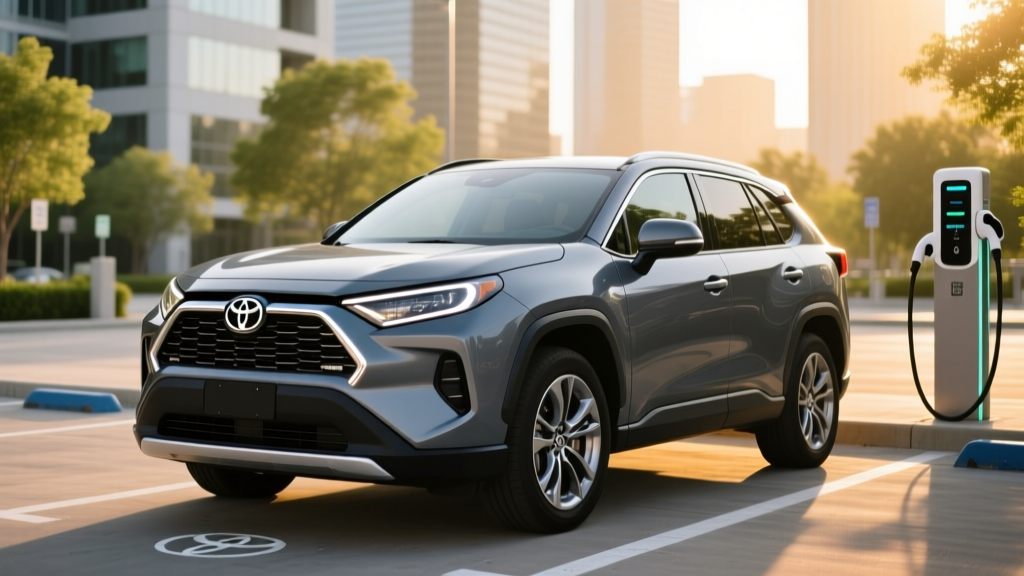
The 2025 Toyota RAV4 Hybrid Limited occupies a specific and increasingly crowded niche: a fully loaded compact SUV that sips fuel without requiring a plug, a lifestyle change, or a leap into full battery-electric territory. With an EPA-estimated 41 city / 38 highway / 39 combined MPG and a starting MSRP of $40,805 (including destination), the Limited trim adds premium features like a panoramic moonroof, heated and ventilated front seats, a 10.5-inch touchscreen with wireless Apple CarPlay and Android Auto, and Toyota's full suite of Safety Sense 2.5+ driver-assistance features.
After spending time with the RAV4 Hybrid platform across multiple model years and trims, the 2025 Limited stands out as the version that best balances efficiency with everyday comfort. It does not break new ground in powertrain technology — the 2.5-liter Dynamic Force four-cylinder paired with Toyota's fifth-generation hybrid system has been refined rather than reinvented — but it delivers exactly what hybrid buyers want: predictable, excellent fuel economy, standard electronic all-wheel drive, and Toyota's reputation for long-term reliability.
| Specification | 2025 RAV4 Hybrid Limited |
|---|---|
| EPA Fuel Economy | 41 city / 38 highway / 39 combined MPG |
| Powertrain | 2.5L 4-cyl + 3 electric motors (eAWD) |
| Combined Horsepower | 219 hp (net system) |
| Drivetrain | Electronic On-Demand AWD |
| 0–60 mph | ~7.4 seconds |
| Cargo Volume | 37.5 cu ft (rear seats up) / 69.8 cu ft (folded) |
| Hybrid Battery | 1.6 kWh lithium-ion (sealed, self-charging) |
| Towing Capacity | 1,750 lbs |
| Base MSRP (incl. destination) | $40,805 |
| Hybrid Battery Warranty | 10 years / 150,000 miles |
HEV vs PHEV: Where the RAV4 Hybrid Fits
Before evaluating the RAV4 Hybrid Limited on its own merits, it's essential to understand what it is — and what it is not. The RAV4 Hybrid is a conventional hybrid electric vehicle (HEV). It generates all of its own electricity through regenerative braking and its gasoline engine. You never plug it in. There is no electric-only driving range to manage, no charging cable to deal with, and no need for a home charging setup.
This distinguishes it clearly from the RAV4 Prime, which is Toyota's plug-in hybrid (PHEV) variant. The RAV4 Prime carries a much larger 18.1 kWh battery, delivers 42 miles of EPA electric-only range, produces 302 combined horsepower, and starts at a significantly higher MSRP. The Prime also qualifies for certain state-level incentives and previously qualified for the federal §30D tax credit (though eligibility for new purchases has changed under current IRS rules — more on this below).
| Feature | RAV4 Hybrid (HEV) | RAV4 Prime (PHEV) |
|---|---|---|
| Plug-in Required? | No — self-charging | Yes — 120V or 240V |
| Electric-Only Range | None (EV assist only) | 42 miles EPA |
| Battery Capacity | 1.6 kWh | 18.1 kWh |
| Combined Horsepower | 219 hp | 302 hp |
| EPA Combined MPG (gas) | 39 MPG | 38 MPG (94 MPGe w/ charge) |
| Starting MSRP | ~$33,000 (LE) / $40,805 (Limited) | ~$44,500 (SE) |
| Federal Tax Credit (2025) | Not eligible | Check current IRS §30D rules |
| DC Fast Charging | N/A | Not available (Level 2 max) |
If you can install a Level 2 home charger and your daily commute falls under 40 miles, the RAV4 Prime makes a compelling case — you'd drive mostly electric most days and still have a gas engine for road trips. But if you live in an apartment, lack reliable charging access, or simply want a no-fuss ownership experience, the standard RAV4 Hybrid is the pragmatic choice.
Fuel Economy: EPA Ratings vs Real-World MPG
The EPA rates the 2025 RAV4 Hybrid (all trims, including the Limited) at 41 MPG city, 38 MPG highway, and 39 MPG combined, per fueleconomy.gov. These numbers apply across the Hybrid lineup because the powertrain and eAWD system are identical regardless of trim — the Limited's extra weight from luxury features is negligible in EPA testing.
| Driving Scenario | EPA Rating | Real-World Expectation |
|---|---|---|
| City / Stop-and-Go | 41 MPG | 40–44 MPG (hybrids excel here) |
| Highway (70–80 mph) | 38 MPG | 34–37 MPG (aero drag, less regen benefit) |
| Combined (mixed driving) | 39 MPG | 36–41 MPG depending on route profile |
| Cold Weather (below 30°F) | N/A | 33–36 MPG (engine runs more for cabin heat) |
The real-world story with Toyota's hybrid system is consistent across owners and independent testing: city driving often exceeds the EPA estimate. The hybrid system recovers energy during every stop, and the engine shuts off entirely at low speeds and during coasting. In urban and suburban driving with frequent stops, seeing 42–44 MPG on the trip computer is common.
Highway driving tells a different story. At sustained speeds above 70 mph, the electric motors contribute less and aerodynamic drag dominates. Expect 34–37 MPG on long interstate trips. Cold weather compounds this: the gasoline engine runs more frequently to provide cabin heat and maintain battery temperature, dropping observed economy to the low-to-mid 30s in winter conditions.
For a compact AWD SUV, these numbers remain exceptional. The closest non-hybrid competitor — the Honda CR-V AWD with its turbocharged 1.5L — returns 29 MPG combined. That's a 10 MPG gap that translates to roughly $400–$500 in annual fuel savings at 15,000 miles per year and $3.50/gallon gasoline.
Powertrain and Performance: 219 HP with eAWD
The 2025 RAV4 Hybrid uses Toyota's well-proven hybrid synergy drive system built around a 2.5-liter Dynamic Force inline-four engine producing 176 horsepower and 163 lb-ft of torque on its own. Two front electric motor-generators and one rear motor combine with the engine for a net system output of 219 horsepower.
The rear motor is key: it provides electronic on-demand all-wheel drive without a mechanical driveshaft connecting the front and rear axles. When the system detects front-wheel slip — during acceleration on wet pavement, light snow, or loose gravel — the rear motor engages instantly. It's not a rock-crawling 4WD system, but for the all-weather traction needs of most buyers, it works effectively and adds minimal weight.
The 0–60 mph time of approximately 7.4 seconds places the RAV4 Hybrid in the adequately quick category. It's not the RAV4 Prime's 5.7-second sprint, but it's competitive with turbocharged four-cylinder rivals and never feels underpowered in daily driving. The eCVT transmission is smooth, though some drivers notice a characteristic "rubber-band" sensation under hard acceleration where engine RPM climbs ahead of vehicle speed — a trait inherent to planetary-gear hybrid systems.
One practical note: the RAV4 Hybrid's 1,750-pound towing capacity is modest. If you need to tow a small trailer, it will handle a lightweight utility trailer or a pair of dirt bikes, but it's not rated for most campers or boat trailers. The RAV4 Prime, with its more powerful system, is rated for the same 1,750 pounds.
Hybrid Battery Longevity, Warranty, and Replacement Cost
Battery longevity is the single most common concern among first-time hybrid buyers, and it deserves a direct, data-backed answer.
Toyota Hybrid Battery Warranty: 10 years or 150,000 miles (whichever comes first), covering defects and capacity loss below a defined threshold. This applies to all 2025 RAV4 Hybrid trims and is transferable to subsequent owners.
The 2025 RAV4 Hybrid's 1.6 kWh lithium-ion traction battery is small, sealed, and managed conservatively by the hybrid control system. Unlike full EV batteries that regularly cycle from 10% to 90% state of charge, the RAV4 Hybrid's battery operates in a narrow band — typically between 40% and 80% SoC. The system never fully depletes or fully charges the pack during normal operation, which dramatically reduces degradation stress.
Real-world longevity data supports this engineering approach. Toyota's hybrid batteries in the RAV4, Prius, and Camry Hybrid platforms have demonstrated exceptional durability. It's common for these batteries to last 150,000–200,000+ miles with minimal capacity loss. Independent fleet data and owner surveys consistently show hybrid battery failure rates well below 5% within the warranty period.
If replacement is ever needed outside warranty, a new OEM hybrid battery for the RAV4 Hybrid typically costs between $3,000 and $4,500 installed at a dealership. Refurbished or reconditioned units from reputable suppliers can reduce that to $1,500–$2,500. Individual module replacement (rather than the full pack) is sometimes possible for $500–$1,000 if only one or two cells have degraded. Given the 10-year/150,000-mile warranty and the battery's track record, this cost is a low-probability event for most owners.
Pricing, Trim Value, and Tax Credit Eligibility
The 2025 RAV4 Hybrid Limited starts at $40,805 including Toyota's $1,395 destination charge. That positions it at the top of the RAV4 Hybrid lineup, which begins at approximately $33,000 for the LE trim. The Limited's premium over the mid-range XLE (~$35,600) buys you:
- Panoramic glass roof with power sunshade
- SofTex-trimmed heated and ventilated front seats
- Heated steering wheel
- 10.5-inch Toyota Audio Multimedia touchscreen with navigation
- Wireless Apple CarPlay and Android Auto
- JBL 11-speaker premium audio system (on some packages)
- 360-degree panoramic view monitor
- Front and rear parking assist with automatic braking
Federal tax credit: The standard RAV4 Hybrid (HEV) does not qualify for the IRS §30D Clean Vehicle Credit. That credit is reserved for plug-in electric vehicles (BEVs and PHEVs) that meet battery sourcing, critical mineral, MSRP cap, and buyer income requirements. The RAV4 Hybrid, as a self-charging HEV, falls outside the program's definition entirely. For current §30D eligibility rules on plug-in vehicles, consult the IRS Clean Vehicle Credit page.
Some states and utilities offer their own incentives for hybrid purchases, though these are less common than EV-specific rebates. Check your state energy office and local utility for any applicable programs.
RAV4 Hybrid vs PHEV vs Full EV: Which Is Right for You?
Choosing between the RAV4 Hybrid, the RAV4 Prime (PHEV), and a full battery-electric SUV depends on your charging access, driving patterns, and budget. Here's a practical decision framework:
Choose the RAV4 Hybrid (HEV) if:
- You cannot install a home charger (apartment, street parking, no garage)
- You want zero behavior change — just fill up with gas as usual
- Your budget is under $42,000 and you want a loaded compact SUV
- You drive 10,000–15,000 miles/year in mixed city/highway conditions
- You value proven long-term reliability with minimal maintenance
Choose the RAV4 Prime (PHEV) if:
- You can install a Level 2 (240V) home charger
- Your daily commute is under 42 miles round-trip (you'll rarely use gas)
- You want 302 hp and quicker acceleration
- You want to reduce fuel consumption dramatically while keeping gas for road trips
- You can absorb the ~$4,000+ price premium over the Hybrid Limited
Choose a full EV (e.g., Tesla Model Y, Hyundai Ioniq 5) if:
- You have reliable home Level 2 charging
- You want zero tailpipe emissions and the lowest per-mile fuel cost
- You qualify for the federal §30D tax credit (up to $7,500 with point-of-sale transfer)
- You're comfortable planning DC fast-charging stops on road trips
- You want the latest in ADAS and over-the-air software updates
For the majority of US buyers who lack consistent home charging access, the RAV4 Hybrid remains the lowest-friction path to dramatically better fuel economy. You get 39 MPG combined in a practical, well-equipped AWD SUV without any infrastructure investment.
Ownership Costs: 5-Year Total Cost Breakdown
Let's put real numbers around five years of RAV4 Hybrid Limited ownership compared to a similarly priced gas-only compact SUV averaging 26 MPG combined:
| Cost Category (5 years, 75,000 mi) | RAV4 Hybrid Limited (39 MPG) | Gas SUV Baseline (26 MPG) |
|---|---|---|
| Purchase Price (MSRP) | $40,805 | $38,000 |
| Fuel Cost ($3.50/gal avg) | $6,731 | $10,096 |
| Fuel Savings vs Gas | $3,365 saved over 5 years | |
| Estimated Maintenance | ~$2,800 (no plug, fewer brake jobs) | ~$3,200 |
| Insurance (avg) | ~$7,500 | ~$7,000 |
| Estimated Depreciation | ~$16,300 (strong resale) | ~$16,000 |
| Approx. 5-Year Total | ~$74,136 | ~$74,296 |
The RAV4 Hybrid Limited essentially breaks even with a comparably equipped gas SUV over five years despite its higher sticker price, thanks to fuel savings and slightly lower maintenance costs (regenerative braking reduces brake pad wear significantly). Where the Hybrid pulls ahead is in years 6–10: the fuel savings compound, Toyota hybrids hold strong resale values, and the hybrid battery warranty provides long-tail peace of mind.
Pros, Cons, and Final Assessment
Pros
- 39 MPG combined EPA — class-leading for AWD compact SUVs
- No plug required — zero infrastructure or behavior change
- Standard eAWD across all Hybrid trims
- 10-year / 150,000-mile hybrid battery warranty
- Limited trim offers premium features without luxury-brand pricing
- Strong resale value and proven long-term reliability
- Toyota Safety Sense 2.5+ standard (adaptive cruise, lane tracing, auto emergency braking)
Cons
- No federal tax credit eligibility (HEV, not a plug-in)
- Highway MPG drops to mid-30s at sustained 75+ mph speeds
- 1,750-lb towing capacity is limited for the class
- eCVT drone under hard acceleration (common to planetary hybrids)
- Limited trim pushes $41K+ — the XLE offers most features for less
- Infotainment is functional but less polished than competitors' systems
The 2025 RAV4 Hybrid Limited is not the most exciting SUV in its segment, but it may be the most rational. It delivers best-in-class fuel economy, standard AWD, a comprehensive feature list, and the long-term durability that Toyota's hybrid platform has earned over two decades of real-world use. For buyers who want efficiency without complexity, it remains the benchmark.
Frequently Asked Questions
How many MPG does the 2025 RAV4 Hybrid Limited get?
The EPA rates it at 41 MPG city, 38 MPG highway, and 39 MPG combined. In real-world driving, city and suburban routes often return 40–44 MPG thanks to regenerative braking, while sustained highway driving at 70–80 mph typically yields 34–37 MPG.
Does the RAV4 Hybrid need to be plugged in?
No. The RAV4 Hybrid is a conventional hybrid (HEV). It charges its own 1.6 kWh battery through regenerative braking and the gasoline engine. You never plug it in. If you want a plug-in RAV4, look at the RAV4 Prime (PHEV).
How long does the RAV4 Hybrid battery last, and what does replacement cost?
Toyota covers the hybrid battery for 10 years or 150,000 miles. In practice, these batteries regularly last 150,000–200,000+ miles due to conservative state-of-charge management. Out-of-warranty replacement costs $3,000–$4,500 for a new OEM pack, or $1,500–$2,500 for a refurbished unit.
Does the 2025 RAV4 Hybrid qualify for any federal tax credit?
No. The IRS §30D Clean Vehicle Credit applies only to plug-in electric vehicles (BEVs and PHEVs) meeting specific battery sourcing, MSRP, and buyer income requirements. The RAV4 Hybrid, as a self-charging HEV, is not eligible. Check irs.gov for current rules on qualifying plug-in vehicles.
Should I get the RAV4 Hybrid or the RAV4 Prime?
If you can install a Level 2 home charger and your daily driving is under 42 miles, the RAV4 Prime's 42-mile electric range and 302 hp make it the superior daily driver — you'll use very little gasoline on most days. If you lack charging access or want to keep costs lower, the RAV4 Hybrid delivers 39 MPG combined with zero lifestyle change and a lower entry price.
Is the RAV4 Hybrid Limited worth the premium over the XLE?
The Limited adds roughly $5,200 over the XLE and includes the panoramic roof, ventilated seats, 10.5-inch screen, 360-degree camera, and heated steering wheel. If these features matter to you, the Limited is well-equipped. If you're budget-conscious, the XLE at ~$35,600 delivers identical fuel economy and powertrain performance with most essential features.
How does the RAV4 Hybrid compare to the Honda CR-V Hybrid?
The 2025 Honda CR-V Hybrid AWD is rated at 40 city / 34 highway / 37 combined MPG — slightly lower on the highway than the RAV4 Hybrid's 38 MPG highway. The RAV4 Hybrid has a modest edge in highway efficiency and a longer-running track record with its hybrid system. The CR-V Hybrid offers a more refined interior and slightly more rear legroom. Both are excellent choices; the RAV4 wins on highway MPG and cargo versatility, the CR-V on interior polish.