Quick Verdict: The 2025 RAV4 Hybrid LE at a Glance
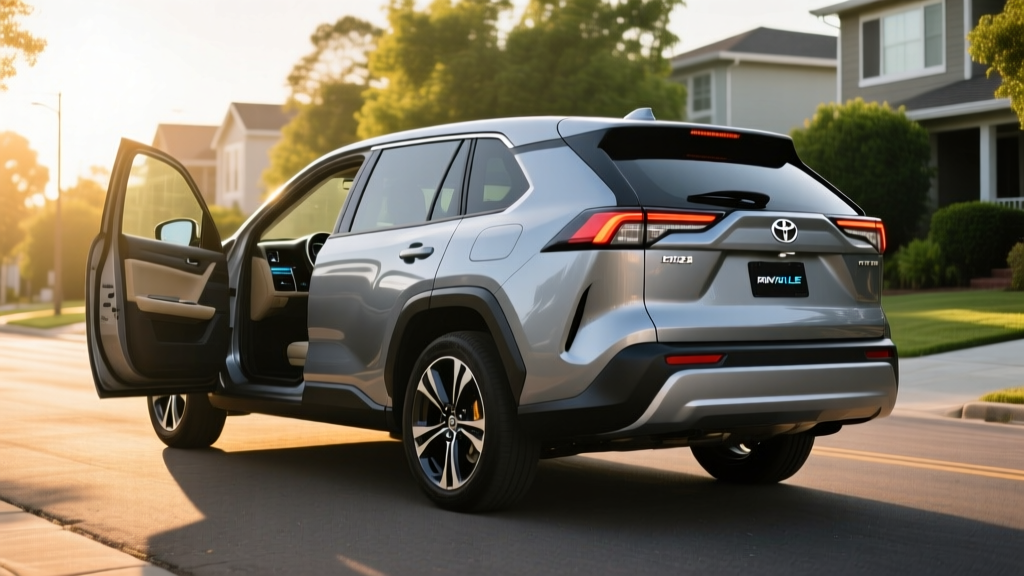
The 2025 Toyota RAV4 Hybrid LE remains the volume-selling hybrid SUV in America for good reason. It pairs a 2.5-liter four-cylinder engine with dual electric motors for 219 combined horsepower, achieves an EPA-estimated 41 MPG combined, and starts at $32,675 including destination. No plug required — this is a conventional hybrid (HEV), not a plug-in — so you simply fuel up and drive while the system recovers energy through regenerative braking.
For buyers cross-shopping the compact SUV segment, the RAV4 Hybrid LE undercuts the Honda CR-V Hybrid Sport ($35,395) on price while matching or exceeding its fuel economy. It also avoids the range-anxiety and charging-infrastructure concerns that still accompany full battery-electric vehicles. If your priority is maximum efficiency with zero lifestyle change, this trim is the sweet spot in Toyota's lineup.
| Specification | 2025 RAV4 Hybrid LE |
|---|---|
| Powertrain | 2.5L I4 + 2 electric motors (front & rear) |
| Combined Horsepower | 219 hp |
| Drivetrain | Electronic AWD (eAWD) |
| EPA Fuel Economy | 41 city / 38 highway / 41 combined MPG |
| Fuel Tank | 14.5 gallons |
| Total Range | ~594 miles |
| Hybrid Battery | Lithium-ion, ~1.6 kWh (sealed, self-charging) |
| 0–60 mph | ~7.4 seconds |
| Base MSRP (incl. destination) | $32,675 |
| Federal Tax Credit | Not eligible (§30D is BEV/PHEV only) |
| Hybrid Battery Warranty | 10 years / 150,000 miles |
HEV vs PHEV: Which RAV4 Hybrid Is Right for You?
Toyota offers the RAV4 in two distinct electrified flavors. Understanding the difference prevents costly missteps at the dealership.
| Feature | RAV4 Hybrid (HEV) | RAV4 Prime (PHEV) |
|---|---|---|
| Plug-in Required? | No — self-charging | Yes — plug in for EV range |
| Electric-Only Range | ~1 mile at low speed | 42 miles (EPA) |
| Combined Horsepower | 219 hp | 302 hp |
| Battery Capacity | ~1.6 kWh | 18.1 kWh (lithium-ion) |
| DC Fast Charging | N/A | No (Level 2 only, ~2.5 hrs) |
| Combined MPG (gas) | 41 MPG | 38 MPG / 94 MPGe |
| Starting MSRP | $32,675 | $44,515 |
| Federal Tax Credit | None | Up to $7,500 (§30D, subject to eligibility) |
The conventional RAV4 Hybrid LE is the right pick if you lack access to home or workplace charging and want a lower purchase price. The RAV4 Prime (PHEV) makes sense only if you can plug in nightly and your daily commute falls under 42 miles — turning most drives into electric-only trips while keeping a gas engine for road trips.
Fuel Economy: EPA Numbers vs Real-World MPG
| Driving Scenario | EPA Estimate | Real-World Expectation |
|---|---|---|
| City | 41 MPG | 40–44 MPG (hybrids excel in stop-and-go) |
| Highway (70 mph) | 38 MPG | 34–37 MPG (aero drag reduces hybrid advantage) |
| Combined | 41 MPG | 37–41 MPG depending on driving mix |
| Cold Weather (below 32°F) | — | 33–37 MPG (engine runs more for cabin heat) |
According to fueleconomy.gov, the 2025 RAV4 Hybrid LE earns a 41 MPG combined rating. In practice, Toyota's hybrid system thrives in city traffic where regenerative braking and electric-motor assist do the heavy lifting. Owners who drive mostly urban routes frequently report 42–44 MPG on forums and fuel-tracking apps like Fuelly.
Highway driving reverses the advantage. At sustained 70–80 mph speeds, the gasoline engine carries most of the load, and aerodynamic drag dominates. Expect 34–37 MPG on long interstate trips. Cold weather further reduces efficiency — the engine must run more often to generate cabin heat and maintain the hybrid battery's operating temperature, dropping real-world combined figures to the low-to-mid 30s in winter climates.
Compared to the gas-only RAV4 LE (27/35/30 MPG), the hybrid saves roughly 140 gallons per year at 15,000 miles driven — worth approximately $460 annually at $3.30/gallon regular unleaded.
Powertrain and Driving Performance
The 2025 RAV4 Hybrid LE uses Toyota's fifth-generation hybrid system. A 2.5-liter Atkinson-cycle four-cylinder engine produces 176 hp and 163 lb-ft of torque on its own, while a front-mounted electric motor adds 134 hp. A second, 54-hp motor on the rear axle provides electronic all-wheel drive (eAWD) by engaging automatically when slip is detected or during hard acceleration.
Net system output is 219 hp. That translates to a 0–60 mph time of approximately 7.4 seconds — brisk enough for confident highway merging and passing. The electronically controlled CVT (eCVT) is smooth and avoids the rubber-band feel of older CVTs, though it won't satisfy anyone seeking sporty engagement.
The eAWD system does not include a mechanical driveshaft to the rear wheels. Instead, the rear electric motor provides up to 1,254 lb-ft of instantaneous torque to the rear axle in short bursts for traction. This is adequate for rain, light snow, and gravel roads, but it is not designed for serious off-roading or towing beyond the 1,750-pound rated capacity.
Pricing, Trims, and Tax Credit Eligibility
The 2025 RAV4 Hybrid LE starts at $32,675 including the $1,420 destination charge. That makes it $1,400 more than the gas-only RAV4 LE ($31,275) — a premium you'll typically recoup in fuel savings within 3–4 years at average mileage.
Higher hybrid trims add features at escalating prices:
- Hybrid LE: $32,675 — 8-inch touchscreen, wireless Apple CarPlay/Android Auto, TSS 2.5 safety suite
- Hybrid XLE: $34,185 — blind-spot monitoring, dual-zone climate, Smart Key
- Hybrid XLE Premium: $36,105 — SofTex seats, moonroof, 12.3-inch display
- Hybrid SE: $37,075 — sport-tuned suspension, 19-inch wheels
- Hybrid Woodland Edition: $36,945 — TRD-tuned suspension, all-terrain tires
- Hybrid XSE: $38,175 — sport appearance, heated front seats
- Hybrid Limited: $41,345 — leather, JBL audio, 360° camera
Does the RAV4 Hybrid Qualify for a Federal Tax Credit?
No. Under current IRS §30D rules, the federal clean vehicle credit (up to $7,500) applies only to battery-electric vehicles (BEVs) and plug-in hybrids (PHEVs) that meet battery-sourcing, critical-mineral, MSRP, and buyer-income requirements. The conventional RAV4 Hybrid is a self-charging HEV and does not qualify. However, some states and utilities offer rebates for hybrid purchases — check your state energy office or local utility for current programs.
Hybrid Battery Longevity, Warranty, and Replacement Cost
Toyota equips the 2025 RAV4 Hybrid with a sealed lithium-ion hybrid battery pack (~1.6 kWh usable capacity). This is not the large traction battery found in a full EV — it's a compact unit designed for frequent shallow charge/discharge cycles rather than deep cycling, which significantly extends its lifespan.
Toyota's hybrid battery warranty covers 10 years or 150,000 miles (whichever comes first) against defects and capacity loss below a specified threshold. This is among the strongest hybrid battery warranties in the industry and reflects Toyota's decades of hybrid system refinement dating to the 1997 Prius.
Real-world longevity data is encouraging. Independent surveys and fleet data consistently show Toyota hybrid batteries lasting 150,000–200,000+ miles before requiring replacement. If replacement is needed out of warranty, the cost for a RAV4 Hybrid battery currently ranges from $2,500 to $4,000 including labor at a dealership. Third-party refurbishment shops offer rebuilt packs for $1,500–$2,500. For most owners who trade vehicles within 10 years, battery replacement is unlikely to be a concern.
Who Should Choose the RAV4 Hybrid LE — and Who Shouldn't?
Pros
- 41 MPG combined — best-in-class for AWD compact SUVs
- No plug-in required; zero lifestyle change vs. a gas car
- Standard eAWD included at every trim level
- 10-year / 150,000-mile hybrid battery warranty
- Strong resale value and Toyota reliability reputation
- $32,675 entry price undercuts many hybrid competitors
Cons
- No federal tax credit (HEVs excluded from §30D)
- Highway MPG drops to 34–37 in real-world driving
- eAWD is traction-assist only — not for serious off-road use
- 1,750-lb towing capacity limits utility
- Cabin and infotainment feel dated vs. newer competitors
- No DC fast charging (not applicable for HEV, but worth noting vs. PHEV)
Hybrid vs PHEV vs EV — Which Fits Your Life?
- Choose the RAV4 Hybrid (HEV) if: You lack reliable home or workplace charging, drive a mix of city and highway, and want maximum MPG with zero plug-in hassle. The LE trim gives you the best value.
- Choose the RAV4 Prime (PHEV) if: You can install a Level 2 home charger, your daily round-trip commute is under 42 miles, and you want electric-only daily driving with gas-engine backup for road trips. The $7,500 potential tax credit helps offset the $11,840 price premium over the Hybrid LE.
- Choose a full EV (e.g., Tesla Model Y, Hyundai Ioniq 5) if: You have home charging access, want zero tailpipe emissions, qualify for the full §30D credit, and are comfortable with 250–320 miles of EPA range and DC fast-charging road trips.
Frequently Asked Questions
How many MPG does the 2025 RAV4 Hybrid LE get?
The EPA rates the 2025 RAV4 Hybrid LE at 41 MPG city, 38 MPG highway, and 41 MPG combined. In real-world driving, city-heavy commuters often see 42–44 MPG, while sustained highway driving at 70+ mph typically yields 34–37 MPG. Cold weather can reduce combined figures to the low-to-mid 30s.
Does the RAV4 Hybrid need to be plugged in?
No. The RAV4 Hybrid is a conventional hybrid (HEV). Its small lithium-ion battery recharges through regenerative braking and the gasoline engine. You never plug it in — just fill the 14.5-gallon tank with regular unleaded and drive. If you want plug-in capability with electric-only range, look at the RAV4 Prime (PHEV).
How far can the RAV4 Prime go on electric only?
The RAV4 Prime (PHEV variant) delivers an EPA-estimated 42 miles of electric-only range on a full charge of its 18.1 kWh battery. Total combined range (electric + gas) exceeds 600 miles. The conventional RAV4 Hybrid LE has no meaningful electric-only range — its motor assists the gas engine but cannot sustain EV-mode driving beyond roughly one mile at very low speeds.
Is the RAV4 Hybrid reliable, and what does battery replacement cost?
Toyota's hybrid systems have an extensive reliability track record spanning over 25 years. The hybrid battery is warrantied for 10 years / 150,000 miles, and fleet data shows most units lasting 150,000–200,000+ miles. Out-of-warranty replacement costs range from $2,500–$4,000 at a dealership, or $1,500–$2,500 through a third-party refurbisher. For most original owners, replacement is unlikely within the warranty period.
Does the 2025 RAV4 Hybrid qualify for any tax credit?
The conventional RAV4 Hybrid does not qualify for the federal §30D clean vehicle credit, which is reserved for battery-electric and plug-in hybrid vehicles meeting specific battery-sourcing, MSRP, and buyer-income criteria. The RAV4 Prime (PHEV) may qualify for up to $7,500 depending on your income, the vehicle's MSRP cap compliance, and battery-component sourcing — verify current eligibility on IRS.gov or with a tax professional. Some state and utility programs offer separate hybrid incentives; check local resources.
How does the RAV4 Hybrid compare to the Honda CR-V Hybrid?
The 2025 Honda CR-V Hybrid Sport starts at $35,395 and is rated at 43 city / 36 highway / 40 combined MPG. The RAV4 Hybrid LE undercuts it by roughly $2,700 while delivering comparable combined MPG (41 vs. 40). The CR-V Hybrid edges ahead in city MPG (43 vs. 41) and offers a slightly more modern interior, while the RAV4 Hybrid provides a longer hybrid battery warranty (10 yr/150k mi vs. Honda's 8 yr/100k mi) and historically stronger resale value.