Quick Verdict: The Best Daily-Commute Compromise
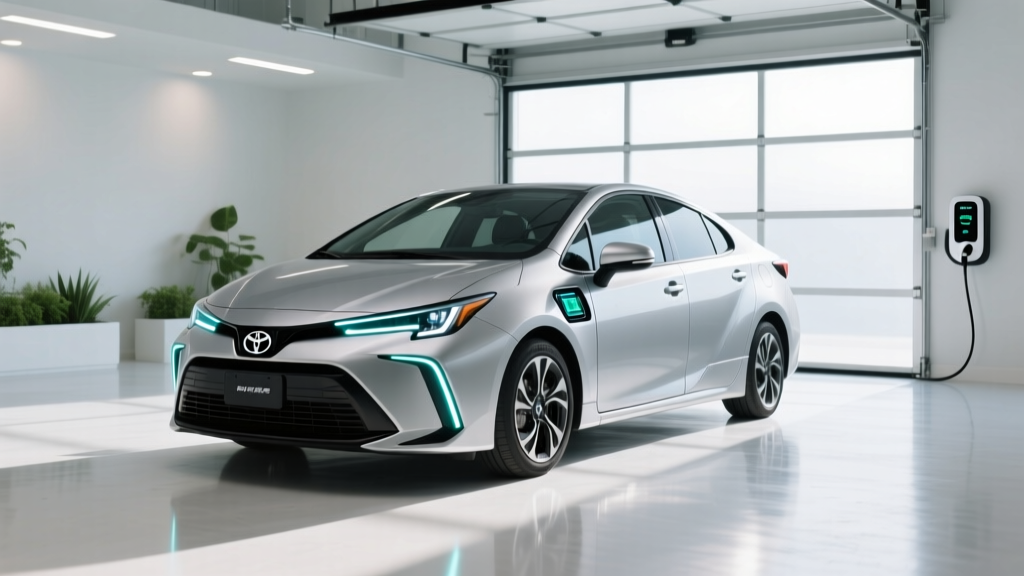
The 2025 Prius Plug-In Hybrid SE occupies a narrow but valuable lane: enough electric-only range to cover most commutes without burning a drop of gas, plus a gasoline engine that eliminates range anxiety on road trips. With an EPA-rated 44 miles of electric driving and 48 MPG combined once the battery depletes, the SE trim is the efficiency-maximizer in the Prius Plug-In Hybrid lineup — and it starts at $33,475 before destination.
For buyers who can charge at home but aren't ready to commit to a full battery-electric vehicle (BEV), this is one of the most practical electrified vehicles on the market. The trade-off is a smaller battery and fewer features than the XSE or XSE Premium trims, but the SE's lower weight translates directly into better efficiency numbers.
HEV vs PHEV: What's the Difference?
Toyota sells two fundamentally different Prius models, and confusing them is the most common buyer mistake:
Prius Hybrid (HEV)
- No plug. The battery charges via regenerative braking and the engine.
- Battery: ~1.0 kWh lithium-ion — too small for meaningful electric-only driving.
- Electric-only: Under 1 mile at low speeds.
- EPA MPG: 57 combined (LE FWD).
- Starting price: ~$28,350.
Prius Plug-In Hybrid (PHEV)
- Plug required to access full electric range (J1772 connector).
- Battery: 13.6 kWh lithium-ion — enough for 44 miles electric-only.
- Electric-only: 44 miles EPA (SE trim).
- EPA MPG: 48 combined (charge-sustaining mode, SE).
- Starting price: $33,475.
The conventional HEV never needs to be plugged in — it generates all its own electricity. The PHEV can operate without plugging in (as a regular hybrid), but you'd forfeit the 44 miles of electric range that justify the price premium. If you can't charge at home or at work, the standard Prius HEV is the smarter buy.
Electric Range, MPG, and Real-World Efficiency
| Metric | EPA Rating | Real-World Expectation |
|---|---|---|
| Electric-only range (SE) | 44 miles | 38–42 mi (highway/cold); 44–48 mi (city/warm) |
| MPGe (electric mode) | 127 MPGe combined | Varies with driving style and climate |
| Gas MPG – City | 50 mpg | 48–53 mpg (hybrids often beat EPA in city) |
| Gas MPG – Highway | 47 mpg | 43–47 mpg (sustained 70+ mph reduces efficiency) |
| Gas MPG – Combined | 48 mpg | 46–50 mpg depending on mix |
| Total combined range | ~510 miles | 480–540 mi depending on conditions |
Real-world note: Plug-in hybrids like the Prius PHEV tend to exceed their EPA city MPG because regenerative braking recaptures energy in stop-and-go traffic. Highway driving is less favorable — at 75 mph on an interstate, expect the gas engine to work harder and deliver closer to 43 mpg. In cold weather (below 35°F), electric-only range drops 15–25% because the battery is less efficient and cabin heating draws significant energy. Per fueleconomy.gov, the SE trim's combined range of approximately 510 miles means most owners will visit a gas station once every two to three weeks.
Powertrain and Performance Specs
| Specification | 2025 Prius Plug-In Hybrid SE |
|---|---|
| Engine | 2.0L 4-cylinder Atkinson-cycle |
| Engine output | 150 hp / 139 lb-ft torque |
| Electric motor output | 161 hp (front-mounted) |
| Net combined horsepower | 220 hp |
| Battery capacity | 13.6 kWh (lithium-ion) |
| 0–60 mph | 6.7 seconds |
| Drivetrain | Front-wheel drive (FWD only) |
| Transmission | Continuously variable (eCVT) |
| Cargo volume | 20.3 cu ft (rear seats up) |
| Base MSRP | $33,475 + $1,095 destination |
The 220 combined horsepower is a significant upgrade from the previous-generation Prius PHEV (which made 121 hp). The 2.0-liter engine replaces the old 1.8-liter, and the result is a car that can merge onto highways and pass without hesitation. The SE is FWD-only — all-wheel drive is not available on the Prius Plug-In Hybrid in any trim for 2025.
Charging: Speeds, Times, and What You Need to Know
The 2025 Prius Plug-In Hybrid SE uses a J1772 connector for AC charging. Here's the critical detail most buyers get wrong: this vehicle does not support DC fast charging. There is no CCS or CHAdeMO port. All charging is AC, which means:
| Charging Level | Power (kW) | Time to Full (0–100%) | Practical Use |
|---|---|---|---|
| Level 1 (120V household outlet) | ~1.4 kW | ~9.5 hours | Overnight top-up; full recharge if parked 10+ hours |
| Level 2 (240V home/public) | ~3.5 kW (onboard charger limit) | ~4 hours | Full recharge overnight; recommended for daily use |
| DC Fast Charge | N/A | N/A | Not supported |
The onboard charger is limited to approximately 3.5 kW. Even if you plug into a 7.2 kW or 11.5 kW Level 2 station, the Prius PHEV will only accept ~3.5 kW. This is typical for plug-in hybrids — the small battery doesn't need high-speed charging — but it means a public Level 2 stop will take about 4 hours for a full charge. Plan accordingly: this car is designed for home or workplace charging, not DC fast-charging road trips.
Level 1 reality check: Many PHEV owners find that a standard 120V outlet delivers enough overnight charge to replenish 40+ miles of range in 10 hours. If your daily commute is under 40 miles round-trip, Level 1 may be sufficient — no electrician required. Just ensure the outlet is on a dedicated 15A or 20A circuit.
Pricing, Trims, and Federal Tax Credit Eligibility
The 2025 Prius Plug-In Hybrid comes in three trims:
- SE: $33,475 — 44 mi electric range, 48 MPG combined, 17-inch alloy wheels, Toyota Safety Sense 3.0
- XSE: $36,620 — 40 mi electric range, 45 MPG combined, 19-inch wheels, heated front seats, power liftgate
- XSE Premium: $40,070 — 40 mi electric range, 45 MPG combined, panoramic roof, JBL audio, digital rearview mirror
Note that the SE delivers the best efficiency figures because it's lighter and rides on smaller wheels. The XSE and XSE Premium sacrifice 4 miles of electric range and 3 MPG for additional features and larger wheels.
Federal Tax Credit: Up to $3,750
Under IRS §30D rules, the 2025 Prius Plug-In Hybrid may qualify for a partial federal tax credit of up to $3,750 (not the full $7,500). The credit amount depends on whether the vehicle's battery components and critical minerals meet US-sourcing thresholds. As of the 2025 tax year:
- Income caps apply: Modified AGI ≤ $150,000 (single), $225,000 (head of household), $300,000 (joint).
- MSRP cap: Vehicle MSRP must not exceed $55,000 (sedans). All Prius PHEV trims qualify.
- Battery sourcing: The credit splits into two $3,750 halves — one for battery components, one for critical minerals. Toyota's supply chain typically qualifies for one half, yielding $3,750.
- Point-of-sale transfer: You can transfer the credit to the dealer at purchase to reduce your out-of-pocket cost, rather than waiting to claim it on your tax return.
Verify current eligibility at IRS.gov before purchasing — sourcing requirements tighten annually and credit amounts can change.
After a potential $3,750 credit, the SE's effective price drops to approximately $30,820 (including destination), which puts it in direct competition with well-equipped compact SUVs and midsize sedans — but with dramatically lower fuel costs.
Reliability, Battery Warranty, and Replacement Cost
Toyota Hybrid Battery Warranty
- Coverage: 10 years / 150,000 miles (whichever comes first)
- What's covered: Hybrid battery pack, hybrid control module, inverter — defects and capacity loss below a defined threshold
- Applies to: All 50 states (California and states adopting CARB standards previously had 10yr/150k; Toyota now applies this nationwide for 2025)
- Transferable: Yes, to subsequent owners
The Prius nameplate has over two decades of real-world hybrid battery data. According to NHTSA records and long-term owner surveys, Toyota's hybrid battery packs routinely last 150,000–200,000+ miles before significant degradation. The 13.6 kWh pack in the PHEV is larger and undergoes more charge cycles than a standard HEV pack, but Toyota's conservative battery management system (which maintains a generous buffer at the top and bottom of the state-of-charge range) protects longevity.
Battery replacement cost: If the pack does need replacement out of warranty, expect $3,500–$5,500 for a new OEM battery pack including labor at a Toyota dealer. Third-party refurbished packs are available for $2,000–$3,500. For context, most Prius owners never replace the hybrid battery during their ownership.
The rest of the powertrain — the 2.0L engine, eCVT, and electric motor — benefits from Toyota's reputation for mechanical reliability. The eCVT has no traditional gears or bands to wear out; it uses a planetary gearset with far fewer moving parts than a conventional automatic. Toyota's general powertrain warranty covers 5 years / 60,000 miles, and the basic vehicle warranty is 3 years / 36,000 miles.
Who Should Choose the Prius PHEV vs a Full EV or Gas Car?
Choose the Prius Plug-In Hybrid SE if:
- Your daily round-trip commute is under 44 miles and you can charge at home or work
- You take 2+ road trips per year exceeding 200 miles and don't want to plan around charging stations
- You live in an apartment or area with limited public charging infrastructure
- You want to reduce gasoline consumption by 60–80% without going fully electric
- Your budget is $30,000–$35,000 after incentives
Choose a full EV (BEV) instead if:
- You have reliable home Level 2 charging and rarely drive more than 250 miles in a day
- You want to eliminate gasoline entirely (no oil changes, no gas station visits)
- You qualify for the full $7,500 federal credit on a BEV like the Tesla Model 3 or Chevrolet Equinox EV
- You prioritize instant torque and one-pedal driving
Choose the standard Prius HEV instead if:
- You cannot charge at home or work (no garage, no workplace chargers)
- Your budget is closer to $28,000–$30,000
- You want maximum simplicity — no charging cables, no battery management
- Your daily mileage is high enough that you'd rarely use the PHEV's electric range anyway
The Prius PHEV's sweet spot is the commuter who drives 20–40 miles daily, charges overnight on a 120V or 240V outlet, and uses the gasoline engine for weekend trips. In that scenario, many owners report using less than 5 gallons of gas per month — an effective cost of $15–$20/month for fuel on weekdays, with electricity adding roughly $8–$15/month depending on local rates.
Pros and Cons at a Glance
Pros
- 44 miles electric-only covers most commutes
- 220 hp is genuinely quick for a Prius (6.7s 0–60)
- 48 MPG combined after battery depletes — no efficiency cliff
- Level 1 (120V) charging is viable for many owners
- 10-year / 150,000-mile hybrid battery warranty
- Qualifies for up to $3,750 federal tax credit
- Toyota Safety Sense 3.0 standard (adaptive cruise, lane-keeping, auto emergency braking)
Cons
- No DC fast charging — road trips run on gas only
- FWD only — no AWD option for snow-belt buyers
- Level 2 onboard charger limited to 3.5 kW
- Rear seat and cargo space tighter than a compact SUV
- XSE/Premium trims sacrifice range for features
- Partial tax credit ($3,750) vs $7,500 available on some BEVs
- No spare tire — tire-inflation kit only
Frequently Asked Questions
How many MPG does the 2025 Prius Plug-In Hybrid SE get?
The EPA rates the SE trim at 50 mpg city, 47 mpg highway, and 48 mpg combined when operating in hybrid (charge-sustaining) mode. In electric mode, it achieves 127 MPGe combined. Real-world testing shows city driving often yields 48–53 mpg thanks to regenerative braking, while sustained highway driving at 75+ mph may drop to 43–47 mpg.
How far can the Prius Plug-In Hybrid go on electric only?
The EPA rates the SE trim at 44 miles of electric-only range. In real-world conditions, expect 38–42 miles in cold weather or at highway speeds, and up to 48 miles in warm city driving. The XSE and XSE Premium trims are rated at 40 miles due to additional weight and larger wheels.
Does the 2025 Prius Plug-In Hybrid qualify for a tax credit?
It may qualify for up to $3,750 under the IRS §30D clean vehicle credit, depending on battery component and critical mineral sourcing requirements for the 2025 tax year. Buyer income caps apply ($150K single / $300K joint). The credit can be transferred to the dealer at point of sale. Always verify current eligibility at IRS.gov before purchasing.
Is the Prius Plug-In Hybrid reliable? What about battery replacement cost?
Toyota's hybrid systems have an exceptional reliability track record spanning 25+ years. The hybrid battery is warranted for 10 years / 150,000 miles. Out-of-warranty replacement runs $3,500–$5,500 for a new OEM pack, but most owners never need a replacement. The eCVT transmission has no traditional wear components and is among the most durable drivetrain designs in the industry.
Can I charge the Prius PHEV at a public DC fast charger?
No. The 2025 Prius Plug-In Hybrid does not have a DC fast-charging port. It charges exclusively via AC using the J1772 connector, at up to 3.5 kW on Level 2. A full charge takes approximately 4 hours on Level 2 or about 9.5 hours on a standard 120V household outlet.
Should I get the Prius PHEV or a full electric vehicle?
If you can charge at home, rarely drive more than 250 miles in a single day, and want zero gasoline use, a full EV like the Tesla Model 3 or Hyundai Ioniq 6 may be a better fit — especially if you qualify for the full $7,500 federal credit. If you take regular long road trips, lack reliable charging access, or want the safety net of a gas engine, the Prius PHEV gives you 80% of the daily EV experience with none of the range anxiety.