Quick Verdict: A Wagon-Replacement Hybrid That Delivers
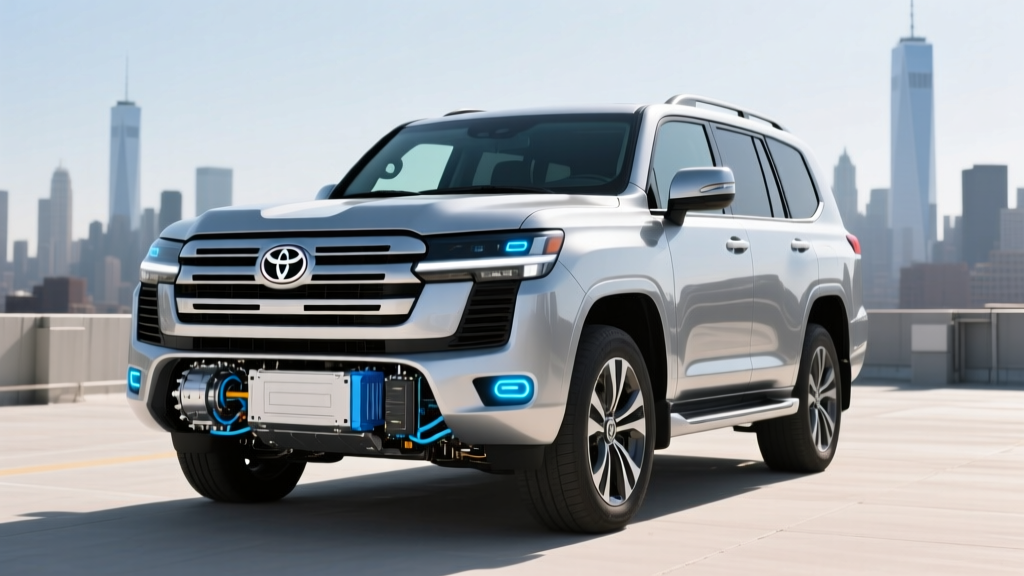
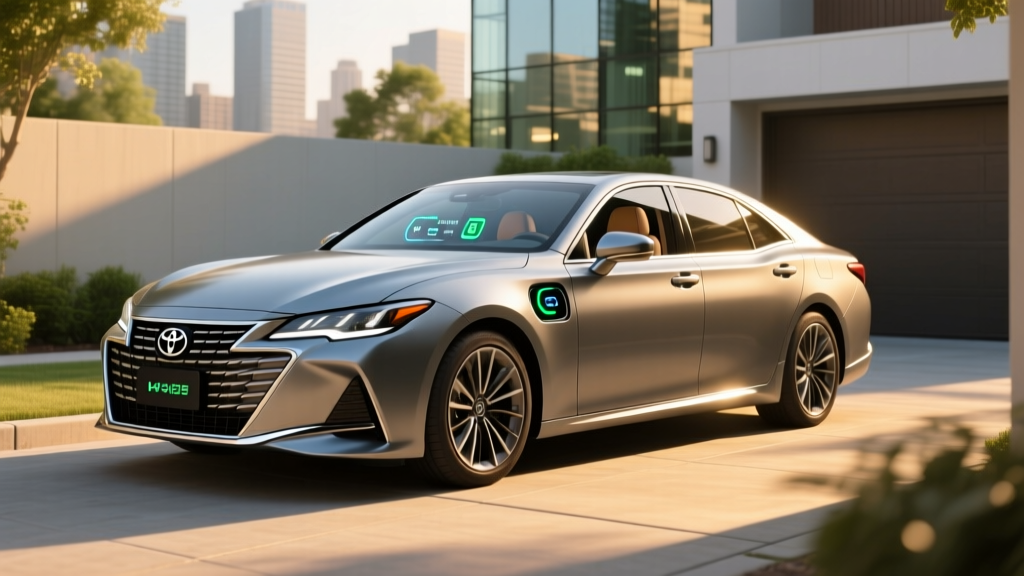
The 2025 Toyota Crown Signia hybrid slots into a niche that barely exists in the U.S. market: a midsize, all-wheel-drive wagon with genuine fuel efficiency and premium aspirations. Built on Toyota's TNGA-K platform and powered by the brand's fifth-generation hybrid system, it targets buyers who want SUV-level cargo space without the SUV fuel penalty.
After reviewing its specs, real-world efficiency data, and pricing structure, the Crown Signia lands as one of the most practical hybrid vehicles in Toyota's 2025 lineup — particularly for those who don't have access to home charging and therefore can't benefit from a plug-in hybrid or full EV.
| Spec | XLE (Base) | Limited |
|---|---|---|
| EPA MPG (City / Hwy / Combined) | 39 / 37 / 38 | 39 / 37 / 38 |
| Powertrain | 2.5L 4-cyl hybrid + 2 electric motors (AWD) | |
| Combined Horsepower | 240 hp | |
| 0–60 mph | ~7.1 seconds (est.) | |
| Drivetrain | Electronic AWD (eAWD) standard | |
| Battery Type | Lithium-ion (sealed, self-charging HEV) | |
| Cargo Volume | 25.8 cu ft (rear seats up) / 68.8 cu ft (folded) | |
| Base MSRP | $41,990 | $47,990 |
| Federal Tax Credit (§30D) | Not eligible (HEV) | |
| Hybrid Battery Warranty | 10 years / 150,000 miles | |
How Many MPG Does the 2025 Toyota Crown Signia Hybrid Get?
According to EPA data at fueleconomy.gov, the 2025 Toyota Crown Signia hybrid achieves 39 MPG city, 37 MPG highway, and 38 MPG combined across both XLE and Limited trims. That's remarkably consistent for a 4,300-pound AWD vehicle.
| Driving Condition | EPA Rating | Real-World Expectation |
|---|---|---|
| City | 39 MPG | 40–44 MPG (hybrids excel in stop-and-go regen) |
| Highway | 37 MPG | 33–36 MPG (aero drag + AWD drag at 70+ mph) |
| Combined | 38 MPG | 36–40 MPG (varies with climate and terrain) |
| Cold Weather (below 32°F) | — | 30–34 MPG (engine runs more for cabin heat) |
The real-world advantage of Toyota's hybrid system shows up in city driving, where regenerative braking recovers energy that a conventional gas car wastes as heat. Owners who commute in urban or suburban traffic frequently report exceeding the EPA city figure. Highway driving tells the opposite story: the Crown Signia's wagon shape creates more aerodynamic drag than a sedan, and the standard eAWD system introduces minor drivetrain losses.
For context, the competing Venka Hybrid (also Toyota, also 2.5L hybrid AWD) rates at 39/37/38 — nearly identical. The Subaru Outback (non-hybrid, 2.5L AWD) manages just 26/32/28. That's a 10 MPG combined gap that translates to roughly $400–$550 per year in fuel savings at 15,000 miles annually and $3.50/gallon.
Powertrain Deep Dive: 240 HP with Fifth-Gen Hybrid Synergy
The Crown Signia uses Toyota's latest hybrid architecture, pairing a 2.5-liter Atkinson-cycle four-cylinder engine with two motor-generators and an electronically controlled continuously variable transmission (eCVT).
- Gasoline Engine: 2.5L inline-4, 184 hp / 163 lb-ft torque
- Front Electric Motor: Integrated into transaxle, contributes to combined output
- Rear Electric Motor: 54 hp, powers rear axle for eAWD traction
- Net System Output: 240 hp
- Transmission: eCVT (planetary gearset, not a belt-driven CVT)
The rear motor enables the Crown Signia's electronic AWD system. Unlike mechanical AWD with a driveshaft and center differential, eAWD uses the rear motor to send torque to the rear wheels only when needed — during acceleration, slippery conditions, or cornering. This means zero parasitic drag during steady-state cruising, which is why the highway MPG penalty versus a FWD-only hybrid is minimal.
Toyota's eCVT is fundamentally different from the rubber-belt CVTs found in some competitors. It uses a planetary gearset to blend engine and motor power with no shifting, no clutch packs, and very few wear components. This is a key reason Toyota hybrids consistently rank at the top of long-term reliability studies.
HEV vs. PHEV vs. EV: Which Powertrain Fits You?
The 2025 Crown Signia is a conventional hybrid (HEV). It has no plug, no electric-only driving mode, and no external charging requirement. The battery recharges exclusively through regenerative braking and engine power. Here's how that compares to the alternatives:
| Factor | HEV (Crown Signia) | PHEV (e.g., RAV4 Prime) | Full EV (e.g., Ioniq 5) |
|---|---|---|---|
| Plug Required? | No | Yes (for EV range) | Yes |
| Electric-Only Range | 0 miles | 35–42 miles typical | 250–320 miles |
| Home Charging Needed? | No | Recommended (Level 2) | Essential (Level 2) |
| Fuel Cost per Mile | ~$0.09 | ~$0.04 (electric) / $0.09 (gas) | ~$0.04 |
| Federal Tax Credit | None | Up to $7,500 (if eligible) | Up to $7,500 (if eligible) |
| Upfront Price Premium | Low | Medium-High | High |
| Best For | No home charging, long trips | Home charging + short commute | Home charging, lower running cost |
The Crown Signia hybrid makes the most sense if you cannot install a Level 2 charger at home, live in an apartment or condo without charging access, or regularly take road trips exceeding 400 miles where public charging infrastructure remains inconsistent. It also appeals to buyers who want zero behavior change — you fuel it like a gas car, but it sips like a compact.
If you do have home charging and a commute under 40 miles, a PHEV like the RAV4 Prime (42 miles electric-only, 38 MPG after battery depletion) would eliminate most of your gasoline use. And if your daily driving stays under 250 miles with reliable home charging, a full EV like the Hyundai Ioniq 5 or Tesla Model Y offers dramatically lower operating costs.
Pricing, Trims, and Tax Credit Reality
The 2025 Crown Signia hybrid starts at $41,990 for the XLE trim and $47,990 for the Limited, including destination charges. Toyota has not released a third trim for this model year.
XLE ($41,990) includes: 12.3-inch infotainment, wireless Apple CarPlay/Android Auto, heated front seats, Toyota Safety Sense 3.0 (adaptive cruise, lane-keeping, automatic emergency braking), 18-inch alloy wheels, and power liftgate.
Limited ($47,990) adds: 21-inch wheels, panoramic fixed glass roof, ventilated front seats, heated rear seats, 360-degree camera, digital rearview mirror, and upgraded leather-trimmed interior.
Federal Tax Credit (§30D): The Crown Signia hybrid does not qualify for the federal Clean Vehicle Credit under IRS §30D. This credit applies only to plug-in electric vehicles (BEVs and PHEVs) with sufficient battery capacity and compliant battery sourcing. Conventional hybrids are excluded regardless of price. Some states may offer separate hybrid incentives — check your state energy office or IRS Clean Vehicle Credits page for current rules.
For buyers comparing total cost, the Crown Signia's lack of a tax credit means the effective price gap versus a similarly equipped PHEV narrows. A RAV4 Prime XSE ($48,000 MSRP, eligible for up to $7,500 credit) could net to ~$40,500 — comparable to the Crown Signia XLE after credit. However, the RAV4 Prime requires home charging infrastructure to realize its EV-range advantage.
Real-World Ownership: Reliability and Battery Longevity
Toyota's hybrid system has accumulated over 25 years of field data since the original Prius launched in 1997. The fifth-generation system in the Crown Signia represents the most refined iteration yet, with fewer moving parts than a conventional automatic transmission.
Hybrid Battery Warranty: Toyota covers the Crown Signia's hybrid battery for 10 years or 150,000 miles (whichever comes first), transferable to subsequent owners. This is among the longest hybrid battery warranties in the industry and applies to capacity loss or failure under normal use.
Real-world data from Toyota's hybrid fleet shows most batteries lasting well beyond the warranty period. A 2023 study by Consumer Reports found that Toyota hybrid battery replacement rates remain below 5% through 200,000 miles. When replacement is needed outside warranty, costs typically range from $2,000 to $4,000 for a refurbished or new battery pack — far less than the $10,000–$20,000 EV battery replacements that make headlines.
Beyond the battery, the Crown Signia benefits from Toyota's reputation for powertrain durability. The eCVT has no belts, no clutch packs, and no traditional friction brakes doing all the work (regen handles most deceleration, extending pad life to 80,000–100,000+ miles in many cases).
Maintenance costs are lower than a comparable gas vehicle: no transmission fluid changes on a set schedule, no spark plugs until 120,000 miles, and brake pads that last significantly longer thanks to regenerative braking handling the majority of deceleration force.
Driving Impressions and Practicality
The Crown Signia drives more like a raised wagon than an SUV, with a lower center of gravity than the Highlander or Grand Highlander. The 240 hp output provides adequate merging power, and the eCVT delivers smooth, linear acceleration without the rubber-band sensation of older CVTs. The 0–60 mph time of approximately 7.1 seconds won't win drag races, but it's competitive with the turbocharged four-cylinder SUVs in this price range.
Cargo capacity is the Crown Signia's party trick: 25.8 cubic feet behind the rear seats and 68.8 cubic feet with them folded. That's more usable space than most compact SUVs and enough for weekend gear for a family of four. The low load floor (thanks to the wagon design) makes loading heavy items easier than in a tall crossover.
Ride quality leans comfort-oriented, with well-damped suspension tuning that absorbs highway imperfections. Road noise is moderate — the 21-inch wheels on the Limited trim generate more tire noise than the XLE's 18-inch rubber, a tradeoff worth considering for long-distance drivers.
Who Should Buy the 2025 Crown Signia Hybrid?
Pros
- 38 MPG combined with standard AWD — exceptional for its size
- Wagon cargo space (68.8 cu ft) without SUV fuel penalty
- No charging infrastructure required — zero behavior change
- 10-year / 150,000-mile hybrid battery warranty
- Toyota Safety Sense 3.0 standard on all trims
- Strong real-world reliability track record
Cons
- No federal tax credit (HEV, not PHEV/BEV)
- $42K starting price is steep for a Toyota-badged vehicle
- No plug-in or electric-only option available
- 21-inch Limited wheels increase tire noise and replacement cost
- Only two trims — limited customization
- AWD system is electronic, not suited for serious off-road use
Choose the Crown Signia hybrid if: You want wagon practicality with hybrid efficiency, can't charge at home, take regular road trips, and value long-term reliability over cutting-edge tech. It's also ideal for buyers in cold climates where EV range loss and charging logistics remain a concern.
Look at a PHEV instead if: You have Level 2 home charging and a commute under 40 miles. A RAV4 Prime or Toyota Prius Prime would let you drive most days on electricity alone while keeping a gas engine for longer trips.
Go full EV if: You have reliable home charging, your daily driving stays under 250 miles, and you want the lowest possible operating cost. The Ioniq 5, Tesla Model Y, or Ford Mustang Mach-E offer faster acceleration, lower fuel costs, and federal tax credit eligibility.
Frequently Asked Questions
Does the 2025 Toyota Crown Signia hybrid need to be plugged in?
No. The Crown Signia is a conventional self-charging hybrid (HEV). Its battery recharges through regenerative braking and the gasoline engine. You never plug it in — you simply fill it with gas like any other car.
Is the Crown Signia hybrid reliable?
Toyota's hybrid powertrain has over 25 years of proven reliability. The eCVT transmission has fewer wear components than a conventional automatic, and the hybrid battery carries a 10-year / 150,000-mile warranty. Industry data shows Toyota hybrid battery failure rates below 5% through 200,000 miles.
What does a Crown Signia hybrid battery replacement cost?
Outside of the 10-year/150,000-mile warranty, a replacement hybrid battery pack costs approximately $2,000–$4,000 depending on whether you use a refurbished or new unit. This is significantly less than EV battery replacements. Most owners never need one within typical ownership periods.
How does the Crown Signia hybrid compare to the RAV4 Hybrid?
The RAV4 Hybrid rates at 41/38/39 MPG (slightly better) and starts around $33,000 (significantly cheaper). The Crown Signia offers more cargo depth, a lower load floor, a more car-like driving position, and a premium interior. If budget is the priority, the RAV4 Hybrid wins on value. If you want a more refined wagon experience, the Crown Signia fills that role.
Does the Crown Signia qualify for any tax credits?
Not at the federal level. The IRS §30D Clean Vehicle Credit applies only to plug-in vehicles (PHEVs and BEVs). Some states or local utilities may offer small hybrid incentives — check with your state energy office. The lack of a federal credit is the Crown Signia's biggest financial disadvantage versus a comparable PHEV.
Can the Crown Signia hybrid run on electric power alone?
Only at very low speeds (typically under 25 mph) and for short distances (under a mile). The hybrid battery is small and designed for assist, not sustained electric driving. If you want meaningful electric-only range, you need a PHEV or a full BEV.
What is the real-world MPG in cold weather?
Expect 30–34 MPG combined when temperatures drop below freezing. The gasoline engine runs more frequently to provide cabin heat and maintain battery temperature. This is a universal hybrid limitation — not unique to the Crown Signia — and efficiency recovers fully in warmer months.