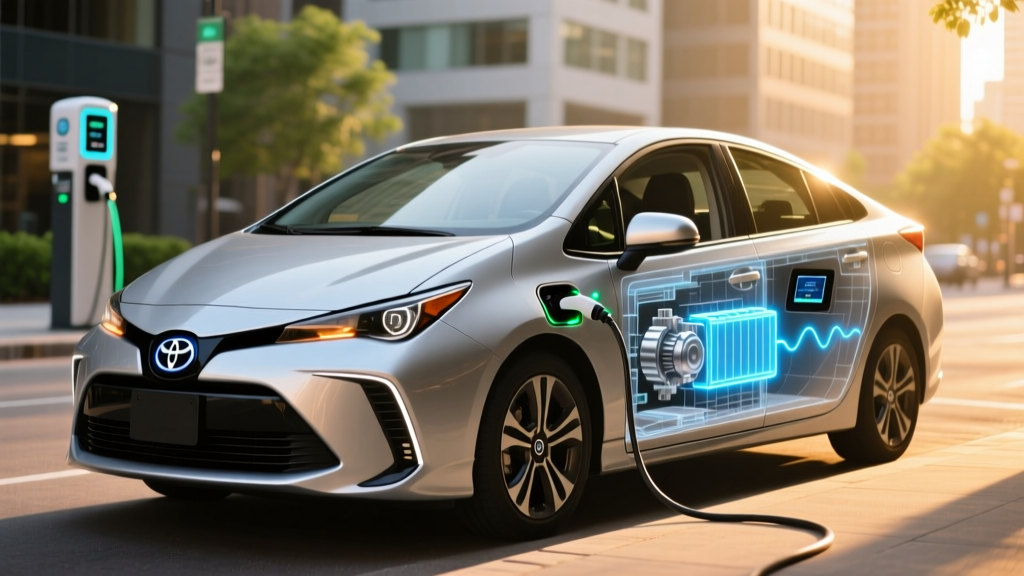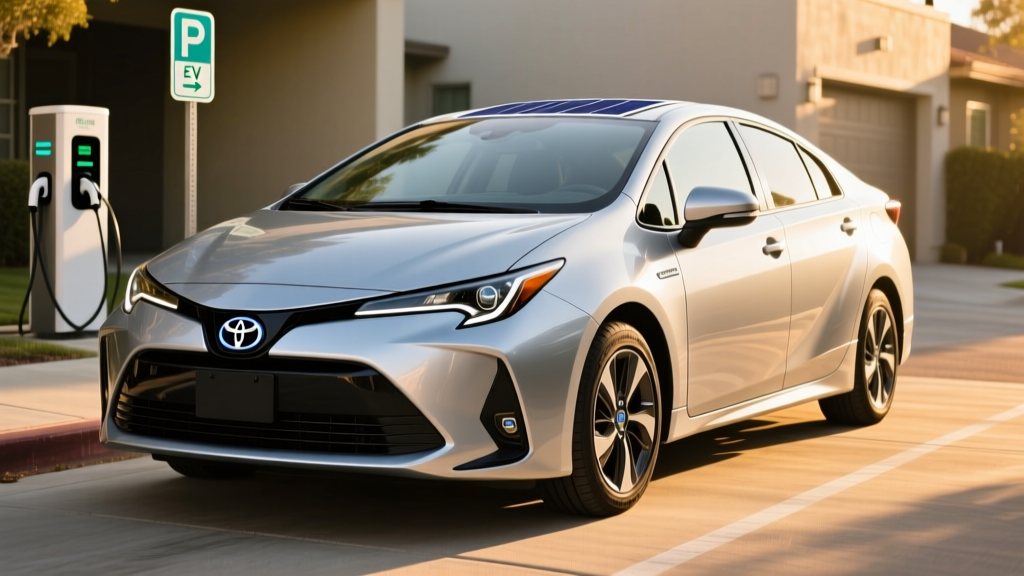
The Toyota Prius invented the modern hybrid segment, and the current generation (redesigned for 2023) remains one of the most efficient vehicles you can buy without plugging in. For 2025, the 2025 Prius hybrid carries over the dramatic styling, improved powertrain, and class-leading efficiency that made the last two model years critical and commercial successes. Whether you're considering the standard Prius HEV or the plug-in Prius Prime PHEV, this guide covers every spec, real-world number, and ownership detail you need before signing the paperwork.
2025 Prius Hybrid at a Glance: Key Specs
| Spec | 2025 Prius (HEV) | 2025 Prius Prime (PHEV) |
|---|---|---|
| Powertrain | 2.0L I4 + electric motor (HEV) | 2.0L I4 + electric motor (PHEV) |
| Combined Horsepower | 194 hp (FWD) / 196 hp (AWD-e) | 220 hp |
| 0–60 mph | 7.2s (FWD) / 7.0s (AWD-e) | 6.6s |
| EPA Combined MPG | 57 MPG (LE FWD) | 52 MPG (combined gas+electric) / 127 MPGe (EV mode) |
| Electric-Only Range | N/A (not plug-in) | 44 miles (SE/XSE) |
| Total Range | ~590 miles | ~480 miles (EV + gas) |
| Battery | ~0.9 kWh lithium-ion (self-charging) | 13.6 kWh lithium-ion |
| DC Fast Charge | No | No (Level 2 AC only) |
| Level 2 Charge Time (0–100%) | N/A | ~4 hours (240V, 16A) |
| Base MSRP | $28,350 (LE) | $33,475 (SE) |
| Federal Tax Credit (§30D) | Not eligible | Up to $3,750 (see eligibility) |
| Battery Warranty | 10 yr / 150,000 mi | 10 yr / 150,000 mi |
How Many MPG Does the 2025 Prius Hybrid Actually Get?
The EPA rates the 2025 Prius LE (FWD) at 57 MPG combined — broken down as 57 city / 56 highway. The XLE and Limited trims, which add weight from extra equipment and larger wheels, drop slightly to 52 combined (52 city / 52 highway). The AWD-e models rate at 54 combined (53 city / 54 highway) for LE and 48 combined for XLE/Limited.
| Trim | City MPG | Highway MPG | Combined MPG |
|---|---|---|---|
| LE (FWD) | 57 | 56 | 57 |
| XLE (FWD) | 52 | 52 | 52 |
| Limited (FWD) | 52 | 52 | 52 |
| LE (AWD-e) | 53 | 54 | 54 |
| XLE / Limited (AWD-e) | 49 | 47 | 48 |
Prius HEV vs. Prius Prime PHEV: Which Is Which?
This is the single most common point of confusion in the Prius lineup. Here's the distinction:
Conventional Hybrid (HEV) — Standard Prius: You never plug it in. The gasoline engine and regenerative braking charge a small (~0.9 kWh) battery that assists acceleration and enables brief low-speed electric driving. You fuel it like any gas car. Efficiency comes from the engine running at optimal RPMs and recapturing braking energy.
Plug-In Hybrid (PHEV) — Prius Prime: It has a larger 13.6 kWh battery you can charge from a wall outlet or Level 2 charger. This gives you 44 miles of electric-only range (EPA, SE/XSE trims) before the gas engine engages. Once the battery depletes, it operates exactly like a conventional hybrid at 52 MPG combined. Think of it as a short-range EV for daily commuting with a gas engine for longer trips.
Prius Prime PHEV: Electric-Only Range and Charging Details
The 2025 Prius Prime (SE and XSE trims) delivers 44 miles of EPA-rated electric-only range. That covers the average American's one-way commute and most daily errands without burning a drop of gasoline. The XSE Premium trim, with its heavier equipment load, rates at 40 miles EV-only.
Charging the Prime's 13.6 kWh battery:
- Level 1 (120V household outlet): Approximately 11 hours from empty to full. Plug in overnight and wake up to a full charge.
- Level 2 (240V, 16A home charger): Approximately 4 hours from empty to full.
- DC Fast Charging: Not available. The Prius Prime does not support CCS or CHAdeMO DC fast charging — this is typical for PHEVs with smaller batteries.
The total combined range (electric + gasoline) is approximately 480 miles, meaning you could drive from San Francisco to Los Angeles on a single tank-and-charge without stopping.
Powertrain and Performance: 194 HP That Punches Above Its Weight
The previous-generation Prius was notorious for sluggish acceleration. The 2025 model is a different animal. Toyota's fifth-generation hybrid system pairs a 2.0-liter four-cylinder engine with a permanent-magnet electric motor through a planetary gearset (eCVT). Combined output is 194 hp for FWD and 196 hp for AWD-e models, which add a rear-mounted electric motor for all-wheel traction.
The 0–60 mph time of 7.2 seconds (FWD) or 7.0 seconds (AWD-e) places the Prius alongside sport compacts from just a few years ago. More importantly for daily driving, the electric motor's instant torque makes city merging and passing confident. The Prius Prime pushes 220 combined horsepower and hits 60 mph in 6.6 seconds, making it the quickest Prius ever sold.
Handling benefits from a lower center of gravity (the battery sits under the rear seats) and a multi-link rear suspension. It's not a sports car, but it no longer feels like an appliance.
Pricing, Trims, and Tax Credit Eligibility
The 2025 Prius hybrid lineup breaks down as follows (MSRP, before destination):
- LE (FWD): $28,350
- LE (AWD-e): $29,750
- XLE (FWD): $31,695
- XLE (AWD-e): $33,095
- Limited (FWD): $34,745
- Limited (AWD-e): $36,145
The 2025 Prius Prime starts at $33,475 (SE) and climbs to approximately $39,675 (XSE Premium).
- Standard Prius (HEV): Not eligible. The §30D credit applies only to plug-in vehicles (BEVs and PHEVs) with sufficient battery capacity.
- Prius Prime (PHEV): Potentially eligible for up to $3,750 under current IRS rules. The full $7,500 credit requires meeting both critical-mineral and battery-component sourcing thresholds; the Prime currently qualifies for the critical-minerals portion only. Buyer income caps apply ($150K single / $300K joint modified AGI), and the vehicle MSRP must not exceed $55,000 (sedans). The credit can be transferred to the dealer at point of sale as an immediate price reduction. Always verify current eligibility at irs.gov, as sourcing requirements tighten annually.
- State incentives: Vary widely by jurisdiction. Some states (e.g., California, Colorado, New York) offer additional rebates for PHEVs. Check your state energy office or DMV for current programs.
Battery Warranty, Lifespan, and Replacement Cost
How long do Prius hybrid batteries actually last? Real-world data from Toyota's two decades of hybrid sales is encouraging. The Prius taxi fleet and high-mileage owner reports regularly show original batteries lasting 150,000–200,000+ miles. Toyota's hybrid system is conservative with battery cycling — it never fully charges or fully depletes the pack, which dramatically extends cell life. The standard Prius's small ~0.9 kWh battery undergoes shallow cycles, making degradation minimal over the vehicle's lifespan.
Replacement cost if out of warranty: A new OEM hybrid battery for the current-generation Prius runs approximately $2,500–$3,500 installed at a dealership. Independent hybrid specialists often offer refurbished or reconditioned batteries for $1,200–$2,000 installed. For the Prius Prime's larger 13.6 kWh pack, expect $5,000–$7,000 for OEM replacement. These are worst-case scenarios — the vast majority of Prius owners never replace their hybrid battery.
Toyota's warranty documentation details specific coverage terms and capacity-retention thresholds.
Who Should Choose the Prius Hybrid vs. a Full EV or Gas Car?
Choose the 2025 Prius (HEV) if:
- You want maximum fuel savings with zero lifestyle change — no charging, no range planning
- You live in an apartment or lack reliable home/workplace charging access
- Your budget is under $35K and you want proven reliability
- You drive 15,000+ miles/year and want to minimize fuel cost ($900–$1,100/year at 15K miles and $3.50/gal)
- You want a car that will reliably run 200,000+ miles with basic maintenance
Choose the 2025 Prius Prime (PHEV) if:
- You can charge at home (even a standard 120V outlet works overnight)
- Your daily round-trip commute is under 44 miles — you'll rarely use gas on weekdays
- You want EV-like daily driving but need gas flexibility for road trips
- You want the $3,750 federal tax credit to offset the higher purchase price
- You want 220 hp and the quickest Prius ever made
Choose a full battery EV (e.g., Tesla Model 3, Hyundai Ioniq 6) if:
- You have reliable Level 2 home charging
- Your daily driving is under 250 miles and you road-trip infrequently
- You want zero tailpipe emissions and minimal drivetrain maintenance
- You want access to the full $7,500 federal tax credit (on eligible models)
- You want the lowest per-mile "fuel" cost (electricity at ~$0.14/kWh ≈ $0.04/mile vs. Prius HEV at ~$0.07/mile)
Stick with a conventional gas car if:
- You drive very few miles per year (under 8,000) — the fuel savings won't offset a hybrid's price premium
- You need a truck or large SUV and can't wait for electrified options in your segment
Reliability and Safety
Toyota's hybrid powertrain is among the most proven in the automotive industry, with over 25 million hybrids sold globally since 1997. The current-generation Prius uses Toyota's fifth-generation hybrid system with a well-understood eCVT planetary gearset — there are no traditional transmission clutches or belts to wear out. Consumer Reports and J.D. Power consistently rate the Prius above average for predicted reliability.
On the safety front, every 2025 Prius includes Toyota Safety Sense 3.0 as standard: adaptive cruise control, lane-keeping assist, pre-collision braking with pedestrian detection, and automatic high beams. The Prius earned the IIHS Top Safety Pick+ designation in prior model years under the current generation; check iihs.org for the latest 2025 crash-test results. The Prius Prime's additional battery weight does not materially alter crash performance.
Pros and Cons
- Best-in-class 57 MPG combined (LE FWD)
- Quick for a hybrid: 7.0s 0–60 (AWD-e)
- No plug-in required — zero lifestyle change
- 10-year / 150,000-mile battery warranty
- Available AWD-e for snow-belt buyers
- Low annual fuel cost (~$950/yr at 15K mi)
- Proven long-term reliability track record
- Not eligible for federal §30D tax credit
- Cabin noise under hard acceleration (engine drone)
- Rear seat headroom is tight for tall passengers
- Cargo space (23.8 cu ft) trails compact SUVs
- AWD-e models drop to 48 MPG combined (XLE/Limited)
- No DC fast charging (not applicable for HEV, but worth noting for Prime comparison)
Frequently Asked Questions
Does the 2025 Prius hybrid need to be plugged in?
No. The standard 2025 Prius is a conventional hybrid (HEV). It charges its own small battery through the gasoline engine and regenerative braking. You simply fill it with gas like any other car. Only the Prius Prime (PHEV) requires plugging in to access its 44-mile electric-only range — and even the Prime can operate indefinitely as a hybrid without ever being plugged in.
How much does it cost to fuel a 2025 Prius per year?
At the EPA-estimated 57 MPG combined and 15,000 miles driven annually, you'd burn roughly 263 gallons per year. At $3.50/gallon (national average), that's approximately $920/year in fuel. A comparable non-hybrid compact sedan at 30 MPG would cost about $1,750/year — the Prius saves roughly $830 annually. Over a 10-year ownership period, that's $8,300 in fuel savings.
Is the Prius Prime worth the extra cost over the standard Prius?
It depends on your driving pattern and charging access. The Prime costs roughly $5,125 more than a Prius LE at base MSRP, but may qualify for a $3,750 federal tax credit, narrowing the gap to ~$1,375. If you can charge at home and your daily driving is under 44 miles, you'll use almost no gasoline on weekdays and could save $500–$700/year in fuel versus the HEV. The payback period is roughly 2–3 years after the credit, making the Prime a strong value for commuters with charging access.
How reliable is the 2025 Prius hybrid battery?
Very reliable. Toyota's hybrid batteries use conservative charge windows (the system never fully charges or depletes the pack), which dramatically extends cell life. Real-world data from millions of Prius vehicles shows most original batteries lasting 150,000–200,000+ miles. The battery is warranted for 10 years / 150,000 miles. If replacement is needed out of warranty, expect $2,500–$3,500 for the HEV or $5,000–$7,000 for the Prime's larger pack.
Does the 2025 Prius qualify for any tax credits?
The standard Prius hybrid (HEV) does not qualify for the federal §30D clean vehicle credit — that credit is reserved for plug-in vehicles. The Prius Prime (PHEV) may qualify for up to $3,750 depending on battery-sourcing compliance, buyer income limits ($150K single / $300K joint), and the $55,000 sedan MSRP cap. State-level incentives for hybrids and PHEVs vary — check your state's energy office for current programs. Always confirm eligibility at irs.gov before purchasing.
What's the difference between the Prius LE, XLE, and Limited trims?
The LE is the efficiency champion at 57 MPG combined, with 16-inch wheels and a lighter curb weight. The XLE adds a larger touchscreen, wireless charging, heated front seats, and 18-inch alloy wheels — but drops to 52 MPG combined due to added weight and rolling resistance. The Limited tops the range with a panoramic glass roof, ventilated seats, a JBL audio system, and a digital rearview mirror, also at 52 MPG. If maximum MPG is your priority, the LE is the clear choice.
How does the Prius hybrid compare to a full EV for total cost of ownership?
A full EV like the Tesla Model 3 or Hyundai Ioniq 6 will have lower per-mile fuel costs ($0.04/mile electricity vs. $0.06/mile gas in the Prius) and fewer maintenance items (no oil changes, no engine air filter). However, EVs carry higher purchase prices, potentially higher insurance premiums, and require reliable home charging infrastructure. The Prius hybrid eliminates range anxiety entirely and costs less upfront. For buyers who drive 15,000+ miles/year with home charging, an EV typically wins on TCO. For buyers without charging access or who regularly drive 300+ miles in a day, the Prius hybrid is the pragmatic choice.